
Main Courses
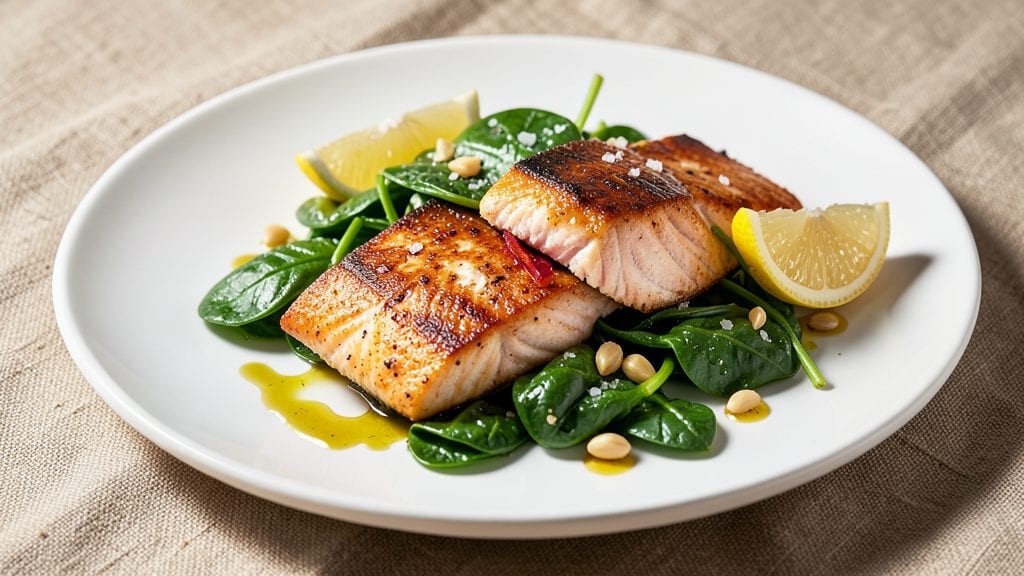
This baked salmon and spinach recipe delivers restaurant-quality results with minimal effort—juicy salmon with crispy skin and perfectly wilted greens that absorb all the bright, garlicky flavors.
The secret lies in the lemon-garlic crust that locks in moisture while creating a golden, flavorful exterior, paired with spinach that wilts just enough to soak up the pan juices.
I developed this dish after years of testing different baking techniques, and it consistently delivers tender salmon with a crispy edge and spinach that’s tender but still vibrant.
The beauty of this recipe is its simplicity—just 15 minutes of prep, followed by 20 minutes in the oven at 400°F. You’ll need fresh salmon fillets (skin-on for extra crispiness), a handful of fresh spinach, and a few pantry staples like lemon, garlic, olive oil, and salt.
The spinach wilts directly in the baking dish, creating a savory, aromatic bed for the salmon that requires no additional sides. This dish is perfect for weeknight dinners when you want something healthy but still feels indulgent.
What makes this recipe stand out is the balance of textures and flavors—the salmon’s crispy skin contrasts with its tender flesh, while the spinach adds a touch of earthiness that complements the bright, zesty lemon and rich garlic notes.
The dish is visually appealing, with the salmon’s golden crust and the spinach’s vibrant green creating a striking presentation. Serve it with a side of quinoa or crusty bread to soak up the pan juices, and you’ll have a complete, satisfying meal.
The best part? This recipe scales effortlessly—whether you’re cooking for two or feeding a family of four. The foolproof method ensures consistent results every time, and the flavors only deepen as the dish sits.
Once you try this baked salmon and spinach, it’ll quickly become a staple in your weekly rotation. Let’s get started—your table is about to get an upgrade.
Ingredients for baked salmon and spinach
Fresh salmon and spinach shine with just a few bright, simple ingredients.
| Ingredient | Amount | Notes |
|---|---|---|
| Fresh Salmon Fillets 🐟 | 2 whole | Skin-on, center-cut preferred |
| Fresh Baby Spinach 🥬 | 4 cups | Loosely packed, stems removed |
| Extra-Virgin Olive Oil 🫒 | 2 tbsp | Lightly fruity for balance |
| Lemon Zest 🍋 | 1 tbsp | From 1 large lemon |
| Lemon Juice 🍋 | 2 tbsp | Freshly squeezed |
| Garlic Cloves 🧄 | 4 cloves | Minced, not pre-minced jar |
| Diamond Crystal Kosher Salt 🧂 | 1 tsp | For seasoning, not iodized |
| Freshly Ground Black Pepper 🌶️ | ½ tsp | Cracked peppercorns preferred |
| Fresh Dill 🌿 | 2 tbsp | Chopped, stems removed |
| Unsalted Butter 🧈 | 1 tbsp | Cold, for crust |
| Fresh Parsley 🌿 | 1 tbsp | Chopped, for garnish |
| Red Wine Vinegar 🍷 | 1 tsp | For spinach dressing |
The salmon is everything here—skin-on, center-cut fillets from the seafood counter make all the difference. Whole Foods or local fishmongers usually have the freshest cuts, but don’t stress if you grab supermarket salmon—just check the sell-by date. Look for fillets with a firm texture and vibrant color, not grayish or slimy. The baby spinach? Organic from the salad bar if possible, but the pre-washed bags work too—just shake out the excess water. I always grab extra dill and parsley at the same time since they keep for weeks in the fridge.
No fresh dill? Dried works at half the amount, but it’s not the same. Short on lemon? Substitute lime juice, though the flavor shifts slightly. The olive oil can be swapped for avocado oil if you prefer a milder taste, but extra-virgin adds richness. For the spinach, if you’re using frozen, thaw and squeeze out all the water—it’ll stay soggy otherwise. The butter is key for that crispy skin, so don’t skip it. Trust me on the cold butter—it melts just enough to create the perfect crust.
This dish reheats beautifully—just pop it back in the oven at 350°F for 5-7 minutes. The salmon and spinach taste even better the next day as the flavors meld. Store leftovers in an airtight container for up to 2 days, but honestly, it’s gone by then. I always make a double batch and freeze half for lazy nights. The lemon zest and garlic can be prepped ahead, too—just store them in a small jar in the fridge for up to 3 days.
Why You'll Love This Recipe
- Same effort, different vibes: serve it with crusty bread for a lazy Tuesday or swap in a splash of white wine for a fancier guest night. The salmon stays moist, the spinach stays vibrant—it’s always ready for the occasion.
- No-Fuss Prep: I swear by this—just toss the spinach, drizzle the olive oil, and lay the salmon right on top. The lemon zest and juice do all the work while you’re scrolling through your phone or waiting for the oven to preheat.
- Bright & Simple: That zesty lemon cutting through the richness of the salmon? It’s the kind of balance that makes you take a second bite without even thinking. The spinach wilts into tender, bite-sized pockets of flavor—no overcooking, no bitterness.
- Weeknight to Dinner Party: Same effort, different vibes: serve it with crusty bread for a lazy Tuesday or swap in a splash of white wine for a fancier guest night. The salmon stays moist, the spinach stays vibrant—it’s always ready for the occasion.
Step-by-step instructions for lemon-garlic baked salmon with wilted spinach
Here's how to create perfectly crisp salmon with tender spinach—simple steps for a restaurant-quality dish.
Prepare the Salmon and Seasoning
Preheat your oven to 375°F while you work. Place the 2 whole fresh salmon fillets on a cutting board, skin-side down. Using your fingers, gently press along the top of each fillet to create shallow dimples—this prevents curling during baking. Pat them completely dry with paper towels, as moisture is the enemy of crispy skin.
In a small bowl, combine the 1 tablespoon lemon zest, 2 tablespoons lemon juice, 1 teaspoon diamond crystal kosher salt, and 0.5 teaspoon freshly ground black pepper. Rub this mixture evenly over both sides of the salmon fillets, pressing gently to help the seasoning adhere. Let them sit at room temperature for 10 minutes while you prepare the spinach—this ensures even cooking.
Create the Spinach Dressing and Prep the Pan
In a large bowl, combine the 4 cups fresh baby spinach, 1 teaspoon red wine vinegar, and the 2 tablespoons chopped fresh dill. Gently toss to coat the spinach evenly. In a separate small bowl, whisk together the 2 tablespoons extra-virgin olive oil and the 1 tablespoon cold unsalted butter until smooth. Drizzle this mixture over the spinach and toss again until everything is lightly coated. Set aside.
Line a baking sheet with parchment paper and arrange the seasoned salmon fillets in the center, skin-side down. The spinach will bake alongside the salmon, so place it in a separate bowl for now—you'll add it to the pan just before baking. This keeps the greens vibrant and prevents them from wilting prematurely.
Bake the Salmon to Golden Perfection
Transfer the salmon to the preheated oven and bake for 12-15 minutes, depending on thickness. You'll know it's done when the edges are golden brown and the salmon flakes easily with a fork. The internal temperature should reach 145°F—use an instant-read thermometer to check the thickest part of the fillet.
During the last 2 minutes of baking, carefully pour the dressed spinach around the salmon fillets on the baking sheet. The residual heat will gently wilt the spinach while keeping it bright green. If the spinach starts to brown too quickly, tent the pan loosely with foil to protect it.
Finish and Serve With Fresh Herbs
Remove the salmon and spinach from the oven and let them rest for 3-5 minutes. This resting period ensures the salmon stays moist and the flavors meld together. While they rest, transfer the spinach to a serving platter and arrange the salmon fillets on top. Sprinkle with the 1 tablespoon chopped fresh parsley for a pop of color and freshness.
Serve immediately with the wilted spinach nestled around the salmon. Each bite should deliver a perfect balance of crispy skin, tender flesh, and bright, herby greens. The lemon-garlic seasoning adds a bright, zesty contrast that cuts through the richness of the salmon. Enjoy with a simple side of crusty bread or a fresh salad to complete the meal.
Pro Tips For Making Baked Salmon And Spinach
- Preheat with the pan: DESCRIPTION: Crank your oven to 400°F and let the baking sheet sit inside for 5 minutes before adding the salmon. I learned this the hard way—cold salmon steams instead of searing, and you end up with sad, gray edges. The extra heat jumpstarts the crust, so it browns properly while the spinach wilts evenly underneath.
- Pat spinach dry: DESCRIPTION: Toss the baby spinach with a paper towel or salad spinner to remove excess moisture—wet leaves turn to mush in the oven. I skip this sometimes, and the spinach just sits there, limp and soggy, while the salmon gets all the attention. A quick shake in a colander makes a real difference.
- Don’t overcrowd the pan: DESCRIPTION: Leave at least 1 inch between salmon fillets, or they’ll steam instead of brown. I used to pack them in like sardines, thinking more would cook faster—wrong. The edges stay pale, and the lemon zest just sits there, doing nothing. Space them out for even cooking and crispy skin.
- Zest first, juice last: DESCRIPTION: Grate the lemon zest directly over the salmon before baking, then add the juice afterward. The zest clings better, and the bright flavor soaks in while the salmon cooks. I used to mix them together, and half the zest would end up in the spinach—wasted citrus punch. Timing matters here.
Wine and beer pairings for this baked salmon and spinach
Crisp White Wine
A dry Riesling from Germany or Alsace is my go-to pairing for this dish—its bright acidity and citrus notes mirror the lemon-garlic crust on the salmon while cutting through the richness.
Look for a Kastellaun Riesling Kabinett or Domaine Weinbach—both offer crisp, mineral-driven flavors that elevate the dish without overpowering it. Serve slightly chilled (45-48°F) to enhance the wine’s refreshing quality. 🍷
Crisp Sauvignon Blanc
New Zealand Sauvignon Blanc delivers a vibrant, herbaceous match that complements the fresh dill and spinach. I love Kim Crawford Sauvignon Blanc or Oyster Bay for their zesty lime and grapefruit notes that harmonize with the lemon in the recipe.
The wine’s natural acidity also balances the salmon’s richness, creating a perfect harmony. Aim for a serving temperature of 45-50°F.
Light Red Option
For red wine lovers, a Pinot Noir from Oregon or Burgundy works beautifully—its delicate red fruit flavors and silky texture won’t clash with the salmon’s brightness.
Try Domaine Serene Pinot Noir or La Crema. Serve at 55-60°F to let its subtle earthiness complement the spinach’s herbal notes without overpowering the dish.
Beer Pairings
A crisp Belgian witbier like Hoegaarden or Stella Artois adds a refreshing contrast with its coriander and citrus notes. The effervescence cleanses your palate between bites of salmon and spinach.
For a local option, try a German Helles Lager—its mild malt sweetness balances the dish’s acidity beautifully. Serve both at 40-45°F for optimal enjoyment.
Non-Alcoholic Options
For a sparkling alternative, San Pellegrino Aranciata or Topo Chico with a splash of cranberry juice adds a citrusy effervescence that mimics the wine pairings. The bubbles enhance the dish’s brightness, while the cranberry adds a subtle tartness.
For a still option, sparkling water with lemon slices keeps things light and refreshing without detracting from the meal’s flavors.
Serving Temperature Tips
Always chill white wines and beers before serving—this enhances their crispness and refreshes your palate. I recommend using an ice bucket with a towel for quick chilling or storing bottles in the fridge for 30-60 minutes before serving.
For reds, let them breathe for 10-15 minutes in a decanter to soften tannins and release aromas. The right temperature ensures every sip complements the dish perfectly. 💡
Nutrition facts
Frequently asked questions
Can I use frozen spinach instead of fresh?
Yes, but you must thaw and thoroughly drain it first. Frozen spinach releases excess water when cooked, which can make your dish soggy. After thawing, squeeze out all moisture with a clean kitchen towel or paper towels before mixing with the dressing. For best results, use 10-ounce bags of frozen chopped spinach (about 2 cups packed) and follow the same baking method.
Why is my salmon skin not crispy?
Crispy skin happens when moisture is properly controlled. Pat the salmon completely dry before seasoning, and make sure it's skin-side down on the baking sheet. Use cold butter (not melted) for that golden crust, and avoid overcrowding the pan. If your oven runs hot, reduce the temperature to 350°F for 18-20 minutes instead.
Can I make this recipe ahead of time?
Prepare the salmon and spinach dressing up to 24 hours ahead and store them separately in airtight containers in the fridge. When ready to bake, assemble everything and cook as directed. The flavors actually improve after resting, as the lemon and garlic infuse the salmon more deeply. Reheat gently at 350°F for 5-7 minutes to maintain crispiness.
What's the best way to reheat leftovers?
Reheat in a 350°F oven for 5-7 minutes to preserve the crispy skin and tender texture. Avoid microwaving—it makes the salmon rubbery. For extra crispiness, place the salmon skin-side down on a baking sheet with a splash of water and cover with foil for 3 minutes before removing the foil for the final 2 minutes.
Can I substitute another fish?
This recipe works best with firm, oily fish like salmon, but you could try sea bass or halibut for similar results. Avoid delicate fish like cod or tilapia—they won't hold up as well with the lemon-garlic marinade. If substituting, reduce baking time by 2-3 minutes to prevent overcooking.