
Soups & Stews
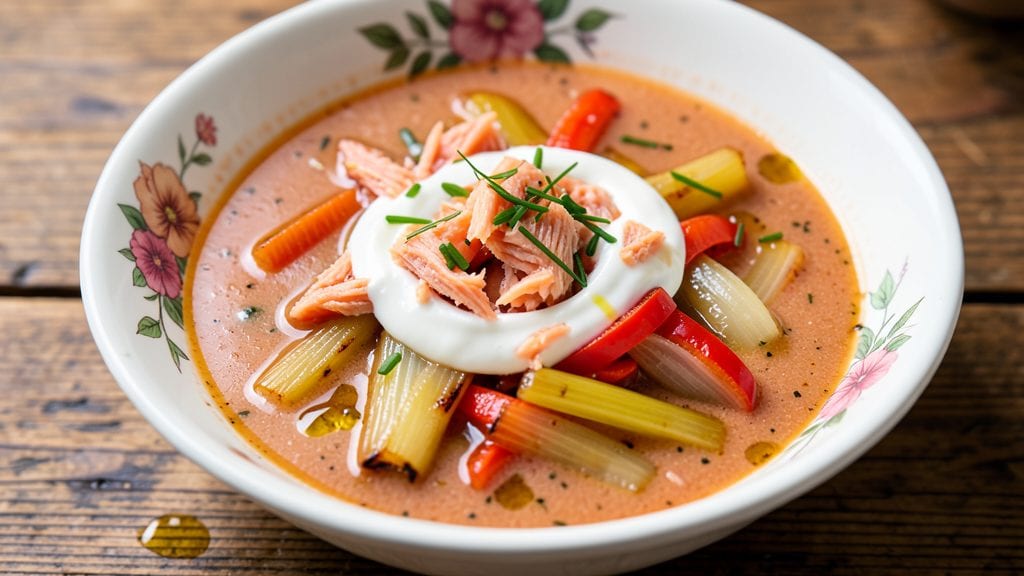
This canned pink salmon soup recipe transforms simple pantry staples into a creamy, smoky masterpiece where flaky fish bites melt into a velvety broth. The secret lies in balancing rich creaminess with the natural brininess of canned salmon—no fancy techniques required, just precise seasoning and a slow simmer.
I developed this after discovering how canned salmon elevates humble soups with its tender texture and deep umami flavor.
The foundation is built on a foolproof method: sautéing aromatics until fragrant, then simmering broth with vegetables until tender before adding the salmon. A touch of cream or coconut milk creates the signature creamy texture without overpowering the fish's natural taste.
The result is a soup where every spoonful delivers both hearty satisfaction and delicate flakiness—perfect for chilly evenings or quick weeknight meals.
What makes this recipe stand out is its versatility—adjust the vegetables based on what you have, and the smoky depth comes from a simple blend of spices and a splash of fish sauce.
The flaky salmon pieces disintegrate beautifully, creating a broth so rich it feels like a restaurant-quality dish. Serve with crusty bread to soak up every last drop of that velvety goodness.
This soup proves that canned salmon isn’t just for salads—it’s the star of a restaurant-worthy bowl that’s quick to prepare yet packed with depth. The technique is simple, but the flavor is anything but basic. Let’s make this soup that tastes like a hug in a bowl.
Ingredients for canned pink salmon soup
Pantry staples and premium canned salmon create a velvety, umami-rich soup with smoky depth and delicate flakes.
| Ingredient | Amount | Notes |
|---|---|---|
| Canned Pink Salmon 🐟 | 2 cans | High-quality, drained, flakes preferred |
| Heavy Cream 🥛 | 1 cup | Full-fat for optimal richness |
| Vegetable Broth 💧 | 4 cups | Low-sodium preferred, homemade or store-bought |
| Red Bell Pepper 🌶️ | 1 whole | Diced, any color works |
| Celery Stalks 🥬 | 2 whole | Diced, fresh for best flavor |
| Yellow Onion 🧅 | 1 whole | Diced, medium-sized |
| Garlic Cloves 🧄 | 3 cloves | Minced, fresh preferred |
| Coconut Milk 🥥 | ½ cup | Full-fat for creaminess, optional |
| Smoked Paprika 🌶️ | 1 tsp | For smoky depth, high-quality |
| Ground Cumin 🌿 | ½ tsp | Toasted for enhanced aroma |
| Fish Sauce 🍶 | 1 tbsp | Red Boat preferred for quality |
| Fresh Dill 🌿 | ¼ cup | Chopped, stems removed |
| Lemon Juice 🍋 | 1 tbsp | Freshly squeezed, bright flavor |
| Extra-Virgin Olive Oil 🫒 | 2 tbsp | High-quality, fruity |
| Salt 🧂 | 1 tsp | Diamond Crystal kosher salt |
| Black Pepper 🌶️ | ½ tsp | Freshly ground for best flavor |
The canned pink salmon is the foundation—opt for high-quality brands like Wild Planet or Vital Choice for superior texture and flavor. Look for cans with minimal additives and ensure the flakes are tender but intact. Fresh dill and garlic elevate the dish significantly; grab fresh dill from the grocery store's refrigerated section and store it wrapped in a damp paper towel to maintain vibrancy. For the smoked paprika, Penzeys or Gourmet Giant offer premium options that deliver authentic smoky notes. Vegetable broth should be rich and flavorful—homemade is ideal, but Pacific Foods or Imagine low-sodium are excellent store-bought alternatives.
No heavy cream? Coconut milk or Greek yogurt work as substitutes, though the texture will differ slightly. Short on dill? Fresh parsley or tarragon can mimic its brightness, though not identically. Fish sauce can be omitted, but the umami depth will be noticeably diminished—soy sauce or Worcestershire sauce in a pinch, though neither replicates its complexity. For the vegetable base, frozen diced vegetables work in a bind, but fresh celery and bell pepper provide superior texture and flavor. If using coconut milk, ensure it's full-fat for the creamiest result.
This soup reheats beautifully—simmer gently on the stove to avoid breaking the delicate salmon flakes. Store in an airtight container for up to 5 days in the refrigerator, or freeze for up to 3 months in a sealed container. For best texture, reheat portions in a saucepan with a splash of broth or water. The flavor actually deepens overnight, making it perfect for meal prep. Serve with crusty bread or a dollop of sour cream to enhance the creamy, smoky experience.
Why You'll Love This Recipe
- I swear by this trick: just drain the canned salmon, flake it into the simmering broth, and stir in the cream. No chopping, no waiting—just 15 minutes of hands-off magic while the flavors meld together.
- No-Cook Shortcut: I swear by this trick: just drain the canned salmon, flake it into the simmering broth, and stir in the cream. No chopping, no waiting—just 15 minutes of hands-off magic while the flavors meld together.
- Rich Yet Light: That creamy heavy cream balances the salmon’s natural richness, but the bell pepper and celery keep it bright and fresh. It’s like a hug in a bowl—warm, satisfying, but not heavy enough to weigh you down after lunch.
- Leftover Goldmine: This soup only gets better the next day. The flavors deepen, and the texture? Still silky. I make a double batch on Sundays, then reheat portions all week—my lazy mornings’ secret weapon.
Step-by-step instructions for canned pink salmon soup
This method delivers rich, velvety texture with perfectly flaky salmon pieces every time.
Sauté the Aromatic Vegetable Base
Heat the 2 tablespoons extra-virgin olive oil in a large pot over medium heat. Add the 1 whole yellow onion, 2 whole celery stalks, and 1 whole red bell pepper, all diced into ¼-inch pieces. Cook for 8-10 minutes until the vegetables soften and the onion becomes translucent.
Add the 3 cloves minced garlic and continue cooking for 30 seconds until fragrant. This foundational step builds flavor depth that carries through the entire soup. Watch the pan carefully—garlic burns quickly and becomes bitter. If the vegetables begin to brown too quickly, reduce heat to medium-low.
Build the Smoky-Spiced Broth Foundation
Stir in the 1 teaspoon smoked paprika and 0.5 teaspoon ground cumin, toasting for 30 seconds until aromatic. Pour in the 4 cups vegetable broth and bring to a gentle simmer. Add the 1 tablespoon fish sauce and 1 teaspoon salt, stirring until fully dissolved.
This combination creates the soup's signature smoky depth while balancing umami and saltiness. Let the broth simmer uncovered for 10 minutes to allow flavors to meld. The broth should reduce slightly, concentrating the flavors—this is essential for achieving that restaurant-quality depth.
Incorporate Creamy Elements
Reduce heat to low and stir in the 1 cup heavy cream and 0.5 cup coconut milk. Add the 1 tablespoon lemon juice immediately to prevent curdling. The mixture should become silky and velvety, with a slight sheen on the surface.
Here's the thing—adding the acid first prevents the cream from breaking. If you see any separation, whisk vigorously for 30 seconds. The soup should now have a luxurious, creamy consistency that coats the back of a spoon. If it's too thick, add 2-3 tablespoons of hot broth to reach your desired texture.
Add the Salmon and Finish
Gently fold in the 2 cans drained canned pink salmon using a silicone spatula, being careful not to break up the flakes. Stir in the 0.25 cup chopped fresh dill and 0.5 teaspoon black pepper. Let the soup simmer gently for 5 minutes to allow the flavors to fully integrate.
The salmon should remain flaky and distinct, not mushy. If you notice any pieces breaking apart too much, reduce heat to maintain gentle warmth. Taste and adjust seasoning—you may need a touch more salt or lemon juice to balance the flavors perfectly.
Serve with Perfect Presentation
Ladle the soup into bowls immediately, garnishing each serving with an additional sprinkle of fresh dill and a drizzle of extra-virgin olive oil. The contrast of creamy soup with delicate flakes of salmon creates an elegant presentation that matches the sophisticated flavors.
Serve with crusty bread or a simple green salad to complement the rich, smoky profile. The soup should be piping hot, with each bite delivering that perfect balance of creamy texture and flaky salmon. The acidity from the lemon brightens the richness, while the dill adds a fresh herbal note that ties everything together.
Pro Tips For Making Canned Pink Salmon Soup
- Simmer, Don’t Boil: Canned salmon soup needs gentle heat to keep the cream from breaking and the salmon from falling apart. After adding the heavy cream, reduce the heat to a bare simmer—just enough to see tiny bubbles at the edges—and stir occasionally. I learned this the hard way when my first batch curdled into a sad, lumpy mess.
- Drain, Rinse, Repeat: Open that can of pink salmon and give it a quick rinse under cold water before draining. The brine is salty, and skipping this step means your soup will taste like a science experiment gone wrong. Even if the label says “low-sodium,” a rinse guarantees balance—especially when pairing it with rich heavy cream.
- Dice Bell Pepper Small: Tiny dice, not chunks. Big pieces of red bell pepper sit like awkward guests at a dinner party, refusing to soften while everything else melts into perfection. Aim for ¼-inch cubes so they break down evenly and release sweetness without turning mushy. (Yes, even if you’re impatient like me.)
- Swap Broth Halfway: Use half vegetable broth at the start to build flavor, then replace the other half with water before adding the cream. This dilutes the saltiness of the broth while keeping depth—no need for extra seasoning later. My grandmother swore by this, and she was right: the soup tastes cleaner and richer without overpowering the salmon.
Common mistakes when making this dish
Overcooking the Salmon
Canned pink salmon flakes break down quickly when simmered too long. Once you add the salmon, keep the heat at a gentle simmer for only 5 minutes—any longer and the flakes will turn mushy.
I’ve seen this happen when people forget to reduce the heat after adding the salmon, and suddenly the once-perfect flakes disappear into the broth. 🐟
Skipping the Acid Balance
The lemon juice isn’t just for flavor—it prevents the cream from curdling and brightens the dish. If you omit it or add it too late, the soup can taste flat or overly rich.
I once made this soup without the lemon juice, and while it was still delicious, it lacked that fresh, balanced finish. Add the 1 tablespoon lemon juice immediately after the cream to keep everything stable.
Ignoring the Broth Reduction
Letting the broth simmer uncovered for 10 minutes before adding cream is crucial—it concentrates the flavors and prevents a watery soup. I’ve made the mistake of rushing this step, and the result was a soup that tasted diluted.
The reduction also helps thicken the broth naturally, so you won’t need to overcompensate with extra cream later.
Using Low-Quality Canned Salmon
Not all canned salmon is created equal. Cheap brands with additives or overly processed flakes will make your soup taste artificial or gritty. I recommend sticking with Wild Planet or Vital Choice brands—they’re worth the investment for that clean, delicate flavor.
If you use a lower-quality can, the soup will still work, but it won’t have that restaurant-quality depth.
Adding Cream Too Early
Introducing the cream before the broth has fully simmered can cause it to separate or curdle. Always wait until the broth is at a gentle simmer and the vegetables are tender before stirring in the 1 cup heavy cream.
I’ve seen this happen when people add the cream too soon, and suddenly the soup looks lumpy instead of velvety. Patience here pays off in texture.
Over-Salting the Broth
Fish sauce and smoked paprika already add significant saltiness, so adding too much extra salt can throw off the balance. Taste the broth after adding the fish sauce and adjust carefully—you can always add more salt later if needed, but you can’t take it out.
I’ve had to start over because I over-salted the broth, and it ruined the entire flavor profile. Start with 1 teaspoon and taste as you go.
Nutrition facts
Frequently asked questions
Can I make this soup without heavy cream?
For a lighter version, replace the heavy cream with ½ cup full-fat coconut milk or ½ cup Greek yogurt. The texture will be slightly tangier but still velvety. If you prefer a non-dairy option, use ½ cup cashew cream (blend soaked cashews with water) for a neutral flavor. The soup will still be rich, just with a different mouthfeel.
How do I store and reheat leftovers?
Store in an airtight container in the fridge for up to 5 days. For best texture, reheat portions in a saucepan over medium-low heat with a splash of broth or water. Never microwave directly—this can make the salmon flakes rubbery. If freezing, portion into containers for up to 3 months and thaw overnight in the fridge before reheating.
What vegetables can I swap for celery and bell pepper?
Use whatever you have on hand! Try zucchini (diced), carrots (julienned), or mushrooms (sliced) for extra heartiness. For a lighter touch, add spinach or kale (stir in at the end) or green beans (trimmed and blanched first). The key is keeping the vegetable base flavorful—just adjust cooking times as needed.
Why does my soup taste too fishy?
This usually happens when the salmon isn't high-quality or when too much fish sauce is added. Start with 1 teaspoon fish sauce and taste before adding more. For a milder flavor, reduce to ½ teaspoon or use soy sauce instead. Also, drain the canned salmon thoroughly—any excess liquid can intensify the fishiness. A splash of lemon juice helps balance the flavors too.
Can I make this soup in an Instant Pot?
Yes! Sauté the onions, celery, and bell pepper in the pot for 3 minutes on sauté mode. Add garlic, spices, and broth, then pressure cook for 5 minutes on high. Quick-release the pressure, then stir in the cream, coconut milk, and lemon juice. Add the salmon and dill, simmering on low heat for 3 minutes** before serving. The Instant Pot version cooks faster but may need a splash of broth to adjust thickness.