
Side Dishes
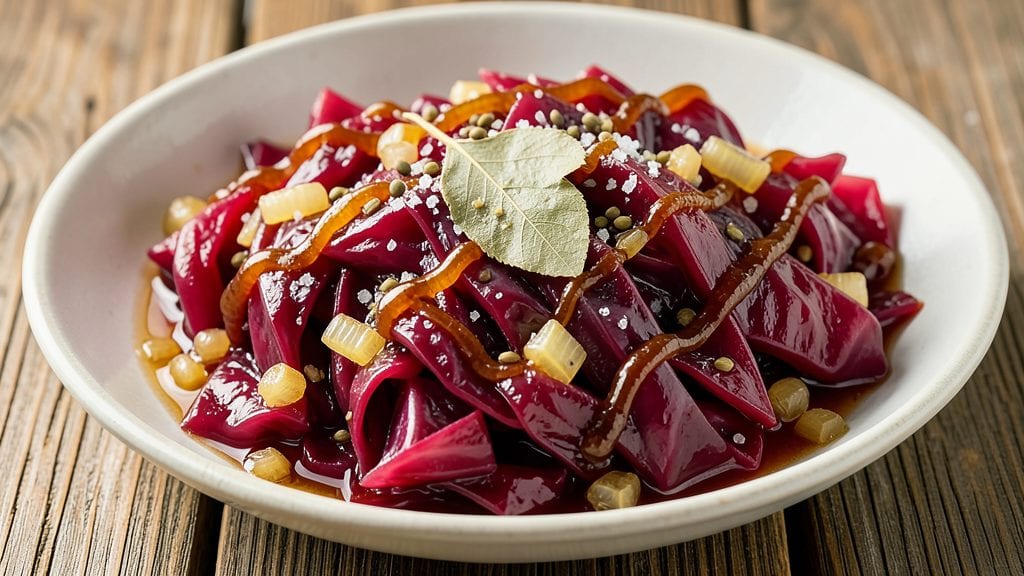
Transforming canned red cabbage into a tangy-sweet side dish is simpler than you think—this braised version delivers restaurant-quality depth with just 15 minutes of hands-on time. The secret lies in balancing vinegar and spices to unlock the cabbage's natural sweetness while keeping the texture tender.
I developed this recipe after discovering how canned red cabbage could elevate weeknight meals without the prep of fresh.
This method works perfectly with pantry staples: canned red cabbage, vinegar, brown sugar, and basic spices like mustard seeds and bay leaf. The cabbage simmers until glossy and tender, absorbing flavors that transform it from simple to sophisticated.
It pairs beautifully with roasted meats, sausages, or even as a standalone side for sandwiches.
What you'll achieve is a dish that's perfectly balanced—tangy yet sweet, tender yet slightly crisp at the edges. The aroma alone will have everyone at the table asking for seconds. Ready in under 30 minutes, this recipe proves canned cabbage can be just as impressive as its fresh counterpart.
Use it as a side for holiday dinners, a topping for hot dogs, or a filling for stuffed cabbage rolls. The versatility makes it a staple for any home cook looking to add depth to their meals without extra effort.
Ingredients for canned red cabbage
Pantry staples transform canned red cabbage into a restaurant-worthy side dish—simple yet sophisticated.
| Ingredient | Amount | Notes |
|---|---|---|
| Canned Red Cabbage 🥬 | 1 can | 14-15 oz can, drained |
| Apple Cider Vinegar 🍏 | ½ cup | Unfiltered for depth |
| Brown Sugar 🍚 | ¼ cup | Light or dark preferred |
| Water 💧 | ½ cup | Room temperature |
| Mustard Seeds 🌶️ | 1 tsp | Whole, not ground |
| Bay Leaf 🍃 | 1 whole | Fresh preferred |
| Salt 🧂 | ½ tsp | Kosher or sea salt |
| Yellow Onion 🧅 | ¼ cup | Finely diced, yellow or red |
| Black Peppercorns 🌶️ | ¼ tsp | Crushed lightly |
| Fresh Thyme 🌿 | 1 tsp | Leaves only, chopped |
| Honey 🍯 | 1 tbsp | Wildflower preferred |
| Olive Oil 🫒 | 1 tbsp | Extra-virgin for finishing |
The canned red cabbage is the foundation—store-bought quality varies, so check for minimal liquid and no added preservatives. Trader Joe's and Whole Foods carry the best brands with vibrant color. For the vinegar, Bragg's apple cider vinegar adds subtle sweetness, but any unfiltered variety works. The mustard seeds should be whole and yellow—no brown seeds, which can taste bitter. Penzeys or bulk bins at natural markets offer the best quality. Don't skip the bay leaf—it infuses subtle earthiness that elevates the dish. If using dried thyme, McCormick or Spicewalla brands stay potent longer than generic options.
No apple cider vinegar? White vinegar or red wine vinegar work in a pinch, but add 1 tsp extra brown sugar to balance acidity. Substituting honey? Maple syrup works 1:1, but the flavor profile shifts slightly. Fresh thyme unavailable? Dried thyme at one-third the amount suffices, though texture differs. For the onion, red onion adds color but milder flavor—yellow or white onions deepen the savory notes. The olive oil matters only at the end—use something fruity like California Olive Ranch for finishing drizzle. Prefer a different spice blend? Smoked paprika (1/2 tsp) adds depth without altering the core tangy-sweet balance.
This braised cabbage reheats beautifully—double the batch for leftovers. Store in an airtight container for up to 5 days in the fridge, where flavors deepen. Freezes well for 3 months if portioned into single-serving containers. The dish tastes even better the next day as the cabbage absorbs all the braising liquid. For meal prep, cook 2 cans and portion into containers with your main protein—perfect for lunches or holiday sides. The bay leaf can be removed before serving for a cleaner presentation, though it adds subtle flavor.
Why You'll Love This Recipe
- Five-Ingredient Magic: Honestly, I swear by this recipe because it’s the kind of dish that proves you don’t need a pantry full of fancy stuff. Just open a can of red cabbage, toss in vinegar, sugar, water, and a pinch of mustard seeds—boom. That’s it. No chopping, no peeling, no waiting for a head of cabbage to soften.
- Sweet-Tangy Bite: Between us, the balance here is chef’s kiss—the apple cider vinegar cuts through the cabbage’s natural sweetness while the brown sugar caramelizes just enough to make your mouth water. Add those tiny mustard seeds? They pack a subtle punch that keeps every bite interesting.
- Weeknight Workhorse: I keep this on rotation because it’s the ultimate side dish that doesn’t quit. Serve it with roasted chicken for a cozy dinner, pile it on sandwiches for lunch the next day, or even toss it into tacos for a tangy crunch. It’s that versatile.
Step-by-step instructions for braised red cabbage
This method transforms simple canned cabbage into a restaurant-worthy side with balanced sweetness and tang.
Sauté the Aromatics
Heat the 1 tablespoon olive oil in a medium saucepan over medium heat. Add the 0.25 cup finely diced yellow onion and cook for 3-4 minutes until softened and translucent. This foundational step builds flavor—don't rush it or the onions will brown too quickly.
Add the 1 teaspoon whole mustard seeds and 0.25 teaspoon crushed black peppercorns to the pan. Toast for 30 seconds until fragrant—you'll smell the nutty aroma of the mustard seeds and pepper. This step is crucial for developing depth before adding the cabbage. Remove the pan from heat immediately after to prevent burning.
Combine Wet Ingredients and Simmer
Return the pan to medium heat and pour in the 0.5 cup apple cider vinegar and 0.5 cup water. Stir to combine, then add the 1 whole bay leaf and 1 teaspoon chopped fresh thyme. Bring the mixture to a gentle simmer, then reduce heat to low. Add the 1 can drained red cabbage and stir gently to coat the cabbage slices evenly.
Simmer uncovered for 10 minutes, stirring occasionally. The cabbage will begin to soften and release its natural juices. This initial simmering phase is where the cabbage absorbs the vinegar's tanginess and begins to tenderize. If the liquid reduces too quickly, add 1-2 tablespoons water to maintain a gentle simmer.
Sweeten and Thicken the Braise
After 10 minutes, stir in the 0.25 cup brown sugar and 1 tablespoon honey. These ingredients work together to create a perfect balance of sweetness and acidity. Increase heat to medium-low and simmer uncovered for another 10-12 minutes, stirring occasionally, until the cabbage is fork-tender and the sauce has thickened slightly.
You'll know it's ready when the cabbage slices are soft enough to pierce easily with a fork and the sauce has reduced to a glossy consistency. The cabbage should also have a deep, rich color from the caramelization of the sugars. If the sauce is too thin, simmer uncovered for an additional 2-3 minutes to thicken further.
Season and Finish
Remove the pan from heat and discard the whole bay leaf. Stir in the 0.5 teaspoon salt and taste the cabbage. Adjust the seasoning if needed—you may want to add a pinch more salt or a splash of vinegar for brightness. The cabbage should be perfectly balanced between sweet, tangy, and slightly savory.
For the final touch, drizzle with an additional 1 teaspoon olive oil and toss gently. This finishing oil adds a silky texture and enhances the cabbage's natural flavors. Serve immediately while warm, or let it cool slightly before serving. This braised red cabbage pairs beautifully with roasted meats, sausages, or as a standalone side dish.
Pro Tips For Making Canned Red Cabbage
- Simmer Slowly: Crank the heat to medium and let the canned cabbage bubble for 5 minutes to drive off the raw vinegar bite—then drop to a gentle simmer. I learned this the hard way after burning the sugar twice; patience keeps the flavor balanced, not bitter.
- Toast the Seeds: Dry-toast the mustard seeds in a separate pan for 30 seconds until they sizzle and smell nutty—then toss them into the cabbage. Skipping this step leaves them bland; the aroma is half the magic.
- Balance the Sweet: Start with half the brown sugar called for, taste, then add the rest. Canned cabbage’s natural sweetness varies wildly; you’re just fine-tuning, not rescuing a disaster.
- Strain the Liquid: Pour the cooked cabbage through a fine-mesh sieve to remove excess liquid if it’s too soupy. I used to ignore this, but it makes the texture tighter—especially for sandwiches or salads where you want bite, not sog.
Storing and reheating this recipe
Refrigerator Storage
Store your braised red cabbage in an airtight glass container (I love Pyrex with snap-on lids) for up to 5 days in the fridge. The flavors actually improve overnight as the cabbage continues to absorb the tangy-sweet braising liquid.
Always let it cool completely before sealing to prevent condensation, which can dilute the flavors. 🥬
Freezer Prep Tips
For longer storage, portion the cabbage into single-serving freezer-safe containers or quart-sized freezer bags, leaving ½ inch headspace for expansion. Label with the date—it stays fresh-tasting for 3 months.
When ready to use, thaw overnight in the fridge before reheating for best texture. I avoid freezing with the braising liquid to prevent mushiness.
Stovetop Reheating
My preferred method is stovetop because it maintains the perfect texture. Transfer the cabbage to a saucepan over medium-low heat and add 2 tablespoons water to prevent sticking. Simmer uncovered for 5-7 minutes, stirring occasionally, until heated through (165°F internal temp).
Taste and adjust seasoning—it often needs a pinch of salt after reheating. 🔥
Microwave Method
For quick reheating, transfer cabbage to a microwave-safe dish with a splash of water, cover loosely with a damp paper towel, and heat on high for 2-3 minutes.
Stir halfway through, then continue in 30-second intervals until hot. Avoid overcooking—microwaving can make the cabbage slightly rubbery if pushed too far.
Leftovers Reinvention
Transform leftover braised cabbage into stuffed cabbage rolls by mixing with cooked rice and ground meat, or use as a hot dog topping with mustard and sauerkraut.
The flavors work beautifully in sandwiches or as a soup base—just add broth and simmer. Double the batch on purpose for these creative uses! 💡
Texture Preservation
If your reheated cabbage seems dry, add 1-2 tablespoons apple cider vinegar and 1 teaspoon honey to restore moisture and balance. For extra richness, finish with a drizzle of olive oil or a sprinkle of toasted mustard seeds before serving.
The key is gentle heat and minimal liquid to maintain that perfect braised texture. ✨
Nutrition facts
Frequently asked questions
Can I substitute white cabbage for canned red cabbage in this recipe?
While you can technically use white cabbage, it won't deliver the same vibrant color or sweet-tart flavor profile. Canned red cabbage is pre-braised and has a distinct tanginess that works perfectly with the vinegar and spices in this recipe. Fresh red cabbage would require much longer cooking time to achieve similar tenderness.
How do I adjust this recipe for a sugar-free version?
Simply omit the 0.25 cup brown sugar and reduce the honey to 1 teaspoon. The apple cider vinegar will still provide tanginess, and you can enhance sweetness naturally by adding 1 teaspoon maple syrup> or a splash of fruit juice. The cabbage will be more acidic but still flavorful.
What's the best way to reheat this braised cabbage without making it mushy?
Use the stovetop method with medium-low heat and just 2 tablespoons water to prevent overcooking. Simmer uncovered for 5-7 minutes until heated through (165°F). Never microwave on high power—opt for 30-second intervals> to maintain texture.
Can I make this recipe without vinegar?
You can substitute with ½ cup red wine> or ½ cup cranberry juice> for tanginess, but vinegar's acidity is key for balancing the sweetness. If using wine, reduce simmering time by 2-3 minutes> since alcohol evaporates faster. The flavor will be slightly different but still delicious.
How does this braised cabbage pair with different proteins?
This tangy-sweet cabbage complements smoked sausages>, roasted pork>, and grilled chicken> perfectly. For seafood lovers, try pairing with baked salmon> or shrimp skewers>. The acidity cuts through rich meats while the sweetness balances delicate fish flavors.