Main Courses
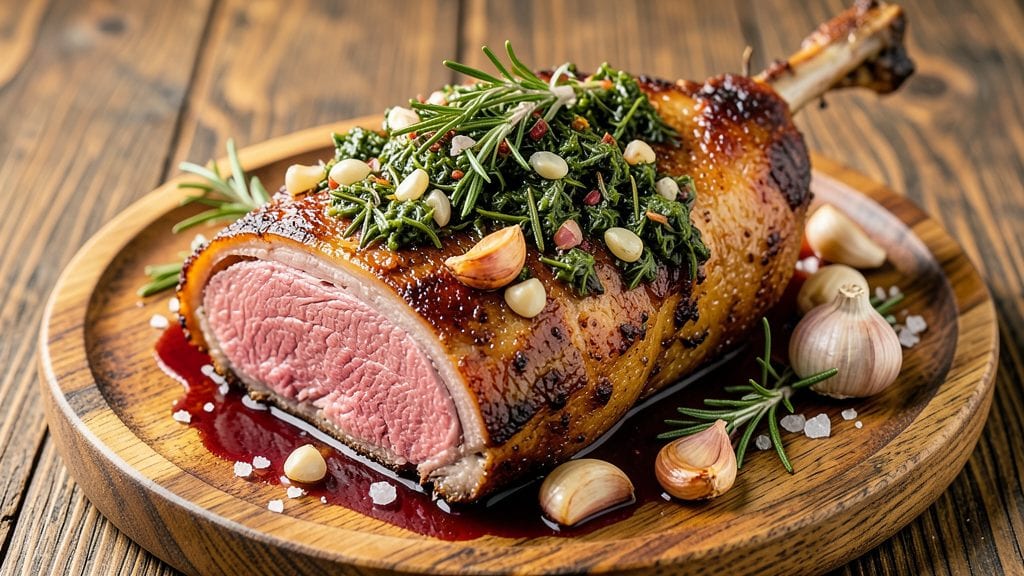
A classic roast leg of lamb delivers restaurant-quality results with its herb-crusted exterior and juicy pink center—the kind of dish that transforms any dinner into a special occasion. This recipe preserves tradition while ensuring foolproof technique, from proper brining to precise oven timing.
The secret lies in balancing high heat and careful resting to maintain moisture without overcooking.
We begin with a simple yet transformative preparation: a dry brine of kosher salt and black pepper that tenderizes the meat while developing deep flavor. Trussing secures the shape, ensuring even cooking, and a blend of fresh rosemary, thyme, and garlic creates an aromatic crust that seals in juices.
Roasting at 325°F for 20 minutes per pound guarantees a tender, pink center with a golden-brown exterior—no guesswork required.
The moment you pull it from the oven, the aroma alone will have everyone gathering at the table. After resting for 15 minutes, the lamb slices effortlessly, revealing succulent, evenly cooked meat that pairs perfectly with classic mint sauce or roasted root vegetables.
This method delivers restaurant-quality results with minimal effort, proving that tradition and technique can coexist seamlessly.
Serve with a bright mint sauce, crisp roasted potatoes, and steamed green beans for a complete meal that feels both elegant and approachable. The juicy, flavorful lamb becomes the star, while the sides complement without competing. Ready to master this timeless dish? Let’s get started.
Ingredients for classic roast leg of lamb
Juicy pink center and aromatic herb crust—just twelve ingredients transform ordinary lamb into a showstopper.
| Ingredient | Amount | Notes |
|---|---|---|
| Bone-In Leg Of Lamb 🐑 | 4 lb | French-style, fat cap intact |
| Kosher Salt 🧂 | 1 ½ tbsp | Diamond Crystal preferred |
| Freshly Ground Black Pepper 🌶️ | 1 ½ tsp | Coarsely cracked |
| Fresh Rosemary 🌿 | ½ cup | Stems removed, finely chopped |
| Fresh Thyme 🌿 | ¼ cup | Leaves only, stems discarded |
| Garlic Cloves 🧄 | 8 cloves | Peeled, smashed flat |
| Extra-Virgin Olive Oil 🫒 | 2 tbsp | High quality, fruity |
| Butcher's Twine 🧵 | 1 piece | 18-inch length for trussing |
| Unsalted Butter 🧈 | ½ cup | Cold, cubed for basting |
| Fresh Mint Leaves 🌿 | ¼ cup | For mint sauce (optional) |
| Lemon Juice 🍋 | 2 tbsp | Freshly squeezed |
| Heavy Cream 🥛 | ¼ cup | Full-fat for richness |
The lamb cut is everything here. French-style leg of lamb with the fat cap intact delivers unmatched flavor and moisture—ask your butcher to trim excess fat while preserving the natural protective layer. Source from a reputable market like Whole Foods or D'Artagnan for premium quality. The bone-in version roasts more evenly than boneless, but if you prefer convenience, boneless will work with 10 minutes extra roasting time. Pat the lamb dry before seasoning—this ensures the herb crust adheres properly and develops a crisp exterior during roasting.
No fresh rosemary? Dried rosemary at half the amount works in a pinch, though fresh is ideal for that vibrant aroma. Substituting garlic powder for fresh? Use one-third the quantity—fresh garlic's intensity can't be replicated. For the mint sauce, if you're out of mint, substitute basil with a pinch of lemon zest to mimic the brightness. The butter for basting should be cold and cubed—this prevents the lamb from steaming and losing its crust. For a dairy-free option, use olive oil instead of butter, though the flavor profile will differ slightly.
Lamb can be prepped up to 24 hours ahead—store uncovered in the fridge to dry the surface for better crust formation. The herb mixture keeps in an airtight container for 3 days in the refrigerator. Roasted lamb reheats best at 325°F for 10-15 minutes covered with foil to retain moisture. For leftovers, slice against the grain and serve with a drizzle of the mint sauce to elevate the dish. The lamb's natural juices make it perfect for sandwiches the next day—just add a smear of mustard and fresh herbs.
Why You'll Love This Recipe
- No-Chop Necessary: The bone-in leg of lamb is the star—no dicing, no mincing, just season with salt, pepper, and a handful of rosemary and thyme. Honestly, it’s the kind of recipe where you can set it and forget it (well, mostly).
- Crispy-Perfect Every Time: That bone-in magic? It renders down into flavor gold while the outside gets a caramelized crust you’ll want to eat with a spoon. Between us, the rosemary and thyme infuse the fat so deeply, even the juices taste like a fancy dinner.
- Sunday Dinner Ready: This isn’t just for holidays—it’s my go-to for game days, family dinners, or when I’m craving something that feels special but doesn’t require a three-course menu. (Yes, even on a Tuesday night.)
- Leftovers That Don’t Suck: The best part? The meat practically falls off the bone, so you’ll have days of lunches—sandwiches, salads, or just cold slices with crusty bread. Took me three tries to get the timing right, but now it’s my secret weapon for effortless leftovers.
Step-by-step instructions for classic roast leg of lamb
This method delivers a perfectly herb-crusted, juicy pink center every time—simple yet precise.
Prepare the Herb Crust and Season the Lamb
In a food processor, finely chop the 0.5 cup fresh rosemary and 0.25 cup fresh thyme until you achieve a paste-like consistency. Add the 8 cloves garlic cloves, 1.5 tbsp kosher salt, and 1.5 tsp freshly ground black pepper, then pulse until the mixture forms a coarse, aromatic paste. Transfer this to a mixing bowl and stir in 2 tbsp extra-virgin olive oil until fully combined.
Pat the 4 lb bone-in leg of lamb completely dry with paper towels, focusing on the fat cap and any moisture in the cavity. This step is critical—moisture prevents proper browning. Spread the herb mixture evenly over the entire surface of the lamb, pressing it firmly into the meat so it adheres. Use your hands to ensure full coverage, including the fat cap and any exposed bone areas. This creates the signature herb crust while locking in moisture.
Truss and Sear for Maximum Flavor
Use the 1 piece butcher's twine to tightly truss the lamb, tying the legs together and tucking the fat cap toward the meat. This shape ensures even cooking and prevents the meat from drying out. Place the lamb fat-side up on a rack in a roasting pan, allowing air to circulate underneath for even browning.
Preheat your oven to 425°F while you prepare the lamb. Heat a large oven-safe skillet over medium-high heat and add 0.25 cup unsalted butter, allowing it to melt and foam. Carefully place the lamb in the skillet and sear for 8-10 minutes on each side until the exterior develops a deep golden-brown crust. The butter will bubble vigorously—this is normal and creates incredible flavor. Transfer the seared lamb to the roasting pan.
Roast to Juicy Pink Perfection
Place the roasting pan in the preheated 425°F oven and roast for 30 minutes. After this initial high-heat phase, reduce the oven temperature to 325°F and continue roasting for an additional 1 hour to 1 hour 15 minutes, depending on your preferred doneness. For a classic juicy pink center, aim for an internal temperature of 130-135°F when measured with a meat thermometer in the thickest part of the leg (not touching bone).
Here's the thing—this temperature range ensures the lamb remains tender and pink while developing a beautiful crust. If you prefer medium doneness (140-145°F), adjust accordingly. Baste the lamb with its own juices every 20 minutes during the second hour of roasting to keep the meat moist and enhance flavor. The roasting pan will collect these precious juices, which you can use later for the mint sauce.
Rest and Prepare the Mint Sauce
Once the lamb reaches your desired internal temperature, remove it from the oven and transfer to a cutting board. Tent loosely with aluminum foil and let it rest for 20-30 minutes. This resting period is absolutely critical—it allows the juices to redistribute throughout the meat, preventing them from pooling on the cutting board. The lamb will continue to rise in temperature by 5-10°F during this time, so don't cut into it immediately.
While the lamb rests, prepare the optional mint sauce by combining the 0.25 cup fresh mint leaves, 2 tbsp lemon juice, and 0.25 cup heavy cream in a small bowl. Mash the mint leaves with a fork to release their oils, then whisk in the remaining ingredients until smooth. Taste and adjust seasoning with additional salt or lemon juice if needed. This bright, cooling sauce cuts through the richness of the lamb beautifully.
Carve and Serve with Confidence
After resting, remove the butcher's twine and carefully carve the lamb against the grain into ½-inch thick slices. The meat should be tender enough to pull apart slightly with your fingers, with a juicy pink center that's slightly springy to the touch. If the juices run clear when you pierce the thickest part with a knife, you've achieved perfection.
Serve the lamb immediately with the mint sauce drizzled generously over each portion. The herb crust should be fragrant and slightly crisp, while the interior remains succulent and pink. Pair with roasted vegetables or a simple green salad to complete this classic dish. The key to success lies in the precise timing and temperature control—trust the thermometer and let the lamb rest, and you'll achieve restaurant-quality results every time.
Pro Tips For Making Classic Roast Leg Of Lamb
- Preheat Your Pan: DESCRIPTION: I learned this the hard way—skipping this step means your lamb won’t develop that golden crust. Heat your roasting pan (with rack) in the oven for 10-15 minutes at 425°F before adding the lamb. The searing happens faster, and the meat stays juicier.
- Salt the Night Before: DESCRIPTION: Dry-brining lamb overnight (yes, even bone-in) makes a real difference. Sprinkle kosher salt generously on all sides, cover, and refrigerate. The salt penetrates deeper, and the crust forms better without drying out the exterior.
- Don’t Overcrowd the Herbs: DESCRIPTION: Too many sprigs of rosemary and thyme? They’ll steam instead of crisp. Use about 4-5 sprigs total, loosely tucked into the fat cap—not buried under the meat. Less is more; you want aroma, not soggy stems.
- Check Internal Temp Twice: DESCRIPTION: Pull the lamb when it hits 130-135°F for medium-rare (use an instant-read thermometer in the thickest part). Then, let it rest 15-20 minutes under foil—it’ll climb to 140°F. Skipping the rest means dry, stringy meat, and I’ve done it. Don’t repeat my mistake.
Flavor customization for classic roast leg of lamb
Herb Variations
Swap the classic rosemary-thyme blend for Middle Eastern flavors by mixing 1 tbsp ground cumin, 1 tbsp coriander, and 1 tsp smoked paprika with the olive oil.
For a Provençal twist, add 1 tbsp dried lavender buds (remove after roasting) and 1 tsp orange zest to the herb paste. I find lavender adds an unexpected floral depth that pairs beautifully with the lamb’s richness. 🌿
Spice Rub Options
For a Mediterranean-inspired crust, mix 1 tbsp harissa paste with the herb blend and roast at 350°F for 10 minutes longer to caramelize the spices. A Moroccan tagine-style rub uses 1 tsp each of cinnamon, ginger, and turmeric—this adds warm, earthy notes that complement the lamb’s natural sweetness.
Always toast whole spices in a dry pan for 1 minute before grinding to deepen their flavor. 🌶️
Sweet and Tangy Glazes
Brush the lamb with a honey-mustard glaze (mix 2 tbsp honey, 1 tbsp Dijon mustard, and 1 tbsp apple cider vinegar) during the last 20 minutes of roasting.
For a fig and balsamic reduction, simmer ½ cup fig jam with ¼ cup balsamic vinegar and 1 tbsp butter until thickened, then baste the lamb generously. The acidity cuts through the fat, keeping the meat juicy. 🍯
Smoky Wood Enhancements
Elevate the dish by finishing the lamb with smoked sea salt (like Maldon) and a sprinkle of crushed juniper berries before roasting. For a grilled flavor, sear the lamb in a cast-iron skillet over direct flame for 5 minutes per side before transferring to the oven.
I love using apple or cherry wood chips in a smoker for 10 minutes at the end to infuse subtle smokiness. 🔥
Global Flavor Profiles
Transform this classic into a Greek-style lamb by adding 1 tbsp dried oregano and 1 minced shallot to the herb crust, then serve with a tzatziki drizzle.
For a North African touch, mix 1 tsp ras el hanout into the herb paste and garnish with toasted almonds and preserved lemon slices. These adaptations keep the lamb’s tenderness while introducing bold, unexpected flavors. 🗺️
Dairy-Free Adaptations
Replace butter with olive oil or coconut oil for basting, and use cashew cream (blend ½ cup soaked cashews with ¼ cup water) instead of heavy cream in the mint sauce.
For a herb-infused oil, steep 1 cup olive oil with ¼ cup fresh herbs in a jar for 24 hours, then strain and use as a finishing drizzle. These swaps maintain moisture and richness without dairy. 🥥
Nutrition facts
Frequently asked questions
Why does the recipe call for a bone-in leg of lamb?
The bone-in cut stays juicier and more flavorful during roasting because the bone acts as a natural insulator. It also helps maintain the shape while cooking, giving you a more impressive presentation. If you must use boneless, add 10 minutes to the roasting time to account for the lack of moisture retention.
Can I make this ahead of time?
Prep the herb crust and season the lamb up to 24 hours ahead, then refrigerate uncovered to dry the surface. Roast just before serving, or cook it completely and refrigerate for up to 3 days. Reheat slices in a skillet with a splash of broth or water for 2-3 minutes to restore moisture.
What's the best way to tell if the lamb is done?
Use a meat thermometer to check the thickest part (avoiding bone). For a classic juicy pink center, aim for 130-135°F. If you prefer medium (140-145°F), pull it when the thermometer reads 5°F below your target—it'll rise during resting. The juices should run clear when pierced, and the meat should yield slightly to gentle pressure.
How do I fix dry lamb?
Dry lamb usually means overcooking or skipping the rest. If it happens, slice against the grain and serve immediately with a flavorful sauce (like mint or garlic). For future attempts, reduce oven temp by 25°F and roast 10 minutes longer at 300°F to finish. Always rest the meat before slicing!
What sides pair best with roast lamb?
Classic pairings include roasted root vegetables (carrots, parsnips), crispy roasted potatoes with rosemary, and steamed green beans with lemon. For a Mediterranean twist, serve with couscous and a simple cucumber-tomato salad. The herb crust on the lamb complements earthy, fresh, or citrusy flavors beautifully.