Snacks
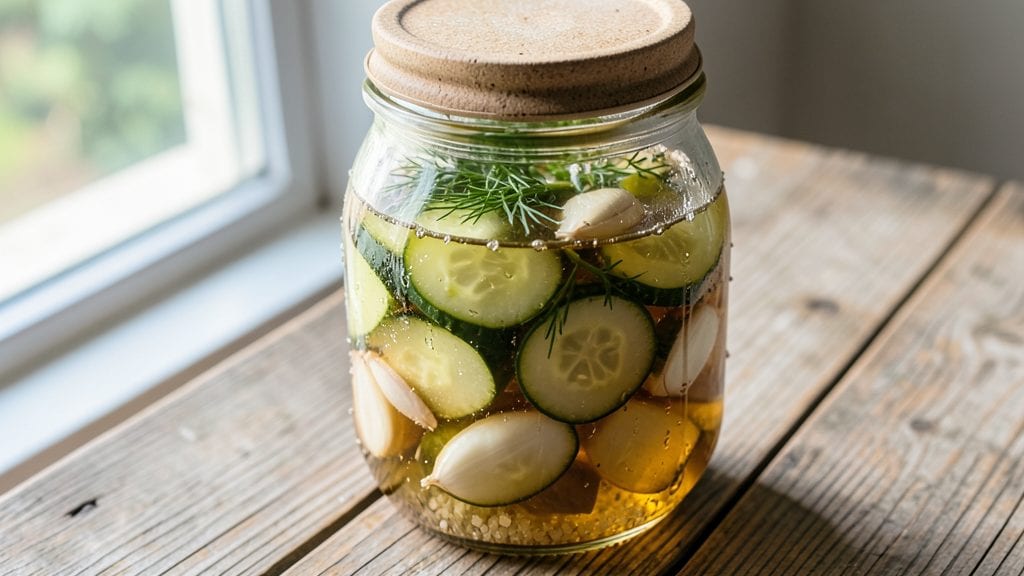
This easy refrigerated pickle recipe delivers restaurant-style crunch without canning or waiting days—just 10 minutes of prep and 24 hours of soaking. I developed this method after craving crisp, tangy pickles that didn’t require a pressure cooker or special equipment.
The secret lies in the right vinegar-to-water ratio and proper slicing technique, both of which guarantee crispness every time.
What makes this recipe truly foolproof is its simplicity: just cucumbers, vinegar, water, salt, and optional spices like garlic or dill. No fancy jars or sterilization required—just a clean container in your fridge.
The vinegar brine preserves the crunch while infusing flavor, and the soaking time allows the cucumbers to absorb just enough liquid to stay crisp rather than soggy.
By the time you’re done, you’ll have crisp, tangy pickles that taste like they’ve been sitting in a jar for weeks, not hours. These work perfectly as a snack, sandwich topping, or appetizer—no cooking required.
The best part? You can customize the flavor with your favorite spices, making each batch uniquely yours.
This method also lets you make exactly how much you need, whether it’s a small batch for a party or a large jar for meal prep. Once you try refrigerated pickles, you’ll never go back to store-bought. Let’s get started!
Ingredients for easy refrigerated pickle
Five core ingredients, plus optional spices, for tangy crunch in minutes.
| Ingredient | Amount | Notes |
|---|---|---|
| Persian Cucumbers 🥒 | 2 lb | Thinly sliced, seeds removed |
| White Vinegar 💧 | 2 cups | Distilled or apple cider |
| Water 💧 | 2 cups | Filtered preferred |
| Diamond Crystal Kosher Salt 🧂 | ½ cup | Not iodized table salt |
| Granulated Sugar 🍚 | ¼ cup | White or raw |
| Garlic Cloves 🧄 | 4 cloves | Thinly sliced, optional |
| Fresh Dill Weeds 🌿 | ¼ cup | Chopped, stems removed |
| Black Peppercorns 🌶️ | 1 tsp | Crushed, optional |
| Mustard Seeds 🌱 | 1 tsp | Whole, optional |
| Red Pepper Flakes 🔥 | ½ tsp | Optional for heat |
Cucumbers are the star—Persian or Kirby work best for their size and seedlessness. Grab 2 pounds at Trader Joe's or your local grocery store. Look for firm, unblemished cucumbers (the thicker, the better for slicing). Slice them paper-thin—a sharp knife or mandoline makes this faster. I always remove the seeds to avoid bitterness, but it's optional. For spices, Penzeys or bulk bins at natural stores have the freshest options, but regular grocery store jars work fine if they're not ancient. The dill? Fresh is worth it—dried just doesn't cut it for this recipe.
No vinegar? Apple cider or white wine vinegar works too—just adjust the flavor to taste. Short on sugar? Honey or maple syrup at half the amount keeps things balanced. Skip the garlic if you're not a fan, but trust me, it adds depth. The salt matters—Diamond Crystal kosher dissolves perfectly, but any kosher salt works. For heat, red pepper flakes are my go-to, but cayenne at half the amount works too. Want more crunch? Add 1/4 cup sliced radishes to the mix—they stay crisp all day.
This keeps for 2-3 weeks in the fridge, but honestly, it's gone in days. The brine gets stronger over time, so taste and adjust as needed. For meal prep, I double the batch and store it in mason jars—perfect for lunches or snacks. The pickles get better after 48 hours of soaking, so make it a day ahead if you can. If you're giving them as a gift, transfer to clean jars with fresh brine—people love homemade pickles, and they're always a hit at parties.
Why You'll Love This Recipe
- No-Fuss Jar Magic: I swear by this—just slice those Persian cucumbers, toss them in a jar with vinegar, salt, and sugar, then wait. That’s it. No boiling, no fussing, and zero cleanup beyond the one jar I rinse.
- Tangy Crunch Alert: Between us, this isn’t your bland grocery-store pickle. The vinegar cuts through the cucumbers just right, while the sugar keeps it from being too harsh—like a bright, crisp bite that actually makes you reach for another.
- Meal Prep MVP: I make a big batch on Sundays and keep it in the fridge. Perfect for sandwiches, charcuterie boards, or just snacking straight from the jar. Honestly, it’s my go-to for lazy nights when I don’t want to think.
- Dirt-Cheap & Long-Lasting: A few cucumbers, a splash of vinegar, and some pantry staples? This costs next to nothing and lasts weeks. Plus, the leftovers never go bad—just pull out what you need when you need it. Budget win.
Step-by-step instructions for easy refrigerated pickles
Here's how to make crisp, tangy pickles in just 10 minutes with no canning required.
Prepare the Cucumber Mixture
Begin by thoroughly washing the 2 lb Persian cucumbers under cold running water. Using a sharp knife, carefully slice them into ¼-inch thick rounds, removing any seeds or blemishes as you go. I like to work in batches—this keeps the slices even and prevents bruising. Transfer the sliced cucumbers to a large mixing bowl.
In a separate small bowl, combine the 0.5 cup Diamond Crystal kosher salt and 0.25 cup granulated sugar. Mix well to break up any salt clumps. Sprinkle this mixture evenly over the cucumber slices and toss gently with your hands until every piece is fully coated. Let the cucumbers sit for 5 minutes—this helps draw out excess moisture for crispier final pickles.
Combine the Brine Ingredients
While the cucumbers rest, measure out the 2 cups white vinegar and 2 cups water into a clean quart-sized jar or airtight container. Add the 4 cloves garlic cloves (thinly sliced) and 0.25 cup fresh dill weeds (chopped stems removed). Stir gently to distribute the aromatics.
Next, add the 1 tsp black peppercorns (crushed lightly between a rolling pin and cutting board), 1 tsp mustard seeds, and 0.5 tsp red pepper flakes (if using). Give everything another stir to ensure the spices are evenly distributed throughout the liquid. The mixture should look cloudy from the salt and sugar you'll add next.
Assemble and Press the Pickles
Carefully transfer the salted cucumber slices to the jar, packing them down gently but firmly. The goal is to create space for the brine to fully surround each slice. I use a wooden spoon to press them down—this prevents floating and ensures even pickling.
Pour the prepared brine over the cucumbers until they're completely submerged. If some slices float, weigh them down with a small plate or clean stone. Seal the jar tightly and give it a final shake to distribute the liquid. Let it sit at room temperature for 5 minutes to allow the flavors to begin mingling.
Refrigerate for Maximum Crunch
Transfer the sealed jar to the refrigerator and let it chill for at least 4 hours—overnight yields the crispiest results. The pickles will develop their signature tang and crunch as they absorb the vinegar and spices. I always check them after 4 hours to see if they've reached my preferred texture.
When ready to serve, remove the pickles from the refrigerator and let them sit at room temperature for 5 minutes before opening. This prevents condensation from diluting your brine. Store any leftovers in the refrigerator for up to 2 weeks—the flavor actually improves with time as the spices infuse further.
Pro Tips For Making Easy Refrigerated Pickle
- CHILL THE BRINE FIRST: Pour your vinegar, water, and salt into a jar or container before adding the cucumbers—this lets the salt dissolve completely and cools the liquid faster. I used to dump everything in at once, and the brine would stay warm too long, making the pickles mushy. Five minutes in the fridge before adding the cukes makes all the difference.
- SLICE CUCUMBERS THIN: Cut Persian cucumbers into ¼-inch thick slices—not too thick, not too thin. Thick slices stay crunchy but take forever to pickle, while paper-thin ones turn soggy. A sharp knife and steady hand (or a mandoline if you’re fancy) keep them uniform, so every bite has that perfect bite.
- WEIGH DOWN THE CUCUMBERS: Skip the random rocks or canning weights—use a clean dinner plate or a small glass bowl to press the cucumbers fully under the brine. Air pockets mean uneven pickling, and half-buried slices taste bland. Press them down hard at first, then check after 24 hours to adjust.
- SWEETEN THE BRINE LAST: Stir in the sugar after the salt dissolves, but before adding the cucumbers. This lets the sugar dissolve evenly without clumping, and the pickles absorb sweetness faster. I used to add it later, and the syrup would pool at the bottom—now it mixes right in.
Dietary considerations for these flavors
Gluten-Free Friendly
This recipe is naturally gluten-free since it relies solely on cucumbers, vinegar, water, salt, and sugar—no wheat or gluten-containing ingredients. However, always double-check your vinegar and spices labels, as some brands may process their products in facilities that handle gluten.
I recommend using certified gluten-free white vinegar (like Bragg) and checking individual spice jars for cross-contamination warnings. 🌱
Low-Sodium Adaptations
If you're watching your sodium intake, reduce the kosher salt to ¼ cup instead of ½ cup—this still seasons the cucumbers while cutting the salt by half. For extra flavor without added sodium, add 1 tbsp lemon juice or 1 tsp apple cider vinegar to the brine.
I also love adding ½ tsp onion powder or ½ tsp celery seed for depth without extra salt.
Diabetic-Friendly Options
To make these pickles more diabetes-friendly, reduce the sugar to 1 tbsp or swap it entirely for 1 tbsp monk fruit sweetener (like Lakanto). The vinegar and spices will still provide tangy flavor without spiking blood sugar.
For even lower carbs, use Kirby cucumbers (they have fewer seeds) or pickle spears instead of sliced rounds. 💡
Allergen Considerations
This recipe is egg-free, dairy-free, and nut-free, making it safe for most common allergies. The only potential allergen is mustard seeds (if used), which can trigger reactions in some people.
For a mustard-free version, omit them entirely—the garlic, dill, and peppercorns still deliver great flavor. Always store pickles in clean, dedicated containers to avoid cross-contamination with allergens like peanuts or shellfish.
Vegan and Pescatarian
These pickles are inherently vegan and perfect for pescatarian diets since they contain no animal products. The tangy, crisp flavor pairs beautifully with fish dishes like grilled salmon or seared scallops.
For a seafood-inspired variation, add ½ tsp smoked paprika or 1 tsp Old Bay seasoning to the brine for a coastal twist. The pickles also make a great topping for vegan wraps or salads. 🌊
Nutrition facts
Frequently asked questions
Can I use regular table salt instead of kosher salt?
You can substitute, but you'll need 1/3 cup table salt instead of 1/2 cup kosher. Table salt is denser, so use less to avoid over-salting. The key is achieving the same 1/2 cup total salt measurement—just measure carefully!
How long do these pickles actually last in the fridge?
Your pickles stay fresh for 2-3 weeks when properly stored in the fridge. The flavor actually improves after 48 hours of soaking, but they're safe to eat for the full 3-week window. For best quality, use within 2 weeks—after that, the texture may soften slightly.
Why did my pickles turn mushy instead of staying crisp?
Mushiness usually happens from two issues: either the cucumbers weren't sliced thin enough (1/4-inch max) or they weren't properly submerged in the brine. For extra crispness, slice cucumbers paper-thin and pack them tightly in the jar. Also ensure they're fully covered by the liquid—use a small plate to weigh them down if needed.
Can I make these pickles without vinegar?
Vinegar is essential for both flavor and preservation in this recipe. However, you could experiment with lemon juice (though it won't preserve as long) or pickle juice from store-bought pickles for a similar tang. For true refrigerated pickles, stick with vinegar—the acidity prevents spoilage and creates that classic tang.
What's the best way to store leftovers?
Transfer any remaining pickles to a clean, airtight container with their brine. Store in the fridge for up to 2 weeks. For meal prep, portion into small jars—this keeps them crisp longer. If the brine evaporates, add a little water to maintain coverage. The pickles will stay crunchy if properly refrigerated!