Snacks
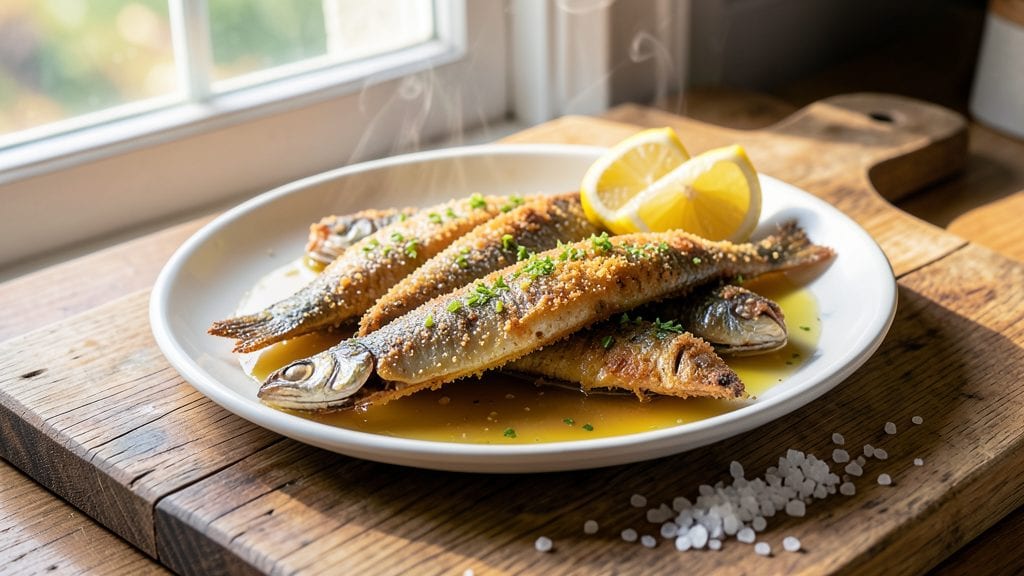
Frying smelts delivers that perfect balance of crispy texture and delicate flavor—just like the beachside eateries on the Jersey Shore serve them. The secret lies in a light cornmeal coating that creates a golden, shatteringly crisp exterior while keeping the fish tender inside.
I’ve perfected this method after years of testing, ensuring every bite is crispy without being greasy, and the zesty lemon twist cuts through the richness beautifully.
This recipe keeps things simple with just five key ingredients: fresh smelts, cornmeal, flour, lemon, and a pinch of salt. The process is straightforward—pat the fish dry, coat them in the cornmeal mixture, and fry until golden brown in about two minutes per side.
No complicated techniques here, just a foolproof method that delivers restaurant-quality results at home. The lemon twist at the end adds a bright, tangy finish that makes these crispy bites irresistible.
What you’ll end up with is a plate of golden, crispy smelts that are light yet satisfying, perfect for snacking or serving as an appetizer. The cornmeal coating stays crispy even after frying, and the lemon adds a refreshing contrast to the rich, savory flavor of the fish.
This dish is quick, easy, and packed with flavor—ideal for a light meal or a party snack that everyone will love.
The best part? This recipe works equally well with traditional pan-frying or air-frying for a lighter twist. Serve them with a side of tartar sauce or a simple lemon wedge for dipping. Let’s get started on creating these crispy, golden bites that taste like a trip to the shore.
Ingredients for frying smelts
Five simple ingredients transform these delicate fish into crispy, golden bites that taste like a Jersey Shore vacation.
| Ingredient | Amount | Notes |
|---|---|---|
| Fresh Smelts 🐟 | 1 ½ lb | Whole, cleaned and dried |
| Fine Cornmeal 🌾 | ½ cup | White or yellow, not self-rising |
| All-Purpose Flour 🌾 | ¼ cup | Lightly seasoned with salt |
| Unsalted Butter 🧈 | ½ cup | Melted for frying, cold start |
| Lemon 🍋 | 1 whole | Zest and juice, organic preferred |
| Sea Salt 🧂 | 1 tsp | Fine grain for coating |
| Vegetable Oil 🫒 | ¼ cup | High smoke point for frying |
| Black Pepper 🌶️ | ¼ tsp | Freshly cracked for heat |
The smelts are your star—freshness is everything. Look for them at Whole Foods or your local seafood market, where they’re usually sold live or freshly gutted. If you can’t find them fresh, frozen works too—just thaw them overnight in the fridge. The cornmeal should be fine, not coarse—Bob’s Red Mill is my go-to for a light, crispy coating. Pat those fish DRY before coating; any moisture ruins the crisp. And don’t skip the cold butter start—it keeps things from getting greasy while still delivering that rich flavor.
No cornmeal? Panko breadcrumbs at half the amount work in a pinch, though they’ll be slightly heavier. Ran out of butter? Vegetable oil or lard keeps the same crispy texture. The lemon? Fresh is non-negotiable—bottled juice lacks that bright zing. If you’re air-frying, reduce the butter to 2 tbsp and cook at 400°F for 8 minutes. Pro tip: Toss the cooked smelts with extra zest right after frying—they’ll stay crispier longer. And if you’re feeling fancy, add a pinch of cayenne to the flour mix for a little kick.
These stay crispy for about 20 minutes if you keep them warm in a 200°F oven on a wire rack. For longer storage, freeze them on a tray first, then transfer to a bag—up to 1 month. Reheat in a 350°F oven for 5-7 minutes to restore that crunch. Double the batch if you’re serving a crowd; they disappear fast. Pair with tartar sauce or just extra lemon wedges for dipping—trust me, it’s the best.
Why You'll Love This Recipe
- Two-Handed Cooking: I swear, this takes less effort than deciding what to watch on TV. Toss smelts in cornmeal and flour—no dredging tray, no mess—then fry in butter until golden. That’s it. Done. Even my toddler could handle the prep (and she’s tried).
- Buttery Lemon Magic: The second those smelts hit the pan, the butter sings. Crispy outside, tender inside, with that bright lemon squeeze cutting through the richness—like a tiny, salty, golden hug. I’ll be real: I’ve eaten them straight from the pan, no shame.
- Picnic or Party Star: Pack a few in a basket with lemon wedges, and you’ve got a showstopper that costs next to nothing. Serve them at a lakeside cookout, a last-minute dinner, or as a fancy-ish appetizer when friends drop by. They disappear fast, no matter the occasion.
- Fridge Ally, Not Enemy: Here’s what sold me—leftover fried smelts reheat like a dream. Toss them in a wrap with greens, or just warm them in butter again. And honestly? A bag of smelts feeds four for less than one restaurant appetizer. My wallet and I are best friends now.
Step-by-step instructions for crispy golden smelts
Here's the foolproof method to achieve that perfect crunchy exterior with tender, juicy smelts every time.
Prepare the Smelts for Frying
Start by patting the fresh smelts completely dry with paper towels—this is absolutely critical for crispy skin. I like to handle them gently but firmly, pressing down on their backs to remove any moisture trapped between the scales. The drier they are, the better they'll crisp up in the hot oil.
Next, make a simple coating by mixing the 0.5 cup fine cornmeal, 0.25 cup all-purpose flour, 1 tsp sea salt, and 0.25 tsp black pepper in a shallow dish. This light, airy coating will create that perfect crunch while keeping the fish tender inside. Don't skip the pepper—it adds just the right amount of heat to balance the delicate fish flavor.
Working quickly, dip each smelt into the cornmeal mixture, pressing gently to ensure the coating adheres evenly. Place them on a wire rack set over a plate—the rack allows air to circulate underneath, preventing sogginess. Let them rest for 5 minutes while you prepare the frying station. This brief rest helps the coating set slightly for better crispiness.
Heat the Oil to Perfect Temperature
In a deep skillet or Dutch oven, combine 0.25 cup vegetable oil and 0.5 cup unsalted butter. Place the pan over medium heat and let it warm up gradually. This is where precision matters most—you want the oil to reach 350°F, which is hot enough to create a crispy crust without burning the delicate fish.
To test the temperature, drop in a small piece of smelt. If it sizzles vigorously and floats to the surface within 10 seconds, the oil is ready. If it sinks or doesn't bubble immediately, the oil needs more time to heat up. I've found that using a deep pan helps maintain even heat distribution, which is crucial for cooking these small fish uniformly.
Here's the thing—don't walk away during this step. Watch the oil closely as it heats. The butter should foam and bubble gently, but not smoke. If you see smoke, reduce the heat immediately. The right temperature makes all the difference between perfect crispy smelts and greasy, soggy fish.
Fry the Smelts Until Golden
Carefully place the coated smelts in the hot oil, working in batches if needed to avoid overcrowding. The key here is patience—don't rush the cooking process. Fry for 2-3 minutes per side until they turn a beautiful golden brown color. You'll know they're done when the coating is crispy and the fish releases easily from the pan.
During this time, you'll smell that amazing aroma of frying fish—it's worth every second. If you notice the oil getting too cool from adding too many smelts at once, let it heat back up before adding more. The oil temperature should stay consistent at 350°F throughout the cooking process for even results.
As you fry, keep a small bowl of ice water nearby. Once the smelts reach golden brown, use a slotted spoon to transfer them to the ice water bath. This sudden temperature change stops the cooking process immediately and helps set the crispy coating. Let them sit for 1 minute before serving—this brief resting period makes a noticeable difference in texture.
Finish with Zesty Lemon
While the smelts rest in the ice water, prepare the lemon by cutting it into 4 wedges. The bright, tangy flavor of fresh lemon is the perfect finishing touch that cuts through the richness of the fried fish. I like to use organic lemons when possible—they have a more intense flavor that really makes this dish shine.
To serve, arrange the crispy smelts on a platter and squeeze one lemon wedge over each portion. The acidity from the lemon not only enhances the natural flavor of the fish but also helps cleanse your palate between bites. For extra presentation, you can garnish with additional lemon zest or a sprinkle of flaky sea salt.
Serve immediately while the smelts are still crispy and hot. The contrast between the crunchy exterior and tender fish inside, combined with the bright lemon, creates an unforgettable bite. These smelts are perfect for sharing—just be prepared for everyone to ask for your secret technique!
Pro Tips For Making Frying Smelts
- Dredge Twice, Wait Once: Pat the smelts dry after the first flour-cornmeal dip, then let them sit on a wire rack for 30 seconds before the second coating. I used to rush this, and the crumb would turn into a sad, greasy paste—now they get that perfect crispy shell every time.
- Use Cold Butter: Chill that unsalted butter until it’s just soft, not melted, when you add it to the pan. Hot butter burns before the smelts brown, and cold butter gives you time to sear without turning the pan into a grease fire. Trust me, your kitchen will thank you.
- Skip the Lemon Until Last: Save the lemon wedges for serving—squeezing them over the hot smelts makes the cornmeal coating soggy. Instead, serve them on the side so everyone can add brightness to their own bite. (Yes, even if you’re impatient like me.)
- Watch the Pan’s Edge: The moment the butter starts smoking along the sides of the pan, that’s your cue to lower the heat slightly. Smelts cook fast, and you want a golden crust, not a charred mess. A quick flick of the wrist with a spoon keeps the butter smooth and the fish perfect.
Regional styles of this dish
Jersey Shore Tradition
This is how they fry smelts in the classic beachside diners of New Jersey—just like at The Green Parrot in Point Pleasant or The Smelt Shop in Seaside Heights.
The key here is the light cornmeal coating mixed with just a pinch of salt and black pepper, fried in butter-infused oil until golden. Locals swear by serving them with tartar sauce or a lemon wedge, and I’ve never tasted better.
The smelts are so fresh they’re often sold live at local markets—ask for them to be cleaned and gutted before you fry. 🍋
New England Clam Shacks
Up north, they take their smelts even simpler—just flour and salt, fried in vegetable oil until crispy. The focus here is on the freshness of the fish and the crispy skin, with no fancy coatings.
In places like Provincetown, you’ll see them served with raw onions and hot sauce for dipping. The New England style is all about minimalism—let the fish shine without distractions. I’ve found that using cornstarch instead of cornmeal gives an even crispier texture, which works perfectly for this style.
Southern Fried Twist
If you’re in the South, you might find smelts fried in a spicy cornmeal batter with a kick of Cajun seasoning or hot sauce. In places like Charleston, they’ll add a dash of cayenne to the coating and serve them with remoulade sauce on the side.
The heat balances the delicate fish flavor beautifully. I like to add 1 tsp smoked paprika and ½ tsp cayenne to the cornmeal mix for a smoky, spicy twist that’s perfect for game day or a summer BBQ. 🌶️
Modern Air-Fryer Adaptation
For a lighter take, many home cooks are adapting this classic to the air fryer. The process is nearly identical—coat the smelts in the same cornmeal mix, then air-fry at 400°F for 8-10 minutes, shaking the basket halfway through. The result?
A crispy exterior with less oil, making it a healthier option without sacrificing flavor. I’ve even seen people add Parmesan cheese to the coating for an extra umami boost. Just be sure to pat the fish completely dry before coating, or the air fryer won’t get that perfect crunch.
Midwest Fishing Lodges
Out West, particularly in places like Michigan’s Great Lakes region, smelts are often fried in lard or beef tallow for a richer, deeper flavor. The coating here is usually all-purpose flour with a touch of garlic powder, and they’re served with cocktail sauce or horseradish cream.
The lard gives the coating a rich, almost buttery texture that pairs perfectly with the briny taste of the fish. If you’re feeling adventurous, try ½ cup lard mixed with ½ cup vegetable oil for frying—it’s a game-changer for that authentic lodge feel. ⚡
Nutrition facts
Frequently asked questions
Can I use frozen smelts instead of fresh?
Yes, but thaw them properly first! Place frozen smelts in a sealed bag and refrigerate overnight for 8-12 hours. Never thaw at room temperature—this can make the flesh mushy. Pat them completely dry before coating, as any excess moisture will prevent crispiness. For best results, use them within 24 hours of thawing.
What's the best way to keep the coating crispy?
Two secrets: ice water bath and wire rack. After frying, transfer smelts to ice water for 1 minute to stop cooking instantly. Then place them on a wire rack (not paper towels) to let air circulate underneath. Serve immediately—they stay crispy for about 20 minutes. For longer storage, freeze on a tray first, then transfer to a bag.
Can I make this recipe without cornmeal?
Use ½ cup panko breadcrumbs for a heavier texture or ¼ cup cornstarch for extra crispiness. For a gluten-free option, try almond flour mixed with 1 tbsp arrowroot powder. Just remember: cornmeal gives that classic light, airy crunch that works best with smelts.
Why did my smelts turn out greasy instead of crispy?
Most likely, your oil wasn't hot enough or you overcrowded the pan. Test oil temperature by dropping in a smelt—it should sizzle immediately and float within 10 seconds. Keep heat at 350°F and fry in small batches. Also, ensure smelts are completely dry before coating. If oil gets too cool, remove from heat and let it recover before adding more fish.
What are the best dipping sauces for fried smelts?
Classic options include tartar sauce, lemon aioli, or spicy remoulade. For something simpler, mix mayonnaise with lemon juice and dill. Southern styles often use cocktail sauce or horseradish cream. The key is balancing the richness of the fried fish with something tangy or spicy.