
Side Dishes
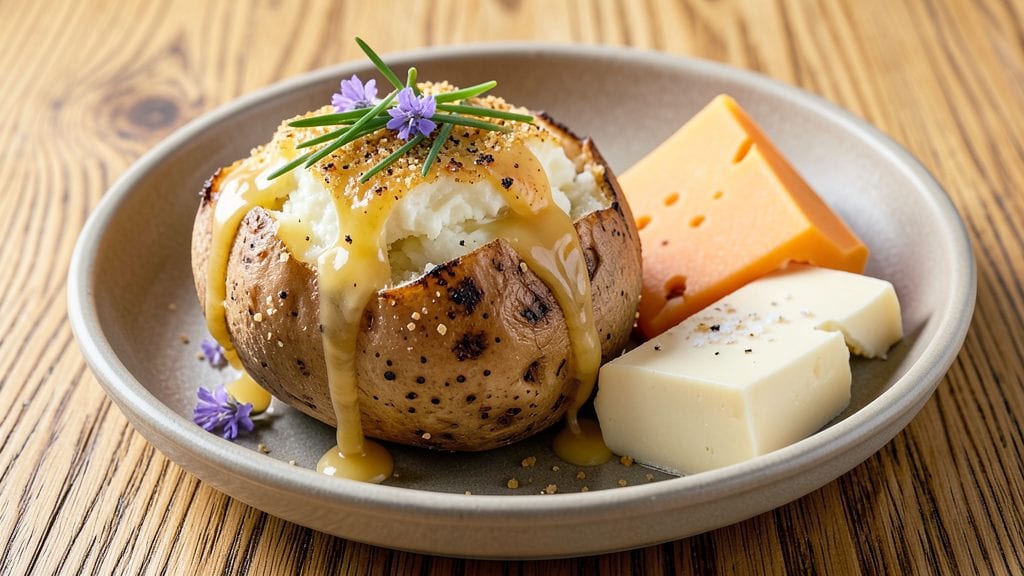
Gordon Ramsay’s baked potato recipe transforms a simple spud into a restaurant-worthy centerpiece with a crispy cornmeal crust and that signature gooey cheese pull. I’ve spent years perfecting this technique—starting with the right potatoes and ending with a knife sliding through perfectly fluffy, buttery layers.
The secret isn’t just the high-heat baking; it’s the science of piercing, seasoning, and timing that Ramsay swears by.
This isn’t your average side dish. We’re talking golden, crackling crusts that hold their shape while the inside stays pillowy and rich. The cornmeal coating adds texture without overpowering the potato’s natural flavor, and the butter-salt rub ensures every bite is packed with savory depth.
Even the cheese—whether sharp cheddar or creamy gouda—melts into that irresistible stringy pull that makes this dish unforgettable.
What makes this recipe stand out is the precision: baking at 425°F until the crust is crisp, then letting the potatoes rest so the steam redistributes for that cloud-like interior.
Top with sour cream, chives, and bacon if you like, but the star is always the potato itself—perfectly cooked, every time. This is the kind of dish that elevates a simple meal into something special, and it’s easier than you think.
Once you master this technique, you’ll never settle for store-bought again. The key is patience—letting the potatoes bake undisturbed and resisting the urge to cut into them too soon. Trust the process, and you’ll have a baked potato that tastes like it came straight from Ramsay’s own kitchen.
Let’s get started with the exact steps that deliver that crispy, gooey perfection.
Ingredients for gordon ramsay baked potato
Four perfect potatoes. One crispy crust. All the gooey cheese pull you dream of.
| Ingredient | Amount | Notes |
|---|---|---|
| Russet Potatoes 🥔 | 4 whole | Large, uniform size preferred |
| Cornmeal 🌽 | ½ cup | Fine grind for smooth coating |
| Unsalted Butter 🧈 | ¼ cup | Cold, cubed for even coating |
| Kosher Salt 🧂 | 2 tbsp | Coarse grain preferred |
| Sharp Cheddar Cheese 🧀 | 2 cups | Block cheese, freshly grated |
| Creamy Gouda Cheese 🧀 | 1 cup | Block cheese, freshly grated |
| Sour Cream 🥛 | ½ cup | Full-fat for best texture |
| Chopped Chives 🌿 | ¼ cup | Fresh, for garnish |
| Cooked Bacon 🥓 | ½ cup | Crumbled, optional topping |
| Garlic Powder 🧄 | ½ tsp | For extra flavor depth |
| Black Pepper 🌶️ | ½ tsp | Freshly ground preferred |
| Olive Oil 🫒 | 1 tbsp | For brushing potatoes |
The potatoes are non-negotiable. Russets are your best bet—they’re starchy, hold their shape, and bake up fluffy. Skip the waxy Yukon Golds here. I grab mine from Whole Foods when they’re on sale, but any grocery store’s Russets work fine. Look for ones that feel heavy for their size—that’s how you know they’re packed with starch. If you can’t find Russets, Idaho potatoes are a solid backup. Just don’t substitute sweet potatoes or reds—they’ll turn mushy.
No cornmeal? All-purpose flour or panko adds texture in a pinch, but cornmeal gives that signature crunch. The butter needs to be cold—take it out of the fridge 10 minutes before coating. For cheese, block cheddar and Gouda melt like a dream, but pre-shredded gets clumpy. Freshly grate it yourself (or buy pre-grated at Trader Joe’s—it’s the only store that does it right). The bacon can be any kind, but thick-cut, smoked holds up best when crumbled. Want extra flavor? Add a dash of smoked paprika to the cornmeal mix.
These potatoes reheat beautifully—wrap in foil and bake at 350°F for 15 minutes. Store leftovers in the fridge for 3 days, but honestly, they’re best fresh. For make-ahead prep, bake them ahead, then reheat before serving. The cheese pull gets even better after resting. I always bake mine in a dark metal pan—it browns the crust faster. If you’re serving a crowd, double the recipe and use a large roasting pan.
Why You'll Love This Recipe
- No-Fuss Crispy Edge: I swear by the cornmeal trick—just toss those Russets in a bag with it, and the oven does the rest. No peeling, no fuss, just that buttery, crackling crust I can’t resist.
- Cheddar Magic: That sharp cheddar melts into a gooey blanket while the outside stays crisp—like a hug in food form. Honestly, I’ll take this over any sad microwave potato any day.
- Game for Any Gathering: Double the batch, halve the effort. These reheat perfectly for picnics, tailgates, or when my college kid calls for “real food.” (Yes, even on a Tuesday night.)
- Budget Win: Russets are cheap, butter is cheap, and one bag of cheddar feeds the whole family. I made this for $3 per serving and still felt fancy—now that’s a meal I can get behind.
Step-by-step instructions for gordon Ramsay's baked potato recipe
Here's how to achieve that perfect crispy crust and gooey cheese pull every time.
Prep and Season the Potatoes for Maximum Crisp
Preheat your oven to 425°F for maximum crispiness. Scrub the 4 whole Russet Potatoes thoroughly under cold water to remove any dirt, but don't peel them—the skin adds texture and flavor. Pierce each potato all over with a fork, about 8-10 times per potato, to allow steam to escape and prevent bursting.
Place the potatoes on a baking sheet and brush them lightly with the 1 tablespoon olive oil. Sprinkle evenly with the 2 tablespoons kosher salt—this helps draw out moisture for an extra-crispy crust. Toss gently to coat, then flip to distribute the oil and salt evenly on all sides. The potatoes should look glistening but not drenched.
Create the Crispy Cornmeal Crust
In a small bowl, combine the 0.5 cup cornmeal with the 0.5 teaspoon garlic powder and 0.5 teaspoon black pepper. Mix well until evenly distributed. This blend will create that signature crispy crust that sets this recipe apart.
While the potatoes are still warm from preheating, sprinkle the cornmeal mixture evenly over each potato, pressing it gently into the skin. The heat from the potatoes will help the cornmeal adhere better. For extra crispiness, I like to press down firmly around the top of each potato where the crust will form. This step is what gives you that satisfying crunch when you cut into them.
Bake Until Perfectly Crisp and Tender
Bake the potatoes for 60-75 minutes, flipping them halfway through at the 30-minute mark. You'll know they're done when you can easily pierce them with a fork and the skin is deep golden brown and crispy all over. The internal temperature should reach 205-210°F when measured with an instant-read thermometer.
Here's the thing—don't be tempted to open the oven door before the 30-minute mark. The sudden temperature drop can cause the potatoes to steam instead of crisp up. If your oven runs hot, you might need to reduce the time slightly, but always check for doneness with both the fork test and visual cues of crispy skin.
Prepare the Cheese Filling While Potatoes Rest
While the potatoes are baking, melt the 0.25 cup unsalted butter in a small saucepan over low heat. Once melted, remove from heat and stir in the 2 cups sharp cheddar cheese and 1 cup creamy gouda cheese until completely smooth. The mixture should be like a thick, gooey paste—this is what creates that perfect cheese pull when you cut into your potato.
In a separate bowl, mix together the 0.5 cup sour cream with the 0.5 cup cooked bacon and 0.25 cup chopped chives. This adds richness and a nice contrast to the sharp cheeses. Keep both mixtures warm until ready to serve—cold fillings make for a less enjoyable eating experience.
Assemble and Serve with Cheese Pull Perfection
Carefully slice open each potato lengthwise, creating a deep pocket for the filling. I like to use a sharp chef's knife and cut straight down the middle, then gently pry the halves apart. The potatoes should be hot and the crust should still be crispy when you do this.
Spoon the melted cheese mixture into each potato half, pressing down gently to help it settle. Then top with the sour cream mixture, creating a beautiful contrast of colors and textures. The cheese should be hot enough to create that signature "cheese pull" when you cut in—this is what makes these potatoes truly special. Serve immediately while everything is hot and the crust is at its crispest!
Pro Tips For Making Gordon Ramsay Baked Potato
- PIERCE THE POTATOES FIRST: I learned this the hard way—skipping the fork stabbing leads to uneven baking and sad, undercooked centers. Use a fork to pierce each Russet in 4-5 spots, then microwave for 5 minutes before baking. This guarantees they’ll finish fluffy inside while the skin crisps.
- SALT THE CORNMEAL MIX: Don’t just sprinkle cornmeal on the foil—toss it with a pinch of kosher salt first. The salt dissolves into the butter later, seasoning the crust evenly. I used to skip this, and the flavor always felt flat until I tried it.
- WATCH THE BUTTER TEMPERATURE: Melt the butter until it’s just warm enough to coat your fingers, not hot. If it’s too hot, the cheddar will melt into a greasy mess instead of forming a creamy, stretchy blanket. Let it cool for 2 minutes after melting—trust me, it makes a real difference.
- REST THE POTATOES BEFORE CUTTING: I know, you’re eager to load up that plate, but resist. Let the baked potatoes sit for 5-10 minutes under foil after coming out of the oven. This lets the steam redistribute, so the insides stay creamy when you slice them open. Cutting too soon turns them into a mushy disaster.
Pro cooking tips for great gordon ramsay baked potato
Potato Piercing Science
Piercing potatoes isn't just about preventing explosions—it's about steam control. When you pierce them 8-10 times with a fork, you create channels for steam to escape during baking. This prevents the potato from turning mushy inside while allowing that crispy crust to form.
I learned this the hard way when a potato burst all over my oven rack (and my kitchen floor). Use a fork with sharp tines—they pierce deeper than a knife, creating better steam pathways. 🥔
Oven Temperature Secrets
Baking at 425°F is non-negotiable for that signature Ramsay crust, but here's the pro move: Don't open the oven door until at least 30 minutes in. Every time you peek, you lose 10-15°F of heat, turning your crispy dream into a steamed disappointment.
I set a timer and resist the urge—trust me, the wait is worth it. For even crispier results, place your baking sheet on the middle rack where heat circulates most evenly. 🌡️
Cornmeal Crust Tricks
The secret to that perfect cornmeal crust lies in timing and pressure. While the potatoes are still warm from preheating (not hot), sprinkle the cornmeal mixture and press it firmly into the skin—especially around the top where the crust forms. The residual heat helps the cornmeal adhere better.
For extra crunch, I like to lightly toast the cornmeal in a dry pan for 1-2 minutes before mixing with spices. This adds a nutty depth that takes the crust to the next level. 🌽
Cheese Pull Mastery
That signature gooey cheese pull comes from two key factors: using block cheese (not pre-shredded) and keeping everything hot. When you melt the butter with the cheese, it should be smooth like a thick paste—not grainy.
For the ultimate pull, I like to add 1 tablespoon of heavy cream to the cheese mixture before serving. This makes the cheese even more stretchy. Serve immediately while the potato is piping hot—cold cheese doesn't pull nearly as well. 🧀
Resting Technique
This is where most home cooks fail. After baking, let the potatoes rest for 5-10 minutes before cutting. This allows the steam inside to redistribute, creating that cloud-like interior texture Ramsay is famous for.
I place them in a wire cooling rack (not directly on the counter) to prevent soggy bottoms. If you cut too soon, you'll end up with a gummy mess instead of that perfect fluffy center. Patience here makes all the difference. ⏳
Knife Skills Matter
When it's time to cut, use a sharp chef's knife and slice straight down the middle with one smooth motion. Then gently pry the halves apart—don't twist or you'll crush the interior.
For extra presentation, I like to score the top of the potato in a crosshatch pattern before baking. This creates a prettier opening when you slice it open, making it look even more restaurant-worthy. A dull knife will tear the potato—always keep your blades sharp! 🔪
Nutrition facts
Frequently asked questions
Why do I need to pierce the potatoes before baking?
Piercing creates steam escape channels so your potatoes bake evenly without bursting. The 8-10 fork holes per potato prevent pressure buildup that causes explosions while helping the crust crisp properly. Skip this step and risk a messy oven floor!
Can I make these potatoes ahead of time?
Bake them completely, then cool and refrigerate for up to 3 days. Reheat at 350°F for 15-20 minutes wrapped in foil. The crust stays crispy and the interior reheats beautifully. Just add fresh toppings before serving.
What's the best way to get extra crispy skin?
Use 425°F heat and place potatoes on the middle rack where heat circulates best. Brush with olive oil after piercing, then press cornmeal firmly into the skin. For maximum crunch, toast the cornmeal in a dry pan for 1-2 minutes before coating.
Why does my cheese not pull like in the recipe?
Pre-shredded cheese contains anti-caking agents that prevent proper melting. Always use block cheese freshly grated. Keep everything hot—serve immediately after baking. For extra pull, add 1 tablespoon heavy cream to the melted cheese mixture before serving.
Can I use sweet potatoes instead of Russets?
Not for this recipe! Russets are starchy and hold their shape perfectly, while sweet potatoes turn mushy. If you must use a different potato, try Idaho potatoes as a backup. The texture and flavor will differ significantly from the classic Ramsay version.