
Main Courses
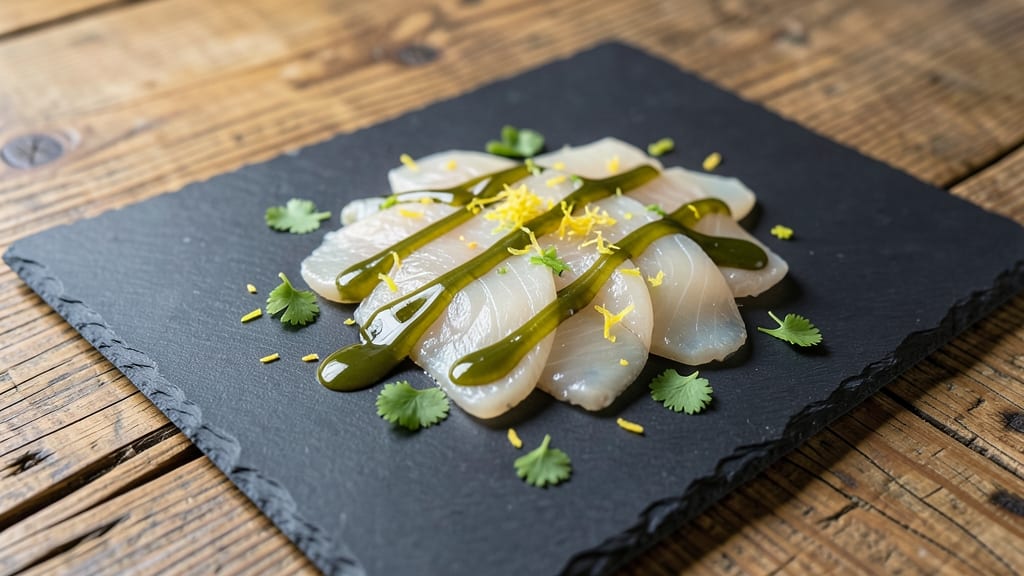
This halibut crudo recipe transforms ultra-fresh halibut into a delicate, citrus-kissed masterpiece that rivals any high-end seafood bar. The key lies in precise slicing, proper handling, and balancing bright flavors with delicate textures—techniques I perfected during my coastal foraging adventures.
Every element must work together to create a dish that feels both elegant and approachable, even for home cooks.
What sets this recipe apart is the focus on freshness and texture—halibut so tender it melts in your mouth, paired with zesty citrus and aromatic herbs. The marinade infuses just enough flavor without overpowering the natural sweetness of the fish, while the garnishes add visual appeal and contrast.
This isn't just a raw fish dish; it's a celebration of coastal ingredients done right.
By following these steps, you'll achieve a dish that's restaurant-quality yet simple to prepare at home. The halibut should be flaky and delicate, the citrus bright and refreshing, and the presentation polished enough to impress even the most discerning guests.
Whether you're serving it as an appetizer or a light main course, this crudo delivers both sophistication and satisfaction.
Pair it with a crisp white wine or sparkling water with lemon to elevate the experience further. The beauty of this recipe lies in its ability to highlight the natural qualities of the fish while adding just enough complexity to make it unforgettable.
Let's get started on creating your own seafood delight.
Ingredients for halibut crudo
Freshness is everything—just five ingredients transform delicate halibut into a restaurant-worthy crudo masterpiece.
| Ingredient | Amount | Notes |
|---|---|---|
| Sustainably Sourced Halibut Fillet 🐟 | 1 ½ lb | Sashimi-grade, skinless, center-cut preferred |
| Extra-Virgin Olive Oil 🫒 | ½ cup | High-quality, fruity, cold-pressed |
| Fresh Lemon Juice 🍋 | ¼ cup | Strained, no pulp |
| Fresh Lime Juice 🍋 | ⅛ cup | Strained, no seeds |
| Fresh Cilantro Leaves 🌿 | ½ cup | Finely chopped, stems removed |
| Fresh Mint Leaves 🌿 | ¼ cup | Finely chopped, tender stems included |
| Avocado Oil Mayonnaise 🥑 | ¼ cup | Homemade or high-quality store-bought |
| Shallots 🧅 | 2 whole | Thinly sliced, finely minced |
| Garlic Cloves 🧄 | 4 cloves | Finely minced, fresh |
| Flaky Sea Salt 🧂 | 1 tsp | Diamond Crystal preferred |
| Freshly Cracked Black Pepper 🌶️ | ½ tsp | Coarsely ground |
| Microgreens 🌱 | ½ cup | For garnish, any variety |
| Edible Flowers 🌸 | ¼ cup | Optional, for presentation |
| Lemon Zest 🍋 | 1 tbsp | Finely grated, bright yellow |
| Lime Zest 🍋 | 1 tsp | Finely grated, bright green |
The halibut is non-negotiable here. Sashimi-grade is a must—ask your fishmonger for the freshest cut, ideally caught within 48 hours. Whole Foods or local seafood markets usually carry it, but if you're buying frozen, thaw it overnight in the fridge, never under running water. The fillet should be opaque pink with no brown edges—that's your quality indicator. For texture, look for center-cut pieces, which are firmer and less likely to tear when slicing. If you're feeling adventurous, forage for sea urchin or scallops to mix in for extra umami, but halibut alone delivers incredible flavor.
No fresh herbs? Dried cilantro or mint at half the amount works in a pinch, but the flavor won't be the same. The citrus juices can be swapped for key lime juice or grapefruit juice for a tangier twist, but stick to fresh—bottled citrus juice lacks brightness. For the mayo, avocado oil mayo is key—it's neutral and won't overpower the delicate flavors. If you're avoiding mayo, whipped avocado or olive oil emulsion works beautifully. The shallots and garlic should be finely minced, almost paste-like—this ensures even distribution without overpowering. And trust me, Diamond Crystal sea salt flakes on top add a luxurious finish that table salt can't match.
This dish is best served immediately after assembly—halibut starts to oxidize within 15 minutes of slicing. If you need to prep ahead, marinate the fish in citrus juice for up to 2 hours (no longer, or it'll get mushy), then slice just before serving. Store any unused halibut in an airtight container with a paper towel, covered in plastic wrap, for up to 2 days. The garnishes? Keep them separate until serving—microgreens and edible flowers add visual drama but wilt fast. For leftovers (if there are any), sear the halibut immediately—it's not meant to be eaten raw more than once.
Why You'll Love This Recipe
- No-Fuss Freshness: I swear by this recipe when I’m too tired to cook but still crave something special. Just slice the halibut thin, toss it with olive oil and lime, and let it sit—no heat, no fuss. The fish stays tender, the citrus brightens it up instantly, and honestly? That’s all you need.
- Bright & Zesty Magic: Between the lemon and lime, this crudo is like a burst of sunshine on a plate. The halibut’s natural sweetness pairs perfectly with the acidity, while the cilantro adds that fresh, herby kick. It’s the kind of flavor that makes you reach for seconds without even thinking.
- Weeknight or Party Ready: Between us, this is my go-to for when friends drop by unannounced. Serve it as a light appetizer with crusty bread, or pile it high on toast for a fancy-but-easy brunch. No one will guess it took me less than 10 minutes to prep—just a sharp knife and a little patience.
- Leftovers? No Problem: Here’s what sold me—this dish actually improves the next day. The flavors meld even better, and the texture stays perfect if you store it right (in a sealed container, chilled). I’ve taken it to potlucks, packed it for lunch, and even fed my picky teen with it—no complaints.
Step-by-step instructions for halibut crudo
This ultra-fresh preparation delivers melt-in-your-mouth texture with vibrant citrus brightness every time.
Prepare the Halibut for Perfect Texture
Begin by carefully examining the 1.5 lb sustainably sourced halibut fillet for any pin bones using tweezers. Pat the fillet completely dry with paper towels—this is critical for proper slicing and preventing excess moisture in the final dish. I like to work with the fish chilled but not frozen, as this makes it easier to handle while maintaining that pristine texture.
Using a sharp, long-bladed knife, slice the fillet crosswise into ¼-inch thick pieces. Work quickly and confidently—halibut is delicate and should be sliced against the grain for optimal tenderness. Arrange the slices on a chilled plate and cover with plastic wrap, pressing it directly against the fish to maintain shape. Let them rest for 10 minutes in the refrigerator while you prepare the citrus marinade.
Create the Citrus Marinade
In a small mixing bowl, combine the 0.25 cup fresh lemon juice, 0.125 cup fresh lime juice, 1 tbsp lemon zest, and 1 tsp lime zest. Add the 0.5 cup extra-virgin olive oil and whisk vigorously until fully emulsified. The citrus oils should create a beautiful, cloudy appearance—this indicates proper emulsification and will prevent separation when mixed with the fish.
Next, add the finely minced 2 whole shallots and 4 cloves garlic to the marinade. Stir well to distribute the aromatics evenly. Taste the mixture and adjust seasoning with 1 tsp flaky sea salt and 0.5 tsp freshly cracked black pepper. The marinade should be bright, tangy, and perfectly balanced—this is the foundation of your dish's flavor profile.
Assemble the Crudo with Precision
Remove the chilled halibut slices from the refrigerator and arrange them on a large serving platter or individual plates. Using a small offset spatula, gently spread ¼ cup of the citrus marinade evenly over each slice. The fish should glisten slightly but not appear wet—this indicates proper application without over-saturation.
In a separate small bowl, combine the 0.5 cup finely chopped fresh cilantro leaves, 0.25 cup finely chopped fresh mint leaves, and 0.25 cup avocado oil mayonnaise. Mix gently to create a vibrant green herb sauce. Spoon this mixture around the halibut slices, creating an artistic presentation while ensuring each piece gets coated with the herbed mayonnaise.
Garnish and Serve Immediately
Working quickly, arrange the 0.5 cup microgreens and 0.25 cup edible flowers around the halibut slices, creating an elegant border that enhances the dish's visual appeal. The microgreens add a delicate crunch while the edible flowers provide a pop of color and subtle floral notes that complement the citrus profile.
Serve the halibut crudo immediately on a bed of ice or chilled glass plates to maintain the proper temperature. Each serving should feature 4 halibut slices arranged artfully with the citrus marinade glistening on top and the herbed mayonnaise creating beautiful swirls around the base. The presentation should be as stunning as the flavors—this is a dish where visual appeal matters just as much as taste.
Final Flavor Adjustments (Optional)
After serving, taste one piece and adjust seasoning if needed. The natural sweetness of the halibut should harmonize perfectly with the bright citrus and fresh herbs. If the dish needs more acidity, add a few drops of additional fresh lemon juice or lime juice. For extra richness, drizzle with more of the citrus marinade. Remember, this dish should be served immediately—waiting even 10 minutes can compromise the delicate texture and vibrant flavors.
The perfect halibut crudo should offer a delicate balance: the fish should be tender yet firm, the citrus bright yet not overpowering, and the herbs fresh and vibrant. Each bite should deliver that melt-in-your-mouth texture with a burst of citrus and herbal complexity that makes this dish truly special.
Pro Tips For Making Halibut Crudo
- Cut Thin, Not Thick: Halibut crudo needs to be paper-thin—no more than ¼-inch slices—so the citrus and oil penetrate every bite. Thicker pieces stay tough and bland, and I learned this after serving a guest a chewy slab that tasted like rubber. A sharp knife and steady hand make all the difference.
- Pat Dry, Then Salt: Wipe the halibut fillet completely dry with paper towels before salting—moisture dilutes the citrus and oil, leaving you with a soggy mess. Sprinkle flaky salt (like Maldon) immediately after drying; let it sit for 10 minutes to draw out just enough moisture to help the marinade cling.
- Balance Citrus Ratios: Lemon juice brightens, lime juice sharpens—use them in a 3:1 ratio (3 parts lemon to 1 lime) unless you’re craving pucker. I once drowned the halibut in lime and got a dish that tasted like a sad margarita. Taste as you go; adjust with a squeeze, not a flood.
- Chill Before Serving: Let the crudo sit uncovered in the fridge for 20–30 minutes after tossing with the dressing. This lets flavors meld and prevents a watery plate when you serve it. Skipping this step means serving it at room temp, where the oil separates and the fish tastes dull. Patience here pays off.
Pro cooking tips for this recipe
Knife Skills Matter
Slicing halibut properly is the difference between restaurant-quality crudo and something that falls apart at the first bite. I use a long, sharp sashimi knife (like the Shun Premier 6-inch) because it glides through the fish without tearing.
Always slice against the grain—this shortens the muscle fibers and keeps each piece tender. Work quickly but deliberately; halibut oxidizes fast, so don’t linger. For extra precision, freeze the knife blade for 10 minutes before slicing—this creates a sharper edge that cuts cleaner. 🔪
Citrus Emulsification Trick
The secret to a silky marinade is proper emulsification. When combining citrus juice and olive oil, whisk vigorously for at least 30 seconds—this breaks down the citrus oils so they don’t separate.
I like to add a splash of ice-cold water (just 1 tsp) to help stabilize the emulsion. If the mixture still looks oily, whisk in another ½ tsp xanthan gum (it’s magic for raw fish dishes).
Taste as you go: the marinade should coat your tongue evenly without leaving a greasy film. 💧
Herb Prep Like a Pro
Fresh herbs make or break this dish, so handle them with care. For cilantro and mint, I stack the leaves, roll them tightly, and slice with a sharp chef’s knife to get uniform, finely chopped pieces. Avoid crushing the herbs—this releases bitter compounds.
Store-bought dried herbs won’t cut it here, but if you’re desperate, reconstitute dried herbs in 1 tbsp warm water for 5 minutes, then drain and finely chop. For extra brightness, add 1 tsp finely grated finger lime zest (if you can find it) to the herb mix. 🌿
Temperature Control
Halibut crudo should be served chilled but not icy—around 40°F. If your kitchen is warm, place the assembled dish on a bed of ice for 5 minutes before serving. I also like to chill my serving plates in the freezer for 10 minutes beforehand.
Never let the fish sit at room temperature, even for a few minutes—this is a raw dish, and safety is non-negotiable. For large gatherings, prep everything 15 minutes ahead and keep the halibut on ice until the last moment. ❄️
Garnish with Purpose
Microgreens and edible flowers aren’t just for looks—they add texture and subtle flavors. Arrange microgreens in a circular pattern around the halibut for visual appeal, and scatter edible flowers (like nasturtiums or pansies) sparingly—their peppery or floral notes complement the citrus.
For a coastal twist, garnish with toasted sesame seeds or crispy shallot strings (thinly sliced raw shallots fried in olive oil for 30 seconds). The goal is contrast: crunch vs. melt-in-your-mouth, bright vs. earthy. 🌸
Serving with Confidence
This dish is all about presentation and precision. Serve each portion on chilled glass plates with a small offset spoon for dipping into any extra marinade. I like to pair it with crispy wonton strips on the side for guests who want extra texture.
For a restaurant-worthy touch, drizzle the plate with a thin line of gold leaf or sprinkle flaky salt in a zigzag pattern before serving. Confidence in plating makes the dish feel special—even if it’s just for two. ✨
Nutrition facts
Frequently asked questions
Can I substitute halibut with another type of fish for crudo?
Sablefish (black cod) or flounder work beautifully—they have a similar delicate texture. Avoid fish with strong flavors like salmon or tuna, as they can overpower the dish. The key is using sashimi-grade fish that's been flash-frozen to kill parasites. Always ask your fishmonger for recommendations based on your local availability.
How do I know if my halibut is fresh enough for crudo?
Look for bright pink or orange flesh with no brown edges or fishy odor. The skin should be shiny, not dull. When pressed gently, it should spring back immediately. For extra safety, buy from a trusted seafood market that specializes in sashimi-grade fish. If in doubt, freeze it for 7 days at -4°F to ensure safety.
Can I make this ahead of time?
No—crudo is best served immediately after assembly. You can prep the marinade and herb mix up to 2 hours ahead, but slice the fish only 10-15 minutes before serving. The texture degrades quickly once cut, and the citrus marinade can make the fish mushy if left too long. For parties, assemble everything except the fish, then slice and plate just before serving.
What's the best way to store leftover halibut?
If you have leftovers (unlikely with this delicate dish!), store the whole fillet in an airtight container with paper towels, covered in plastic wrap. Keep it refrigerated for up to 2 days. For longer storage, vacuum-seal and freeze for 3 months. Never refreeze thawed fish. If you must cook leftovers, sear them immediately at high heat for 2-3 minutes per side to preserve texture.
What wine pairs best with halibut crudo?
A crisp Sauvignon Blanc or Albariño complements the citrus perfectly, while a dry Riesling adds subtle sweetness. For something bubbly, try Prosecco or Champagne—the acidity cuts through the richness. Avoid heavy reds; they'll overpower the delicate flavors. A sparkling water with lemon twist also works beautifully for a non-alcoholic option.