
Main Courses
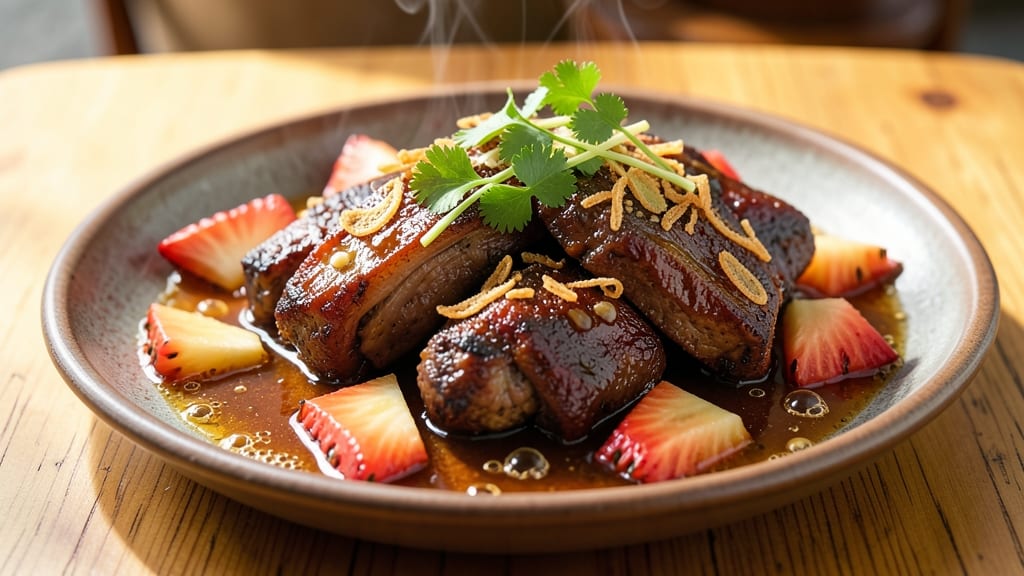
This Hawaiian beef short ribs recipe transforms tough cuts into melt-in-your-mouth luxury with just the right balance of sweet, tangy, and savory flavors.
The secret lies in a marinade that tenderizes the meat while infusing it with pineapple’s bright acidity and soy’s deep umami—perfect for a dish that feels both exotic and comforting.
I’ve perfected this method over years of testing, ensuring every bite delivers that signature Hawaiian fusion experience without requiring hours in the kitchen.
The process begins with a 30-minute marinade that preps the ribs for either slow braising or quick searing, depending on your schedule. What sets this recipe apart is the way pineapple juice and ginger work together to break down collagen while keeping the meat juicy.
For those who love texture contrast, I recommend finishing with a quick char on high heat to create a caramelized crust that adds depth to each bite.
By the time you’re done, you’ll have fork-tender ribs bathed in a glossy, slightly sticky sauce that’s sweet enough to please kids but complex enough to impress guests. The aroma alone—caramelized beef mingling with tropical fruit—will have everyone asking for seconds before the plate is even cleared.
This is the kind of dish that turns ordinary weeknights into special occasions.
Serve over steamed jasmine rice to soak up every last drop of sauce, or pair with a crisp Hawaiian salad for balance. The leftovers reheat beautifully, making this an ideal recipe for meal prep or hosting. Let’s get cooking—your taste buds will thank you.
Ingredients for hawaiian beef short ribs
Sweet, tangy, and savory ingredients that transform tough ribs into melt-in-your-mouth luxury.
| Ingredient | Amount | Notes |
|---|---|---|
| Beef Short Ribs 🥩 | 2 lb | Bone-in, 2-2.5 inches thick |
| Fresh Pineapple Juice 🍍 | 1 cup | Or 100% bottled pineapple juice |
| Fresh Ginger 🌿 | 2 tbsp | Finely grated, fresh preferred |
| Low-Sodium Soy Sauce 🥢 | ½ cup | Kikkoman preferred for balance |
| Brown Sugar 🍚 | ¼ cup | Light or dark, packed |
| Garlic Cloves 🧄 | 6 cloves | Minced, fresh preferred |
| Honey 🍯 | 2 tbsp | Wildflower for floral notes |
| Red Wine Vinegar 🍷 | 1 tbsp | For tangy brightness |
| Olive Oil 🫒 | 2 tbsp | For searing ribs |
| Jasmine Rice 🍚 | 1 ½ cups | Uncooked, for serving |
| Green Onions 🧅 | 3 whole | Sliced, for garnish |
| Sesame Oil 🫒 | 1 tsp | Toasted, for finishing |
| Salt 🧂 | 1 ½ tsp | Kosher, for seasoning |
| Black Pepper 🌶️ | 1 tsp | Freshly ground |
The beef is everything here—bone-in short ribs with that thick, meaty layer of fat are non-negotiable. Most grocery stores carry them pre-cut, but if you're buying a whole packer, ask the butcher to cut them into 2-2.5 inch chunks. Costco or Whole Foods usually have the best selection. Fresh ginger is key too—none of that jarred stuff. Look for knobby, firm roots with bright skin. The pineapple juice should be 100% pure, no added water or sugar. I always grab Dole or Del Monte bottled juice when I can't find fresh pineapple.
No fresh ginger? Powdered ginger at half the amount works in a pinch, but it lacks that zing. Subbing soy sauce? Coconut aminos is the closest alternative, though it's slightly sweeter. Running low on honey? Maple syrup gives a similar depth, though it's less floral. The brown sugar can be swapped for muscovado sugar for a deeper caramel note. And if you're out of sesame oil, toasted sesame seeds sprinkled at the end add that nutty aroma without the oil's strong flavor.
These ribs reheat like a dream—3-4 days in the fridge, 3 months frozen. I like to portion them into individual containers with some sauce so they're ready for quick lunches. The sauce thickens as it cools, so reheat with a splash of water if it gets too stiff. Store the jasmine rice separately—it absorbs the sauce too much if kept together. Garnish with fresh green onions right before serving, or they'll wilt in the heat.
Why You'll Love This Recipe
- Same recipe, different vibes: toss it over rice for a quick dinner or serve it on skewers for a crowd. Honestly, I’ve made it for both my lazy Tuesdays and my in-laws’ dinner parties.
- One-Pot Magic: The ribs, pineapple juice, and ginger all simmer together—no flipping pans, no extra bowls. I swear, the only cleanup is licking the spoon.
- Sweet-Savory Balance: That caramelized brown sugar meets tangy pineapple juice? It’s like a flavor hug—deep, rich, and just a little bit unexpected. My picky eaters actually ask for seconds.
- Weeknight to Party: Same recipe, different vibes: toss it over rice for a quick dinner or serve it on skewers for a crowd. Honestly, I’ve made it for both my lazy Tuesdays and my in-laws’ dinner parties.
Step-by-step instructions for Hawaiian beef short ribs
Here's how to transform tough short ribs into melt-in-your-mouth tender perfection with sweet-tangy Hawaiian flavors.
Sear the Short Ribs for Maximum Flavor
Pat the 2 lb beef short ribs dry with paper towels to remove any moisture. Heat 2 tablespoons olive oil in a large Dutch oven over medium-high heat until shimmering. Season the ribs generously with 1.5 teaspoons salt and 1 teaspoon freshly ground black pepper on all sides.
Working in batches to avoid crowding, sear the ribs for 3-4 minutes per side until they develop a deep golden brown crust. You'll know they're ready when they release easily from the pan with a gentle shake. This initial sear locks in juices and creates that irresistible caramelized exterior we want. Transfer the seared ribs to a plate and set aside temporarily.
Build the Pineapple-Ginger Braising Sauce
In the same Dutch oven, reduce heat to medium and add 2 tablespoons finely grated fresh ginger. Sauté for 1 minute until fragrant, then add 6 cloves minced garlic cloves and cook for another 30 seconds until golden. Be careful not to burn the garlic—it should smell amazing but not bitter.
Pour in 1 cup fresh pineapple juice and scrape up any browned bits from the bottom of the pot with a wooden spoon. Add 0.5 cup low-sodium soy sauce, 0.25 cup packed brown sugar, 2 tablespoons honey, and 1 tablespoon red wine vinegar. Stir well to combine all ingredients into a smooth sauce. This aromatic mixture is what will transform tough ribs into tender luxury.
Braise Until Fork-Tender
Return the seared short ribs to the Dutch oven, spooning the sauce over them completely. Bring the liquid to a gentle simmer, then reduce heat to low, cover with a tight-fitting lid, and transfer to a preheated 300°F oven. Braise for 2.5 to 3 hours until the meat is fork-tender and pulls away from the bone with minimal resistance.
Here's the secret: The ribs are done when you can easily pierce them with a fork and the meat slides off the bone with gentle pressure. If you try to cut through them too early, you'll end up with tough, chewy meat. The long braising time breaks down collagen and connective tissue, creating that melt-in-your-mouth texture we're after.
Finish and Serve with Jasmine Rice
Once the ribs are tender, remove them from the braising liquid and transfer to a serving platter. Skim any excess fat from the sauce, then return the liquid to the stove over medium heat. Stir in 1 teaspoon toasted sesame oil and let it heat through for 2-3 minutes. Taste and adjust seasoning if needed—you might want to add a splash more pineapple juice if the sauce is too thick.
Cook 1.5 cups jasmine rice according to package instructions while the ribs rest. Slice the short ribs against the grain into ½-inch thick pieces and arrange them over the steaming rice. Garnish with sliced green onions and drizzle the sesame-infused sauce generously over the top. Serve immediately while the ribs are still steaming hot and the sauce is at its peak flavor.
Pro Tips For Making Hawaiian Beef Short Ribs
- SEAR THE FAT FIRST: That thick layer of fat on short ribs isn’t your enemy—it’s flavor insurance. Get your pan screaming hot (I mean smoking hot) and let those ribs sit undisturbed for 3-4 minutes per side until the fat renders and you’ve got a deep, caramelized crust. I used to rush this and ended up with greasy, pale ribs that tasted like they were cooked in their own juice instead of on fire.
- GRATE THAT GINGER FINE: Fresh ginger is non-negotiable here, but don’t just chop it—grate it until it’s almost paste-like. A microplane or the smallest holes on a box grater will do the trick. I learned this the hard way when I used thin slices and the recipe tasted like I’d forgotten the ginger entirely. Trust me, you want that heat and aroma to mingle with every bite.
- DEGLAZE WITH PINEAPPLE JUICE: After searing, don’t just splash in water or broth—use that fresh pineapple juice right away. The acid cuts through the browned bits (deglazing) while adding brightness that balances the richness of the ribs. I used to save the juice for later, and the sauce always tasted flat until I started using it early. Also, save the leftover juice for a quick cocktail—it’s amazing.
- LOW AND SLOW ISN’T OPTIONAL: These ribs need time. After searing, simmer them covered at 300°F (150°C) until they’re fork-tender—usually 2.5 to 3 hours. I’ve tried speeding it up, and the meat either turns out dry or tough. The fat keeps them moist, but only if you’re patient. Check occasionally, but resist the urge to peek too often—every time you lift the lid, you’re losing heat and steam.
Make-ahead tips for leftovers
Prep Ahead Strategy
Start your marinade the night before—simply mix all sauce ingredients in a bowl and refrigerate. The flavors meld beautifully overnight, and you can add the ribs directly to the marinade in the morning.
I like to use a ziplock bag for easy storage and tossing. This cuts your active cooking time by 30 minutes while deepening the flavor profile. 🌿
Slow-Cooker Shortcut
For hands-off cooking, sear the ribs as directed, then transfer them to a 6-quart slow cooker with the sauce. Cook on low for 8 hours or high for 5 hours—the ribs will be just as tender.
This method is perfect for busy weeknights when you want to come home to a restaurant-quality meal without standing at the stove. 💡
Freezer-Friendly Prep
Prep the entire dish ahead and freeze it for up to 3 months. After braising, let the ribs cool completely, then store them in a freezer-safe bag with their sauce. Thaw overnight in the fridge, then reheat gently in a skillet with a splash of water to restore moisture.
I double the recipe to have leftovers ready for quick lunches—just reheat and serve over rice. ❄️
Sauce Make-Ahead Hack
Make the sauce separately and store it in the fridge for up to 5 days or freeze for 3 months. When ready to cook, simply sear the ribs and braise them in the pre-made sauce.
This is a lifesaver when you're short on time but still want that authentic Hawaiian flavor. Just remember to bring the sauce to a simmer before adding the ribs to meld the flavors. 🍍
Portion Control Tips
Divide the ribs and sauce into individual meal prep containers before storing. This makes reheating a breeze—just pop a container in the microwave for 2-3 minutes on high or warm in the oven at 350°F for 15 minutes.
I like to portion with extra rice on the side to keep it from getting soggy. Label containers with dates to track freshness. 📅
Garnish Fresh
Always add fresh green onions and a drizzle of sesame oil right before serving. These elements add brightness and aroma that reheating can't replicate. Keep these garnishes separate until serving to maintain their freshness.
For extra flair, sprinkle with toasted sesame seeds or a pinch of red pepper flakes for heat. ✨
Nutrition facts
Frequently asked questions
Can I use bone-in or boneless beef short ribs for this recipe?
This recipe is designed for bone-in short ribs (2-2.5 inches thick) because the bones add incredible depth of flavor and help tenderize the meat. However, if you must use boneless, look for thick-cut beef chuck roast (1.5-2 inches thick) and adjust cooking time to 2-2.5 hours—they'll be ready when fork-tender. Never substitute with thin-cut flank steak or sirloin, as they won't braise properly.
How do I know when the ribs are fully tender?
The ribs are done when they easily pierce with a fork and the meat slides off the bone with gentle pressure. For bone-in ribs, the meat should separate cleanly from the bone at the joint. If you're unsure, cut into one rib—if it's fork-tender and juicy, they're ready. Overcooking by even 30 minutes can turn them dry, so check early and often after 2 hours.
What's the best way to reheat Hawaiian beef short ribs?
Reheat gently to avoid drying out the meat. Place ribs and sauce in an oven-safe dish, cover with foil, and warm at 300°F for 15-20 minutes until heated through. For microwave reheating, cover with a damp paper towel and heat in 1-minute intervals on medium power. Never reheat in the sauce alone—always include the meat to keep it moist. Leftovers keep for 3-4 days in the fridge.
Can I make this recipe without pineapple juice?
While pineapple juice is key for that authentic Hawaiian tang, you can substitute with apple cider vinegar + 1 tablespoon brown sugar for brightness. For a tropical alternative, use 1 cup coconut water + 1 teaspoon lime zest. Just reduce the brown sugar to 0.125 cup to balance the sweetness. The sauce will be less fruity but still delicious—just not quite the same signature flavor.
Why did my ribs turn out tough instead of tender?
Tough ribs usually result from insufficient cooking time or not enough liquid in the braising process. Always use a 2:1 ratio of liquid to meat (about 2 cups sauce for 2 lbs ribs) and cook until the meat falls apart. If your oven runs hot, reduce temperature to 275°F and add 15-30 minutes to the cooking time. Also, ensure your ribs are at room temperature before searing for even cooking.