
Snacks
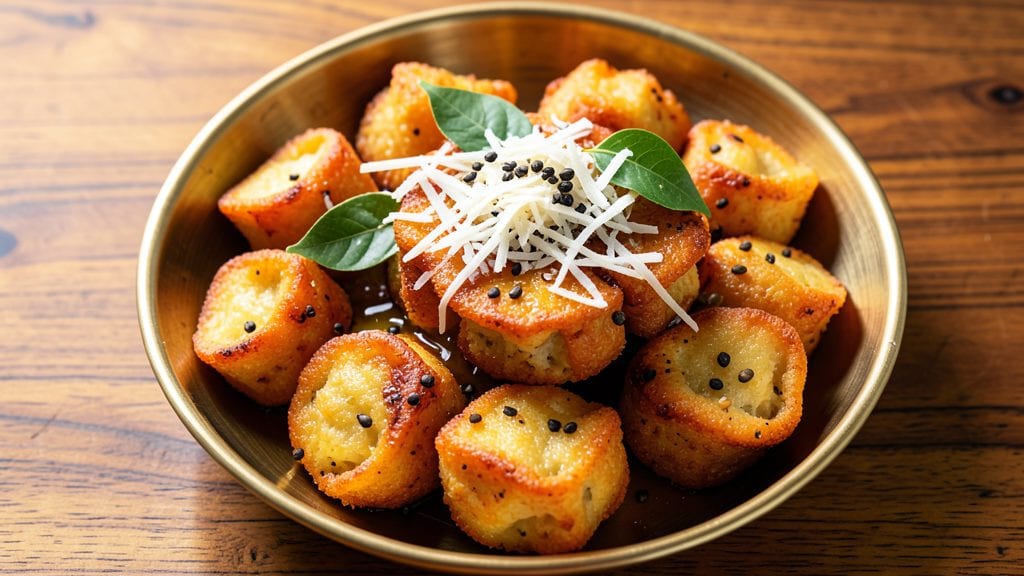
This karuvadu fry recipe delivers the perfect balance of crispy, golden dumplings with a fragrant spiced coconut center—just like the ones you'd find at South Indian festivals.
The secret lies in the precise batter blend of rice flour, urad dal, and aromatic spices that create that signature crunch while keeping the inside tender. I've perfected this technique over years of making them for family gatherings, where they disappear faster than you can say "crispy joy."
The beauty of karuvadu fry is in its simplicity: just a handful of ingredients transformed into a snack that's both satisfying and elegant. The batter requires no special equipment—just a deep fryer or heavy pot—and cooks in batches for even crispiness.
What makes these dumplings truly special is the coconut filling, lightly spiced with mustard seeds and curry leaves, which adds a bright, aromatic contrast to the crispy exterior.
By the time you've shaped the batter into small discs and fried them to a golden brown, your kitchen will smell like a South Indian street stall. The result is a snack that's crispy on the outside, tender inside, and packed with warm, spiced coconut flavor.
These dumplings are perfect for serving with mint chutney, tamarind sauce, or even a hot cup of South Indian filter coffee.
While traditional karuvadu fry are vegetarian, you can easily customize them by adding finely grated vegetables like carrots or peas to the batter for extra texture.
They also make excellent gifts—just package them in airtight containers and they'll stay crispy for days. Let's get started on making these crispy, flavorful delights!
Ingredients for karuvadu fry
Crispy cornmeal meets fragrant coconut—just eight ingredients for festival-worthy dumplings.
| Ingredient | Amount | Notes |
|---|---|---|
| Fine Cornmeal 🌽 | 1 ½ cups | Stone-ground for best texture |
| Rice Flour 🌾 | 1 cup | White or jasmine preferred |
| Urad Dal Powder 🌿 | ½ cup | Toasted for nutty flavor |
| Shredded Coconut 🥥 | 1 cup | Freshly grated, unsweetened |
| Mustard Seeds 🌶️ | 1 tbsp | Lightly toasted for aroma |
| Curry Leaves 🌿 | ¼ cup | Fresh, finely chopped |
| Green Chili 🌶️ | 2 whole | Slit lengthwise, seeds removed |
| Salt 🧂 | ½ tsp | Fine sea salt preferred |
| Asafoetida Powder 🌿 | ¼ tsp | Optional, for depth of flavor |
| Water 💧 | ½ cup | Room temperature |
| Vegetable Oil 🫒 | 2 cups | High smoke point for frying |
| Lemon Juice 🍋 | 1 tbsp | Freshly squeezed |
| Cumin Seeds 🌶️ | ½ tsp | Toasted for extra aroma |
The urad dal powder is non-negotiable here—it’s what gives karuvadu that signature texture. Look for toasted dal powder at Indian grocery stores like Patel Brothers or Patel Brothers Market—the pre-toasted kind has way more flavor than the raw version. If you can’t find it, toast your own urad dal in a dry pan for 5 minutes until it smells nutty. The cornmeal should be fine, stone-ground for that perfect crunch. I always grab extra coconut because it’s the star—Trader Joe’s or Costco have the best prices for unsweetened shredded coconut. Fresh curry leaves make all the difference, but if you’re stuck with dried, soak them in warm water for 10 minutes to revive them.
No mustard seeds? Skip them entirely—the curry leaves and green chili will still give you that South Indian punch. Out of asafoetida? Double the cumin seeds for a similar earthy depth. The batter should hold together like wet sand—if it’s too dry, add a splash more water; if it’s too sticky, mix in a little more cornmeal. For the coconut filling, grate your own coconut if you can—pre-shredded gets clumpy and loses moisture fast. The green chili can be swapped for red chili powder if you prefer milder heat, but I always use fresh for that bright kick.
These stay crispy for 2-3 days in an airtight container, but honestly, they’re best the first day. Reheat in a dry pan over medium heat for 2-3 minutes to revive the crunch. For gifting, pack them in layers with parchment paper between each batch—they’ll stay crisp for up to 5 days that way. Double the recipe if you’re feeding a crowd; they disappear fast at parties. Store the coconut filling separately and mix it in just before frying to keep it fresh.
Why You'll Love This Recipe
- Crispy in Minutes: I swear, this takes less time than boiling water for noodles. Just mix the cornmeal, rice flour, and urad dal powder—no sifting, no fuss—then fry until golden. That crunch happens faster than you’d think.
- Taste Like Childhood: Between us, the mustard seeds sizzling in ghee and the shredded coconut clinging to the edges? Pure nostalgia. It’s the kind of flavor that makes you reach for seconds without thinking.
- Party Snack Hero: Honestly, I keep a batch in the fridge for guests. Serve it warm with chutney, or let it cool for a crunchy, shareable platter. Kids love picking them up, and adults won’t put them down.
- Budget Crunch-Saver: Urad dal and rice flour stretch my grocery budget without sacrificing taste. A single batch feeds four, and leftovers? Still crispy after three days—just reheat in a dry pan. My wallet and taste buds win.
Step-by-step instructions for karuvadu fry recipe
Here's how to make these golden, crispy dumplings with perfect texture every time.
Prepare the Spiced Coconut Mixture
In a small pan, heat the 2 cups vegetable oil over medium-low heat. Add the 1 tablespoon mustard seeds and 0.5 teaspoon cumin seeds, and toast until they release their aroma—about 30 seconds. Remove from heat immediately to prevent burning.
In a separate bowl, combine the 1 cup shredded coconut, 0.25 cup curry leaves, 2 whole green chili (finely chopped), 0.5 teaspoon salt, and 0.25 teaspoon asafoetida powder. Pour the warm spiced oil over this mixture and mix well. Let it cool completely—this creates the flavorful coconut filling that makes karuvadu irresistible.
Mix the Dry Ingredients
In a large bowl, combine the 1.5 cups fine cornmeal, 1 cup rice flour, and 0.5 cup urad dal powder. Add the cooled coconut mixture and mix thoroughly until all the dry ingredients are evenly coated. The batter should be crumbly but hold together when pressed.
Gradually add the 0.5 cup water and 1 tablespoon lemon juice, mixing gently with a spoon. The batter should come together to form a soft, pliable dough. If it feels too dry, add a few drops more water; if too sticky, sprinkle a little more cornmeal. The ideal consistency is like playdough—soft enough to shape but firm enough to hold.
Shape the Dumplings
Divide the dough into 4 equal portions (about 4 ounces each) and roll each portion into a smooth ball. On a lightly floured surface, flatten each ball into a 3-inch circle, about ¼-inch thick. Using your thumb, press a deep well in the center of each circle to create a small cup shape.
Fill each well with about 1 teaspoon of the spiced coconut mixture, then carefully fold the edges inward to seal the dumpling completely. Press the edges firmly to ensure no filling escapes during frying. Place the shaped karuvadu on a plate and cover with a damp cloth to prevent drying while you prepare the rest.
Fry to Crispy Perfection
Heat 1 cup vegetable oil in a deep skillet over medium heat until it reaches 350°F—test with a small piece of dough. Gently slide 2-3 karuvadu into the hot oil, being careful not to overcrowd the pan. Fry for 3-4 minutes on each side, turning occasionally, until they turn a deep golden brown and crisp up.
Remove the fried karuvadu with a slotted spoon and drain on paper towels. Keep the oil at 350°F and fry the remaining dumplings in batches, ensuring they don't lose their crispness. The key is maintaining the oil temperature—if it drops below 325°F, the karuvadu will absorb oil and become greasy instead of crispy.
Serve Warm and Enjoy
Let the fried karuvadu sit for 1-2 minutes after frying to firm up slightly. Serve them warm as a snack or appetizer—each bite should deliver a satisfying crunch followed by the rich, spiced coconut filling. For extra flavor, sprinkle with a pinch of salt or serve with a side of tamarind chutney or mint-coriander sauce. These crispy dumplings are best enjoyed fresh while they're still golden and crunchy!
Pro Tips For Making Karuvadu Fry
- Mix Dry First: Combine your urad dal powder, rice flour, and cornmeal before adding coconut—this prevents clumping when the coconut gets wet. I learned this the hard way when my first batch turned into a sticky mess that wouldn’t hold shape.
- Toast Coconut Low: Dry-roast the shredded coconut on medium-low heat until just golden—too hot and it burns before the edges crisp. Stir constantly, or you’ll end up with blackened bits that ruin the texture.
- Shape Tightly, Fry Fast: Press the karuvadu balls firmly but not too tight—they’ll expand slightly in hot oil. Drop them in small batches when the oil is smoking (350°F/175°C), or they’ll steam instead of fry.
- Salt the Oil: Add a pinch of salt to the frying oil—it seasons the exterior and keeps the karuvadu from absorbing excess oil later. Works especially well if you’re using mustard seeds in the batter.
Best sauces and condiments for these flavors
Spiced Coconut Chutney
The star pairing for karuvadu fry is a spiced coconut chutney that mirrors the flavors inside the dumplings. Blend 1 cup fresh coconut (grated), 2 tbsp tamarind pulp, 1 tbsp roasted cumin powder, 1 green chili, ½ tsp black salt, and ¼ cup water until smooth.
The tamarind adds tangy brightness that cuts through the coconut richness, while the cumin enhances the earthy notes. Serve this chutney warm alongside your crispy dumplings for a perfect balance of textures and flavors. 🥥
Mint-Coriander Sauce
A refreshing mint-coriander sauce elevates karuvadu fry by adding a cool, herby contrast to the warm, spiced coconut. Finely chop ½ cup fresh mint leaves, ¼ cup cilantro, 1 green chili, and ½ inch ginger.
Mix with 1 tbsp lemon juice, ½ tsp chaat masala, and 2 tbsp yogurt. The yogurt adds creaminess while the chaat masala brings a subtle sweetness that complements the crispy exterior. This sauce is especially popular during South Indian festivals. 🌿
Tamarind Date Chutney
For those who love a sweet-tangy twist, tamarind date chutney is a game-changer. Soak ¼ cup dates in warm water for 15 minutes, then blend with 2 tbsp tamarind pulp, 1 tsp jaggery, ½ tsp black pepper, and ¼ cup water.
The natural sweetness of the dates balances the tangy tamarind, creating a sauce that pairs beautifully with the crispy, spiced karuvadu. This chutney also works as a dip for other fried snacks. 🍯
Coconut-Tamarind Dip
A lighter alternative to chutney is a coconut-tamarind dip that’s quick to make. Mix ½ cup grated coconut, 1 tbsp tamarind paste, 1 tsp sugar, ½ tsp mustard seeds, and 2 tbsp water.
Let it sit for 10 minutes to meld flavors before serving. This dip is less heavy than chutney but still delivers the same vibrant coconut-tamarind harmony. It’s perfect for those who prefer a less intense flavor profile. 🥣
Spicy Red Chutney
If you crave heat, a spicy red chutney made with dried red chilies is the way to go.
Soak 4-5 dried red chilies in warm water for 15 minutes, then blend with 1 tbsp peanuts, ½ tsp cumin seeds, 1 tsp jaggery, and ¼ cup water.
The peanuts add crunch, while the chilies bring a slow-building heat that contrasts beautifully with the crispy karuvadu. This chutney is a staple in South Indian households during celebrations. 🌶️
Sweet Coconut Syrup
For a sweet finish, drizzle your karuvadu fry with a light coconut syrup. Simmer ½ cup coconut milk, 2 tbsp jaggery, and 1 tsp cardamom powder for 5 minutes until slightly thickened. Strain and drizzle over the fried dumplings just before serving.
The syrup adds a delicate sweetness that enhances the coconut filling without overpowering the crispy exterior. This is a favorite during Diwali and other festive occasions. 🍯
Nutrition facts
Frequently asked questions about karuvadu fry
Why does my karuvadu fry batter crack while frying?
The most common reason is overmixing the batter or using too much water. The ideal consistency should be like wet sand—not sticky, not dry. If it cracks, reduce water by 1 tablespoon next time and mix just until combined. Also, ensure your oil is at 350°F—too low heat causes uneven cooking and cracking.
Can I make karuvadu fry without coconut?
For a nutty alternative, replace coconut with 1 cup roasted peanuts or cashews blended into a coarse powder. Add 1 teaspoon ginger juice and ½ teaspoon black pepper to mimic coconut's depth. The texture will be slightly denser but still delicious.
How do I store leftover karuvadu fry?
Keep them crispy by storing in an airtight container with a paper towel layer between batches. They stay fresh for 2-3 days at room temperature. To revive crispiness, reheat in a dry pan over medium heat for 2 minutes or air-fry at 375°F for 3 minutes. Never microwave—they'll turn soggy!
What's the best way to shape karuvadu fry for perfect sealing?
Roll the dough into 3-inch circles and press a deep well in the center using your thumb. Fill with coconut mixture, then fold edges inward with a gentle pinching motion. For extra security, use a toothpick to seal the edges before frying. This prevents filling leaks and ensures even cooking.
Can I bake karuvadu fry instead of frying?
Yes, but texture will differ. Brush shaped karuvadu with oil and bake at 375°F for 12-15 minutes until golden. For crispiness, broil for 2 minutes at the end. Baked versions are lighter but lack the signature deep-fry crunch. Best for health-conscious adaptations.