
Main Courses
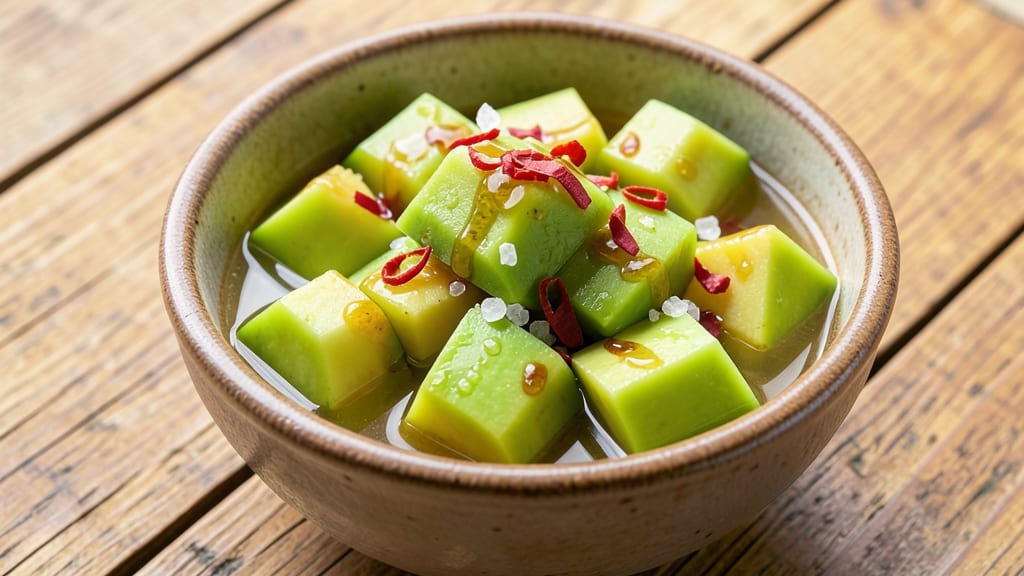
This pickled green mango recipe transforms tart, vibrant fruit into bright, vinegar-kissed chunks that add zing to everything from tacos to salads. The process is faster than you'd think—just 10 minutes of prep followed by a quick soak, yielding a tangy-sweet condiment that keeps for weeks.
I perfected this method after years of experimenting with Southeast Asian pickling techniques, where green mango is a pantry staple.
The beauty of this recipe lies in its simplicity: just four core ingredients—vinegar, sugar, salt, and water—plus optional spices like chili flakes or coriander seeds for depth. Unlike traditional fermented pickles, these mango chunks develop their signature tang in hours rather than days, making them perfect for weeknight cooking.
The key is using firm green mangoes that hold their shape while absorbing the bright, acidic marinade.
What you'll end up with are glossy, jewel-toned mango pieces that burst with flavor—crisp yet tender, with a perfect balance of sweetness and vinegar. These pickled chunks elevate grilled meats, rice bowls, or even cocktails, adding a refreshing contrast to rich dishes.
The recipe scales effortlessly, so you can make a small batch for immediate use or a larger jar for gifting.
Best of all, this method preserves the mango's natural vibrancy without losing its freshness. Store in the refrigerator for up to three weeks, and watch how this simple technique transforms ordinary meals into something extraordinary. Let's get started with the ingredients you'll need.
Ingredients for pickled green mango
Four core ingredients transform tart green mangoes into jewel-toned, tangy-sweet chunks perfect for tacos, salads, and cocktails.
| Ingredient | Amount | Notes |
|---|---|---|
| Green Mangoes 🥭 | 2 lbs | Firm, unripe, peeled and cubed |
| White Vinegar 💧 | 1 cup | Distilled preferred for clarity |
| Granulated Sugar 🍚 | 1 cup | White or raw cane preferred |
| Diamond Crystal Kosher Salt 🧂 | ½ cup | Fine grain for even dissolution |
| Water 💧 | 1 cup | Filtered preferred for clarity |
| Red Chili Flakes 🌶️ | 1 tbsp | Adjust for heat preference |
| Ground Coriander Seeds 🌿 | 1 tsp | Toasted for aromatic depth |
| Fresh Lime Juice 🍋 | 2 tbsp | Brightens final flavor |
| Fresh Cilantro Leaves 🌿 | ¼ cup | Chopped for garnish |
| Fresh Mint Leaves 🌿 | ¼ cup | Chopped for garnish |
The mango selection is non-negotiable. Look for firm, unripe green mangoes—they should yield slightly to pressure but not feel mushy. Asian markets often carry the best selection, but many grocery stores stock them near tropical produce. I always buy a few extra because the peel is thick and wasteful. Once peeled, cut into even 1/2-inch cubes for consistent pickling. Organic mangoes are ideal if you're worried about wax coatings, but conventional works too—just give them a good rinse. The key is starting with fruit that's firm enough to hold its shape through the pickling process.
No red chili flakes? Substitute cayenne pepper at half the amount—it's more concentrated. Skip the coriander seeds entirely if you're out, but the chili adds that essential heat. The vinegar can be swapped for apple cider vinegar if you prefer a milder tang, though white vinegar gives the brightest, clearest result. Fresh lime juice is a game-changer—Mexican Key limes add extra zing, but regular limes work fine. For the sugar, raw cane sugar dissolves slightly slower, creating a more textured final product. Don't rush the sugar dissolution—stir until completely dissolved for even flavor distribution.
These pickled mangoes keep beautifully in the fridge for up to 3 weeks, though they're best within the first week. Store in an airtight jar with the liquid to preserve their vibrant color. For longer storage, freeze the pickled mangoes in portions—they'll last up to 6 months and work perfectly in smoothies or cooked dishes. The pickling liquid makes a fantastic cocktail mixer too—strain and dilute with soda water for a refreshing drink. I always make a double batch because these disappear faster than you'd think—especially when paired with grilled shrimp or spicy noodles.
Why You'll Love This Recipe
- No-Fuss Preservation: I swear by this recipe because it’s basically set-it-and-forget-it. Slice the mangoes, mix the vinegar, sugar, and salt in a jar—no fancy tools, no peeling hassles—and let time do the work. The acidity does all the heavy lifting while I’m scrolling through my phone.
- Tangy-Sweet Magic: That first bite? Crisp green mango with a bright, almost citrusy kick from the vinegar, balanced by just enough sugar to make it irresistible. It’s the kind of flavor that lingers—like a refreshing slap after a spicy dish or a perfect snack on its own.
- Party in a Jar: I keep a batch in my fridge for everything: as a topping for grilled fish, mixed into salads, or even just grabbed straight from the jar when guests drop by. It’s the ultimate crowd-pleaser that takes zero effort to impress.
- Dollar Stretch: Honestly, this recipe is my budget hack. Green mangoes are often cheaper than ripe ones, and the vinegar-sugar brine stretches a single jar into weeks of snacks. Plus, the salt and sugar are pantry staples—no extra shopping needed.
Step-by-step instructions for pickled green mango recipe
Here's how to create vibrant, tangy pickled mangoes that burst with flavor in just minutes.
Prepare the Mangoes for Pickling
Begin by peeling the 2 lbs of green mangoes using a sharp paring knife, working carefully to remove the skin without cutting into the fruit. Cut the peeled mangoes into 1-inch cubes, ensuring each piece is uniform in size. This consistency guarantees even pickling and a professional presentation. I like to work over a bowl to catch any juice that might escape during cutting—this liquid is packed with flavor and shouldn't be wasted.
Transfer the mango cubes to a large mixing bowl and toss them gently with 2 tablespoons of fresh lime juice. This preliminary acid exposure helps preserve the vibrant green color and prevents browning. Let the mangoes sit for 5 minutes while you prepare the brine. The lime juice will begin to work its magic, brightening the flavor profile and setting the stage for the tangy transformation ahead.
Create the Flavorful Brine
In a medium saucepan, combine 1 cup of white vinegar, 1 cup of granulated sugar, 0.5 cup of diamond crystal kosher salt, and 1 cup of water. Bring the mixture to a boil over medium-high heat, stirring constantly until the sugar and salt dissolve completely. The solution should be clear and homogeneous—no grainy residue should remain.
Once boiling, reduce the heat to medium-low and let the brine simmer for 3-4 minutes until it thickens slightly and begins to coat the back of a spoon. This reduction intensifies the flavors and creates a syrupy consistency that will perfectly coat each mango cube. Remove the pan from heat and stir in 1 tablespoon of red chili flakes and 1 teaspoon of ground coriander seeds, allowing the spices to infuse for 2 minutes while still off the heat.
Combine and Pack the Pickled Mangoes
Pour the warm spiced brine over the lime-treated mango cubes in the mixing bowl, ensuring each piece is fully submerged. Gently stir the mixture to distribute the flavors evenly. Transfer the mangoes and brine to a quart-sized mason jar, packing them tightly but carefully to avoid crushing. Leave about ½ inch of headspace at the top to allow for expansion as the mangoes absorb the liquid.
Seal the jar tightly and let it cool to room temperature. This cooling process allows the flavors to meld and the mangoes to fully absorb the tangy, spiced brine. Once cooled, refrigerate the jar for at least 4 hours—though I recommend waiting 24 hours for the flavors to develop fully. The longer they sit, the more vibrant and complex the taste becomes, with the green mangoes transforming into a delightful, vinegar-kissed delicacy.
Finish and Serve with Fresh Herbs
After the mangoes have pickled for the recommended time, open the jar and give the contents a gentle stir. The mangoes should now be bright green, slightly softened, and infused with the tangy, spicy flavors of the brine. Taste one of the cubes—it should be crisp yet yielding, with a sharp vinegar bite balanced by the natural sweetness of the mango and the warmth of the spices.
Just before serving, garnish the pickled mangoes with 0.25 cup of chopped fresh cilantro leaves and 0.25 cup of chopped fresh mint leaves. These herbs add a refreshing contrast to the bold flavors and elevate the presentation. Serve the pickled mangoes chilled as a side dish, a topping for tacos, or a vibrant addition to charcuterie boards. The combination of crisp mango, tangy vinegar, and fresh herbs creates a dish that's as visually stunning as it is delicious.
Pro Tips For Making Pickled Green Mango
- Slice Thin, Even Strips: Use a sharp knife and cut the mangoes into ¼-inch slices—thinner than you think. I learned this the hard way when my first batch turned out mushy because the slices were too thick; even heat and acid penetration matter here.
- Boil the Brine First: Heat the vinegar, sugar, and salt in water until the sugar fully dissolves—no grainy surprises later. I used to skip this, and the pickles always tasted unevenly sweet.
- Pack Tight, But Not Forceful: Stuff the mango slices snugly into the jar, but don’t jam them—this crushes the fruit and makes them soggy. A spoon works better than your fist (yes, I tried that).
- Sterilize Jars Cold: Run clean jars and lids through hot soapy water, then rinse with boiling water—no need to oven-bake them. This keeps the glass from cracking and the seal from failing.
Troubleshooting great pickled green mango
Mushy Mango Fix
If your pickled mangoes turn out too soft, it’s usually because the fruit wasn’t firm enough to start with. Always choose green mangoes that yield slightly to pressure but don’t feel mushy—they should snap when cut.
For extra firmness, add 1 tablespoon of lemon juice to the brine and reduce the soaking time to no more than 12 hours. This helps maintain structure while still developing flavor. 💡
Cloudy Brine Solution
A cloudy brine happens when sugar or salt doesn’t fully dissolve before mixing with the fruit. To prevent this, simmer the vinegar, sugar, and salt mixture until it reaches 212°F—this ensures complete dissolution.
If your brine is already cloudy, strain it through a fine-mesh sieve before pouring over the mangoes. For future batches, use granulated sugar instead of raw cane sugar, as it dissolves more quickly and evenly.
Uneven Color
If your pickled mangoes develop uneven coloring (some pieces staying pale while others turn dark), the lime juice wasn’t distributed evenly during the initial prep. Toss the mango cubes thoroughly with lime juice before adding the brine, and use fresh lime juice (not bottled) for maximum brightness.
For extra vibrancy, add ½ teaspoon of turmeric to the brine—it enhances the green hue naturally. Stir the jar gently every 4-6 hours during the first 24 hours to ensure consistent color absorption.
Excessive Vinegar Bite
The sharp vinegar flavor can overpower the natural sweetness of the mango if the brine is too strong. To balance it, reduce the vinegar by 2 tablespoons and increase the water by the same amount in your next batch.
Alternatively, add 1 extra tablespoon of sugar to the brine to mellow the acidity. For immediate adjustments, mix 1 teaspoon of honey into the pickling liquid and let the mangoes soak for an additional 2 hours before serving.
Mold or Fuzz Development
Mold or fuzzy growth on the surface of your pickled mangoes means the jar wasn’t sealed properly or the fruit wasn’t fully submerged. Always leave at least ½ inch of headspace in the jar and ensure the mangoes are completely covered by the brine.
If mold appears, discard the entire batch—vinegar pickles are safe only if the acidity remains high.
To prevent future issues, sterilize your mason jar and lid by boiling them for 10 minutes before use, and store the pickled mangoes in the coldest part of your fridge (usually the back shelf).
Lack of Flavor Depth
If your pickled mangoes taste flat or lack complexity, the spices or herbs weren’t infused long enough. Toast your coriander seeds in a dry pan for 1-2 minutes before grinding to intensify their aroma, and let the brine steep with the spices for 5 minutes off the heat before adding the mangoes.
For extra depth, add 1 star anise pod or 2 black peppercorns to the brine—these subtle spices add layers of warmth without overpowering the mango’s natural flavor. Let the pickled mangoes rest in the fridge for at least 24 hours before tasting to allow flavors to fully meld. ✨
Nutrition facts
Frequently asked questions about pickled green mango
Can I use ripe yellow mangoes instead of green ones?
Ripe yellow mangoes won't work for this recipe—they're too soft and lose their shape during pickling. The key is using firm, unripe green mangoes that hold their structure while absorbing the tangy brine. If you only have ripe mangoes, try making mango chutney instead, which works beautifully with softer fruit.
How long do these pickled mangoes actually last?
Properly stored in an airtight jar in the refrigerator, these pickled mangoes stay fresh for 3-4 weeks. For longer storage, you can freeze them for up to 6 months—just thaw in the fridge overnight before using. The pickling liquid also makes a fantastic cocktail mixer that lasts just as long!
What are the best ways to use pickled green mango?
These vibrant chunks shine in tacos, salads, and sandwiches, but they're also perfect with grilled meats, rice bowls, or even as a topping for spring rolls. Try mixing them into cocktails with tequila or gin, or use them as a tangy condiment for spicy noodle dishes. The possibilities are endless!
Why does my brine turn cloudy after mixing?
A cloudy brine usually means sugar or salt didn't fully dissolve before mixing. To fix this, simmer your vinegar mixture until it reaches 212°F to ensure complete dissolution. For future batches, use granulated sugar instead of raw cane sugar, as it dissolves more quickly and evenly.
Can I make this recipe without vinegar?
While you can substitute vinegar with lemon or lime juice, you won't get the same tangy preservation. If you're avoiding vinegar, try fermenting the mangoes instead—simmer them in a saltwater brine for 5-7 days to develop natural probiotics. The flavor will be milder but still delicious!