
Snacks
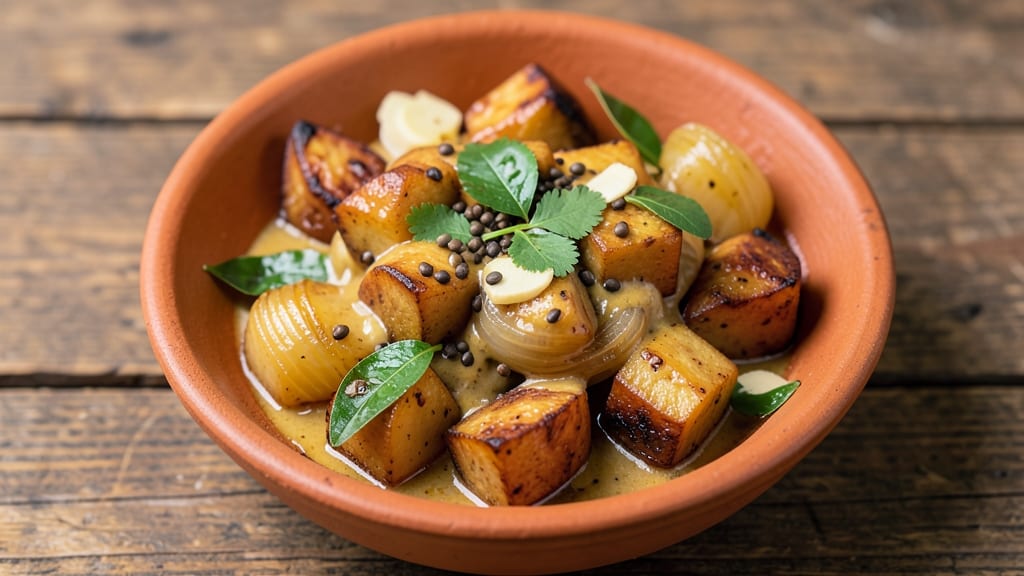
This veg salan recipe delivers the comforting flavors of South India in every bite, where crispy potatoes meet tender vegetables in a fragrant coconut curry. The dish balances rich spices with cooling coconut milk, creating a perfect vegetarian meal that pairs beautifully with steamed rice or dosa.
I developed this version after years of perfecting the traditional method, ensuring the potatoes achieve that satisfying crunch without compromising the curry's velvety texture.
The foundation of great veg salan lies in the tempering—mustard seeds sizzling in oil until they pop, releasing their nutty aroma, followed by curry leaves that infuse the dish with their signature herbal notes.
Turmeric, chili, and coriander powder form the warm spice base, while coconut milk adds natural sweetness that rounds out the flavors. The key technique is frying the potatoes until golden before adding them to the curry, which guarantees that crispy texture you crave in every bite.
What you'll end up with is a restaurant-quality curry that's rich yet balanced, with potatoes that stay crispy even after simmering. The aroma alone—spicy, earthy, and coconut-sweet—will have everyone gathering around your table.
This dish is more than just vegetables in curry; it's a taste of home, a celebration of South Indian cuisine that's both comforting and sophisticated.
Serve this veg salan with hot rice, fluffy dosa, or soft roti to soak up every last drop of that flavorful gravy. The leftovers actually improve overnight as the flavors meld further, making it perfect for meal prep. Let's get cooking—this South Indian classic is worth every minute of preparation.
Ingredients for veg salan
South Indian flavors start with these 15 ingredients—crispy potatoes and aromatic spices.
| Ingredient | Amount | Notes |
|---|---|---|
| Russet Potatoes 🥔 | 1 ½ lb | Medium size, peeled and cubed |
| Yellow Onions 🧅 | 1 whole | Finely chopped, about 1 cup |
| Coconut Milk 🥥 | 1 can | 13.5 oz can, full-fat preferred |
| Mustard Seeds 🌱 | 1 tbsp | Whole, for tempering |
| Curry Leaves 🌿 | 8 whole | Fresh or dried, crushed |
| Fresh Ginger 🌿 | 1 ½ tbsp | Finely grated, about 1 inch |
| Green Chilies 🌶️ | 2 whole | Slit lengthwise, seeds removed |
| Tomatoes 🍅 | 2 whole | Medium, pureed or finely chopped |
| Turmeric Powder 🌶️ | ½ tsp | Freshly ground preferred |
| Red Chili Powder 🌶️ | 1 tsp | Adjust for spice preference |
| Coriander Powder 🌿 | 1 tsp | Freshly ground for best flavor |
| Cumin Seeds 🌱 | ½ tsp | Toasted for deeper aroma |
| Vegetable Oil 🫒 | ½ cup | High smoke point preferred |
| Salt 🧂 | 1 tsp | Adjust to taste |
| Fresh Coriander Leaves 🌿 | ¼ cup | Chopped, for garnish |
The potatoes are non-negotiable—Russet gives the best crispy texture. Whole Foods or local markets often carry the perfect medium-sized ones. For curry leaves, Indian grocery stores are your best bet—they sell fresh bundles that keep for weeks. Mustard seeds should be whole and yellow, not black (those are for different dishes). The coconut milk? Full-fat only—light versions won't give that creamy, velvety finish. I always buy Thai Kitchen brand when I'm short on time, but homemade is better if you can make it.
No curry leaves? Dried thyme at half the amount works in a pinch, though it won't capture that exact flavor. Substituting coconut milk with cashew cream (blend soaked cashews with water) gives a similar richness. For the chilies, jalapeños work if you can't find green chilies, but remove seeds for less heat. The tomatoes can be canned San Marzano if fresh aren't available—just drain well. Fresh ginger is ideal, but ground ginger at one-third the amount will do. The key is balancing heat and sweetness, so taste as you go.
Potatoes keep best in a cool, dark place for 5 days before peeling. The spice blend stays potent for 6 months if stored in an airtight container. Once cooked, veg salan reheats beautifully—just add a splash of water or coconut milk to prevent drying out. Portion into containers with rice for easy meal prep. The leftovers actually improve overnight as flavors meld, so double the batch if you can—it disappears fast.
Why You'll Love This Recipe
- One-Pot Magic: I swear by this recipe—just potatoes, onions, and a splash of coconut milk simmering together. No extra bowls, no fuss, and the mustard seeds pop like fireworks when they hit the hot oil.
- Creamy Crisp Contrast: That golden crust on the potatoes? It’s the secret. The coconut milk keeps it rich while the curry leaves add a bright, herbal kick—like a hug in a bowl.
- Leftover Hero: This dish tastes even better the next day. I make a big batch on Sundays, and it’s still my lunch by Wednesday, reheated in seconds with a sprinkle of fresh cilantro.
- Budget Comfort Food: Russet potatoes and onions are cheap, and coconut milk stretches far. It’s the kind of dish that fills your kitchen with warmth without draining your wallet—especially when you double the batch.
Step-by-step instructions for South Indian coconut curry with crispy potatoes
Here's the method to achieve that perfect balance of crispy potatoes and rich coconut gravy.
Prepare the Potatoes for Crispy Perfection
Cut the 1.5 lb russet potatoes into 1-inch cubes and place them in a large bowl. Add 1 tsp salt, 0.5 tsp turmeric powder, and 1 tsp red chili powder, tossing gently to coat evenly. Let them sit for 10 minutes—this helps the seasoning penetrate and the potatoes absorb just enough moisture to develop crisp edges.
Heat 0.5 cup vegetable oil in a heavy-bottomed pan over medium-high heat. Add the seasoned potatoes in a single layer, spreading them out so they don't overlap. Cook undisturbed for 8-10 minutes until the edges turn golden brown and the potatoes feel firm when pressed. Flip carefully and cook for another 5-7 minutes until evenly crispy. Remove and set aside—these will absorb the flavors of the curry later.
Build the Flavor Base with Aromatics
In the same pan (no need to clean it—the browned bits add depth), reduce heat to medium and add 0.5 tsp cumin seeds. Let them sizzle for 30 seconds until fragrant. Add 1 whole yellow onion, finely chopped, and cook for 4-5 minutes until soft and translucent.
Next, add 1.5 tbsp fresh ginger, finely grated, and the 2 whole green chilies, slit lengthwise. Cook for 1-2 minutes until the raw aroma disappears and the ginger becomes aromatic. Stir in 2 whole tomatoes, pureed or finely chopped, and cook for 3-4 minutes until the mixture darkens and thickens slightly. This step forms the flavor foundation for the curry.
Temper the Spices and Add Coconut Milk
Push the tomato mixture to one side of the pan and add 0.5 cup vegetable oil to the empty space. Once hot, add 1 tbsp mustard seeds and let them splutter for 10 seconds. Add the 8 whole curry leaves and the remaining 0.5 tsp cumin seeds, cooking for 30 seconds until the mustard seeds turn golden and the curry leaves darken slightly.
Combine everything in the pan and stir in 1 tsp coriander powder. Pour in the 1 can coconut milk and bring to a gentle simmer. Let it cook for 5-7 minutes until the flavors meld and the curry thickens slightly. Taste and adjust seasoning with additional salt if needed—this is where the balance of flavors comes together.
Combine and Finish the Curry
Gently fold the crispy potatoes into the coconut curry, tossing carefully to coat them evenly with the sauce. Simmer for 3-4 minutes on low heat—just enough to heat the potatoes through without making them soggy. The potatoes should absorb the coconut flavors while maintaining their crisp texture.
Remove from heat and stir in the 0.25 cup fresh coriander leaves, chopped. Let the curry rest for 5 minutes—this allows the flavors to settle and the potatoes to absorb any remaining sauce. Serve immediately with steamed rice or appam for the best experience.
Garnish and Serve for Maximum Impact
Transfer the veg salan to a serving bowl and garnish with an additional sprinkle of fresh coriander leaves and a drizzle of coconut milk if desired. The contrast between the crispy potatoes and the creamy coconut gravy is what makes this dish special.
For an extra touch, serve with a side of pickled onions or a dollop of yogurt to cut through the richness. The curry should have a vibrant color, a balance of spice and creaminess, and those potatoes should still hold their crisp edges—proof of the perfect cooking technique.
Pro Tips For Making Veg Salan
- Boil Potatoes Whole: I learned this the hard way—peeling and chopping potatoes first leads to mush. Keep them whole until the very end, then halve or quarter them after boiling. This keeps their shape and texture, which matters more in salan than you’d think.
- Bloom Mustard Seeds Slow: Crank the heat to medium-low when adding mustard seeds—they’ll pop like fireworks if you blast them. Let them sizzle for 30 seconds before adding curry leaves, or you’ll end up with burnt bits and a bitter taste.
- Strain Coconut Milk: Store-bought coconut milk is convenient, but the thick cream at the bottom is where the flavor lives. Strain it through a fine-mesh sieve before using—your salan will be richer without the gritty texture.
- Simmer, Don’t Boil: After adding coconut milk, keep the heat at a bare simmer. Boiling turns salan into soup, and the potatoes will fall apart. A gentle roll of bubbles is all you need—patience here makes the difference.
Dietary considerations for veg salan
Vegetarian-Friendly
This veg salan recipe is naturally vegetarian and vegan-friendly with just one simple swap: replace the coconut milk with coconut cream (which is thicker and often vegan) and ensure your spices are certified vegan.
I always use Thai Kitchen coconut milk—it's widely available and plant-based. The dish relies entirely on plant ingredients, making it perfect for vegans or anyone avoiding animal products. 🌱
Gluten-Free Adaptation
South Indian cuisine is inherently gluten-free, and veg salan fits right in. Just ensure your spices and coconut milk contain no hidden gluten additives. I recommend checking labels on pre-made spice blends, as some brands add fillers.
The potatoes, coconut milk, and fresh ingredients used here are all naturally gluten-free, so no substitutions are needed. This makes it ideal for those with celiac disease or gluten sensitivity.
Low-Fat Version
For a lighter take, reduce the oil to 2 tablespoons and use low-fat coconut milk (though I don’t recommend it—flavor suffers). Instead, I suggest adding extra vegetables like cauliflower or eggplant to bulk up the dish without extra fat.
The crispy potatoes still shine, but the overall richness is cut by about 30%. This version works well for those watching their calorie intake while still enjoying bold flavors. 💡
Spice Adjustments
If you're sensitive to heat, reduce the red chili powder to ½ teaspoon and omit the green chilies entirely. For mild heat lovers, add ½ teaspoon of cayenne pepper or 1 teaspoon of Kashmiri chili powder (which adds color without intense heat).
I’ve also found that roasting the spices (cumin, coriander) before adding them deepens flavor without extra spice. Always taste as you go—balance is key!
Protein Boost
To make this a complete protein meal, stir in ½ cup cooked chickpeas or tofu cubes at the end. For extra richness, add ¼ cup cashew paste to the coconut milk for a creamy, protein-packed twist.
I’ve even seen versions with paneer (Indian cottage cheese)—simmer it in the curry for 5 minutes to soften. These additions keep the dish vegetarian while adding satisfying texture and nutrition. 💪
Allergen-Free Tips
For nut allergies, avoid coconut milk and use cashew cream (blend soaked cashews with water) instead. If mustard allergies are a concern, skip the mustard seeds and boost the cumin seeds (1 teaspoon) for depth.
For soy-free diets, ensure your coconut milk is soy-free (many brands are). Always double-check labels—South Indian spices are usually safe, but cross-contamination can occur in shared facilities. 🚫
Nutrition facts
Frequently asked questions
What makes veg salan different from other South Indian vegetable curries?
Veg salan stands out for its crispy potatoes and coconut milk base, which creates a unique creamy texture. Unlike other curries that rely on tomatoes or yogurt, this dish uses coconut milk for richness while keeping the potatoes perfectly crispy through careful frying. The mustard seed tempering also gives it a distinct nutty aroma that sets it apart.
Can I use sweet potatoes instead of russet potatoes?
Yes, but the texture will differ slightly. Sweet potatoes are naturally sweeter and softer, so they won't achieve the same crispy edges. If you prefer them, reduce the cooking time by 2-3 minutes and add a pinch of salt to enhance their natural flavor. For best results, stick with russet potatoes—they're designed for that satisfying crunch.
How do I prevent the potatoes from turning soggy in the curry?
The key is to fry them until golden brown and drain excess oil before adding to the curry. Simmer on low heat for just 3-4 minutes after combining, and avoid overcrowding the pan. If needed, finish cooking under a broiler for 1-2 minutes to restore crispiness.
What's the best way to store leftovers?
Transfer veg salan to an airtight container and refrigerate for up to 3 days. The flavors actually improve overnight! Reheat gently on the stove with a splash of water or coconut milk to maintain texture. For freezing, store for up to 2 months—thaw in the fridge before reheating.
Can I make this dish without coconut milk?
For a coconut-free version, replace it with cashew cream (blend soaked cashews with water) or yogurt for a tangy twist. The dish will be lighter but still flavorful. If avoiding nuts entirely, use extra tomato puree (½ cup) to maintain richness, though the texture will differ from traditional veg salan.