Side Dishes
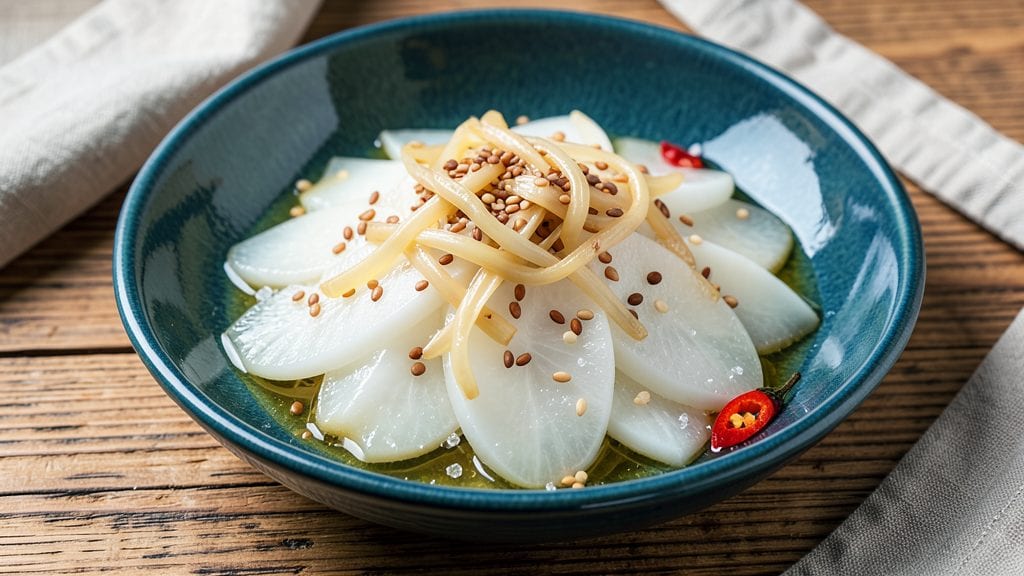
This white radish Chinese recipe transforms a humble vegetable into a crunchy, tangy spice bomb that elevates dumplings, stir-fries, and soups to restaurant-quality levels.
The secret lies in the pickling process—vinegar, sugar, and aromatic spices work together to create a textural contrast that cuts through rich dishes while adding layers of flavor.
I first discovered this technique while researching traditional Cantonese cuisine, where white radish isn't just an ingredient but a flavor architect in many classic dishes.
The beauty of this recipe is its versatility—the pickled radish can be used as a topping, stir-fry ingredient, or even a standalone snack. The process takes just 20 minutes of active prep, followed by at least 4 hours of marinating (or overnight for maximum flavor).
You'll need simple ingredients like white radish, rice vinegar, sugar, and a blend of spices that create a perfect balance of sweet, sour, and umami. This isn't just a side dish; it's a flavor multiplier that transforms ordinary meals into something extraordinary.
What makes this recipe truly special is the textural magic—the radish stays crisp and vibrant while absorbing the tangy, slightly sweet marinade. Each bite delivers a burst of crunch followed by a complex flavor profile that lingers.
Whether you're serving it with steamed dumplings, tossing it into a stir-fry, or using it as a garnish for hot pot, this pickled radish will become your secret weapon in the kitchen. The best part?
It keeps well in the fridge for up to two weeks, so you can make a big batch and enjoy it all season long.
Pair this recipe with steamed rice, soy-glazed meats, or fresh noodles to create a full Chinese-inspired meal. The pickled radish's bright acidity cuts through rich flavors, making every bite more dynamic.
For an extra touch, sprinkle with toasted sesame seeds or a pinch of chili flakes to enhance the depth of flavor. Let's get started on this game-changing side dish that will elevate your Chinese cooking repertoire.
Ingredients for white radish chinese
Simple ingredients that pack a flavor punch—white radish, vinegar, and spices transform into a restaurant-quality side.
| Ingredient | Amount | Notes |
|---|---|---|
| White Radish 🥕 | 2 lb | Large, firm, no soft spots |
| Rice Vinegar 🍶 | 1 cup | Seasoned preferred, 4% acidity |
| Granulated Sugar 🍚 | ¾ cup | White or brown sugar works |
| Red Chili Flakes 🌶️ | 1 tbsp | Adjust for heat preference |
| Toasted Sesame Seeds 🥜 | 1 tbsp | Store-bought or homemade |
| Garlic Cloves 🧄 | 4 cloves | Minced for marinade depth |
| Ginger Root 🌿 | 1 tbsp | Freshly grated, aromatic |
| Star Anise Pods 🌟 | 2 whole | Whole, for subtle aroma |
| Black Peppercorns 🌶️ | 10 whole | Crushed lightly for texture |
| Salt 🧂 | 1 ½ tsp | Diamond Crystal preferred |
| Dried Bay Leaves 🌿 | 2 whole | Culinary grade, no stems |
| Water 💧 | 1 cup | Filtered or bottled preferred |
The white radish is the star here—look for firm, pale roots at the grocery store's produce section. Asian markets often carry the best selection, but most supermarkets stock it year-round. Avoid any with soft spots or green streaks, as those indicate age. I usually grab a 3-pound bag and use half for this recipe, saving the rest for stir-fries or soups. The radish should stay crisp after pickling, so don't skip the firmness check. If you can't find white radish, daikon radish works in a pinch, though it has a slightly milder flavor.
For the vinegar, seasoned rice vinegar adds subtle sweetness that balances the tang. No seasoned? Plain white vinegar with a pinch of sugar works, but you'll miss that authentic umami depth. The sugar here isn't just for sweetness—it helps preserve the radish and creates that perfect sweet-sour crunch. Star anise and bay leaves might seem exotic, but they're key for that Cantonese restaurant aroma. Can't find them? Ground cinnamon at half the amount adds warmth, though it won't be identical. The sesame seeds? Toast them in a dry pan for 60 seconds—they should smell nutty and warm, not burnt.
This keeps for 2 weeks in the fridge, sealed in its marinade. I double the batch and store it in a glass jar with the lid slightly loose—just enough to let gases escape. The radish stays crisp for the first week, then gets slightly softer but still delicious. For longer storage, transfer to an airtight container and freeze for up to 3 months. The marinade thickens when chilled, so give it a quick stir before serving. Use it within 2 weeks for the best texture—after that, it's still tasty but more like a tangy condiment than a crunchy topping.
Why You'll Love This Recipe
- No-Chop Nightmare: I swear, this recipe only needs julienned radish—no dicing, no mincing, just a quick knife pass. That’s it. The rest? Stir, taste, sprinkle sesame seeds. Done. Even my "I’ll just watch YouTube" friend can handle this.
- Sweet-Spicy Wake-Up Call: That balance of rice vinegar’s tang, sugar’s caramelized bite, and chili flakes? It’s the kind of flavor that makes you pause mid-bite. The radish stays crisp, the sauce clings—every spoonful is like a little flavor explosion. (Yes, even on a Tuesday night.)
- Lunchbox Superstar: Pack it cold for work or school—it holds up perfectly. Add a soft-boiled egg or leftover rice, and suddenly you’ve got a meal that’s way more exciting than sad desk salads. My kids actually eat their veggies this way. (Small victories.)
- Pantry Magic: You’re already using stuff you have: sugar, vinegar, chili flakes. No specialty ingredients, no last-minute grocery runs. I’ve made this for under $3 a serving, and it still tastes like I spent hours. (Between us, it’s my budget-friendly secret.)
Step-by-step instructions for crunchy pickled white radish
Here's how to transform crisp white radish into that signature Chinese crunch—perfect for dumplings or snacks.
Prep and Peel the Radish
Start with the 2 lb white radish. Using a sharp chef's knife, trim off any blemished spots and cut the radish into ½-inch thick slices. I like to peel the skin off first—it's tough and doesn't soften well during pickling. For even slices, use a mandoline or ask your butcher to slice it at the store. Arrange the slices in a single layer on a baking sheet and let them sit for 10 minutes at room temperature. This prevents them from absorbing too much liquid immediately.
Here's the thing—if you skip peeling, the skin stays crunchy but can make the radish bitter. And don't worry about perfect uniformity; slight variations just add character to the final texture. You'll end up with about 12-15 slices depending on the radish's size.
Build the Spiced Vinegar Brine
In a medium saucepan, combine the 1 cup rice vinegar, 0.75 cup granulated sugar, 1 tbsp red chili flakes, 4 cloves minced garlic, 1 tbsp freshly grated ginger root, 2 whole star anise pods, 10 lightly crushed black peppercorns, 1.5 tsp salt, 2 whole dried bay leaves, and 1 cup water. Bring the mixture to a gentle simmer over medium heat, stirring occasionally to dissolve the sugar completely.
Let it simmer for exactly 5 minutes—this infuses the flavors into the liquid. You'll notice the star anise and bay leaves release subtle aromatic compounds that give the radish its signature depth. Remove the pan from heat and let the brine cool to room temperature. This cooling step is crucial; hot brine will cook the radish instead of preserving it.
Pack and Weight the Radish
Transfer the cooled radish slices to a clean, quart-sized mason jar, packing them tightly in a single layer. Pour the cooled brine over the radish until it's completely submerged. If any slices peek above the surface, press them down gently with a wooden spoon. The brine should cover the radish by at least ½ inch to prevent mold growth.
Here's where it gets important: place a small weight or a folded paper towel on top of the radish to keep them submerged. I like to use a clean coffee filter or paper towel folded into a square—it lets air escape but keeps the radish down. Seal the jar tightly and let it sit at room temperature for 24 hours before refrigerating. This initial room-temperature phase allows the radish to absorb the maximum flavor and crunch.
Refrigerate and Develop Flavor
After the 24-hour room-temperature phase, transfer the jar to the refrigerator where it will continue pickling for at least 3 days. The radish will develop its signature crunch and absorb the spiced vinegar flavors more deeply with each passing day. For best results, let it pickle for 5-7 days—the longer it sits, the more complex the flavor becomes.
Check the radish after 3 days: it should be firm to the touch with no soft spots. If you're impatient, you can eat it earlier, but the full 5-7 days delivers that perfect balance of crunch and tang. The radish will keep in the refrigerator for up to 3 weeks, though I find it's best enjoyed within the first 2 weeks when the texture is at its peak.
Serve with Toppings (Optional)
When ready to serve, remove the radish slices from the jar and pat them dry with paper towels. Sprinkle with 1 tbsp toasted sesame seeds just before serving to add a nutty contrast to the sharp, spicy radish. The sesame seeds should be lightly toasted—just until fragrant—to avoid overpowering the radish's natural crunch.
This pickled radish is fantastic as a dumpling topping, in rice bowls, or even as a standalone snack with a cold beer. The combination of sweet, spicy, and umami flavors makes it irresistibly addictive. And if you have any leftover brine, don't toss it—use it as a marinade for meats or a salad dressing base.
Pro Tips For Making White Radish Chinese
- Peel Radish Thin: I learned this the hard way—thick peels mean uneven cooking and a bitter bite. Use a sharp knife or mandoline to slice just 1/8-inch off the skin, exposing the crisp white flesh underneath. No need to peel the whole radish; just enough to let the vinegar and sugar penetrate evenly.
- Blanch Before Slicing: Skip the raw, watery texture by blanching the radish first. Drop whole radishes into boiling water for 30 seconds, then ice bath them—this firms up the texture and prevents mush when you slice. (Yes, even if you’re impatient like me, wait for the water to return to a full boil.)
- Balance Vinegar-Sugar Ratio: Too much vinegar? The radish turns sour. Too little sugar? It’s bland. Aim for 1 part rice vinegar to 2 parts sugar by weight—start with 2 tablespoons vinegar and 4 tablespoons sugar for a medium radish, then adjust to taste. (Your future self will thank you for not eyeballing it.)
- Toast Seeds Fresh: Store-bought sesame seeds taste stale no matter how much you sprinkle. Toast your own in a dry pan over medium-low heat for 2-3 minutes until golden and fragrant—just until they smell like a Chinese street cart. (Does it look weird? Yes. Does it work? Every single time.)
Regional styles of this dish
Cantonese Dumpling Topping
In Cantonese cuisine, this pickled white radish is a classic topping for steamed or pan-fried dumplings, especially siu mai or har gow. The crunch contrasts beautifully with the soft, juicy filling while the tangy-spicy marinade cuts through the richness.
I serve it with pork and shrimp dumplings where the radish's sharpness balances the hoisin glaze and ginger-scallion oil. 🥟
For best results, arrange the pickled radish slices on top of the dumplings just before steaming. The heat will soften the edges slightly, creating a textural harmony between the crunchy radish and tender dumpling wrapper.
A sprinkle of toasted sesame seeds adds an extra layer of complexity that dumpling lovers crave.
Sichuan Stir-Fry Star
In Sichuan province, this radish transforms into a stir-fry side dish called la ba cai (辣白菜), though traditionally made with napa cabbage. Here, the pickled white radish gets tossed with chili oil, garlic, and dried shrimp for a spicy, umami-packed side.
I like to add 2 tbsp chili oil and 1 tbsp dried shrimp to the radish after pickling, then stir-fry for 2-3 minutes on high heat to keep it crisp. 🌶️
The Sichuan version relies on mala (numbing-spicy) flavors, so I boost the heat with 1 tsp Sichuan peppercorns (lightly toasted and crushed) in the marinade. Serve this alongside mapo tofu or dan dan noodles—the radish's crunch and heat will elevate the dish instantly.
Northern Chinese Hot Pot Garnish
In Northern China, pickled white radish is a hot pot staple, especially in shuǐguō (水锅) or liángguō (凉锅) broths. The radish's crisp texture and tangy flavor cleanse the palate between rich meats and tofu.
I add 1 tbsp doubanjiang (fermented chili bean paste) to the marinade for deeper umami, then serve the radish as a garnish or side dish alongside the hot pot. 🍲
For an authentic touch, serve the radish in a small ceramic dish at the table with pickled mustard greens and chili oil. The combination of sour, spicy, and umami creates a flavor bridge between courses, making every bite of hot pot more dynamic.
Modern Fusion Twist
This radish isn't just for traditional dishes—it’s a fusion powerhouse. I’ve used it in Korean-style rice bowls with bulgogi beef, Japanese okonomiyaki (savory pancakes), and even Mexican-style tacos with carne asada. The key is balancing the radish's tangy-spicy profile with the dish's dominant flavors.
For tacos, I add 1 tbsp lime juice to the marinade and top with cotija cheese for a global flavor mashup. 🌎
In fusion cooking, the radish works as both a garnish and a flavor enhancer. For example, in a Thai green curry, I toss the pickled radish in at the end to add crunch and acidity that cuts through the creamy coconut milk.
The possibilities are endless—let your creativity guide you!
Nutrition facts
Frequently asked questions
Can I use daikon radish instead of white radish?
Daikon radish works perfectly as a substitute—it has a milder flavor and slightly sweeter taste, but the pickling process remains the same. For best results, choose a firm daikon with no soft spots, and adjust the slice thickness to ¼-inch since it's often larger than white radish. The texture will be slightly softer but still delicious.
How do I adjust the spice level for sensitive eaters?
Simply reduce the red chili flakes to ½ teaspoon or omit them entirely for a mild version. For extra flavor without heat, add ½ teaspoon ground cinnamon or 1 teaspoon toasted cumin seeds to the marinade. The sweet-sour balance will still shine through beautifully.
Can I make this recipe without star anise or bay leaves?
Yes! Skip them if unavailable, but you'll miss some depth. For star anise, use ¼ teaspoon ground cinnamon or 2 whole cloves instead. For bay leaves, add ½ teaspoon dried thyme or 1 strip of lemon peel to the marinade. The dish will still taste great—just slightly more straightforward.
Why does my radish turn soft after pickling?
Over-softening happens when the radish isn't fully submerged in brine or sits too long at room temperature. To fix this, always keep the radish completely covered with liquid and refrigerate after the initial 24-hour room-temperature phase. For extra crispness, add 1 tablespoon cornstarch to the marinade before pickling.
How can I use up leftover pickling liquid?
Don't waste that flavorful brine! Use it as a marinade for tofu, chicken, or shrimp (marinate for 15-30 minutes max), or mix with soy sauce and sesame oil for a quick stir-fry sauce. Store it in a sealed container in the fridge for up to 1 week—it keeps well and adds amazing depth to dishes.