
Appetizers
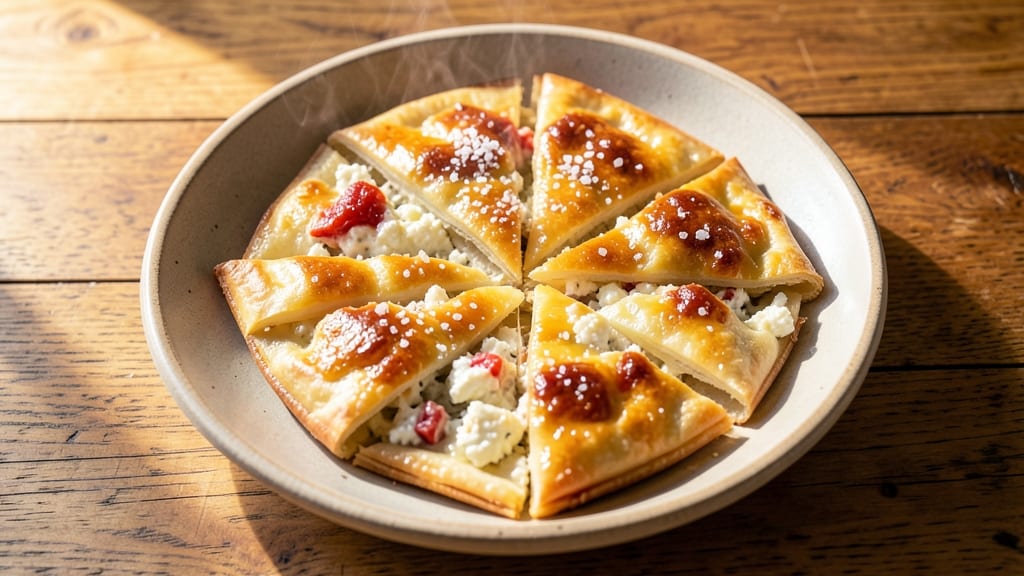
This Albanian byrek with cheese recipe delivers the flaky, melt-in-your-mouth layers that make it a beloved Balkan staple. The secret lies in a delicate dough that encases rich, salty feta—creating a crispy, golden exterior and tender interior that dissolves with every bite.
I first discovered this dish during a trip to Albania, where street vendors served it piping hot with a sprinkle of flaky salt.
The recipe begins with a simple yet precise dough made from flour, water, and a touch of oil, rolled paper-thin to achieve those signature flaky layers. The filling combines crumbled feta with a hint of salt and sometimes eggs, depending on regional tradition.
Baking at high heat ensures a crispy crust while keeping the cheese creamy and gooey inside—no dry or rubbery results here.
What you'll end up with is a dish that balances texture and flavor perfectly: crisp edges, tender layers, and melted cheese that practically oozes with every cut. The aroma of baking byrek fills the kitchen, making it impossible to resist slicing into warm, golden pieces straight from the oven.
This recipe serves as both an appetizer and a satisfying snack.
Serve with a sprinkle of flaky salt and perhaps a side of yogurt or roasted vegetables for a complete meal. The versatility of byrek makes it perfect for gatherings or a quick, delicious bite. Let’s get started on creating your own flaky, restaurant-quality byrek at home.
Ingredients for albanian byrek with cheese
Six simple ingredients create the flaky, golden layers you crave in Albanian byrek.
| Ingredient | Amount | Notes |
|---|---|---|
| All-Purpose Flour 🌾 | 3 cups | Sifted for light texture |
| Unsalted Butter 🧈 | ½ cup | Cold, cubed for flakiness |
| Ice Water 💧 | ½ cup | Chilled for crisp layers |
| Feta Cheese 🧀 | 1 ½ cups | Crumbled, salty variety |
| Large Eggs 🥚 | 2 whole | Optional for binding |
| Flaky Sea Salt 🧂 | 1 tsp | For finishing touch |
| Vegetable Oil 🫒 | 2 tbsp | For brushing dough |
| Olive Oil 🫒 | 1 tbsp | For drizzling |
The flour is non-negotiable here—King Arthur or Gold Medal brands work best for that tender yet crisp texture. Cold butter is key: cut it into small cubes and keep it chilled until the last minute. I always grab the European-style feta from the specialty cheese section at Whole Foods—it's saltier and crumbles better. If you can't find it, regular feta works too, just drain it well to avoid soggy byrek. The eggs are optional but help bind the filling if you're using extra feta.
No flaky salt? Diamond Crystal kosher salt works in a pinch—just sprinkle it lightly. Running short on butter? Vegetable shortening at the same amount gives similar flakiness. The dough needs to rest for 30 minutes before rolling—don't skip this! For extra richness, add a pinch of nutmeg to the filling. And if you're feeling fancy, mix in a tablespoon of sour cream with the feta for a creamier bite. The olive oil? Use a good-quality extra-virgin—it makes all the difference when drizzled on top.
This dough keeps 2 days wrapped in plastic in the fridge. For best results, bake fresh, but you can freeze the rolled-out dough for up to 1 month—just thaw before baking. The finished byrek reheats beautifully in a 350°F oven for 10 minutes. Store leftovers in an airtight container for 3 days, but honestly? It disappears fast—especially when you slice it warm with that flaky salt sprinkled on top.
Why You'll Love This Recipe
- No Yeast Needed: I swear by this—just flour, butter, and ice water. No waiting for dough to rise, no yeast headaches. Roll it out while the coffee brews, then bake. That’s it.
- Salty-Sweet Magic: The feta melts into gooey perfection, while the crispy edges? Chef’s kiss. No fancy seasoning—just the tangy cheese, a beaten egg wash, and that buttery flakiness. Simple, but it sticks with you.
- Breakfast or Snack: Honestly, I make this for breakfast, lunch, or a midnight craving. Slice it up for a quick meal, pack it for a picnic, or serve it warm with a drizzle of olive oil. It’s that adaptable.
- Budget-Friendly Staples: Flour, butter, eggs, and feta—ingredients I already have. No specialty items, no last-minute grocery runs. Leftovers? Reheat in seconds. My wallet and I both approve.
Step-by-step instructions for Albanian byrek with cheese
Here's how to create those signature flaky layers and gooey feta filling every time.
Make the Dough with Perfect Flakiness
In a large mixing bowl, combine the 3 cups all-purpose flour and 1 teaspoon flaky sea salt. Cut in the ½ cup cold unsalted butter using a pastry cutter or your fingers until the mixture resembles coarse crumbs with pea-sized butter pieces remaining. This cold butter is what creates those beautiful flaky layers.
Add the 2 whole large eggs and mix gently with a fork until the dough begins to come together. Gradually add the ½ cup ice water, 1 tablespoon at a time, mixing just until the dough forms a shaggy mass. Avoid overmixing - you're looking for a slightly sticky dough that holds together when pressed.
Turn the dough out onto a lightly floured surface and knead gently just 4-5 times until smooth. Wrap in plastic wrap and refrigerate for 30 minutes. This resting period relaxes the gluten and makes rolling easier. Real talk: don't skip this - it's what prevents tough byrek.
Layer the Cheese Filling Properly
Preheat your oven to 375°F. On a lightly floured surface, roll out the chilled dough into a 12-inch circle about ⅛-inch thick. Transfer to a parchment-lined baking sheet. Here's the thing - you want to make sure your rolling pin isn't too hot, or it'll melt the butter and make the dough sticky.
Sprinkle 1 cup of the crumbled feta cheese evenly over the rolled-out dough, leaving a 1-inch border around the edges. This prevents the cheese from leaking out during baking. The salty feta will melt beautifully between the flaky layers, creating that signature Albanian texture.
Drizzle 1 tablespoon olive oil lightly over the cheese, then fold the dough up like a square envelope, sealing the edges tightly. Press gently to create a neat package. This folding technique ensures even baking and maximum flakiness throughout.
Create the Signature Flaky Layers
Using a sharp knife, cut the sealed package diagonally into 6 equal triangles. Brush the tops generously with 2 tablespoons vegetable oil, being careful not to let the oil pool - you want an even coating. This oil is what creates that golden, crispy exterior while keeping the interior tender.
Arrange the triangles on a parchment-lined baking sheet, cutting side down. Bake for 25-30 minutes until the byrek is deep golden brown and the cheese is fully melted. You'll know it's done when the edges are crisp and the aroma fills your kitchen - that's the real test.
For extra flakiness, I like to tent the byrek loosely with foil after 15 minutes of baking, then uncover and bake until golden. This two-stage approach helps develop those signature layers without drying out the cheese filling.
Pro Tips For Making Albanian Byrek With Cheese
- Chill the Dough Properly: After kneading, wrap the dough in plastic and refrigerate for at least 30 minutes—this prevents shrinking when rolled out. I used to skip this and ended up with a sad, uneven byrek that looked more like a deflated balloon than a golden pastry.
- Use Room-Temp Butter: Let your unsalted butter sit out for 30 minutes before mixing it into the dough—this ensures even distribution and a flakier texture. Cold butter creates pockets of resistance, and nobody wants a byrek that fights back during baking.
- Don’t Overfill the Phyllo: Fill the dough layers with cheese just enough to peek through when folded—overstuffing makes it gummy and uneven. I learned this after my first attempt looked like a cheese volcano had erupted inside.
- Bake Until Golden, Not Just Set: Keep an eye on the byrek until it’s deep golden brown, not just firm to the touch—this means the cheese is fully melted and the crust is crisp. Underbaking leaves it pale and doughy, which is a crime for this dish.
Regional styles of albanian byrek with cheese
Northern Albania's Layered Style
In the northern regions like Shkodër and Kukës, byrek is often made with a slightly thicker dough—about ⅛-inch thick—that’s rolled out in a rectangular shape rather than a circle. The filling here typically includes 1.5 cups of feta mixed with 1 beaten egg for extra binding, creating a creamier texture.
Locals often add a pinch of black pepper to the cheese, giving it a subtle kick that balances the saltiness. 🌶️
Southern Albania's Triangular Cut
Down in the south, particularly in Tirana and Vlorë, byrek is traditionally cut into 6-8 triangular pieces after baking, rather than the square or rectangular cuts you might see elsewhere. The dough here is rolled slightly thinner—around ⅛-inch to 1/16-inch thick—to maximize flakiness.
The filling often includes a mix of feta and ricotta for a lighter, airier bite, and the triangles are arranged closely together on the baking sheet to ensure even browning.
Kosovo's Egg-Enriched Version
In Kosovo, byrek often incorporates 3 beaten eggs into the filling, creating a richer, almost custard-like center. The dough remains similar to the Albanian style but is sometimes brushed with yogurt before baking for extra tenderness.
This version is especially popular during religious holidays and family gatherings, where it’s served with a side of spicy ajvar (roasted red pepper relish) to cut through the richness.
Greek-Inspired Variations
In regions with Greek influence, like parts of southern Albania near the border, byrek sometimes includes grated kefalotyri cheese (a Greek hard cheese) mixed with feta for a sharper, tangier flavor. The dough may also incorporate a touch of lemon zest for brightness.
These versions are often baked in a clay pot for a rustic touch, giving the byrek a slightly earthy flavor that pairs beautifully with the salty cheese.
Modern Albanian Twists
Today, Albanian chefs are putting their own spin on byrek, including fillings like spinach and feta or potato and cheese for a heartier bite. Some even experiment with smoked cheese or a hint of garlic powder in the dough for added depth.
The key to these modern versions? Keeping the dough crisp and the cheese melt-in-your-mouth gooey—just like the original. 💫
Nutrition facts
Frequently asked questions
Can I make byrek without eggs in the filling?
The eggs help bind the cheese, but they're optional. For a vegan version, simply omit them and use 1.5 cups of extra crumbled feta (well-drained if watery). The dough's structure will hold the filling together during baking, though you might get slightly less creaminess in the center.
Why did my byrek turn out dense instead of flaky?
Dense byrek usually means one of two things: either the butter melted too early (warm dough or overworking) or the dough wasn't rested properly. Always keep your butter cold and refrigerate the dough for at least 30 minutes before rolling. Also, avoid overmixing - just combine until the dough holds together.
What's the best way to reheat leftover byrek?
For crispy, flaky results, reheat in a 375°F oven for 8-10 minutes on a baking sheet. If you're short on time, use the air fryer at 350°F for 5 minutes - it crisps the exterior perfectly. Microwaving works in a pinch but will make the dough soggy.
Can I use other cheeses besides feta?
While traditional Albanian byrek uses feta, you can experiment! Try ricotta for a lighter texture or halloumi for a firmer bite. For extra richness, mix half feta and half goat cheese. Just remember - saltier cheeses need less added salt, while milder cheeses may need an extra pinch.
How do I make byrek ahead of time?
You can prep the dough 2 days ahead and store it wrapped in plastic in the fridge. For the assembled byrek, bake it fresh for best texture, but you can freeze the unbaked triangles for up to 1 month. Thaw overnight in the fridge before baking. Pro tip: Wrap each triangle individually in parchment paper before freezing to prevent sticking.