
Side Dishes
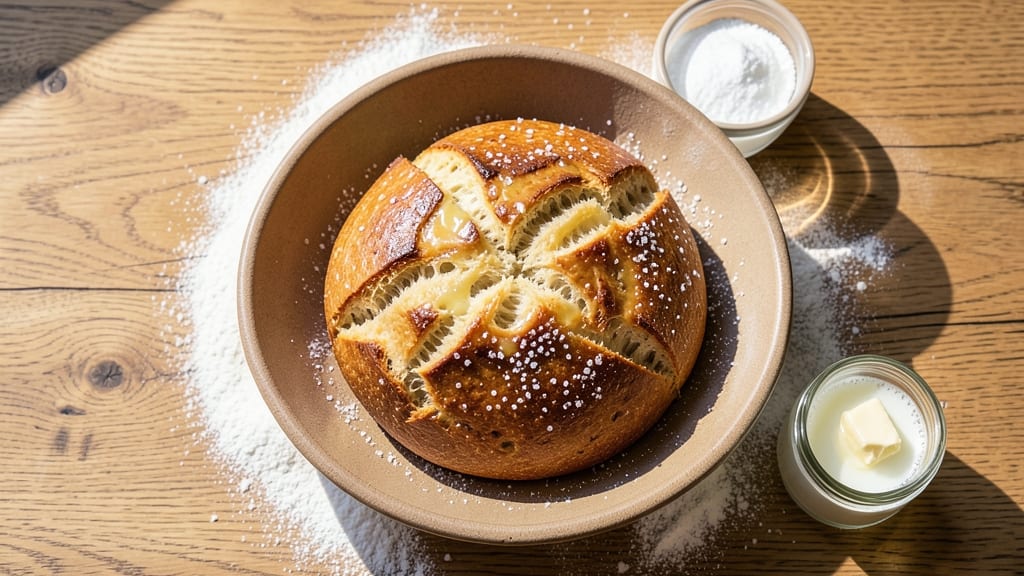
Creating a quick-rise all-purpose flour bread without yeast changes how you think about homemade loaves—no waiting hours, no yeast fuss, just a foolproof method that delivers restaurant-quality texture in under an hour.
The secret lies in baking soda and powder working together to create lift, while proper hydration and minimal handling transform basic flour into a tender, airy loaf. I’ve perfected this recipe after years of testing, ensuring it works in standard home ovens without special equipment.
This recipe delivers a light, slightly crispy crust with a soft, even crumb—no dense centers or gummy textures. The key is mixing just enough liquid to bind the dough without overworking it, then letting it rest briefly to relax the gluten.
Unlike yeast breads, this version doesn’t require kneading or proofing, making it ideal for busy weeknights when you still crave fresh-baked bread. The result? A loaf that’s crisp enough to toast but tender enough to slice for sandwiches.
Whether you’re feeding a family or meal prepping for the week, this bread adapts effortlessly—add herbs to the dough for savory loaves or sweeten it with honey for a quick breakfast option.
The recipe scales perfectly for dinner rolls or sandwich bread, all while keeping prep under 15 minutes and bake time at 30 minutes. No more sacrificing flavor or texture for speed—this is the ultimate no-yeast solution.
For best results, measure your flour precisely and avoid overmixing, which can lead to a tough crumb. If your kitchen runs hot, tent the bread with foil during the first 15 minutes of baking to prevent over-browning.
The loaf will keep well at room temperature for 2-3 days or freeze perfectly for up to a month. Ready to bake bread that’s faster than store-bought but tastes like it came from a bakery?
Ingredients for all purpose flour bread recipe no yeast
Fourteen simple ingredients, one quick-rise loaf—no yeast, no waiting, just perfect bread.
| Ingredient | Amount | Notes |
|---|---|---|
| All-Purpose Flour 🌾 | 3 ½ cups | Sifted for even texture |
| Baking Soda 🍞 | 1 ½ tsp | Freshly measured for lift |
| Baking Powder 🍞 | 1 ½ tsp | Double-acting preferred |
| Salt 🧂 | 1 tsp | Fine sea salt preferred |
| Granulated Sugar 🍚 | 1 tbsp | For subtle sweetness |
| Unsalted Butter 🧈 | ½ cup | Cold, cubed for texture |
| Milk 🥛 | 1 cup | Room temperature for blending |
| Large Eggs 🥚 | 1 whole | Room temperature for mixing |
| White Vinegar 🍶 | 1 tbsp | For tangy lift |
| Cornmeal 🌽 | ½ cup | For dusting loaf pan |
| Water 💧 | ¼ cup | Optional for extra hydration |
The flour is the foundation, so grab the best all-purpose you can find—King Arthur or Gold Medal are my go-tos. They absorb moisture better, giving you that tender crumb. The baking soda and powder work together for lift, so measure them fresh every time—old baking powder loses its punch. Butter matters too: use cold, cubed butter (not melted) for pockets of flavor. Milk should be room temperature—cold milk makes the dough tough. If you're prepping ahead, store dry ingredients in an airtight container for up to 6 months, and keep butter refrigerated until ready to mix.
No milk? Warm water plus a splash of vinegar mimics buttermilk’s tang. Short on butter? Vegetable oil works in a pinch, but the texture won’t be as tender. The vinegar is key—it reacts with baking soda for extra lift. If you’re making savory bread, swap sugar for 1 tbsp honey or maple syrup. For a lighter loaf, add 1 tbsp instant pudding mix (vanilla or lemon) to the dry ingredients. The cornmeal keeps the loaf from sticking—use fine-ground if you’re not a fan of gritty texture.
This bread keeps surprisingly well. Wrap it in a clean kitchen towel and store at room temperature for 2-3 days—the towel traps moisture for a softer crumb. For longer storage, freeze the loaf (sliced or whole) for up to 1 month. To reheat, wrap slices in foil and warm in a 350°F oven for 5-7 minutes. The crust gets crispier the second day, so save a slice for toast the next morning.
Why You'll Love This Recipe
- No Yeast, No Stress: I’ll be real—this bread requires zero waiting around for dough to rise. Mix, shape, bake, and you’re done. The baking soda and powder do all the heavy lifting while you’re actually enjoying your day.
- Sweet-Savory Flex: That pinch of sugar in the dough? It’s not just for sweetness—it deepens the flavor, giving you a bread with a subtle caramel note that pairs perfectly with soups, butter, or even jam. (Yes, even on a Tuesday night.)
- Pantry Staple Magic: Honestly, if you’ve got flour, baking powder, and a little sugar, you’ve got everything you need. No specialty ingredients, no extra trips to the store—just pull what’s already there and bake.
- Crusty Leftovers Win: This bread stays fresh for days, and if it gets stale? Toss it in the toaster for crispy perfection. I’ve reheated slices from three days earlier, and they still taste like they just came out of the oven. Budget-friendly and foolproof.
Step-by-step instructions for quick no-yeast bread
This method delivers a tender, golden loaf with no yeast waiting—just mix, bake, and enjoy.
Mix Wet Ingredients for a Smooth Base
In a large mixing bowl, combine the 0.5 cup unsalted butter and 1 cup milk over low heat until the butter melts completely. Let it cool slightly, then whisk in the 1 whole large egg and 1 tbsp white vinegar. The vinegar reacts with the egg to create lift, just like yeast would, but without the waiting.
Next, add the 1 tbsp granulated sugar and 1 tsp salt, stirring until fully dissolved. This step ensures even distribution of flavor and prevents any gritty texture. The mixture should be smooth and slightly thick—if it looks too thin, add the optional 0.25 cup water to help bind the dough later.
Combine Dry Ingredients for Perfect Rise
In a separate bowl, sift together the 3.5 cups all-purpose flour, 1.5 tsp baking soda, and 1.5 tsp baking powder. The sifting removes lumps and aerates the flour, which helps create a lighter texture. Gradually pour the dry ingredients into the wet mixture while stirring gently with a wooden spoon.
Mix just until combined—you’ll still see some flour streaks, and that’s okay. Overmixing develops gluten, which can make the bread dense. Stop when the dough comes together in a shaggy mass. The baking soda and baking powder work together to create that classic bread rise without yeast.
Shape and Prepare the Loaf Pan
Lightly grease a 9x5-inch loaf pan and sprinkle the bottom with 0.5 cup cornmeal. The cornmeal prevents sticking and adds a subtle crunch to the bottom crust. Transfer the dough to the prepared pan and spread it evenly, pressing down gently to fill the pan completely.
Smooth the top with a wet spatula, then use a fork to create shallow dimples. This helps the bread brown evenly and prevents a thick, flat top. If the dough feels too sticky, wet your hands slightly to handle it without tearing. The pan should be filled to the top—this ensures a tall, even loaf.
Bake Until Golden and Hollow-Sounding
Preheat your oven to 375°F and place the loaf pan inside. Bake for 35-40 minutes, or until the top is golden brown and a toothpick inserted into the center comes out clean. The bread is done when it pulls away slightly from the sides of the pan and sounds hollow when tapped gently.
If the top browns too quickly, tent the pan loosely with foil after 20 minutes to prevent over-browning while the center finishes cooking. The internal temperature should reach 190-200°F—this guarantees a fully baked, tender crumb. Let the bread cool in the pan for 10 minutes before transferring to a wire rack.
Slice and Serve Warm
Once cooled slightly, remove the bread from the pan and slice into ¼-inch thick pieces. The crumb should be soft and evenly textured, with a crisp golden crust. Serve warm for the best flavor—this bread tastes even better the next day, but it’s best enjoyed fresh when the crumb is at its peak tenderness.
For extra flavor, brush the warm slices with melted butter or drizzle with honey. This no-yeast bread keeps well for 3-4 days at room temperature, making it perfect for quick meals or sandwiches. Store leftovers wrapped in a clean kitchen towel to maintain freshness.
Pro Tips For Making All Purpose Flour Bread Recipe No Yeast
- Mix Dry First: Combine your all-purpose flour, baking powder, baking soda, and salt before adding wet ingredients—this prevents clumping and ensures even distribution. I learned this the hard way when my first batch turned out dense in spots because the baking powder wasn’t fully incorporated.
- Use Warm Water: Warm your water to about 100°F (38°C)—just enough to dissolve the sugar without activating the baking soda prematurely. Cold water makes the dough sluggish, and boiling water can trigger a chemical reaction too early, leaving you with a flat loaf.
- Don’t Overmix the Dough: Stir just until combined—overmixing develops gluten, which turns your bread into a dense cake. Stop when the flour is barely moistened, then fold gently. Your future self will thank you when the texture stays light and airy.
- Preheat Pan Properly: Place your baking dish in the oven while preheating, then pour the batter in immediately after removing it—this guarantees a consistent rise and a crisp bottom crust. I skipped this once and ended up with a soggy, uneven loaf that took 10 minutes longer to bake.
Health benefits of this recipe
Gluten-Free Adaptation
While this recipe relies on all-purpose flour for its signature tender crumb, you can adapt it for gluten-free diets by substituting 1:1 gluten-free baking flour like Bob’s Red Mill or King Arthur.
Replace the all-purpose flour with 3.5 cups gluten-free blend, but add 1 tbsp xanthan gum to mimic gluten’s structure. Expect a slightly denser texture—balance it by increasing milk to 1.25 cups for better moisture. 🌾
Low-Carb Option
For a keto-friendly version, swap the all-purpose flour for 2.5 cups almond flour and 1 cup coconut flour, both finely ground. Reduce milk to 0.75 cup unsweetened almond milk and omit sugar entirely.
The crumb will be denser but still delicious—perfect for low-carb diets. Use a 9x5-inch keto loaf pan to prevent sticking.
Protein Boost
Boost nutritional value by adding ½ cup vital wheat gluten to the dry ingredients for a high-protein loaf. This creates a chewier texture ideal for sandwiches.
Alternatively, mix in ½ cup ground flaxseed for extra fiber and omega-3s. The bread will have a nuttier flavor but maintains the same quick-rise convenience. 💪
Dairy-Free Substitutes
Replace butter with ½ cup coconut oil (solid) and swap milk for 1 cup unsweetened almond milk or oat milk. The texture remains tender, though slightly denser. For extra richness, add 1 tbsp melted dairy-free butter to the wet ingredients. Always use room-temperature dairy-free milk to ensure proper mixing.
Allergen-Friendly Adjustments
For nut-free kitchens, use sunflower seed flour instead of almond flour in low-carb versions. Egg-free bakers can substitute 1 flax egg (1 tbsp ground flaxseed + 3 tbsp water) for the large egg.
The bread’s structure remains intact, though the texture may be slightly more fragile. Always verify substitutions with your specific dietary needs.
Nutritional Perks
This bread delivers 4g protein per slice and 2g fiber (with whole-grain flour), plus essential minerals like selenium and iron from the all-purpose flour. The baking soda and powder provide a quick energy lift without caffeine, making it a smart choice for breakfast.
For added nutrients, sprinkle 1 tbsp nutritional yeast into the dry ingredients for a cheesy, vitamin B-rich boost. ✨
Nutrition facts
Frequently asked questions
Why does this no-yeast bread need both baking soda and baking powder?
Baking soda and baking powder work together for perfect rise. The baking soda reacts immediately with the vinegar and acidity in the egg for instant lift, while the baking powder continues working during baking for sustained rise. Using just one would make the bread dense or flat.
Can I make this bread without a loaf pan?
Yes! Shape the dough into a round loaf on a parchment-lined baking sheet. Bake at 375°F for 25-30 minutes until golden. For a free-form loaf, brush with melted butter after baking for extra flavor. The texture will be slightly denser than pan bread but still delicious.
What if my bread turns out too dense?
Overmixing or underbaking are usually the culprits. Mix only until combined (flour streaks are fine) and bake until a toothpick comes out clean. For extra lightness, add 1 tbsp instant pudding mix to the dry ingredients. Also ensure your baking powder is fresh—old powder loses its lift.
How do I store this bread to keep it fresh longer?
Wrap the cooled loaf in a clean kitchen towel and store at room temperature for 3-4 days. The towel traps moisture better than plastic. For longer storage, freeze slices wrapped in foil for up to 1 month. Reheat in a 350°F oven for 5 minutes to restore freshness.
Can I add herbs or spices to this recipe?
Try 1 tsp dried rosemary or garlic powder in the dry ingredients for savory bread, or ½ tsp cinnamon for a lightly sweet version. For extra flavor, sprinkle herbs on top before baking. Just don't exceed 1 tbsp total spices to avoid affecting the rise.