
Side Dishes
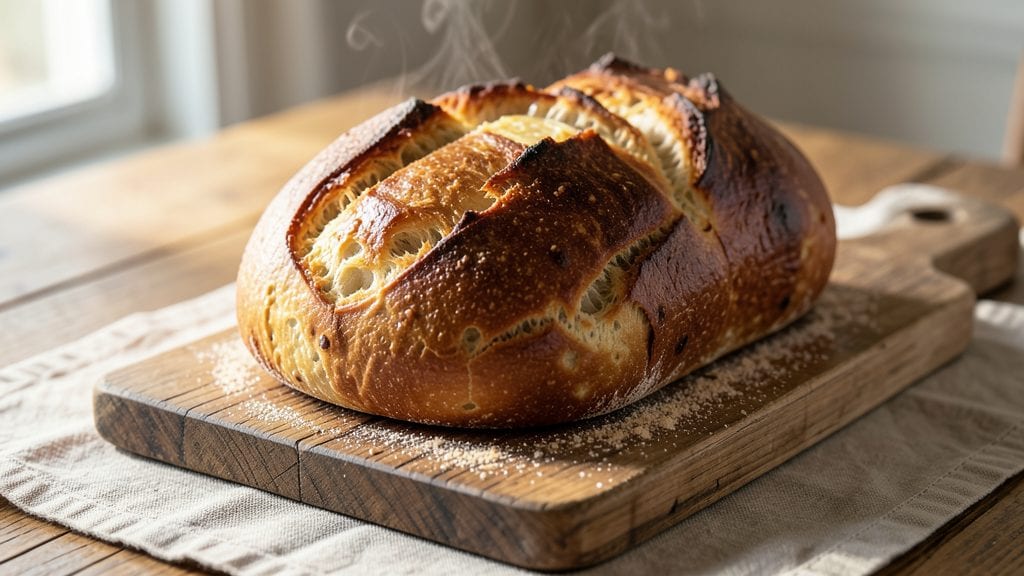
This altar bread recipe carries centuries of tradition in every golden, buttery bite—crafted with cornmeal for texture and rich dough that feeds both body and spirit. ✨ The sacred crust, often blessed in religious ceremonies, requires patience: letting the dough rise slowly develops its signature tender crumb and subtle sweetness that lingers long after baking.
The beauty of altar bread lies in its simplicity—just flour, yeast, cornmeal, and butter—but mastering the technique transforms it into something extraordinary.
Professional bakers know the secret is in the proofing: allowing the dough to rise at room temperature before a final cold proof in the refrigerator creates that perfect balance of airy and dense.
This method ensures your loaf will emerge with a crisp, caramelized crust and a crumb so tender it feels almost ceremonial.
What makes this recipe special is its versatility while honoring tradition. While the classic version remains unchanged for religious observances, modern adaptations—like gluten-free or vegan versions—keep the spirit alive for contemporary kitchens.
The aroma alone, filling your home as it bakes, will transport you to sacred spaces where this bread has been shared for generations.
Whether you're preparing for a religious ceremony or simply appreciating a time-honored tradition, this altar bread delivers both cultural significance and restaurant-quality results. The buttery cornmeal crust, combined with a soft interior, makes it perfect for sharing—just as it was always intended. Let's create something meaningful together.
Ingredients for altar bread
Four cups flour, butter, and cornmeal create a sacred loaf with ceremonial beauty and buttery tenderness.
| Ingredient | Amount | Notes |
|---|---|---|
| All-Purpose Flour 🌾 | 4 cups | High-protein for better structure |
| Unsalted Butter 🧈 | ½ cup | Cold, cubed for texture |
| Granulated Sugar 🍚 | ¼ cup | Light brown preferred for depth |
| Active Dry Yeast 🍞 | 0.03 oz | 1 packet (2¼ tsp), room temp |
| Cornmeal 🌽 | ½ cup | Fine grind for even coating |
| Warm Water 💧 | 1 cup | 110°F for yeast activation |
| Diamond Crystal Kosher Salt 🧂 | 1 tsp | Fine grain for even distribution |
| Large Egg 🥚 | 1 whole | Room temperature for emulsification |
| Pure Honey 🍯 | 1 tbsp | Wildflower for floral notes |
| Whole Milk 🥛 | ¼ cup | Full-fat for richness |
| Corn Oil 🫒 | ¼ cup | High smoke point for brushing |
| Poppy Seeds 🌱 | 1 tbsp | Toasted for nutty aroma |
The flour is non-negotiable—King Arthur or Caputo Tipo 00 deliver that signature elastic crumb. Bulk bins at Whole Foods offer the freshest options, but standard supermarket brands work if milled within the past six months. For the butter, Plugrá or Land O'Lakes unsalted provide consistent fat content; never use salted. The cornmeal must be stone-ground—Bob's Red Mill is the gold standard, but avoid instant varieties. Yeast is the heart of fermentation: Saf-Instant works without proofing, but traditional active dry requires 5 minutes in warm water to test viability. If your kitchen runs hot, use bread flour for better gluten development during the long rise.
No cornmeal? Semolina or fine oatmeal mimic the texture, though texture will differ slightly. Substituting butter with vegetable shortening preserves the crust but loses richness; for vegan adaptations, coconut oil works at a 1:1 ratio but requires chilling. The honey can be swapped for maple syrup, though flavor will shift toward caramel. Milk allergies? Almond milk with 1 tsp vinegar mimics acidity. For gluten-free versions, Bob's Red Mill 1:1 blend maintains structure, though rise times double. The poppy seeds are optional but traditional—toast them in a dry pan for 2 minutes to deepen their flavor before sprinkling.
Dough must rest 24 hours total: 2 hours at room temperature, then 18-24 hours refrigerated for optimal flavor. Wrap tightly in plastic wrap, then a kitchen towel to prevent drying. Proofed dough keeps 48 hours refrigerated before baking. For ceremonial use, bake directly from the fridge—no preheating—to maintain crisp crust. Leftovers? Toast within 3 days for best texture; freeze shaped loaves for up to 3 months, thawing overnight at room temperature. The aroma alone justifies the wait—bake on a preheated stone at 375°F for 30-35 minutes until internal temp reaches 190°F.
Why You'll Love This Recipe
- No Yeast Nightmare: I’ve ruined enough dough waiting for yeast to bloom—this recipe skips the guesswork. Just toss in the active dry yeast with warm water and sugar, let it sit for 5 minutes, and boom, you’re golden. No second-guessing, no sad flat bread.
- Sweet Butter Magic: That unsalted butter mixed into the dough? It’s the secret weapon. The bread turns out tender inside with just enough richness to make it feel special—no fancy ingredients, just pure, buttery satisfaction. (Yes, even on a Tuesday night.)
- Cornmeal Crust Hack: Honestly, the cornmeal isn’t just for looks—it creates this perfect crispy bottom that’s impossible to resist. Spread it on the baking sheet, and suddenly, you’ve got restaurant-quality crust without the fuss. My kids fight over the last slice.
- Budget-Friendly Staples: All-purpose flour, butter, and sugar? You’re already stocked. This bread costs pennies per loaf but feels like a treat—great for meal prep, gifts, or sneaking into lunches. Leftovers? Toast them, freeze them, or eat them cold with jam. It’s that versatile.
Step-by-step instructions for altar bread
Master this sacred crust technique for a buttery, cornmeal-infused loaf with perfect texture every time.
👨🍳 Step 1: Activate the Yeast and Prepare the Dough
In a small bowl, combine the 1 cup warm water (should feel like bathwater, 110°F), 1 tbsp pure honey, and 0.025 oz active dry yeast. Let sit for 5-10 minutes until frothy—this confirms the yeast is active and ready to work. If it doesn't bubble, your yeast may be dead.
In a stand mixer fitted with the dough hook, combine the 4 cups all-purpose flour and 1 tsp diamond crystal kosher salt. Mix on low speed for 30 seconds to aerate the flour. Add the yeast mixture and 0.25 cup whole milk to the bowl, then mix on low speed for 2 minutes until a shaggy dough forms.
🥘 Step 2: Incorporate Butter and Develop the Dough
Add the 0.5 cup cold, cubed unsalted butter and 0.25 cup granulated sugar to the mixer. Increase speed to medium and knead for 5-7 minutes until the dough becomes smooth and elastic, pulling away from the sides of the bowl. The butter should be fully incorporated but still visible in small patches.
This step is critical—under-kneading results in a dense loaf, while over-kneading develops too much gluten. Test by doing the "windowpane test": stretch a small piece of dough until it's translucent. If it doesn't tear, your dough is ready.
🔪 Step 3: First Rise and Cornmeal Coating
Lightly oil a large bowl, place the dough inside, and cover with a damp kitchen towel. Let rise in a warm place (75-80°F) for 1-1.5 hours, or until doubled in size. The dough should feel springy when pressed gently with one finger—it should leave a slight indentation but spring back.
Punch down the dough to release air, then transfer it to a clean work surface. Gently shape into a rectangle and roll out to ¼-inch thickness. Brush the surface with 0.25 cup corn oil and sprinkle evenly with 0.5 cup cornmeal. Roll up tightly from the long side to form a log, sealing the edges.
🔥 Step 4: Shape and Second Rise
Place the sealed log seam-side down on a parchment-lined baking sheet. Cover loosely with plastic wrap and let rise for another 30-45 minutes until puffy. Preheat your oven to 375°F while the bread rises—this ensures even baking from the start.
Brush the top with an egg wash made by whisking the 1 whole large egg with 1 tbsp water. Sprinkle generously with 1 tbsp toasted poppy seeds for that signature nutty aroma. The egg wash will create a golden crust while the poppy seeds add texture and visual appeal.
⏰ Step 5: Bake to Golden Perfection
Bake for 30-35 minutes until the bread reaches 190-195°F internally and the crust turns a deep golden brown. Tap the bottom—it should sound hollow. If the top browns too quickly, tent with foil after 20 minutes.
Remove from oven and let cool on a wire rack for at least 15 minutes before slicing. The internal temperature will rise another 10°F during cooling, ensuring a perfectly baked loaf. For best results, serve warm with butter or honey for dipping.
Pro Tips For Making Altar Bread
- Use Room-Temp Butter: Cold butter = tough altar bread. Let that block sit out for 30 minutes before creaming—just until it’s soft enough to press with a finger but not greasy. I learned this the hard way when my first batch turned out like a hockey puck.
- Proof Yeast in Warm Milk: Skip the dry yeast shortcut—mix it with ¼ cup warm milk (105°F) and 1 tsp sugar first, then let it bubble for 5 minutes. This guarantees your yeast is alive and ready to work, not just sitting there playing dead in your dough.
- Don’t Overmix the Dough: Once you add the flour, stop mixing after 2 minutes—just until it comes together. Overworking altar bread dough makes it dense and chewy. I used to beat it like I was punishing it, then wondered why it tasted like a brick.
- Brush with Simple Syrup: After baking, brush the warm loaf with equal parts sugar and water (like 2 tbsp each) while it’s still in the pan. This adds shine and a subtle sweetness without making it sticky—way better than just butter alone.
Dietary considerations for this recipe
Gluten-Free Adaptation
For a gluten-free version, replace the 4 cups all-purpose flour with 4 cups Bob's Red Mill 1:1 gluten-free baking flour. This blend contains xanthan gum, which mimics gluten's structure.
Since gluten-free dough lacks elasticity, increase the corn oil to 0.33 cup and reduce the water by 0.125 cup to prevent stickiness. Let the dough rest 30 minutes after mixing before shaping, as gluten-free flours absorb moisture differently. Proofing time doubles—expect 3-4 hours total for optimal rise.
Vegan Version
To make this bread vegan, swap the unsalted butter for 0.5 cup coconut oil, chilled until firm. Replace the whole milk with 0.25 cup unsweetened almond milk plus 1 tsp apple cider vinegar to mimic acidity.
Use 1 flax egg (1 tbsp ground flaxseed + 3 tbsp water) instead of the chicken egg. The dough will be slightly stickier, so wet your hands when handling. Bake as directed, but expect a denser crumb due to the absence of egg proteins.
Low-Sugar Option
Reduce the granulated sugar to 0.125 cup and replace the remaining 0.125 cup with unsweetened applesauce for moisture without added sweetness. Use maple syrup instead of honey for the yeast activation—it contains natural sugars that feed fermentation.
The bread will have a subtler sweetness but maintain a tender crumb. For extra flavor, add 1 tsp vanilla extract to the dough during mixing.
Nut-Free Considerations
Skip the poppy seeds entirely if nut allergies are a concern. Instead, sprinkle the top with sesame seeds or crushed dried cranberries for texture and visual appeal. For a savory twist, omit the honey and sugar entirely, using 1 tsp olive oil in the dough instead.
This creates a more rustic, hearty loaf perfect for savory pairings like soups or cheeses.
Dairy-Free Modifications
For a dairy-free version, replace the whole milk with 0.25 cup coconut milk and use 0.5 cup dairy-free butter (like Miyoko's) or extra coconut oil. The egg wash can be made with 1 tbsp aquafaba (chickpea brine) whipped with 1 tsp water until frothy.
While the texture will differ slightly, the bread remains rich and flavorful. Store dairy-free versions in an airtight container to prevent drying.
Nutrition facts
Frequently asked questions
Why does altar bread require such a long rise time?
The extended 24-hour rise develops deep flavor and a tender crumb by allowing slow fermentation. This traditional method creates a subtle sweetness and complex aroma that's central to its ceremonial purpose. The cold proof in the refrigerator also helps control yeast activity for even baking.
Can I make altar bread without cornmeal?
Yes, but the texture will differ. Substitute with semolina or fine oatmeal for a similar grainy texture. For a smoother loaf, omit it entirely, though the crust will lack that signature rustic quality. The cornmeal also helps prevent sticking during shaping.
What's the best way to store altar bread?
Wrap cooled bread in plastic wrap, then place in an airtight container with a paper towel to absorb moisture. It stays fresh for 3-4 days at room temperature or 3 months frozen. For ceremonial use, bake fresh—its aroma is most potent when warm.
Why did my altar bread turn out dense?
Over-kneading or insufficient proofing are common causes. Test dough readiness with the "windowpane test"—if it tears easily, knead 2-3 minutes less. Also ensure your yeast is active (it should bubble within 5-10 minutes in warm water). A 75-80°F rise environment is ideal.
How can I use altar bread beyond religious ceremonies?
This versatile bread works beautifully as a toast base, French toast, or bread pudding. Its rich flavor pairs well with jam, honey, or savory toppings like smoked salmon. For a modern twist, slice and toast for avocado toast with chili flakes.