
Appetizers
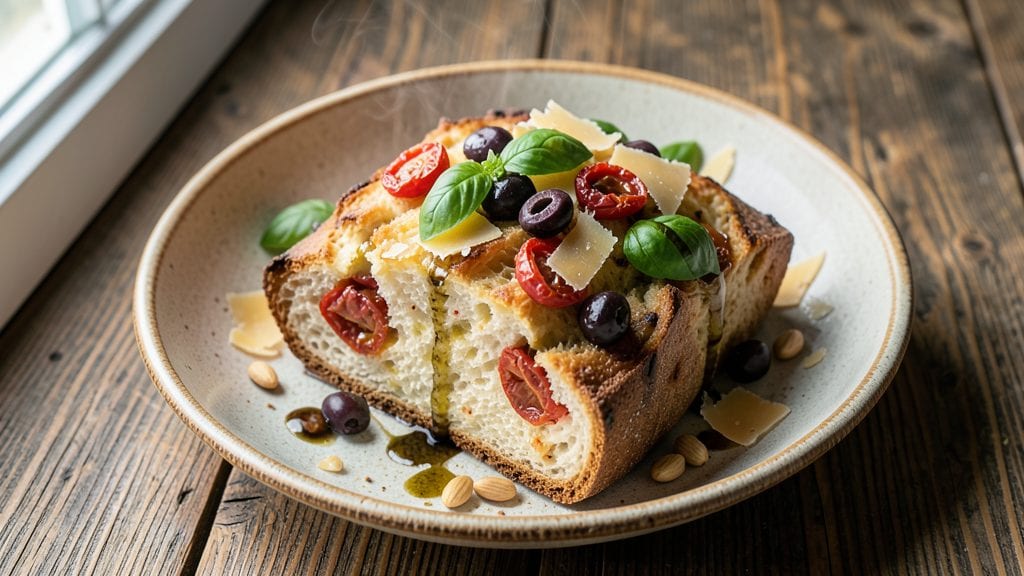
This antipasto bread loaf recipe transforms a simple loaf into a savory Italian masterpiece packed with cured meats, cheeses, and sun-dried tomatoes—perfect for pulling apart and sharing. The secret lies in layering flavors within the dough itself, creating a bread that’s as delicious as it is impressive.
I developed this recipe after years of experimenting with Italian-inspired breads, and it’s become a crowd-pleaser at every gathering.
The dough combines classic Italian techniques with bold antipasto ingredients like salami, provolone, and Kalamata olives, all baked into a golden, pull-apart loaf. What makes this recipe special is how the flavors meld during baking, resulting in a bread that’s rich, aromatic, and impossible to resist.
The best part? It’s foolproof—no advanced skills required, just a few simple steps and a little patience.
By the time it emerges from the oven, you’ll have a loaf with crispy edges, a tender crumb, and pockets of melted cheese and cured meats waiting to be pulled apart.
Serve it warm with a glass of Chianti or as an appetizer to kick off any meal—every bite is a flavor explosion. This is the kind of dish that turns ordinary gatherings into memorable feasts.
Whether you’re hosting a dinner party or simply craving something savory, this antipasto bread loaf delivers restaurant-quality results with minimal effort. Pair it with a simple green salad or roasted vegetables for a complete Italian-inspired spread. Let’s get baking!
Ingredients for antipasto bread loaf
Fifteen ingredients blend Italian tradition with bold antipasto flavors for a loaf that's as impressive as it is delicious.
| Ingredient | Amount | Notes |
|---|---|---|
| All-Purpose Flour 🌾 | 5 cups | Unbleached preferred for texture |
| Active Dry Yeast 🍄 | 2 ½ tsp | Fresh yeast at half the amount |
| Granulated Sugar 🍬 | 1 tbsp | Feeds yeast for activation |
| Warm Water 💧 | 1 ¼ cups | 110°F for yeast activation |
| Unsalted Butter 🧈 | ½ cup | Cold, cubed for dough |
| Large Eggs 🥚 | 2 whole | Room temperature for mixing |
| Diamond Crystal Kosher Salt 🧂 | 1 ½ tsp | Adjust for saltiness |
| Dried Oregano 🍃 | 1 tsp | Italian variety preferred |
| Garlic Powder 🧄 | 1 tsp | Fresh minced for depth |
| Dried Basil 🌿 | ½ tsp | Or 1 tbsp fresh chopped |
| Provolone Cheese 🧀 | 1 cup | Shredded, semi-soft variety |
| Pepperoni Slices 🍕 | ½ lb | Chopped into bite-sized pieces |
| Salami Slices 🥓 | ½ lb | Genoa or spicy variety |
| Kalamata Olives 🫒 | ½ cup | Pitted and halved |
| Sun-Dried Tomatoes 🍅 | ¼ cup | Oil-packed, chopped |
| Extra-Virgin Olive Oil 🫒 | ¼ cup | For dough and drizzling |
The foundation starts with unbleached all-purpose flour, which yields a tender crumb without compromising structure. For yeast, Fleischmann’s active dry yeast works reliably, but if you prefer fresh, halve the quantity—just ensure it's active by the 5-minute float test. The Diamond Crystal kosher salt is essential for flavor balance; avoid table salt, as it's too fine and can over-salt the dough. For the cured meats, Trader Joe's pepperoni and salami offer consistent quality, but any high-quality deli cuts will work. Look for Provolone with visible stretch—it melts beautifully during baking, creating those irresistible pockets of gooey goodness.
No pepperoni? Spicy soppressata or chorizo adds depth, while dried porcini mushrooms> (reconstituted and chopped) can replace olives for a meatier texture. Sun-dried tomatoes lacking? Roasted red peppers from a jar work in a pinch, though they won’t have the same concentrated sweetness. For the herbs, Penzeys Italian seasoning blend simplifies the mix, but if you're using fresh basil, chop it finely so it distributes evenly. The extra-virgin olive oil should have a peppery finish—California Extra or Colavita brands deliver consistent quality. If your dough feels too sticky, add flour 1 tbsp at a time; if it's too dry, incorporate a splash of warm water.
This loaf keeps beautifully for 3-4 days at room temperature wrapped in a clean kitchen towel, though it’s best enjoyed fresh. For longer storage, freeze portions for up to 3 months—wrap tightly in plastic and thaw at room temperature before serving. The antipasto elements can be prepped ahead and stored separately in the fridge for 2 days, making assembly a breeze on baking day. For serving, brush the top with extra olive oil and sprinkle with flaky sea salt (Maldon if you have it) for a restaurant-worthy finish. Pair with a bold Chianti or sparkling water to complement the savory notes.
Why You'll Love This Recipe
- No-Knead Magic: I swear by this dough—just mix, let it rise, and bake. No stand mixer, no fuss, just that perfect pull-apart texture from the yeast and butter doing all the work while I sip my coffee.
- Buttery, Crusty Bliss: That warm, golden crust with a tender crumb inside? The sugar caramelizes just enough to give it a subtle sweetness, while the butter keeps every bite rich and satisfying. Honestly, it’s the kind of bread that makes you close your eyes and take an extra bite.
- Party in a Loaf: Slice it for sandwiches, serve it warm with olive oil for dipping, or toss it into a charcuterie board—this loaf handles everything. I’ve used it for game day snacks, picnic lunches, and even breakfast toast. Versatile enough for any moment, no extra prep needed.
- Budget-Friendly Staple: Flour, yeast, sugar, butter—these are pantry basics that stretch far. A single loaf feeds four, and leftovers toast up beautifully for days. Between us, this is the recipe I turn to when I need something hearty without breaking the bank.
Step-by-step instructions for antipasto bread loaf
This savory Italian-inspired bread delivers pull-apart perfection with bold antipasto flavors.
Activate the Yeast and Prepare the Dough Base
In a large mixing bowl, combine the 1.25 cups warm water with the 1 tbsp granulated sugar and 2.5 tsp active dry yeast. Let this mixture sit for 5-7 minutes until it becomes frothy and bubbles form on the surface. This indicates the yeast is active and ready to work.
In a separate bowl, whisk together the 5 cups all-purpose flour, 1.5 tsp diamond crystal kosher salt, 1 tsp dried oregano, 1 tsp garlic powder, and 0.5 tsp dried basil. Create a well in the center of the dry ingredients and pour in the yeast mixture along with the 0.25 cup extra-virgin olive oil and 0.5 cup cold unsalted butter cut into small cubes. Mix until a shaggy dough begins to form.
Knead and Incorporate the Antipasto Filling
Transfer the dough to a lightly floured surface and knead for 8-10 minutes until smooth and elastic. The dough should be slightly tacky but not sticky. Shape it into a rough ball and place it back in the mixing bowl. Cover with a clean kitchen towel and let it rest for 30 minutes at room temperature.
While the dough rests, prepare the antipasto filling by chopping the 0.5 lb pepperoni slices and 0.5 lb salami slices into bite-sized pieces. Pit and halve the 0.5 cup kalamata olives, then chop the 0.25 cup sun-dried tomatoes and shred the 1 cup provolone cheese. Combine these ingredients in a separate bowl and set aside.
Shape the Loaf and Create Pull-Apart Layers
After the dough has rested, punch it down gently and divide it into three equal portions. Roll each portion into a 12-inch rope and arrange them side by side in a greased 9x5-inch loaf pan. Press the ropes together firmly to create a single loaf shape, leaving a 1-inch gap between the top of the dough and the pan.
Using a sharp knife, make 4-5 vertical cuts through the top of the dough, about 1-inch deep, but don't cut all the way through. This creates the signature pull-apart texture. Sprinkle half of the antipasto filling mixture evenly over the top of the dough, then gently press it down so it adheres to the surface.
Proof and Bake for Maximum Flavor Development
Cover the loaf pan with a damp kitchen towel and let it proof in a warm place for 1-1.5 hours, or until the dough has risen to about 1.5 inches above the rim of the pan. The surface should look slightly puffy and feel springy when pressed gently with a finger.
Preheat your oven to 375°F. Bake the loaf for 35-40 minutes until it is deep golden brown and sounds hollow when tapped on the bottom. In the last 5 minutes of baking, sprinkle the remaining antipasto filling over the top for a crispy, flavorful crust.
Rest and Serve for Optimal Texture
Remove the loaf from the oven and transfer it to a wire rack to cool for 10-15 minutes. This resting period allows the bread to set and the flavors to meld together. For serving, drizzle the top with an additional 1 tablespoon extra-virgin olive oil and sprinkle with extra dried oregano and garlic powder for added depth.
Slice the loaf into thick pieces to reveal the pull-apart layers and the melted provolone cheese oozing between them. Serve warm with your favorite dipping oil or alongside a fresh Italian salad for a satisfying meal.
Pro Tips For Making Antipasto Bread Loaf
- Test Yeast First: Mix a tiny spoonful of yeast with warm water and sugar—if it doesn’t foam in 5 minutes, your loaf won’t rise. I learned this the hard way when a cold pantry killed my first batch.
- Soften Butter Properly: Unsalted butter should be soft but not melted—press it, and it should leave a slight indent. Overworked butter makes the dough greasy; too soft, and it won’t hold shape.
- Knead Until Smooth: The dough should pull away cleanly from the bowl and spring back slowly when poked. Skip this, and your loaf turns dense. I used to rush it—now I set a timer for 8–10 minutes.
- Shape Tightly Before Rising: Roll the dough into a tight log, pinch the seam shut, and tuck the ends under. Loose seams mean air escapes, and your loaf won’t rise evenly—trust me, I’ve seen the sad, flat results.
Essential equipment for this dish
Loaf Pan Essentials
For this antipasto bread loaf, a 9x5-inch loaf pan is non-negotiable—it creates the perfect shape for pull-apart texture. I recommend a lightly greased pan with Wilton’s non-stick spray or a thin layer of olive oil to prevent sticking.
Avoid dark-colored pans, as they can cause uneven browning on the bottom. If you don’t have a loaf pan, a 9x9-inch square baking dish works in a pinch, though the shape will differ slightly. 🧑🍳
Dough Tools
Invest in a sharp serrated knife (like Victorinox 8-inch) for scoring the dough—this ensures clean cuts that create the signature pull-apart layers. A dough scraper (I use OXO Good Grips) helps with shaping and cleaning up sticky dough.
For kneading, your hands work fine, but a stand mixer with a dough hook (like KitchenAid Artisan) saves time and effort for larger batches. 💪
Yeast and Mixing
A digital kitchen scale (I swear by OXO Good Grips) ensures precise measurements for yeast and flour, which is critical for consistent results. For mixing, a large mixing bowl (at least 5-quart capacity) gives you room to work, and a wooden spoon helps scrape down the sides.
If you’re using fresh yeast, a small bowl and thermometer (to check water temperature at 110°F) are essential for activation. ⚡
Proofing Setup
Proofing requires a warm environment—I use a proofing box (like Breville Proofing Box) set to 80°F, but a turned-off oven with a bowl of hot water works too.
A damp kitchen towel keeps the dough moist during proofing, and a lightweight plastic wrap (like Glad Press’n Seal) helps maintain humidity. For checking doneness, a instant-read thermometer (like Thermoworks Thermapen) ensures the internal temp reaches 190°F for perfect texture. 🌡️
Baking and Finishing
A wire cooling rack (I prefer OXO Good Grips) prevents soggy bottoms, and a parchment paper liner in the loaf pan makes cleanup effortless.
For finishing touches, a fine-mesh strainer helps sprinkle dried herbs evenly, and a small brush (like Silpat Silicone Brush) is perfect for drizzling olive oil. A sharp bread knife (like Global GII) ensures clean slices that showcase the pull-apart magic. 🔥
Optional Upgrades
For a professional touch, a baking stone (like Lodge Prep & Serve) enhances browning, while a meat thermometer (like Thermoworks Smoke) guarantees perfect doneness. If you love antipasto flavors, a small food processor (like Cuisinart DFP-14BCY) speeds up chopping cured meats and olives.
Store leftovers in an airtight container (I use Rubbermaid Brilliance) to keep them fresh for up to 4 days. ✨
Nutrition facts
Frequently asked questions
Can I make this antipasto bread loaf without a loaf pan?
A standard 9x5-inch loaf pan creates the ideal shape, but you can adapt! Use a 9x9-inch square baking dish instead—just shape the dough into a rectangle and press it firmly into the pan. The texture will be slightly different, but the flavors will still shine. For a rustic look, try a cast-iron skillet lined with parchment paper.
How do I know when the dough is fully proofed?
The dough is ready when it rises to about 1.5 inches above the pan and feels springy when gently pressed. Tap the top—it should sound hollow, like a drum. If it springs back slowly, give it 15-20 more minutes. Overproofing can cause a dense loaf, so don’t let it double in size.
Can I substitute any of the antipasto ingredients?
Swap pepperoni for chorizo or soppressata, and replace olives with sun-dried mushrooms or roasted red peppers. For cheese, mozzarella or fontina melt beautifully. Just keep the total volume similar—1 cup of filling per loaf ensures rich flavor without overwhelming the dough.
Why did my bread turn out dense instead of pull-apart?
Dense bread usually means the dough didn’t proof enough or was overworked. Ensure your yeast is active (frothy in 5-7 minutes), and knead just until smooth (8-10 minutes). For extra pull-apart magic, score the dough deeper (1.5 inches) and bake at 375°F until golden brown. A wire rack for cooling also helps maintain structure.
How long can I store leftovers, and how do I reheat?
Wrap cooled slices in plastic wrap or store in an airtight container for up to 4 days at room temperature. For reheating, wrap individual slices in foil and warm in a 350°F oven for 5-7 minutes or until crispy. Microwaving works in a pinch, but it can make the bread gummy. Freeze portions for up to 3 months—thaw overnight in the fridge.