
Desserts
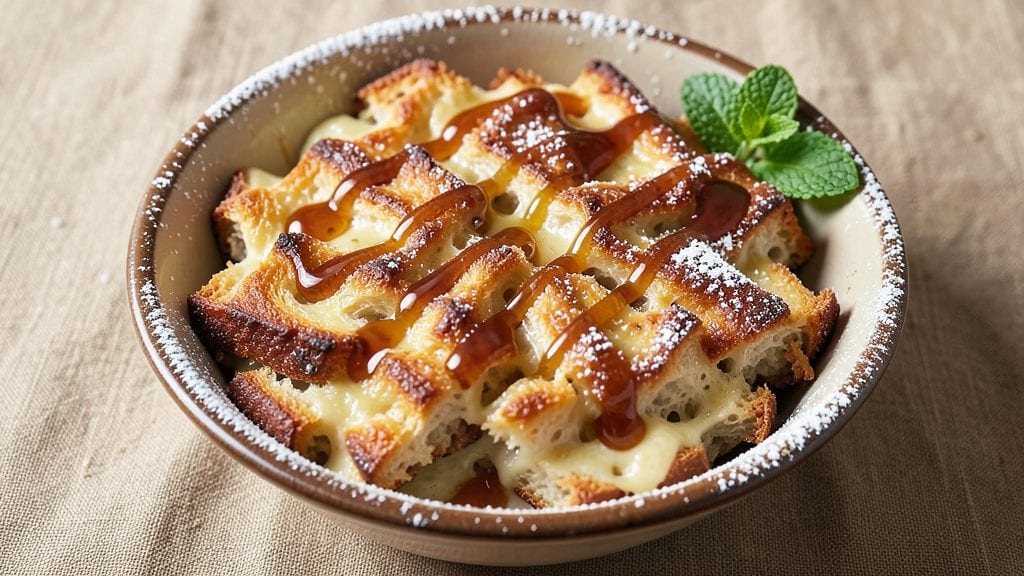
This authentic bread pudding recipe delivers the same comforting, vanilla-kissed warmth my grandmother served after Sunday dinner—rich custard soaking into perfectly toasted bread, crowned with caramelized sugar and a whisper of spice.
The secret lies in using day-old bread (never fresh) and letting the custard mixture steep overnight, where the flavors meld into something deeply nostalgic and impossible to resist.
What sets this apart from modern shortcuts is the precise technique of layering bread cubes in a greased dish, pouring custard generously between each layer, and baking until the top is golden and the center jiggles just slightly when shaken.
A vanilla bean split lengthwise infuses the custard with real depth, while a sprinkle of cinnamon and nutmeg adds warmth that lingers long after the last bite. This isn’t just dessert—it’s a restaurant-quality experience you can recreate at home.
The result is a tender, custardy center with crisp edges, where every bite releases a burst of vanilla and the buttery richness of well-toasted bread.
Serve it warm with a drizzle of caramel sauce or a dusting of powdered sugar, and you’ll understand why this recipe has been passed down for generations. No fancy equipment or complicated steps—just patience and a few simple ingredients that transform into something extraordinary.
For those with dietary needs, substitutions are simple: use gluten-free bread, swap dairy for coconut milk, or add a splash of bourbon for depth. The core technique remains the same—authentic comfort in every forkful. Let’s get started on creating your own piece of culinary tradition.
Ingredients for authentic bread pudding
Twelve ingredients transform into a nostalgic, custard-soaked masterpiece—where vanilla depth and buttery toasted bread unite.
| Ingredient | Amount | Notes |
|---|---|---|
| Day-Old Bread Loaf 🍞 | 1 ½ lb | Crusts removed, cubed uniformly |
| Large Eggs 🥚 | 6 whole | Room temperature for best binding |
| Heavy Cream 🥛 | 1 ½ cups | Full-fat for optimal richness |
| Whole Milk 🥛 | 1 cup | Warmed to room temperature |
| Granulated Sugar 🍚 | 1 cup | Light brown preferred for depth |
| Unsalted Butter 🧈 | ½ cup | Cold, cubed for even melting |
| Vanilla Bean 🌿 | 1 whole | Split lengthwise, seeds scraped |
| Ground Cinnamon 🌶️ | 1 ½ tsp | Freshly ground for aromatic punch |
| Ground Nutmeg 🌶️ | ½ tsp | Freshly grated preferred |
| Diamond Crystal Kosher Salt 🧂 | ½ tsp | Adjust to taste after baking |
| Turbinado Sugar 🍚 | ½ cup | For caramelized topping |
| Dark Brown Sugar 🍚 | 2 tbsp | Enhances caramelization |
| Vanilla Extract 🍯 | 1 tbsp | Pure Madagascar preferred |
The bread is non-negotiable—day-old loaves yield the perfect texture, while fresh bread absorbs too much custard and stays gummy. Sourdough or brioche elevate the dish further, but a basic white or wheat loaf works beautifully. For uniform cubes, use a serrated bread knife and aim for 1.5-inch pieces. Most grocery stores carry day-old bread at discounted prices, or simply bake a loaf the night before. The key is ensuring cubes are dry enough to crisp during baking but still absorb custard generously. Whole grain breads add rustic texture but may require slightly more custard to fully saturate.
Vanilla bean is the soul of this recipe, so don't substitute with extract alone—though a 1 tbsp vanilla extract plus scraped seeds works in a pinch. No vanilla bean? Pure Madagascar vanilla extract is the next best option, but avoid imitation varieties. The sugars should be turbinado for caramelization and light brown for custard depth—substituting granulated sugar will yield a less complex flavor. For dairy-free adaptations, coconut cream and almond milk replicate the richness when combined with a neutral oil like avocado. The custard mixture should be thick but pourable—if too thin, add an extra egg yolk; if too thick, whisk in a splash of warm milk.
This custard mixture develops best overnight, allowing flavors to meld into a cohesive, velvety texture. Store the unbaked mixture in an airtight container in the refrigerator for up to 24 hours, though it's best used immediately. Once baked, bread pudding reheats beautifully—cover with foil and warm at 350°F for 15-20 minutes until the center is just heated through. For make-ahead convenience, bake the pudding a day in advance, then reheat before serving. The caramelized sugar topping can be prepared up to 3 days ahead and stored in an airtight container at room temperature, though it's best used within 48 hours for optimal crunch.
Why You'll Love This Recipe
- No Waste Magic: I swear by this trick—day-old bread transforms into something golden and irresistible. No stale loaves cluttering your pantry; just a few minutes of cubing and soaking, and suddenly you’ve got dessert (or breakfast!) out of something you’d otherwise toss.
- Creamy Caramel Bliss: That perfect balance of custardy richness and buttery crunch? It’s all in the heavy cream and milk—thick, velvety, with just enough sugar to caramelize into a glossy top. Honestly, the first bite makes me close my eyes.
- Weeknight Flexibility: Make it for Sunday supper, pack it for lunch, or reheat slices straight from the fridge when you’re too tired to cook. The eggs bind it together while keeping it light, so it reheats like a dream—no soggy corners here.
- Budget-Friendly Goldmine: Eggs, bread, and dairy? This recipe uses pantry staples that won’t break the bank. Plus, the leftovers? Even better the second day—if you can resist eating the whole batch fresh out of the oven. (Between us, I’ve failed that test.)
Step-by-step instructions for authentic bread pudding
Here's the traditional method that delivers that signature custardy texture and vanilla-kissed aroma.
Prepare the Bread and Infuse the Cream
Begin by removing crusts from the 1.5 lb day-old bread loaf and cutting it into 1-inch cubes. The bread should be completely dry—pat any damp spots with paper towels. This ensures even baking and prevents a gummy texture. Spread the cubes on a baking sheet and set aside.
In a small saucepan, warm the 1 cup whole milk and 1.5 cups heavy cream over medium-low heat until steaming but not boiling. While the mixture heats, split the 1 whole vanilla bean lengthwise and scrape out the seeds using the back of a knife. Add the seeds and scraped pod to the warm dairy and let steep for 10 minutes. This infusion delivers that authentic vanilla depth you can't get from extract alone. Strain out the pod after steeping.
Create the Custard Base
In a large mixing bowl, whisk together the 6 whole large eggs (room temperature) and 1 cup granulated sugar until the mixture is pale yellow and slightly thickened—about 3-4 minutes of vigorous whisking. This step is crucial for creating the signature silky texture. Add the 0.5 cup unsalted butter, melted and cooled slightly, and whisk until fully incorporated.
Gradually pour in the warm vanilla-infused cream mixture while continuing to whisk. The mixture will become noticeably thicker as it comes together. Stir in 1.5 teaspoons ground cinnamon, 0.5 teaspoon ground nutmeg, and 0.5 teaspoon diamond crystal kosher salt. Fold in the bread cubes gently but thoroughly, ensuring each piece is well-coated in the custard mixture. Let the mixture rest for 15 minutes—this allows the bread to absorb the liquid evenly.
Bake Until Golden and Custardy
Preheat your oven to 350°F. Grease a 9-inch square baking dish generously with butter—this prevents sticking and adds to the rich flavor. Transfer the bread mixture to the prepared dish and smooth the top. For that classic caramelized crust, sprinkle 0.5 cup turbinado sugar and 2 tablespoons dark brown sugar evenly over the top.
Bake for 50-60 minutes until the edges are golden brown and the center is just set—when you gently shake the dish, it should jiggle slightly but not be liquid. A toothpick inserted should come out with a few moist crumbs, not wet batter. If the top browns too quickly, tent loosely with foil after 30 minutes to prevent over-browning while allowing the center to finish baking.
Rest and Serve with Warmth
Remove the bread pudding from the oven and let it rest for 15-20 minutes before serving. This resting period allows the custard to fully set and the flavors to meld. The pudding should be warm but not hot—ideal for serving with a scoop of vanilla ice cream or a drizzle of warm caramel sauce.
For an authentic touch, dust the top with powdered sugar just before serving. The contrast between the warm, spiced custard and the cool sweetness creates that perfect balance. Each bite should deliver a harmonious blend of buttery bread, creamy custard, and aromatic vanilla—just like Grandma used to make.
Pro Tips For Making Authentic Bread Pudding
- USE COLD MILK CREAM: I learned this the hard way—warm liquids make the bread soggy before it even hits the oven. Mix your heavy cream and whole milk straight from the fridge, then let the custard sit at room temp for just 10 minutes before adding eggs. The bread soaks up the liquid evenly without turning to mush.
- CUT BREAD INTO UNIFORM CHUNKS: Skip the random tearing—grab a serrated knife and slice the day-old loaf into 1.5-inch cubes. This ensures even baking and prevents some pieces from drying out while others stay damp. (Yes, it takes 5 minutes, but your pudding will thank you.)
- BAKE LOW AND SLOW: I used to blast the oven at 375°F and ended up with a crusty exterior and a wet center. For authentic bread pudding, bake at 325°F for the first 30 minutes, then crank it to 375°F for the last 15. This guarantees a custardy interior with a golden top.
- STIR THE CUSTARD: Before pouring, whisk the egg mixture until the sugar dissolves completely—no gritty bits. Then, fold in the bread gently to avoid compressing it. The goal is to coat every crumb, not pack it like a dense loaf. (Your future self will curse you if you skip this.)
Perfect pairings for this recipe
Classic Toppings
Warm vanilla bean ice cream is the ultimate pairing—its cool creaminess contrasts beautifully with the spiced custard. I always serve it with a scoop on the side so guests can add it themselves.
For a restaurant-style finish, drizzle homemade caramel sauce (simmer 1 cup heavy cream, ½ cup brown sugar, and 2 tbsp butter until thickened) over the top just before serving. 🥄
Coffee & Tea Pairings
A cup of strong brewed coffee cuts through the richness perfectly, especially if you add a splash of bourbon (just 1 oz) to the custard mixture for depth. For a non-alcoholic option, earl grey tea with its citrus notes complements the vanilla and cinnamon beautifully.
I often serve it with a small pot of tea on the side during holidays.
Fruit Complements
Fresh berry compote adds a bright, tangy contrast to the warm pudding. Simmer 1 cup mixed berries (strawberries, blueberries, raspberries) with 2 tbsp sugar and 1 tsp lemon juice until thickened.
A dollop of whipped cream with a sprinkle of toasted coconut flakes also elevates the dish, especially for tropical-inspired twists. 🍓
Seasonal Variations
In fall, add a sprinkle of pecans or walnuts toasted in butter for crunch, then dust with cinnamon sugar. For summer, swap the caramel topping for honey drizzle and serve with lemon sorbet.
During winter holidays, a shot of spiked custard (mix 1 tbsp bourbon or rum into the custard) transforms it into a boozy dessert. 🎄
Unexpected Pairings
Try pairing bread pudding with salted caramel apples for a sweet-savory combo that balances the dessert’s richness. Another surprising match is chilled mint julep—the cool, refreshing mint cuts through the warm spices beautifully. For a savory contrast, serve with crispy prosciutto on the side during holiday brunches. 🍎
Make-Ahead Serving
Bake the pudding a day ahead and store it at room temperature in an airtight container. Reheat in the oven at 350°F for 15-20 minutes before serving. This works perfectly for holiday gatherings—just pop it in the oven while guests arrive.
For a dessert buffet, serve with small bowls of toppings like chopped nuts, chocolate shavings, or extra caramel sauce so everyone can customize their slice. ✨
Nutrition facts
Frequently asked questions
Why does the recipe specify day-old bread?
Day-old bread absorbs custard perfectly without turning gummy or soggy. Fresh bread contains too much moisture, which makes the final texture dense and unpleasant. The slight dryness of day-old bread creates that ideal crisp-tender contrast in every bite.
Can I make this bread pudding without a vanilla bean?
Yes! Use 1 tablespoon pure Madagascar vanilla extract plus the seeds from ½ vanilla bean (if available) for depth. Avoid imitation extracts—they lack the complex floral notes that make this dessert truly special. For extra richness, add a pinch of salt to balance the sweetness.
What's the best way to tell when it's fully baked?
The edges should be golden brown, and the center should jiggle slightly when you shake the dish. Insert a toothpick—it should come out with a few moist crumbs, not wet batter. Overbaking dries out the custard, so trust your instincts and remove it when it's just set.
Can I substitute gluten-free bread?
Use a gluten-free loaf with similar texture (like brioche-style). You may need to add 1 extra egg yolk to the custard to help bind the mixture. Toast the bread cubes lightly before baking to ensure they hold their shape. The flavor won't differ, but the structure might be slightly lighter.
How do I prevent the top from burning too quickly?
If the top browns too fast, tent the dish loosely with foil after 30 minutes. This keeps the center cooking while preventing over-browning. For extra insurance, reduce the oven temperature to 325°F for the last 10 minutes of baking. The key is patience—golden edges mean perfect doneness!