
Main Courses
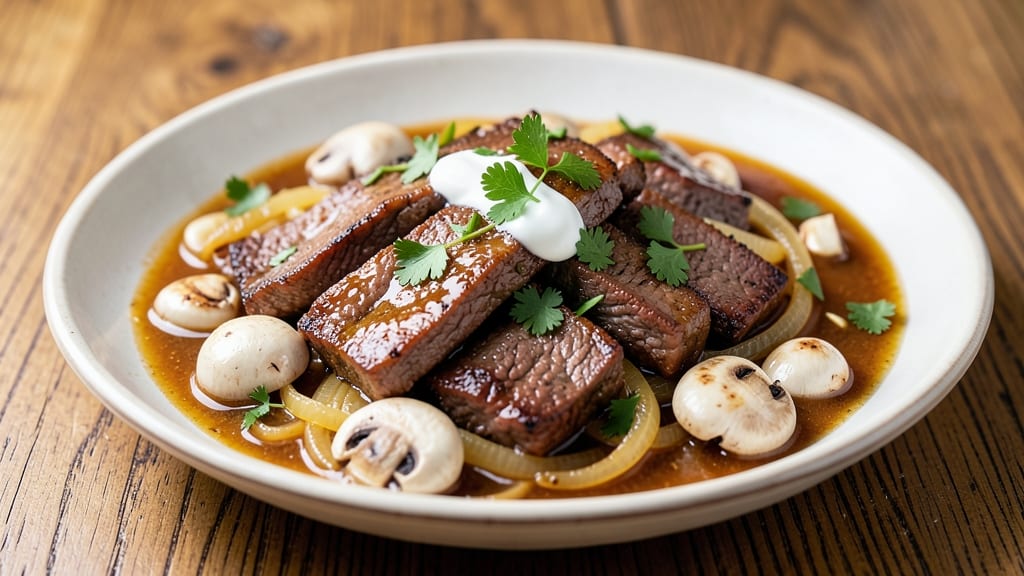
This authentic German beef stroganoff brings the hearty flavors of Bavarian kitchens to your table with smoky paprika and tangy mustard swirls that cling to tender beef and earthy mushrooms.
The secret lies in slow-cooked onions and a velvety cream sauce that balances richness with a touch of acidity—just like the recipes passed down through generations in German homes. I’ve perfected this version to deliver the same restaurant-quality depth without sacrificing simplicity.
The dish starts with searing beef strips in a cast-iron skillet until they develop a deep, caramelized crust, then pulls them aside to build a flavorful base of sautéed onions, mushrooms, and aromatic spices.
A splash of beer—traditional in German cuisine—adds a subtle maltiness that rounds out the sauce, while Dijon mustard provides that signature tang. The result is a dish that’s both comforting and refined, perfect for family dinners or special occasions.
By the time the egg noodles are tossed in the creamy sauce, you’ll have a plate of authentic German beef stroganoff that’s rich, smoky, and satisfying—with each bite delivering layers of umami, acidity, and warmth.
The dish pairs beautifully with a side of buttered dumplings or a crisp green salad to balance the richness. This recipe stays true to its roots while being accessible enough for a weeknight meal.
What sets this version apart is the attention to traditional techniques—like deglazing the pan with beer and letting the sauce simmer until thickened—without requiring specialized equipment. The result is a dish that feels like a home-cooked masterpiece, not just another weeknight dinner. Let’s get cooking!
Ingredients for authentic german beef stroganoff
German pantry staples and a few fresh ingredients create this restaurant-quality stroganoff.
| Ingredient | Amount | Notes |
|---|---|---|
| Beef Sirloin 🥩 | 1 ½ lb | Cut into 1/2-inch strips |
| Yellow Onions 🧅 | 2 whole | Thinly sliced, about 2 cups |
| White Mushrooms 🍄 | 8 oz | Sliced, stems removed |
| Garlic Cloves 🧄 | 4 cloves | Minced, for depth |
| Smoked Paprika 🌶️ | 1 tbsp | Sweet or hot variety |
| Dijon Mustard 🍯 | 1 tbsp | High-quality for tang |
| Dry Beer 🍺 | ½ cup | Lager or pilsner style |
| Heavy Cream 🥛 | ½ cup | Full-fat for richness |
| Unsalted Butter 🧈 | 2 tbsp | For pan searing |
| Diamond Crystal Kosher Salt 🧂 | 1 tsp | Adjust to taste |
| Freshly Ground Black Pepper 🌶️ | ½ tsp | For seasoning |
| Egg Noodles 🍝 | 8 oz | Fresh or dried |
| Fresh Parsley 🌿 | ¼ cup | Chopped, for garnish |
The beef is the centerpiece—sirloin stays tender while developing that perfect caramelized crust. Trader Joe's or Costco carry pre-cut strips for convenience, but ask the butcher for even cuts if you want to splurge. For the onions, yellows with a sharp bite work best—avoid sweet varieties. The mushrooms should be fresh and firm, not slimy or bruised. I always grab white cremini from the store's refrigerated section for extra depth. Smoked paprika is non-negotiable here—Penzeys or Goya brands deliver that authentic smoky flavor.
No beer on hand? Substitute with beef broth plus 1 tbsp apple cider vinegar for acidity. The Dijon mustard can be swapped for whole-grain mustard if you prefer less tang. Fresh herbs? Dried thyme at half the amount works in a pinch. For the cream, half-and-half thinned with milk gives a lighter texture. The egg noodles? Fresh from the Italian market have better texture, but dried Barilla holds up fine. Pro tip: Toast the egg noodles in butter for 2 minutes before adding to the sauce—they soak up all that delicious flavor.
This dish tastes even better the next day—4-5 days in the fridge, covered tightly. Freezes beautifully for 3 months if you portion it into containers. I always make a double batch because it disappears fast. Store the sauce separately from the noodles if reheating—just toss them together when ready to serve. The parsley wilts fast, so add it last or store it separately in a sealed container.
Why You'll Love This Recipe
- One-Pan Magic: I swear by this recipe—just sear the beef, toss in onions and mushrooms, and let the smoked paprika work its depth. No extra pots, no stress, and the garlic cloves release their magic right in that same pan.
- Smoky Depth Bomb: That smoked paprika isn’t just flavor—it’s the secret. Rich, earthy, and slightly sweet, it turns simple beef into something that lingers. Pair it with the creamy mushroom sauce, and you’ve got a dish that tastes like a home-cooked hug.
- Weeknight to Dinner Party: Honestly, this is my go-to for both. Toss it over egg noodles for a lazy Tuesday, or serve it with crusty bread and a side salad for guests. The same recipe, zero extra effort—just scale as needed.
- Leftovers That Don’t Suck: Between us, most stroganoffs turn into sad, watery meals the next day. Not this one. The beef stays tender, the sauce clings, and reheating it? It’s like making it fresh. Plus, it’s budget-friendly—sirloin stretches far, and mushrooms add heartiness without breaking the bank.
Step-by-step instructions for authentic German beef stroganoff
Here's the classic method that delivers rich, smoky flavors and tender beef over perfectly cooked egg noodles.
Prepare the Beef and Aromatics
Pat the 1.5 lb beef sirloin dry with paper towels and cut it into ½-inch strips. This size ensures even cooking without toughness. Season each piece generously with 1 tsp diamond crystal kosher salt and ½ tsp freshly ground black pepper, pressing the spices into the meat so they adhere well.
In a large skillet, melt 2 tbsp unsalted butter over medium-high heat until it foams. Add the sliced 2 whole yellow onions and cook for 4-5 minutes until they soften and begin to caramelize at the edges. Stir in the sliced 8 oz white mushrooms and cook for another 5 minutes until they release their moisture and brown slightly. Remove the vegetables from the skillet and set aside.
Sear the Beef and Build the Sauce Base
In the same skillet, increase the heat to high and add the seasoned beef strips in a single layer. Let them sear undisturbed for 2 minutes until they develop a deep brown crust. Stir and continue searing for another 3-4 minutes until the beef is cooked to medium-rare (it will finish cooking later). Remove the beef and set it aside with the vegetables.
Reduce the heat to medium and add the 4 minced garlic cloves, cooking for 30 seconds until fragrant. Sprinkle in the 1 tbsp smoked paprika and stir for 1 minute to toast the spices and deepen their flavor. Pour in the ½ cup dry beer and scrape up any browned bits from the bottom of the pan. Let the beer simmer for 2-3 minutes until reduced by half.
Finish the Sauce and Combine
Lower the heat to low and stir in the 1 tbsp dijon mustard, allowing it to melt into the sauce. Gradually whisk in the ½ cup heavy cream, stirring constantly to prevent curdling. Return the beef and vegetables to the skillet and simmer for 3-4 minutes until everything is heated through and the sauce has thickened slightly. Taste and adjust the seasoning with additional salt or pepper if needed.
While the stroganoff simmers, cook the 8 oz egg noodles according to package instructions until al dente. Drain and set aside, reserving ½ cup of pasta water in case the sauce needs thinning. Toss the cooked noodles with the stroganoff sauce, adding a splash of reserved pasta water if the sauce is too thick to coat the noodles evenly.
Serve with Fresh Parsley
Transfer the stroganoff to serving plates and garnish each portion with ¼ cup chopped fresh parsley. The bright green color and fresh flavor contrast beautifully with the rich, smoky sauce. Serve immediately while the noodles are hot and the sauce is silky.
This dish is best enjoyed fresh, with the noodles absorbing the flavorful sauce. The combination of smoky paprika, tangy mustard, and creamy beer-infused sauce creates an authentic German taste that's both hearty and comforting.
Pro Tips For Making Authentic German Beef Stroganoff
- Sear the Beef Hard: I learned this the hard way—don’t just brown the sirloin, crisp it. Hit medium-high heat with 1 tablespoon of oil and let those edges turn deep golden before touching anything else. The contrast between the caramelized crust and creamy sauce is what makes this dish sing.
- Slice Onions Thinly: Skip the chopping knife for onions—use a mandoline or sharp knife to slice them paper-thin. They’ll soften in minutes instead of hours, and you’ll avoid that sad, mushy texture that ruins the texture. (Yes, even if you’re impatient like me.)
- Deglaze with Beer: That pan sauce after searing? Don’t waste it. Pour in ½ cup of dark lager or pilsner while the beef rests, scraping every last bit. The bitterness cuts through the richness, and it’s the one thing that separates homemade stroganoff from restaurant mediocrity.
- Salt the Mushrooms: Toss sliced mushrooms with ½ teaspoon of salt and let them sit for 10 minutes before cooking. They’ll release moisture, which you’ll drain off—this guarantees they stay tender, not soggy. (Your future self will thank you.)
Storing and reheating this authentic german beef stroganoff
Fridge Storage Tips
Let your stroganoff cool completely before transferring to an airtight container—I use glass Pyrex with snap-on lids for best results. Store in the fridge at 40°F or below for up to 4-5 days, though I find the flavors deepen after 24 hours.
The sauce thickens slightly overnight, making it even more luxurious. Keep the egg noodles separate if possible to prevent sogginess—just toss them in when reheating. 💡
Freezer-Friendly Method
For long-term storage, freeze the stroganoff sauce and beef mixture in quart-sized freezer bags, leaving 1 inch of headspace for expansion. Seal tightly to prevent freezer burn and label with the date—it keeps for 3 months without losing quality.
When ready to eat, thaw in the fridge overnight, then reheat gently. I always freeze double batches because this dish disappears fast! ❄️
Reheating for Best Texture
Stovetop reheating preserves texture best: pour the stroganoff into a skillet over medium-low heat and add 2-3 tbsp water or beef broth to prevent sticking. Simmer for 5-7 minutes, stirring occasionally, until heated through (165°F internal temp).
For the noodles, cook fresh or thaw frozen egg noodles separately—tossing them in the reheated sauce at the end keeps them al dente. 🔥
Microwave Shortcut
If you're short on time, microwave individual portions in glass containers (never plastic!) on 50% power for 2-3 minutes, stirring halfway. Add a splash of water if the sauce looks too thick.
The noodles will soften more, so serve with extra parsley or a side of crusty bread to soak up the sauce. This method works best for 1-2 servings at a time. ✨
Reviving Day-Old Dishes
If your stroganoff tastes a bit flat after refrigeration, revive it by adding 1 tbsp fresh lemon juice or a pinch of smoked paprika while reheating. A sprinkle of fresh parsley brightens the dish instantly.
For extra richness, stir in 1 tbsp butter at the end—this restores the creamy texture perfectly. The secret? Never overcook when reheating; just warm through gently. 💛
Nutrition facts
Frequently asked questions
What type of beer works best in this German stroganoff?
A dry lager or pilsner style beer adds the perfect maltiness and balances the richness. Look for a crisp, light-bodied German beer like Oettinger or Warsteiner—they complement the smoky paprika without overpowering. If you can't find German beer, a pale ale or even a light American lager works in a pinch.
Can I make this stroganoff without beer?
Replace the ½ cup beer with an equal amount of beef broth plus 1 tbsp apple cider vinegar for acidity. This mimics the beer's depth while keeping the dish authentic. The vinegar also helps tenderize the beef slightly during simmering.
Why does my stroganoff sauce get watery when reheating?
This happens when the sauce separates or the starches in the noodles absorb too much moisture. To fix it, stir in 1 tbsp cornstarch mixed with 2 tbsp cold water while reheating, or add a splash of reserved pasta water to restore balance. Always reheat on low heat to prevent curdling.
What's the best way to serve this dish for a special dinner?
For an elevated presentation, serve the stroganoff over buttered spaetzle instead of egg noodles, and garnish with crispy fried onions and a dollop of sour cream. A side of German-style green beans with almonds or a simple mixed greens salad with a tangy vinaigrette completes the meal.
How do I adjust this recipe for a slow cooker?
Brown the beef and vegetables first, then transfer everything to the slow cooker with the beer, mustard, and cream. Cook on low for 4-5 hours or high for 2-3 hours, stirring occasionally. The sauce will thicken naturally—add egg noodles only in the last 15 minutes to avoid mushiness.