
Breakfast & Brunch
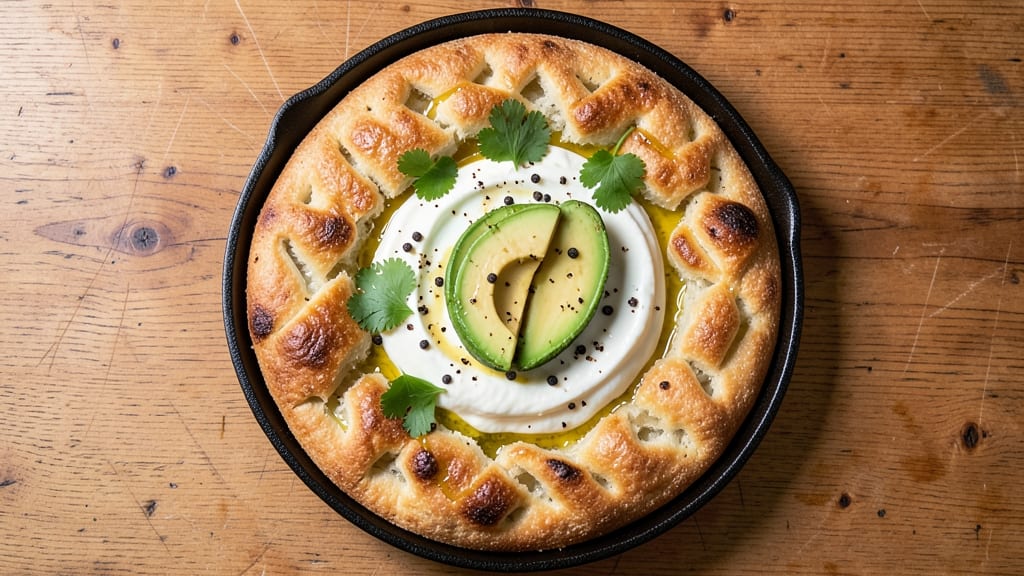
This avocado cottage cheese flatbread recipe transforms simple ingredients into a brunch showstopper with crispy edges and creamy avocado swirls that balance tangy, fresh, and savory flavors.
After years of testing breakfast flatbreads, I finally cracked the code for a dough that bakes perfectly crisp while holding its shape—no more soggy centers or uneven browning. The secret lies in precise dough handling and a filling that stays luscious even after baking.
The beauty of this recipe is its versatility—it works equally well as a vegetarian brunch centerpiece or a satisfying snack. You'll start with a basic flatbread dough that gets rolled thin enough to achieve that golden, crispy texture while staying tender inside.
The filling combines ripened avocado and creamy cottage cheese with a touch of garlic and lemon, creating a contrast of textures that's impossible to resist.
By the time you pull it from the oven, you'll have a flatbread with crispy, caramelized edges that shatter slightly when you bite in, giving way to a soft, pillowy center.
The avocado and cottage cheese filling remains creamy and cool, cutting through the warmth of the bread with every forkful. The aroma alone will have your kitchen smelling like a Mediterranean café.
Serve this flatbread warm with a sprinkle of flaky sea salt, fresh herbs, or a drizzle of chili oil for extra depth. It pairs beautifully with a side of scrambled eggs or a simple green salad, making it the perfect addition to any brunch spread.
Ready to make this recipe? Let's get started with the ingredients.
Ingredients for avocado cottage cheese flatbread
Simple pantry staples meet Mediterranean flavors in this crispy flatbread showstopper.
| Ingredient | Amount | Notes |
|---|---|---|
| All-Purpose Flour 🌾 | 2 ½ cups | Sifted for light texture |
| Active Dry Yeast 🍞 | ¼ tsp | 1 packet, room temperature |
| Granulated Sugar 🍚 | ½ tsp | Feeds yeast for rise |
| Unsalted Butter 🧈 | ¼ cup | Cold, cubed for dough |
| Warm Water 💧 | 1 cup | 110°F for yeast activation |
| Salt 🧂 | ½ tsp | Fine sea salt preferred |
| Ripe Avocados 🥑 | 2 whole | Flesh only, no pits |
| Cottage Cheese 🧀 | ¾ cup | Full-fat for creaminess |
| Garlic Cloves 🧄 | 2 cloves | Minced for flavor |
| Lemon Juice 🍋 | 1 tbsp | Freshly squeezed |
| Extra-Virgin Olive Oil 🫒 | 1 tbsp | For brushing dough |
| Flaky Sea Salt 🧂 | ½ tsp | For finishing |
| Fresh Cilantro 🌿 | ¼ cup | Chopped, optional garnish |
The dough is where magic happens. King Arthur flour or Bob's Red Mill work best for that perfect crispy-yet-tender texture—don't skimp on quality here. Yeast needs to be fresh (check the date on the package), and the water should be warm but not hot—just warm enough to make you think 'yep, that's right.' I always use full-fat cottage cheese (the good stuff, not the low-fat kind) because it adds that perfect creaminess. For the avocados, Hass variety is ideal—look for ones that yield slightly to gentle pressure. If they're too firm, let them sit at room temp for 30 minutes first.
No ripe avocados? Use 1 ripe plus 1 slightly firm avocado—they'll soften during baking. Cottage cheese too thick? Mix in 1 tsp of milk or water to loosen it up. Short on garlic? Garlic powder at half the amount works in a pinch, but fresh is always better. The dough can be made ahead and refrigerated for up to 24 hours—just let it sit at room temp for 30 minutes before rolling. For extra flavor, add 1 tsp of lemon zest to the filling. And if you're feeling fancy, swap the sea salt for smoked paprika on top before baking.
This flatbread is best served warm—pull it from the oven and let it rest for 2 minutes before slicing. Store leftovers wrapped in a clean kitchen towel to keep them soft for up to 2 days. For freezing, slice into wedges and freeze on a tray before transferring to a bag—3 months in the freezer. Reheat slices in a toaster or oven at 350°F for 3-5 minutes. Pro tip: The filling stays fresh for 1 day in the fridge, so make it fresh each morning for the best texture.
Why You'll Love This Recipe
- No-Knead Magic: I swear by this dough—just mix, let it rise, and roll. The yeast does all the work while I sip coffee, and that buttery warmth from the flour and butter? Pure reward.
- Creamy Crunch Contrast: The moment the avocado and cottage cheese meet the crispy flatbread edge? It’s like a hug for your taste buds. No fancy ingredients—just rich, velvety texture in every bite.
- Breakfast or Snack: Honestly, I make these for lazy mornings, but they’re also my go-to for lunchboxes or a quick picnic. Wrap them with smoked salmon or just eat them plain—they’re that versatile.
- Stretches Every Dollar: A single batch feeds four, and leftovers reheat like a dream. The yeast and butter cost pennies, but the flavor? That’s the real value—no guilt, just satisfaction.
Step-by-step instructions for avocado cottage cheese flatbread with crispy edges
Here's how to make this dreamy flatbread with perfect texture and flavor every time.
Activate the Yeast and Mix the Dough
In a small bowl, combine the 1 cup warm water (about 110°F) with the 0.5 tsp granulated sugar and 0.25 tsp active dry yeast. Let it sit for 5-10 minutes until frothy—this means your yeast is alive and ready to work. If it doesn't bubble, your yeast might be dead, and you'll need to start over.
In a large bowl, whisk together the 2.5 cups all-purpose flour and 0.5 tsp salt. Make a well in the center and pour in the yeast mixture along with the 0.25 cup cold unsalted butter, cubed. Using a wooden spoon or your hands, mix until a shaggy dough forms. The butter should be cold enough to stay in chunks—this creates flaky layers later.
Knead the dough on a lightly floured surface for 8-10 minutes until smooth and elastic. You'll know it's ready when it springs back slowly when poked. If it feels sticky, add a little more flour, but don't overdo it—too much flour makes the flatbread tough. Shape into a ball, place in a lightly oiled bowl, cover with a damp towel, and let rise in a warm place for 1-2 hours or until doubled in size.
Prepare the Avocado-Cottage Cheese Filling
While the dough rises, mash the 2 whole ripe avocados in a bowl until completely smooth. Stir in the 0.75 cup cottage cheese, 2 cloves minced garlic, 1 tbsp lemon juice, and 0.5 tsp flaky sea salt. The mixture should be thick but spreadable—if it's too thick, add a splash of water. Taste and adjust seasoning; you want a balance of creamy avocado and tangy cottage cheese.
Real talk: Don't skip the lemon juice. It brightens the flavors and prevents the avocado from browning too quickly. Cover this mixture and refrigerate until you're ready to use it—it'll keep for up to 1 hour before the flatbread goes in the oven.
Roll Out and Assemble the Flatbread
Once the dough has risen, punch it down to release air and divide it into 4 equal portions. On a lightly floured surface, roll each portion into a 6-inch circle about ¼-inch thick. The thinner you roll it, the crispier the edges will get—aim for even thickness so it cooks uniformly.
Spread about 2 tablespoons of the avocado mixture onto each rolled-out dough circle, leaving a ½-inch border around the edges. This prevents the filling from oozing out during baking and ensures that crispy edge you're craving. Gently fold the dough over the filling to create a half-moon shape, then seal the edges by pinching them together firmly.
Bake to Golden Perfection
Preheat your oven to 400°F and line a baking sheet with parchment paper. Brush the sealed flatbreads lightly with the 1 tbsp extra-virgin olive oil—this adds flavor and helps create that beautiful golden crust. Place the flatbreads on the baking sheet, seam-side down, and bake for 15-18 minutes until the edges are deep golden brown and the filling is heated through.
Here's the thing—don't overbake. You want those edges crispy but the center still tender. The flatbread should be warm and slightly puffy when you take it out. If you're worried about the filling being undercooked, you can tent it with foil for the last 2-3 minutes of baking.
Let the flatbread cool for 5 minutes before slicing into wedges. Garnish with the 0.25 cup chopped fresh cilantro right before serving—it adds a fresh pop of color and brightness that ties everything together. Serve warm with your favorite dipping sauce or enjoy as-is for a satisfying, handheld meal.
Pro Tips For Making Avocado Cottage Cheese Flatbread
- TEST YEAST FIRST: Mix a tiny spoonful of warm water, sugar, and yeast in a cup before adding to the dough. If it doesn’t foam in 5 minutes, your yeast is dead—start over. I learned this the hard way after making a flatbread so dense it could’ve been a doorstop.
- SOFTEN BUTTER RIGHT: Use butter straight from the fridge, cut into small cubes, and let it sit at room temp for exactly 10 minutes before mixing. Too soft? It’ll melt into greasy dough. Too cold? The texture turns gummy. Trust the timer—this isn’t a guess.
- KNEAD JUST ENOUGH: Stop when the dough springs back slowly when poked (about 5-7 minutes by hand). Overworking it develops gluten, and your flatbread will turn chewy instead of tender. I used to go overboard, thinking more kneading = better dough—wrong.
- USE COTTAGE CHEESE LATE: Fold in the avocado and cottage cheese right before shaping, not during mixing. Warm dough kills the creaminess of the cheese and makes the avocado turn gray. Save this step for the final 2 minutes—your taste buds will notice.
Make-ahead tips for avocado cottage cheese flatbread
Dough Prep Ahead
Make the dough the night before to save time in the morning. After mixing and the first rise, shape it into a ball, wrap tightly in plastic wrap, and refrigerate for up to 24 hours.
When ready to use, let it sit at room temperature for 30 minutes before rolling. I always do this because morning flatbread prep feels like a breeze when the dough is already ready. 🌙
Filling Prep
Prepare the avocado-cottage cheese filling separately and store it in an airtight container in the fridge for up to 1 hour before baking. The avocado oxidizes quickly, so only mash what you need for the day—no need to make it ahead.
If you're short on time, mix everything except the lemon juice, then add it fresh before spreading on the dough. This keeps the filling vibrant and fresh-tasting. 🥑
Assembled Flatbread Storage
Assembled flatbreads can be refrigerated for 4-6 hours before baking, but I recommend baking them fresh for the best texture. If you're making them ahead, cover them tightly with plastic wrap and place them on a baking sheet in the fridge.
Let them sit at room temperature for 15 minutes before baking to prevent condensation from making the dough soggy. 🍞
Freezer-Friendly Wedges
Slice baked flatbreads into wedges and freeze them on a tray lined with parchment paper for 1 hour to prevent sticking. Transfer to a freezer bag and store for up to 3 months.
Reheat individual wedges in a toaster or oven at 350°F for 3-5 minutes until crispy again. This is my go-to for quick breakfasts or snacks—just grab and reheat! ❄️
Morning Assembly
For a stress-free morning, prep everything the night before: proof the dough, make the filling, and set out all your tools. In the morning, just roll, fill, and bake. I even pre-measure all ingredients into small bowls so I can grab and go.
This method ensures you're not scrambling while the dough rises or the filling spoils. Coffee in hand, flatbread in the oven—perfect start to the day! ☕
Batch Baking
Double the recipe and bake two flatbreads at a time for a crowd. Store the second batch in the fridge, covered, and bake it within 6 hours for the best texture. If you're hosting brunch, assemble all flatbreads the night before, refrigerate, and bake them fresh in the morning.
This way, you can focus on other dishes while your flatbreads stay warm and crispy. 👨👩👧👦
Nutrition facts
Frequently asked questions
Can I make this flatbread without yeast?
Yes! For a quick version, replace the yeast with 1 tsp baking powder and ½ tsp baking soda in the dough. Skip the rising time and bake immediately at 425°F for 12-14 minutes—the texture will be denser but still delicious. The filling stays the same, so you'll still get that creamy avocado-cottage cheese goodness.
How do I prevent the filling from leaking out?
Leave a ½-inch border of dough around the edges when spreading the filling, then seal tightly by pinching the edges firmly. For extra security, brush the sealed edges with a little water before baking. If the filling still leaks, your dough may be too thin—aim for ¼-inch thickness when rolling.
Can I use this recipe for lunch or dinner?
While it's perfect for brunch, this flatbread works beautifully as a savory lunch or dinner appetizer. Serve it with a side of grilled chicken, roasted vegetables, or a fresh salad. For extra flavor, add sun-dried tomatoes or crumbled feta to the filling before baking.
Why did my flatbread turn out dense instead of crispy?
Dense flatbread usually means over-kneading, too much flour, or under-baking. Knead just until smooth (8-10 minutes), measure flour carefully, and bake until edges are deep golden brown (15-18 minutes). Also, ensure your yeast is fresh and the water is 110°F—too hot or cold water can kill the yeast.
What can I substitute for cottage cheese?
For a lighter texture, try ricotta cheese or Greek yogurt (thick, full-fat). For a dairy-free option, blend ½ cup silken tofu with 1 tbsp lemon juice and 1 tsp olive oil to mimic the creaminess. Adjust seasoning as needed—ricotta needs more salt, while tofu may need extra garlic or lemon.