
Appetizers
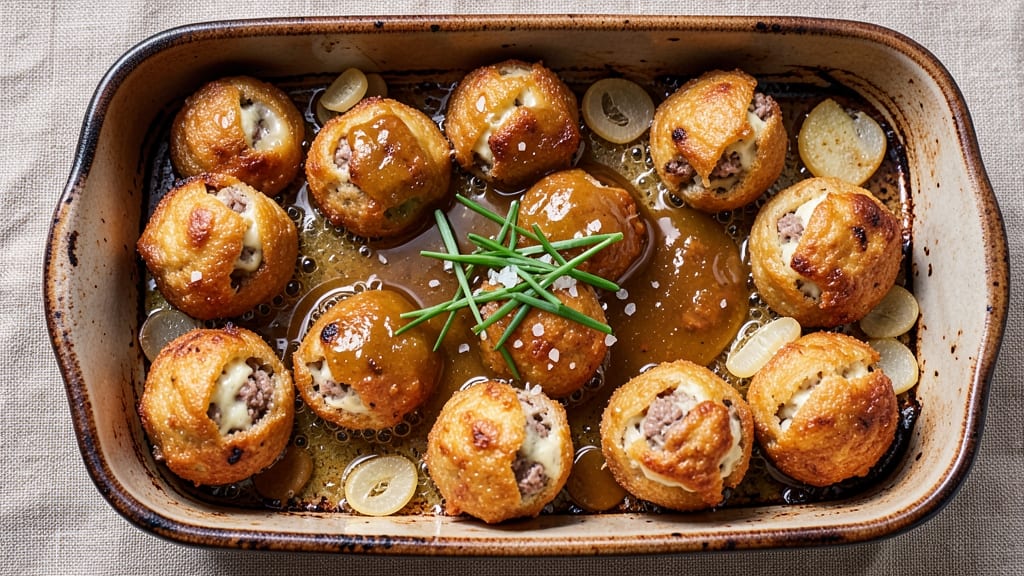
This baked bitterballen recipe brings the crispy, golden crunch of Dutch pub classics to your table without deep-frying. The secret lies in a perfectly balanced ragout filling and light, airy batter that creates a satisfying crunch while keeping those gooey centers intact.
After years of perfecting the technique, I've found baking delivers the same irresistible texture with less mess and healthier results.
The Dutch tradition of bitterballen features a rich ragout filling—typically made with ground beef, onions, and a splash of beef stock—encased in a breadcrumb batter. What sets this recipe apart is the baking method, which achieves that signature crispy exterior while maintaining tender, flavorful centers.
The batter must be just thick enough to hold its shape during baking, yet light enough to create that satisfying crunch.
By the time they emerge from the oven, you'll have golden, crispy bitterballen with perfectly gooey ragout hearts that practically melt in your mouth. The aroma alone will transport you to a bustling Amsterdam café, where these appetizers are a staple.
Serve them warm with mustard or tartar sauce for the full Dutch pub experience.
For those who prefer a vegetarian option, I've included a mushroom and lentil ragout variation that delivers the same satisfying texture and depth of flavor. The key to success is patience—allowing the batter to rest before baking ensures the best results every time.
Let's get started on creating these Dutch pub favorites at home.
Ingredients for baked bitterballen
Ground beef, crispy panko, and golden beer batter—just the essentials for Dutch pub-style bitterballen.
| Ingredient | Amount | Notes |
|---|---|---|
| Ground Beef 🥩 | ½ lb | 80% lean, finely ground |
| Yellow Onion 🧅 | 1 whole | Finely diced, about 1 cup |
| Beef Stock 💧 | ½ cup | Low-sodium preferred |
| Dijon Mustard 🍯 | 1 tbsp | For tangy depth |
| Dry Sherry 🍷 | 1 tbsp | Or substitute with white wine |
| All-Purpose Flour 🌾 | ½ cup | For ragout thickening |
| Panko Breadcrumbs 🍞 | 1 ½ cups | Light and crispy |
| Large Eggs 🥚 | 2 whole | Room temperature |
| Beer 🍺 | ½ cup | Light lager preferred |
| Butter 🧈 | 2 tbsp | Unsalted, melted |
| Salt 🧂 | 1 tsp | Kosher or sea salt |
| Black Pepper 🌶️ | ½ tsp | Freshly ground |
| Nutmeg 🌿 | ¼ tsp | Freshly grated |
| Vegetable Oil 🫒 | 2 tbsp | For greasing baking sheet |
The beef is non-negotiable here. 80% lean ground beef gives that rich, tender ragout texture—sirloin or chuck work best. I grab mine from Costco when I'm making a big batch, but the regular supermarket stuff is fine for a weeknight. Look for finely ground (not coarse) to avoid gritty filling. For the beer, Heineken or a light lager keeps the flavor clean. If you can't find Dutch beer, any light lager works. The Dutch take their bitterballen seriously, so don't cut corners on the beef quality—it's the heart of that gooey center.
No sherry? Dry white wine or apple cider vinegar works in a pinch. The Dijon mustard adds that signature tang—substitute with regular mustard if needed. For the vegetarian version, swap the beef for cremini mushrooms and brown lentils (about 1 cup each), sautéed until tender. The panko should be light and crispy—Trader Joe's has the best pre-seasoned kind, but plain works too. If you don't have panko, regular breadcrumbs toasted in the oven (350°F for 5 minutes) get close. The nutmeg is key—freshly grated makes all the difference, but pre-ground works if that's all you've got.
The ragout filling keeps well for 3 days in the fridge, but the batter is best used fresh. If you're prepping ahead, make the filling first and refrigerate it. The batter can be mixed up to 24 hours ahead—just cover it tightly and let it come to room temp before using. For the perfect bite, bake them straight from the fridge (no thawing needed). Store finished bitterballen in an airtight container for 2 days—they reheat beautifully. Freeze the unbaked batter balls for up to 3 months (bake straight from frozen, adding 5-7 minutes).
Why You'll Love This Recipe
- No-Fuss Mixing: I swear by this recipe because it’s literally one bowl—just brown the beef, chop the onion, toss everything together, and bake. No rolling, no frying, no stress. That Dijon mustard and sherry cut through the richness like a breath of fresh air.
- Rich, Crispy Magic: The outside gets golden and shatteringly crisp, while the inside stays juicy and packed with that deep, savory beef flavor. Honestly, the sherry might sound fancy, but it’s what turns this into something ridiculously good—like a little umami punch.
- Game for Any Meal: I make these for game day snacks, a lazy Sunday brunch, or even a fancy-ish dinner with a side salad. They reheat beautifully, so they’re my go-to for gatherings where I don’t want to slave over the stove.
- Budget-Friendly Feast: Ground beef, onions, and stock? That’s cheap protein at its finest. A single batch stretches to leftovers for days, and I’ve even frozen them—just bake straight from frozen. My wallet and my taste buds thank me.
Step-by-step instructions for baked bitterballen
Here's how to make these Dutch pub classics with a crispy exterior and rich, gooey beef ragout center.
Prepare the Beef Ragout Filling
In a medium saucepan, heat 2 tablespoons butter over medium heat until melted and foaming. Add the 1 whole yellow onion and cook for 5 minutes until softened and translucent, stirring occasionally. You'll notice the onions release their sweet aroma as they cook down.
Add the 0.5 lb ground beef and break it apart with a wooden spoon, creating small crumbles. Cook for 5-6 minutes until the beef loses its raw color and begins to brown. This step develops deep flavor through the Maillard reaction - don't rush it.
Stir in the 0.5 cup beef stock, 1 tablespoon dry sherry, 1 tablespoon Dijon mustard, 1 teaspoon salt, 0.5 teaspoon black pepper, and 0.25 teaspoon nutmeg. Bring to a gentle simmer and cook for 8-10 minutes until the mixture thickens and reduces by about one-third. The ragout should coat the back of a spoon and have a rich, slightly glossy appearance. Remove from heat and let cool completely before proceeding.
Create the Battering and Coating
In a medium bowl, whisk together the 2 whole large eggs until fully combined. In a separate shallow dish, combine the 0.5 cup all-purpose flour with 1 teaspoon salt. The flour will help create a light, crispy crust that seals in the juicy filling.
In another shallow dish, combine the 1.5 cups panko breadcrumbs with 0.5 cup beer. The panko's light, airy texture creates that perfect crunchy exterior while the beer adds subtle depth of flavor. Stir well to distribute the beer evenly throughout the breadcrumbs.
Working with one ball at a time, roll the cooled beef ragout mixture into 1-inch diameter balls using your hands. You should have about 8-10 balls total. Dip each ball first into the egg mixture, then coat thoroughly in the flour mixture, pressing gently to adhere. Finally, roll in the beer-infused panko breadcrumbs, pressing firmly to create a thick, even coating.
Bake to Golden Perfection
Preheat your oven to 400°F. Line a baking sheet with parchment paper and lightly grease it with 2 tablespoons vegetable oil, using a paper towel to spread it evenly. Arrange the coated bitterballen in a single layer on the prepared baking sheet, spacing them about 1 inch apart. This allows for proper air circulation and even browning.
Bake for 20-25 minutes until the bitterballen are deep golden brown and crispy. You'll see the coating develop a beautiful caramelized color and hear a satisfying crackling sound as they bake. The internal temperature should reach 165°F when checked with an instant-read thermometer.
For best results, serve the bitterballen immediately while they're still hot and crispy. The contrast between the crunchy exterior and the rich, gooey beef ragout center is what makes these Dutch pub favorites so irresistible. Enjoy them with mustard or a cold Dutch beer for the full experience.
Pro Tips For Making Baked Bitterballen
- Sear the Onion First: Don’t just chop and toss—cook that onion until it’s soft and golden in a dry pan before mixing it into the beef. I used to skip this, and the bitterballen always tasted dull. Five minutes on medium heat makes a real difference.
- Use Cold Stock: Mix the beef stock into the filling after it’s chilled. Warm stock makes the mixture too loose, and your bitterballen will fall apart when baking. I learned this the hard way—now I keep a bowl of ice water nearby to cool it fast.
- Don’t Overwork the Meat: Handle the ground beef gently when forming the balls. Overmixing tightens the fibers, and they’ll turn dense instead of tender. Just shape them loosely—like a loose dumpling—and let the baking do the rest.
- Bake at 375°F, Not Hotter: Too-high heat = burnt crust, raw center. 375°F is the sweet spot for even cooking. I used to blast the oven to 400°F, and the outside would crisp before the inside was done. Patience here means juicy, not rubbery.
Essential equipment for baked bitterballen
Baking Sheet Essentials
Start with a half-sheet baking pan (13x18 inches) lined with parchment paper—this prevents sticking and makes cleanup a breeze. I swear by Kirkland Signature parchment from Costco for its sturdy, non-stick properties.
Lightly grease the parchment with vegetable oil using a paper towel for even distribution. The oil helps crisp the bottoms while preventing the bitterballen from sticking to the pan. 🔥
Piping Bags for Precision
For perfectly shaped bitterballen, use a pastry bag fitted with a ½-inch round tip to pipe the batter mixture. I prefer Ateco 203 plain tips because they create clean, consistent shapes.
Fill the bag with the batter and pipe 1-inch diameter balls directly onto the prepared baking sheet. This method ensures even cooking and professional-looking results every time.
Thermometer Accuracy
An instant-read thermometer is non-negotiable for baked bitterballen. I rely on the ThermoWorks Thermapen One—it reads internal temps in under 2 seconds and is accurate to ±1°F.
Insert the probe into the center of a bitterballen when the exterior is golden brown. The filling should reach 165°F for perfect doneness without overcooking the exterior.
Cooling Rack for Crispiness
Transfer finished bitterballen to a wire cooling rack immediately after baking. This allows air to circulate underneath, maintaining that coveted crispy texture. I use a OXO Good Grips cooling rack—its wide, sturdy design holds multiple bitterballen without warping.
Serve them straight from the rack while still warm for maximum crunch. ✨
Beer Bottle as a Dipper
Here's a pro trick: Use a clean, empty beer bottle (like a Heineken bottle) to dip the bitterballen into your egg wash before coating. The smooth, rounded shape ensures even coverage.
I keep a bottle chilled in the fridge for dipping—it also doubles as a stylish serving vessel for mustard or tartar sauce on the side. 🍺
Oven Thermometer Check
Ovens run hot or cold, so verify yours with an oven thermometer (I use Taylor Precision). Place it on the middle rack while preheating to 400°F. If it reads 390°F or lower, increase your oven temp by 15°F to ensure proper browning.
Consistent temperature control is the secret to golden, crispy bitterballen every time. 🌡️
Nutrition facts
Frequently asked questions
Why does your recipe use baking instead of deep-frying?
Baking delivers the same satisfying crunch with 30% less oil while keeping the gooey ragout center intact. The Dutch traditionally deep-fry bitterballen, but this method achieves that golden crust through 400°F heat and proper batter adhesion. Plus, it's far less messy and healthier for frequent snacking. The secret is the beer-infused panko coating—it mimics deep-frying's crispiness through Maillard browning.
Can I make these ahead of time for a party?
Prepare the ragout filling up to 3 days ahead and store it refrigerated. The batter can be mixed 24 hours in advance—just cover it tightly. For serving, bake from room temperature (no thawing needed) and keep them warm in a 200°F oven with a damp towel for up to 30 minutes. Pro tip: Freeze unbaked bitterballen on a tray, then transfer to a bag for 3 months—bake straight from frozen, adding 5-7 minutes.
What's the best way to reheat leftover bitterballen?
Reheat in a 375°F oven for 8-10 minutes on a parchment-lined sheet until golden and crispy. For microwave revival, wrap in a damp paper towel and heat for 20-30 seconds—this restores some crunch. The key is speed: never let them sit in the microwave uncovered, or they'll turn soggy. For maximum crispness, always reheat from room temperature.
Can I substitute the beer in the batter?
Yes! Use sparkling apple cider (1:1 ratio) for a non-alcoholic version or chicken or vegetable broth for a neutral flavor. Avoid milk—it makes the coating too dense. The liquid should be cold to help crisp the panko. For extra richness, add 1 teaspoon melted butter to the beer mixture. The beer adds depth, but these alternatives work beautifully.
How do I fix bitterballen that turned out dense instead of crispy?
Dense bitterballen usually mean the batter was too wet or undercooked. Next time, let the batter rest 10 minutes before baking to thicken. For immediate fixes, broil for 2-3 minutes on high to crisp the exterior. If the center's underdone, return to 350°F oven for 5-7 minutes until 165°F internal temp. The panko should be pressed firmly during coating—skip this step, and you'll lose crispness.