
Main Courses
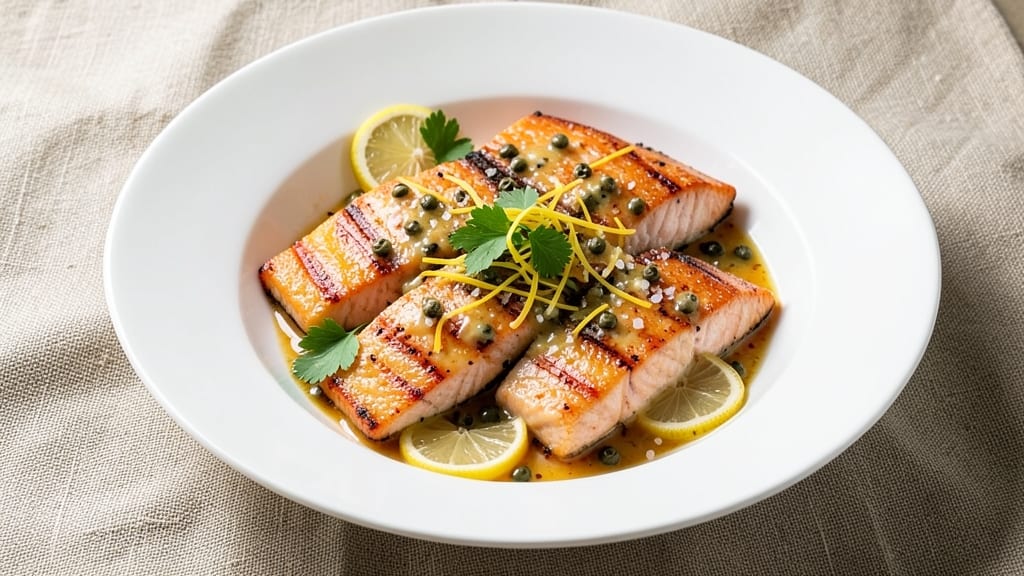
This baked salmon piccata recipe delivers restaurant-quality results with just a single baking sheet and 20 minutes of hands-on time. The secret lies in balancing crispy lemon-butter crust with bright caper-lemon sauce—no frying required.
I developed this version after years of perfecting pan-seared piccata, adapting it for home cooks who want that signature tangy crunch without the fuss.
The technique is straightforward: bake the salmon first to develop that golden crust, then finish with a quick sauce made from butter, lemon, capers, and herbs. This method ensures tender, flavorful fillets every time while keeping the sauce light and vibrant.
The beauty of baking is that it's foolproof—no risk of overcooking or uneven searing that often plagues stovetop versions.
What you'll end up with is perfectly crispy salmon topped with a glossy lemon-caper sauce that's tangy, herby, and just sweet enough. The sauce clings to the fish, creating bites that burst with bright Mediterranean flavors.
Serve it with roasted asparagus or a simple arugula salad for a complete meal that feels both elegant and effortless.
For those watching their diet, swap regular butter for olive oil and use gluten-free breadcrumbs if needed—the technique remains the same, and the results stay just as impressive. Let's get started with this foolproof, zero-fuss salmon piccata that tastes like it came from a seaside bistro.
Ingredients for baked salmon piccata
Restaurant-quality salmon piccata starts with these 13 simple, high-impact ingredients—no fancy prep required.
| Ingredient | Amount | Notes |
|---|---|---|
| Salmon Fillets 🐟 | 4 whole | Skin-on, 6-8 oz each |
| Unsalted Butter 🧈 | ½ cup | Cold, cut into cubes |
| All-Purpose Flour 🌾 | ¼ cup | Gluten-free option available |
| Lemon Zest 🍋 | 1 tbsp | From 1 large organic lemon |
| Fresh Lemon Juice 🍋 | ¼ cup | From 1 large organic lemon |
| Capers 🍈 | 2 tbsp | Rinsed, drained, nonpareils |
| Fresh Parsley 🌿 | ¼ cup | Finely chopped, stems removed |
| Garlic Cloves 🧄 | 2 cloves | Minced, fresh preferred |
| Dry White Wine 🍷 | ¼ cup | Substitute chicken broth if needed |
| Extra-Virgin Olive Oil 🫒 | 1 tbsp | For drizzling on salmon |
| Kosher Salt 🧂 | 1 ½ tsp | Divided for seasoning |
| Ground Black Pepper 🌶️ | ½ tsp | Freshly cracked |
| Dijon Mustard 🍯 | 1 tsp | For sauce richness |
The salmon is the foundation, so opt for skin-on fillets—the skin crisps beautifully during baking. Whole Foods or your local fishmonger carry the best quality, but most grocery stores stock frozen skin-on fillets that work perfectly. Look for fillets around 6-8 oz each to ensure even cooking. If using frozen, thaw overnight in the fridge—never at room temperature. The butter should be cold and cubed when coating the salmon; this creates that signature crispy crust. For the capers, nonpareils are ideal—they're small and pack more flavor punch than regular capers. If you can't find them, regular capers work, but chop them finely.
No white wine? Chicken or fish broth works in a pinch, though the sauce will be slightly less vibrant. Fresh lemon juice is non-negotiable—bottled juice lacks the bright acidity needed. Organic lemons have thicker zest, which is perfect here. For the parsley, fresh is best, but if you're in a bind, dried parsley at one-third the amount will do. The Dijon mustard adds depth, but if you're avoiding it, a dash of lemon zest boosts the citrus notes. The flour should be lightly toasted in a dry pan for 1 minute before using—this removes any raw taste and adds subtle nuttiness. For gluten-free, use a 1:1 gluten-free flour blend, but expect a slightly less crisp crust.
Prep ahead to save time: zest and juice the lemon, mince the garlic, and chop the parsley in advance. The sauce components keep well in the fridge for 3 days, so you can assemble it ahead and finish with freshly baked salmon. Store the baked salmon in an airtight container with a paper towel underneath to absorb moisture—it reheats beautifully in a 350°F oven for 8-10 minutes. The sauce can be reheated separately, but add a splash of water or lemon juice to loosen it before serving. For meal prep, portion the salmon and sauce separately and assemble just before eating to maintain that crispy texture.
Why You'll Love This Recipe
- No-Fuss Pan: The salmon goes in raw, the butter melts into a golden crust—no flipping, no fuss. Honestly, I’ve burned more than one pan trying to sear salmon perfectly, but this? Just bake, then drizzle.
- Bright & Buttery Magic: That lemon zest and juice cut through the richness of the butter, giving you a crispy, tangy finish. Between us, the first bite always makes me think, “Why didn’t I do this sooner?”
- Weeknight to Date Night: Same recipe, different vibes—dinner with the kids or a candlelit table. The flour-butter crust adds a restaurant-worthy touch without the effort.
- Leftovers That Don’t Suck: Cold salmon piccata in a salad? Yes, please. The flavors actually improve the next day—no sad, dry fish here. My lunchbox secret weapon.
Step-by-step instructions for baked salmon piccata
This method delivers perfectly crisp salmon with a bright, tangy sauce that requires minimal effort.
Prepare the Salmon for Crispy Perfection
Preheat your oven to 425°F with a rack positioned in the middle position. Pat each of the 4 whole salmon fillets dry with paper towels—this step is critical for achieving crispy skin. Place the fillets skin-side down on a parchment-lined baking sheet.
Drizzle each fillet evenly with 1 tablespoon extra-virgin olive oil, spreading it gently over the skin. Sprinkle ½ teaspoon kosher salt and ¼ teaspoon ground black pepper over each fillet, focusing on the skin side. Let the salmon rest uncovered for 10 minutes at room temperature while you prepare the sauce components. This brief resting period ensures even cooking.
Create the Lemon-Caper Sauce Base
In a small bowl, whisk together ½ cup unsalted butter (cold, cut into cubes), ¼ cup all-purpose flour, 1 teaspoon Dijon mustard, 1 tablespoon lemon zest, and ½ teaspoon kosher salt. The mixture should resemble coarse crumbs with small butter pieces—this forms the roux that will thicken your sauce.
In a separate bowl, combine ¼ cup fresh lemon juice, 2 tablespoons capers, 2 cloves minced garlic, and ¼ cup dry white wine. Set aside. This citrusy, briny mixture will infuse the sauce with vibrant flavor. The wine will cook off completely, leaving behind concentrated lemon and caper notes that complement the salmon beautifully.
Bake the Salmon Until Flaky
Bake the salmon for 12-15 minutes until the skin is deep golden brown and crispy, and the flesh flakes easily when tested with a fork. The internal temperature should reach 145°F at its thickest point. If the skin isn't crisp enough after 12 minutes, return it to the oven for an additional 1-2 minutes.
During the last 3 minutes of baking, sprinkle ¼ cup finely chopped fresh parsley evenly over the salmon. This adds freshness and visual appeal. Remove the salmon from the oven and transfer it to a warm serving platter, skin-side up. Tent loosely with aluminum foil to keep warm while you prepare the sauce.
Thicken and Finish the Sauce
Immediately after removing the salmon, place the baking sheet on the stovetop over medium heat. Add the butter-flour mixture to the baking sheet and whisk vigorously for 1-2 minutes until it begins to bubble and turn golden. This step creates a rich, velvety base for your sauce.
Gradually pour in the lemon-caper mixture while whisking continuously. The sauce will bubble vigorously as it thickens—this should take about 2-3 minutes. If the sauce becomes too thick, whisk in 1-2 tablespoons hot water to reach your desired consistency. The final sauce should coat the back of a spoon smoothly and have a glossy sheen.
Serve with Perfect Timing
Return the salmon to the baking sheet and spoon the finished sauce generously over the top. The residual heat will warm the sauce slightly, allowing it to cling beautifully to the crispy skin and flaky flesh. Serve immediately while the salmon is still hot and the sauce is silky.
Each serving should feature a crispy, golden-brown skin that contrasts perfectly with the tender, flaky salmon beneath. The sauce should be bright, tangy, and slightly briny, with visible capers and parsley adding texture and freshness. Pair with crusty bread or roasted vegetables to complete the meal.
Pro Tips For Making Baked Salmon Piccata
- CRANK THE OVEN TO 425°F: I learned this the hard way—salmon piccata needs high heat to get that crispy crust from the flour-butter mix. If you bake it at 375°F like some recipes say, you’ll end up with tender fish and sad, mushy breading. Trust me, 425°F for the first 10 minutes makes all the difference.
- PAT THE FILLETS DRY (YES, REALLY): Salmon piccata relies on that golden crust, and wet fish won’t stick. Use paper towels and press firmly—don’t just wipe. I know, it feels like overkill, but skipping this step means your butter-flour coating will slide off instead of crisping up.
- DON’T OVERMIX THE SAUCE: After baking, the lemon-butter sauce is where the magic happens. If you whisk in too much flour at once, it’ll turn gluey. Start with 1 tablespoon, then add lemon juice gradually while stirring on the stove. I used to dump it all in and end up with a thick, pasty mess.
- USE COLD BUTTER FOR DREDGING: Here’s the weird but crucial part: mix cold butter (cut from the block) with the flour for dredging. It melts just enough to coat the salmon without making it greasy, and the crust stays crispier longer. Warm butter? You’ll get a soggy, greasy film instead of that perfect crunch.
Common mistakes when making this dish
Overcooking the Salmon
Salmon piccata should be flaky and tender, not dry or rubbery. The moment it hits 145°F internal temperature, remove it immediately—even 1-2 minutes extra can turn it tough.
I've learned this the hard way: overcooked salmon loses its delicate texture. Use an instant-read thermometer for precision, especially if your oven runs hot. 🌡️
Skipping the Resting Time
Letting salmon rest for 10 minutes at room temperature before baking ensures even cooking. Without this step, the center may stay undercooked while the edges overcook. I always set a timer and prep other components during this time—it's the secret to perfectly cooked fillets every time.
Using Warm Butter
The butter for the coating must be cold and cubed. Warm butter melts too quickly, preventing that signature crispy crust. I keep my butter in the freezer for 10 minutes before cutting it into cubes to ensure it stays firm. This small detail makes all the difference in texture.
Overcrowding the Pan
When baking, leave at least 1 inch of space between fillets. Crowding causes uneven cooking and steaming instead of crisping. I use a half-sheet baking pan for 4 fillets—this gives them room to breathe and develop that golden crust. 🍳
Not Deglazing Properly
The baking sheet contains flavorful salmon juices that should be incorporated into the sauce. After removing the salmon, place the sheet on the stovetop over medium heat and immediately add the butter-flour mixture. This creates a richer, more flavorful sauce. Skipping this step means losing precious flavor.
Rushing the Sauce Thickening
Whisking the sauce too quickly or at high heat causes it to separate or become grainy. Maintain medium heat and whisk constantly for 2-3 minutes until it thickens smoothly.
I've seen many home cooks rush this step, resulting in a lumpy sauce. Patience here is key to that silky, glossy finish.
Nutrition facts
Frequently asked questions
Can I use frozen salmon for this recipe?
Yes, but thaw it properly first. Place frozen salmon fillets in the refrigerator overnight (about 12 hours) for even thawing. Never thaw at room temperature, as this promotes bacterial growth. Once thawed, pat the fillets completely dry with paper towels before seasoning and baking to ensure that crispy skin.
What's the best way to store leftovers?
Store baked salmon piccata in an airtight container with a paper towel underneath to absorb moisture. Keep it refrigerated for up to 2 days. Reheat gently in a 350°F oven for 8-10 minutes or until warmed through. The sauce can be reheated separately, but add a splash of water or lemon juice to loosen it before serving.
How can I make this gluten-free?
Use a 1:1 gluten-free flour blend instead of all-purpose flour for the sauce coating. For extra crispiness, mix the gluten-free flour with 1 tablespoon cornstarch. The texture will be slightly different but still delicious. Also, ensure your capers and wine are certified gluten-free if you're highly sensitive.
Can I prepare the sauce ahead of time?
Make the sauce components (lemon-caper mixture and butter-flour roux) up to 3 days ahead and store them separately in the fridge. When ready to serve, simply combine and heat according to the recipe instructions. The fresh parsley should be added right before serving for maximum flavor and color.
What wine works best if I don't have white wine?
Use dry sparkling wine or chicken/fish broth as substitutes. Dry sparkling wine adds a nice acidity, while broth maintains the sauce's flavor profile. If using broth, reduce the amount to 2 tablespoons and add 1 extra tablespoon lemon juice to compensate for the lack of acidity. The sauce will still be delicious!