
Desserts
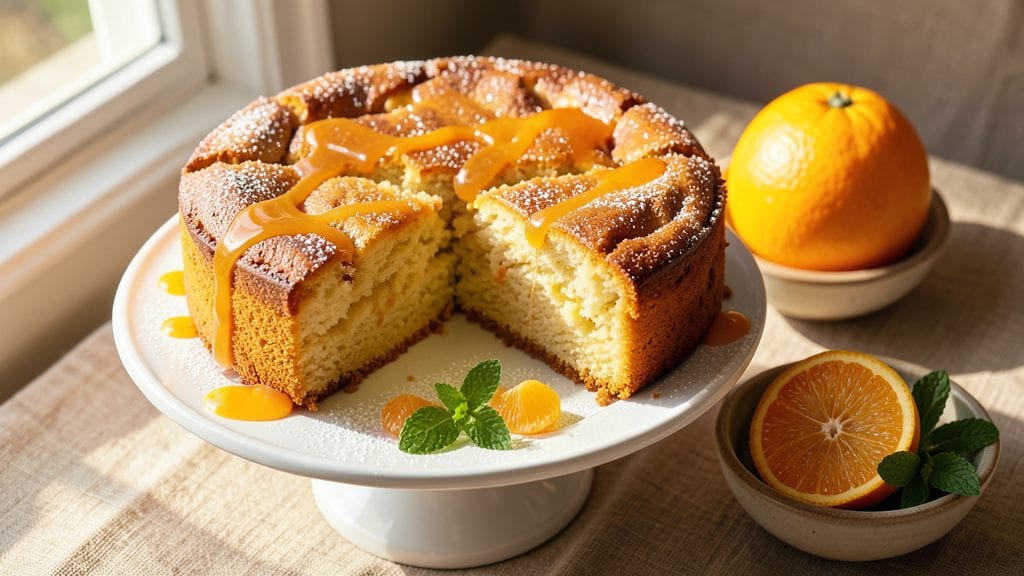
A basic orange cake recipe that delivers bright citrus flavor without overpowering sweetness has been my go-to for years—especially for birthdays and holiday gatherings. The secret lies in balancing orange zest and juice with vanilla and butter, creating a tender crumb that stays moist for days.
I developed this version after realizing most recipes either taste like orange soda or dry out too quickly.
This cake requires just 9 ingredients and 45 minutes of active time, including baking. The key steps are properly measuring the orange components (zest from 2 oranges, juice from 1) and creaming the butter and sugar until light and fluffy.
A simple syrup glaze keeps it moist without adding extra frosting, though you can certainly add cream cheese frosting if preferred.
What you’ll end up with is a cake that’s richly citrusy yet perfectly balanced, with a tender crumb and just the right amount of moisture. The aroma alone will have everyone anticipating dessert, and the flavor—bright, not sour—makes it versatile for any occasion.
The recipe scales easily for parties, and leftovers stay fresh for days when stored properly.
For extra flair, add a sprinkle of orange zest to the glaze or fold a bit of whipped cream into the batter. The possibilities are endless, but the foundation remains the same: a foolproof orange cake that’s simple to make yet impressive to serve.
Let’s get started with the ingredients and instructions.
Ingredients for basic orange cake
Nine essential ingredients create a perfectly balanced orange cake with bright citrus flavor and tender moisture.
| Ingredient | Amount | Notes |
|---|---|---|
| Unsalted Butter 🧈 | 1 cup | Cold, cubed for creaming |
| Granulated White Sugar 🍚 | 1 ½ cups | Superfine preferred for smoothness |
| Large Eggs 🥚 | 2 whole | Room temperature for even mixing |
| All-Purpose Flour 🌾 | 2 cups | Sifted, level measurements |
| Baking Powder 🍞 | 2 tsp | Aluminum-free for neutral flavor |
| Fine Sea Salt 🧂 | ½ tsp | Diamond Crystal preferred |
| Pure Vanilla Extract 🌿 | 1 tbsp | Bourbon-infused for depth |
| Fresh Orange Zest 🍊 | ½ cup | From 2 large oranges |
| Fresh Orange Juice 🍊 | ½ cup | From 1 large orange |
The butter and sugar form the cake's foundation, so quality matters. European-style unsalted butter from brands like Plugrá or Land O'Lakes creates a richer texture. For the sugar, superfine dissolves more easily, though granulated works if sifted first. The orange components are critical—select Navel or Valencia oranges for their natural sweetness and vibrant flavor. Avoid blood oranges, as their deep hue can alter the cake's color and taste. Zest from organic oranges often has more intense flavor, but conventional works fine if the fruit is fresh. Store-bought orange juice lacks the same depth, so freshly squeezed is ideal—though not strictly necessary if you use a high-quality brand like Tropicana Pure Premium.
Substitutions are possible but may affect flavor balance. Melted coconut oil can replace butter at a 1:1 ratio, though the texture will be slightly denser. For vanilla, vanilla bean paste adds flecks of flavor, while imitation extracts should be avoided entirely. If you lack fresh orange zest, high-quality bottled zest from brands like Frontier Co-op works, though fresh is superior. For orange juice, bottled pulp-free varieties are preferable to concentrate. The baking powder must be fresh—old powder loses its lift, resulting in a dense cake. Always check the expiration date. Flour should be spooned and leveled for accuracy, as scooping compresses the volume.
This cake stays moist for 4-5 days when stored in an airtight container at room temperature, though it's best enjoyed within 2 days. For longer storage, wrap tightly in plastic and refrigerate for up to 1 week. Freezing is possible for 3 months—wrap individual slices in plastic wrap before placing in a freezer bag. The glaze, if made separately, should be applied within 24 hours of baking for optimal texture. Leftovers can be reheated briefly in the microwave to restore freshness, though the cake's natural moisture keeps it tender without additional steps.
Why You'll Love This Recipe
- Pantry Staples Only: I’ll never stress over missing ingredients again. Butter, sugar, flour, eggs—if your kitchen has these basics, you’re golden. No specialty items, no last-minute grocery runs.
- Citrus Magic: That bright orange zest cuts through the richness of the butter, giving it a lift most boxed cakes can’t match. Honestly, it’s the secret weapon in this simple mix.
- Birthday or Breakfast: Slice it for a celebration or grab a fork straight from the pan—this cake handles both without fuss. I’ve served it at brunch with yogurt and at parties with whipped cream, and it never lets me down.
- No-Waste Leftovers: The texture stays moist for days, so I bake a full sheet pan and portion it out. Freezes beautifully too—perfect for when you need a quick dessert but forgot to plan ahead.
Step-by-step instructions for basic orange cake
Here's the method for achieving tender, citrus-infused layers without compromising structure.
Cream Butter and Sugars to Light Ribbons
In a stand mixer fitted with the paddle attachment, beat the 1 cup unsalted butter (cold, cubed) and 1.5 cups granulated white sugar on medium speed for 3-4 minutes. You're aiming for a pale, fluffy mixture that nearly doubles in volume—this incorporates air that will create a light texture. The sugar should dissolve completely, leaving no graininess behind.
I like to scrape down the sides of the bowl with a silicone spatula every 30 seconds to ensure even mixing. This step is critical for moisture—properly creamed butter creates tiny pockets that hold liquid, preventing dryness. If using superfine sugar, the process will be slightly faster, but don't rush it. The butter should be just soft enough to blend but not melted.
Add Eggs and Citrus Elements Gradually
Add the 2 whole large eggs (room temperature) one at a time, mixing on low speed for 30 seconds after each addition until fully incorporated. This prevents overmixing which can develop gluten. Next, add the 0.5 cup fresh orange juice and 0.5 cup fresh orange zest, mixing just until combined—about 20 seconds total. The zest will look like tiny specks suspended in the batter, while the juice adds moisture without overpowering the citrus flavor.
Here's the thing—don't overmix after adding the citrus. You want the zest distributed evenly but not pulverized into the batter. This ensures bright orange flavor without bitterness. The mixture should be smooth with no visible streaks of orange juice or zest. If you see any, fold gently with a spatula until just combined.
Combine Dry Ingredients for Even Distribution
In a separate bowl, whisk together the 2 cups all-purpose flour, 2 teaspoons baking powder, and 0.5 teaspoon fine sea salt. Sift the flour through a fine-mesh sieve directly into the bowl to aerate it—this prevents dense pockets in the cake. The baking powder should be sifted in as well to maintain its leavening power.
With the mixer on low speed, gradually add the dry ingredients to the wet mixture in three additions, mixing just until combined after each. Stop mixing as soon as the flour disappears—overmixing develops gluten which makes the cake tough. The batter should be thick but pourable, with visible orange specks throughout. If it looks too stiff, add 1-2 tablespoons of the orange juice to maintain moisture.
Fold in Vanilla and Prepare for Baking
Remove the bowl from the mixer and fold in the 1 tablespoon pure vanilla extract using a silicone spatula. This step ensures even distribution of the vanilla's aromatic compounds. The batter should now be smooth, with no visible flour streaks. For maximum flavor penetration, let the batter rest for 10-15 minutes at room temperature while you preheat your oven to 350°F.
During this rest, the flour will fully hydrate and the gluten will relax slightly, resulting in a more tender cake. Preheat two 8-inch round cake pans by placing them in the oven while it heats. Grease the pans thoroughly with butter and line the bottoms with parchment paper for easy removal. The batter should fill the pans about 2/3 full—this accounts for rising without overflowing.
Bake Until Golden and Springy
Divide the batter evenly between the prepared pans. Bake for 25-30 minutes until a toothpick inserted in the center emerges with a few moist crumbs but no wet batter clinging to it. The edges should be golden brown, and the cake should spring back slightly when pressed gently in the center.
I know it seems counterintuitive, but don't overbake—this is how you maintain moisture. The cake will continue cooking slightly as it cools. Let the cakes rest in their pans for 10 minutes before transferring to a wire rack to cool completely. This gradual cooling prevents cracking and helps the layers set properly. The final texture should be tender with a fine crumb, and the orange flavor should be bright but balanced—not overpowering.
Pro Tips For Making Basic Orange Cake
- Cream Butter Slowly: Let the butter sit at room temperature for 20-30 minutes before creaming—cold butter traps air poorly, and you’ll end up with a dense cake. I learned this the hard way after mixing stiff, lumpy butter and wondering why my cake tasted like a brick.
- Sift the Dry Mix: Whisk flour, baking powder, and a pinch of salt together, then sift the mix into the wet ingredients. This prevents lumps and ensures even baking—no one wants a cake with pockets of dry flour hiding in the middle.
- Don’t Overmix the Batter: Once you fold in the flour, stop mixing after just 10-12 strokes. Overmixing develops gluten, and your cake will turn out tough instead of tender. I used to think more mixing = better texture, but now I know better.
- Bake Until Springy: Check doneness at 25-30 minutes by pressing the center lightly—it should spring back, not feel gummy. If the top browns too fast, tent loosely with foil early. A cake that’s pulled out too soon will collapse, and no one wants a sad, flat orange cake.
Dietary considerations for this dish
Gluten-Free Adaptation
For a gluten-free version, replace the 2 cups all-purpose flour with a 1:1 gluten-free flour blend like Bob's Red Mill 1-to-1 or King Arthur Measure for Measure. Add 1 teaspoon xanthan gum to mimic gluten's binding properties.
Reduce the orange zest to 0.33 cup since gluten-free batters can absorb more moisture, and increase the orange juice to 0.67 cup to compensate. Bake at 325°F for 30-35 minutes—gluten-free cakes need slightly lower heat to prevent over-browning. 🌱
Dairy-Free Modifications
Swap the 1 cup unsalted butter for 1 cup dairy-free butter like Miyoko's Creamery or Earth Balance Soy-Free. Use 1 cup coconut oil (melted and cooled slightly) for a neutral flavor, though it may yield a denser texture.
For richness, add 2 tablespoons almond milk to the wet ingredients. The cake will still be moist but may have a slightly different crumb. Test with a toothpick for doneness—dairy-free versions can take 5-10 minutes longer to set. 🧈
Lower-Sugar Option
Reduce the 1.5 cups granulated sugar to 1 cup and replace the remaining 0.5 cup with 0.5 cup coconut sugar or 0.5 cup monk fruit sweetener. The coconut sugar adds subtle caramel notes, while monk fruit keeps the sweetness without affecting blood sugar.
Compensate by increasing the orange zest to 0.67 cup to enhance natural sweetness. The cake may be slightly denser, so bake for 28-30 minutes and check for doneness early. 🍯
Nut-Free Considerations
If your recipe includes nut-based substitutions (like almond flour), ensure all ingredients are certified nut-free. For example, if using oat flour as a partial replacement, confirm it's processed in a nut-free facility.
Always check labels on dairy-free butters or sweeteners—many contain traces of nuts. Store-bought gluten-free blends often cross-contaminate with nuts, so opt for certified nut-free brands like Cuppa Cake for safety. 🌰
Allergen-Friendly Storage
For gluten-free or dairy-free versions, store leftovers in airtight containers lined with parchment paper to prevent moisture loss. Refrigerate for up to 5 days—these cakes dry out faster due to reduced fat and gluten. Freeze slices wrapped in plastic wrap and aluminum foil for up to 2 months.
Thaw at room temperature for 1-2 hours before serving. Avoid microwaving—reheat in a 300°F oven for 10 minutes to preserve texture. ❄️
Nutrition facts
Frequently asked questions
Can I use bottled orange juice instead of fresh?
Freshly squeezed orange juice delivers the best flavor, but you can use bottled juice in a pinch. Look for 100% orange juice with no added sugar—brands like Tropicana Pure Premium work well. For extra brightness, add an extra 1 tablespoon of fresh orange zest to compensate for the flavor difference. Avoid concentrate or juice with pulp, as they can alter the cake's texture.
Why does my orange cake turn out dry?
Overmixing the batter or overbaking are the most common culprits. Stop mixing as soon as the flour disappears to avoid developing gluten, which makes cakes tough. Also, check your oven temperature—if it runs hot, reduce it to 340°F and bake for 28-30 minutes. For extra moisture, brush the warm cake with 2 tablespoons of simple syrup (equal parts sugar and water, heated until dissolved) while still in the pan.
How do I make this cake gluten-free without it tasting dense?
Use a 1:1 gluten-free flour blend with xanthan gum (like Bob's Red Mill) and reduce the orange zest slightly to 0.33 cup. Increase the orange juice to 0.67 cup to maintain moisture. Bake at 325°F for 30-35 minutes—lower heat prevents over-browning while allowing even cooking. Let the cake cool completely before slicing to avoid crumbling.
What’s the best way to store leftovers?
Wrap the cake tightly in plastic wrap or store in an airtight container at room temperature for up to 4 days. For longer storage, refrigerate for 1 week or freeze slices (wrapped individually) for 3 months. To revive stale cake, brush with a simple syrup (equal parts sugar and water, warmed) or reheat slices in a 300°F oven for 10 minutes before serving.
Can I add cream cheese frosting instead of the glaze?
A classic pairing. For a 2-layer 8-inch cake, use 8 oz cream cheese, 4 oz butter, 3 cups powdered sugar, and 1 tsp vanilla extract. Beat until smooth, then spread between layers and on top. Chill for 30 minutes before slicing. The tangy frosting balances the citrus perfectly, making it ideal for celebrations.