
Main Courses
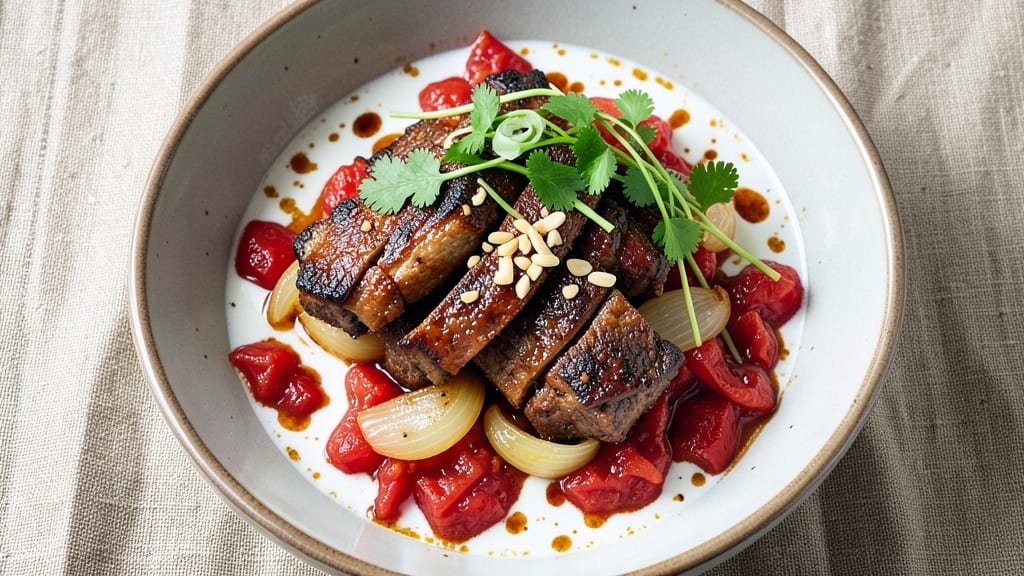
This beef short rib curry transforms tough cuts into melt-in-your-mouth tenderness that’ll have your whole table begging for seconds. The secret? A slow braise that breaks down the meat while building layers of aromatic spices into a rich, velvety sauce—no fancy techniques, just time and patience doing the heavy lifting.
I’ve perfected this recipe over years of testing, and trust me, the results are worth every minute.
The beauty of this curry lies in its simplicity: 5 hours of hands-off cooking (mostly in a slow cooker or Dutch oven) turns inexpensive short ribs into restaurant-worthy bites.
The spice blend—warm cinnamon, earthy cumin, and bright turmeric—marinates the meat while it cooks, infusing it with flavor so deep you’ll taste it in every bite. And the sauce? Creamy, slightly sweet, and just spicy enough to linger on your tongue.
By the time you’re ready to serve, you’ll have fall-apart tender beef swimming in a glossy, fragrant sauce that clings to every forkful. The ribs pull apart easily, releasing juices that turn your rice into a flavor bomb.
Serve it with buttery naan to soak up every last drop, or let the curry shine on its own—either way, this is the kind of dish that turns weeknights into special occasions.
Make it ahead for even better flavor—the sauce deepens overnight—and don’t skip the ghee finish, which adds a luxurious richness that takes it from home-cooked to showstopper. Let’s get cooking!
Ingredients for beef short rib curry
Five hours of slow cooking turns tough ribs into restaurant-quality curry bites.
| Ingredient | Amount | Notes |
|---|---|---|
| Beef Short Ribs 🥩 | 2 lb | Bone-in, 2-3 inches thick |
| Yellow Onion 🧅 | 1 whole | Chopped into 1-inch pieces |
| Garlic Cloves 🧄 | 6 cloves | Minced, fresh preferred |
| Ginger Root 🌿 | 1 tbsp | Freshly grated, peeled |
| Coconut Milk 🥥 | 1 can | 13.5 oz can, full-fat |
| Crushed Tomatoes 🍅 | 1 can | 14.5 oz can, San Marzano |
| Ground Cumin 🌶️ | 1 tbsp | Toasted for deeper flavor |
| Ground Coriander 🌿 | 1 tbsp | Freshly ground preferred |
| Turmeric Powder 🧂 | 1 tsp | Bright yellow color |
| Cinnamon Stick 🌿 | 1 whole | For aroma infusion |
| Cardamom Pods 🌿 | 4 whole | Lightly crushed |
| Bay Leaves 🍃 | 2 whole | Dried, standard size |
| Garam Masala 🌶️ | 1 tbsp | Store-bought blend works |
| Unsalted Butter 🧈 | 2 tbsp | Cold, for finishing |
| Salt 🧂 | 1 ½ tsp | Kosher or sea salt |
| Black Peppercorns 🌶️ | ½ tsp | Freshly cracked |
The short ribs are everything here—bone-in, 2-3 inches thick for maximum flavor and tenderness. Look for chuck or plate cuts at your butcher or grocery store's meat department. The Costco Kirkland brand is my go-to for consistency, but any quality butcher will have good options. If you can't find bone-in, bone-out ribs will work (just add 15 minutes to cooking time). The spices? Penzeys or Spicewalla for premium blends, but the regular grocery store stuff works fine if it's fresh. Smell your spices—if they don't smell amazing, toss them.
No coconut milk? Heavy cream or half-and-half in a pinch (cut with a little water to thin), but you'll lose that authentic depth. The crushed tomatoes can be whole peeled tomatoes if you're in a hurry—just crush them by hand. Running short on cardamom? Allspice or nutmeg at half the amount works, though it won't be identical. The ginger and garlic are non-negotiable though—fresh is ideal, but if you must use powdered, double the amount. For the butter finish, ghee works even better—just melt it gently at the end for that restaurant-quality sheen.
This curry tastes even better the next day—make extra if you can. Keeps 4-5 days in the fridge, or 3 months frozen in airtight containers. I like to portion it into individual containers so I can grab a meal straight from the freezer. The sauce thickens when chilled, so add a splash of water or milk when reheating. Serve with basmati rice or warm naan—Trader Joe's frozen naan is my secret weapon for lazy weeknights.
Why You'll Love This Recipe
- Same recipe, different vibes: serve with naan for a fancy dinner or over rice for a lazy Sunday. Between us, it’s the one dish that always impresses without trying too hard.
- Foolproof Prep: I swear by the slow-cooker method here—just dump in the ribs, onions, and spices, then walk away. The ginger and garlic caramelize into something deeply flavorful with zero babysitting.
- Rich, Layered Depth: That first bite? The short ribs fall apart like butter, while the coconut milk smooths out the heat—like a hug in a bowl. Honestly, the balance of spice and creaminess keeps me coming back.
- Weeknight or Guest Night: Same recipe, different vibes: serve with naan for a fancy dinner or over rice for a lazy Sunday. Between us, it’s the one dish that always impresses without trying too hard.
Step-by-step instructions for beef short rib curry
Here's how to transform tough short ribs into melt-in-your-mouth curry perfection.
Sear the Short Ribs for Deep Flavor
Pat the 2 lb beef short ribs completely dry with paper towels. Heat a large Dutch oven over medium-high heat and add the ribs in a single layer, bone-side down. Let them sear undisturbed for 5 minutes until a deep golden-brown crust forms. This crust locks in flavor during the long braise.
Flip the ribs and sear the other side for another 5 minutes. Remove them from the pot and set aside. You'll notice the meat releases easily from the pan when properly seared - this is your signal it's ready. Don't rush this step; proper browning creates the foundation for rich curry flavors.
Build the Spice Base
In the same Dutch oven, reduce heat to medium and add 2 tablespoons of unsalted butter. Toss in the chopped 1 whole yellow onion and cook for 5 minutes until softened. Add the minced 6 cloves garlic cloves and freshly grated 1 tablespoon ginger root, cooking for 1 minute until fragrant.
Stir in the 1 tablespoon ground cumin, 1 tablespoon ground coriander, and 1 teaspoon turmeric powder, cooking for 30 seconds until the spices release their aromas. Add the 1 whole cinnamon stick, lightly crushed 4 whole cardamom pods, and 2 whole bay leaves. Pour in the 1 can crushed tomatoes and stir to combine.
Simmer the Curry Low and Slow
Return the seared short ribs to the pot, bone-side up. Pour in the 1 can coconut milk and add 1.5 teaspoons salt and 0.5 teaspoon cracked black peppercorns. Bring to a gentle simmer, then reduce heat to low. Cover and cook for 2 hours, stirring occasionally, until the ribs are fork-tender.
Here's the thing - you want the liquid to reduce slightly but not completely evaporate. The ribs should be falling off the bone when tested with a fork. If the liquid reduces too much, add ½ cup water to maintain the proper consistency. The spices will infuse deeply during this time, creating complex layers of flavor.
Finish with Garam Masala
Once the ribs are tender, remove them from the pot and strain the cooking liquid through a fine-mesh sieve into a clean bowl. Discard the solids. Return the ribs to the pot and stir in 1 tablespoon garam masala. Pour the strained sauce back in and simmer uncovered for 5 minutes to let the flavors meld.
The sauce should coat the back of a spoon and have a rich, aromatic aroma. If it's too thick, add a splash of water to reach your desired consistency. The garam masala adds that final warming spice note that makes this curry truly special. Taste and adjust seasoning if needed - you might want to add a pinch more salt or a crack of pepper.
Pro Tips For Making Beef Short Rib Curry
- SEAR THE RIB BONES FIRST: I used to toss the short ribs straight into the curry pot, but that’s how you end up with a watery mess. Sear the bones bone-side down in a hot pan for 3-4 minutes until they’re deeply browned—this locks in flavor and builds a crust that won’t dissolve when you add liquid. (Yes, it’s extra work, but trust me, the first bite makes it worth it.)
- GRATE GINGER FINE: Skip the mincer—you want ginger so fine it practically disappears into the sauce. A box grater does the job faster and more evenly than a knife, and it releases the heat without leaving fibrous chunks. I learned this the hard way after biting into a surprise piece mid-bite.
- STIR IN COCONUT MILK GRADUALLY: Pouring all the coconut milk at once dilutes the base and weakens the spices. Instead, add it in two stages: first, enough to deglaze the pan (about 1/3 cup), then the rest later to adjust consistency. This keeps the sauce rich and the flavors concentrated—no thin, watery disappointment here.
- LET THE RIB BONE MARINATE IN ITS JUICE: After simmering, resist the urge to rush. Tent the pot with foil and let the ribs rest in their own juices for 10-15 minutes off the heat. The residual steam keeps them tender, and the sauce thickens just enough to coat them properly. (I know, I know—waiting is the hardest part.)
Best sauces and condiments for this recipe
Creamy Coconut Base
The foundation of this curry is the full-fat coconut milk—it creates that luxurious, velvety texture that makes every bite irresistible. I use 1 can (13.5 oz) of Thai Kitchen brand because it’s rich and creamy without being overly sweet.
If you’re using light coconut milk, add 1 extra tablespoon of heavy cream to restore richness. The key is to let the coconut milk simmer gently with the spices for at least 2 hours—this allows the natural sweetness to caramelize slightly, deepening the flavor. 🥥
Spiced Tomato Layer
Don’t skip the San Marzano crushed tomatoes—their natural sweetness balances the spices beautifully. I blend 1 can (14.5 oz) with 1 tablespoon of tomato paste before adding it to the pot to thicken the sauce naturally.
For extra depth, sauté the tomatoes with the onions and garlic until they darken slightly—this adds a smoky note that elevates the dish. If you’re short on time, fire-roasted diced tomatoes work in a pinch, but they won’t have the same depth. 🍅
Garam Masala Finish
The garam masala is what transforms this curry from good to unforgettable. I use 1 tablespoon of Patiala brand (it’s my go-to for its balanced warmth), but any high-quality blend will work. Add it only in the last 5 minutes of cooking—this preserves its bright, aromatic flavors.
For a smoky twist, toast the garam masala in a dry pan for 30 seconds before stirring it into the sauce. A pinch of ground fenugreek (½ teaspoon) adds a unique bitterness that pairs perfectly with the richness. 🌶️
Butter or Ghee Finish
The final touch is 2 tablespoons of cold unsalted butter (or ghee for extra richness) swirled into the sauce at the end. This adds a luxurious mouthfeel and helps balance any sharp spices.
I melt the butter gently over low heat, then let it cool slightly before stirring it in—this prevents the sauce from breaking. For a restaurant-quality sheen, finish with a drizzle of melted ghee and a sprinkle of toasted cumin seeds.
The butter also helps emulsify the sauce, making it silky smooth. 🧈
Yogurt or Cream Swirl
For a tangy contrast, stir in ¼ cup of plain Greek yogurt or heavy cream in the last few minutes of cooking. This cuts through the richness and adds a velvety texture.
I like to temper the yogurt first by whisking it with a splash of warm sauce before adding it to the pot—this prevents curdling. For extra decadence, top each serving with a dollop of whipped cream or a swirl of sour cream.
This step is optional but makes the curry feel even more indulgent. 🥛
Fresh Herb Garnish
Brighten the dish with cilantro and mint—I chop ¼ cup of each and scatter them over the top just before serving. The cilantro adds freshness, while the mint lifts the whole dish. For a citrusy note, add zest from 1 lime and a few drops of lime juice.
If you’re serving this curry at a dinner party, garnish with edible flowers or toasted pistachios for an elegant touch. The herbs should be added last to preserve their vibrant color and flavor. 🌿
Nutrition facts
Frequently asked questions
Can I use bone-in or boneless short ribs for this curry?
Bone-in short ribs are ideal—they add incredible depth of flavor and stay juicier during the long braise. However, boneless ribs will work too, though they may require 15-20 extra minutes of cooking time to reach the same tenderness. The bones also help anchor the meat in the pot during simmering, so if using boneless, consider adding a few beef bones or chicken thighs to mimic the texture.
How do I adjust the spice level for picky eaters?
Start by reducing the garam masala to ½ tablespoon and omit the ½ teaspoon of cracked black peppercorns (use powdered instead). For a milder kick, replace 1 teaspoon of turmeric with ½ teaspoon of mild paprika. Add the spices to the pot after the onions soften (not during the initial toasting) to minimize their heat. Always taste the sauce before serving and adjust with a pinch of sugar or extra coconut milk to balance.
Can I make this curry in a slow cooker instead of a Dutch oven?
Follow the same searing step in a skillet, then transfer everything (including the ribs) to a 6-quart slow cooker. Cook on low for 6-7 hours or high for 4-5 hours, stirring once halfway. The sauce may thicken more in a slow cooker, so add ¼ cup water or coconut milk if needed. The ribs will be even more tender, almost falling apart. For best results, use the "keep warm" setting for up to 2 hours after cooking.
Why does my curry sauce turn out watery or too thick?
Watery sauce usually means the coconut milk wasn't reduced enough—simmer uncovered for 5-10 extra minutes to thicken it. For too-thick sauce, whisk in 2-3 tablespoons of warm water or coconut milk gradually until smooth. The key is maintaining a low simmer throughout cooking. If using a slow cooker, reduce the cooking time slightly (by 30 minutes) to prevent over-reduction. Always taste and adjust seasoning after thickening.
What are the best sides to serve with this curry?
This rich curry pairs perfectly with basmati rice (jasmine rice works too) or naan bread for soaking up the sauce. For a lighter option, serve with cauliflower rice or a fresh cucumber-raita (yogurt dip). Heartier sides like roasted sweet potatoes or garlic naan balance the dish beautifully. Avoid heavy sides like mashed potatoes—they’ll make the meal feel too heavy. For a complete meal, add a simple mixed green salad with lemon vinaigrette.