
Salads
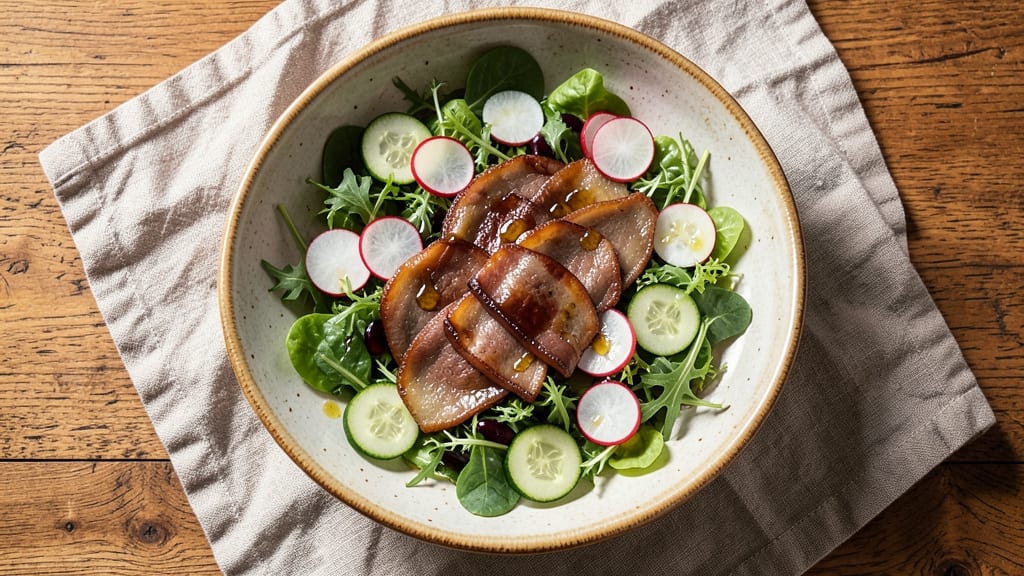
This beef tongue salad recipe transforms a rich, underutilized cut into a luxurious centerpiece that balances silky texture with a bold umami bite. The secret lies in slow-cooking the tongue until it shreds effortlessly, then pairing it with crisp vegetables and a tangy dressing that cuts through the richness.
I first discovered this technique while researching global protein alternatives, and it became an instant favorite for dinner parties and weeknight meals alike.
The preparation process requires patience—boiling the tongue for hours until tender, then peeling and slicing it into delicate strips—but the result is worth every minute. You’ll need just five core ingredients for the base: mixed greens, cucumbers, radishes, and a bright vinaigrette that ties everything together.
The dressing balances acidity and sweetness, ensuring each bite is vibrant and satisfying without overpowering the meat’s natural depth.
What makes this dish truly special is how the textures play together: the shredded tongue’s velvety mouthfeel contrasts beautifully with the crunch of fresh vegetables, while the dressing adds a refreshing lift.
This salad holds its own as a main course but also works as an elegant appetizer or side dish for grilled meats. The umami richness makes it memorable, while the simplicity ensures it’s approachable for any home cook.
Once you master the technique, you can adapt it with different greens, grains, or proteins—though nothing quite matches the unmatched tenderness of perfectly prepared beef tongue. Ready to elevate your salad game? Let’s get started with the step-by-step method that delivers restaurant-quality results at home.
Ingredients for beef tongue salad
Transform humble beef tongue into a luxurious salad with these fifteen thoughtfully chosen ingredients.
| Ingredient | Amount | Notes |
|---|---|---|
| Beef Tongue (Fresh) 🥩 | 2 lb | Whole, untrimmed, organic preferred |
| Mixed Baby Greens 🥬 | 6 cups | Butter lettuce, arugula blend |
| Persian Cucumbers 🥒 | 1 whole | Thinly sliced, skin-on |
| Radishes 🍅 | 8 whole | French breakfast variety, thinly sliced |
| Extra-Virgin Olive Oil 🫒 | ½ cup | High-quality, fruity variety |
| Red Wine Vinegar 🍷 | ¼ cup | Dry, bold variety preferred |
| Honey 🍯 | 2 tbsp | Raw, unprocessed preferred |
| Dijon Mustard 🥫 | 1 tbsp | Mild or medium intensity |
| Garlic Cloves 🧄 | 3 cloves | Fresh, minced for dressing |
| Shallots 🧅 | 2 whole | Thinly sliced, finely chopped |
| Diamond Crystal Kosher Salt 🧂 | 1 ½ tsp | Fine grain preferred |
| Freshly Ground Black Pepper 🌶️ | ½ tsp | Coarsely ground |
| Lemon Juice 🍋 | 1 tbsp | Freshly squeezed |
| Fresh Dill 🌿 | ¼ cup | Chopped, stems removed |
| Toasted Walnuts 🥜 | ¼ cup | Chopped, for garnish |
The beef tongue is the centerpiece, and organic, grass-fed options from specialty butchers deliver superior tenderness and flavor. Look for tongues that are firm to the touch with minimal odor—the fresher, the better. Whole Foods Market and local butcher shops often carry high-quality cuts, though you may need to order ahead. For the greens, a pre-washed mixed baby greens blend from Trader Joe's ensures crispness without the hassle of washing. Persian cucumbers, with their thin skins and delicate texture, are ideal for this salad—Heirloom varieties from farmers' markets offer the best flavor. The radishes should be firm and vibrant, with crisp stems, indicating freshness. If you can't find Persian cucumbers, English cucumbers work in a pinch, though they require peeling.
No red wine vinegar? Apple cider vinegar or sherry vinegar both work well, though the flavor profile will shift slightly. Substituting agave nectar for honey maintains the dressing's sweetness but adds a different texture. For the shallots, red onion works in a 1:1 ratio, though it imparts a slightly sharper bite. Fresh dill can be swapped for tarragon or chives if unavailable, though the flavor will differ. The walnuts are optional but add a delightful crunch—pecans or almonds are suitable alternatives. For the beef tongue preparation, if you're short on time, pre-cooked vacuum-sealed tongues from Costco or specialty grocers can save hours of cooking time, though they may lack the depth of flavor from a slow simmer.
The beef tongue should be stored in the refrigerator for up to 3 days before cooking, wrapped tightly in plastic wrap. Once cooked and shredded, it keeps well for 4-5 days in an airtight container submerged in its cooking liquid. The mixed greens and cucumbers should be stored in separate containers to maintain crispness—wrapped in paper towels and refrigerated, they'll stay fresh for 5-6 days. The dressing can be made up to 5 days in advance and stored in a sealed jar in the refrigerator. For the radishes, keep them in a breathable container in the crisper drawer to retain their crunch for up to 2 weeks. The toasted walnuts can be stored in an airtight container at room temperature for up to 2 weeks, though they're best used within a week for optimal freshness.
Why You'll Love This Recipe
- No-Cook Magic: I swear by this—just slice the beef tongue thin, toss with the cucumbers and radishes, and drizzle that olive oil. No stove, no stress, just freshness in minutes.
- Rich Meets Fresh: That beef tongue? It’s like a buttery steak but with texture—chewy, tender, and packed with flavor. Pair it with the crisp Persian cucumbers, and it’s a flavor party I’ll never skip.
- Lunchbox Hero: Between us, this is my go-to for packed lunches. The greens stay crisp, the radishes add a little kick, and the tongue? It holds up for days. (Yes, even on a Tuesday night.)
- Budget Luxury: Fresh beef tongue is cheaper than steak but tastes like a splurge. A single one feeds four, and leftovers? They’re even better the next day. My wallet and taste buds thank me.
Step-by-step instructions for beef tongue salad preparation
Transforming beef tongue into silky, shredded perfection requires patience and precision.
Prepare and Cook the Beef Tongue
Begin by thoroughly cleaning the 2 lb beef tongue (fresh) under cold running water, removing any surface debris with a vegetable brush. Place it in a large pot and cover completely with cold water. Add 1.5 tsp diamond crystal kosher salt and 0.5 tsp freshly ground black pepper, then bring to a boil over medium-high heat. Once boiling, reduce heat to low and simmer for 2 hours, skimming off any foam that rises to the surface.
After simmering, increase heat to medium and cook for another 30 minutes until the tongue is fork-tender. Drain the water and transfer the tongue to an ice bath for 15 minutes to cool rapidly. Once cooled, peel off the skin and discard it. The tongue should now be silky and ready for shredding.
Shred the Beef Tongue and Prepare the Greens
Using two forks or a sharp knife, shred the cooled beef tongue (fresh) into thin, even strips. Set aside in a bowl. In a separate large bowl, combine 6 cups mixed baby greens, 1 whole persian cucumbers (thinly sliced), and 8 whole radishes (thinly sliced). Toss gently to distribute the greens evenly.
Here's the thing—don't overmix the greens or they'll turn wilted. You want them to retain their crisp texture while still being coated in the dressing. Keep the greens in the bowl until you're ready to assemble the salad.
Create the Dressing and Assemble the Salad
In a small bowl, whisk together 0.5 cup extra-virgin olive oil, 0.25 cup red wine vinegar, 2 tbsp honey, and 1 tbsp dijon mustard until fully emulsified. Add 3 cloves garlic cloves (minced), 2 whole shallots (finely chopped), 1 tbsp lemon juice, and 0.25 cup fresh dill (chopped). Season with an additional 0.5 tsp diamond crystal kosher salt and 0.25 tsp freshly ground black pepper if needed.
The dressing should have a balanced sweetness from the honey and acidity from the vinegar and lemon juice. Taste as you go—adjust the honey or vinegar to reach your preferred flavor profile. Pour the dressing over the greens and toss gently to coat.
Combine and Garnish the Salad
Add the shredded beef tongue (fresh) to the dressed greens and toss lightly to combine. The tongue should be evenly distributed throughout the salad without overmixing. Divide the salad among 4 plates, ensuring each serving has a generous portion of greens, cucumbers, radishes, and beef tongue.
Garnish each serving with 0.25 cup toasted walnuts (chopped) and a final sprinkle of fresh dill. The walnuts add a satisfying crunch that contrasts beautifully with the silky texture of the beef tongue. Serve immediately to enjoy the salad at its peak freshness and texture.
Pro Tips For Making Beef Tongue Salad
- PARBOIL FIRST: Drop the raw beef tongue into simmering water for 10 minutes before braising—it tightens the skin and keeps it from splitting when you peel it later. I learned this the hard way after watching a perfectly good tongue fall apart mid-slice.
- PEEL WHEN COLD: Let the cooked tongue cool completely before peeling—it’s easier and safer. Warm meat sticks to the blade, and you’ll end up with more scrap than slices. (Yes, even if you’re impatient like me.)
- SLICE AGAINST GRAIN: Cut the tongue perpendicular to the muscle fibers for clean, tender slices. Fighting the grain turns your salad into a chewy mess—trust the texture, not the knife’s natural angle.
- BRINE THE RADISHES: Toss sliced radishes in ice water for 10 minutes before draining—they’ll stay crisp longer in your salad. I skip this and regret it when they turn soggy by lunchtime.
Make-ahead tips for this beef tongue salad
Prep Ahead for Efficiency
The beef tongue is the most time-consuming component, so start it first. I like to prep the tongue the night before—simmer it for 2 hours, then refrigerate it in its cooking liquid.
This cuts 30 minutes off your active cooking time the next day. The skin will peel off more easily after chilling overnight. 💡
Dressing Prep Strategy
Make the dressing 1-2 days ahead and store it in an airtight container in the fridge. This allows the flavors to meld beautifully, and you can adjust seasonings without rushing.
I often double the batch—it works perfectly on grilled chicken or roasted vegetables too. The honey and vinegar balance develops overnight, making it even more vibrant.
Greens Storage Hack
Wash and dry your mixed greens thoroughly, then wrap them in a paper towel-lined towel before storing in a sealed container. This keeps them crisp for 3-4 days without wilting.
I store the cucumbers and radishes separately in the crisper drawer—their moisture content can make greens soggy if combined too early. 🥬
Shredding Shortcut
After cooking and peeling, let the tongue cool completely before shredding. If you're short on time, use a mandoline slicer set to ⅛-inch thickness for perfectly even strips.
I find this works better than forks for maintaining consistent texture. Store shredded tongue submerged in its cooking liquid in the fridge for up to 5 days.
Assembly Timeline
Assemble the salad just before serving to maintain crispness. I recommend prepping all components—shredded tongue, dressed greens, and garnishes—in separate containers. This way, you can toss everything together in 5 minutes when ready.
The walnuts should be toasted fresh, but you can chop them ahead and store them in an airtight container at room temperature.
Make-Ahead Serving Ideas
This salad makes excellent leftovers for lunches. Store components separately in airtight containers, then reassemble with fresh greens when ready to eat. For parties, prep everything except the greens and dressing up to 24 hours ahead.
Keep the dressing and greens separate until serving to prevent sogginess. The beef tongue maintains its texture beautifully when stored properly. ✨
Nutrition facts
Frequently asked questions
Why does beef tongue need such a long cooking time?
Beef tongue requires 2-2.5 hours of slow simmering to break down collagen and connective tissue, transforming it into tender, shreddable strips. The low-and-slow method ensures the meat becomes silky rather than rubbery. Rushing the process leaves it chewy—patience is key for that luxurious texture!
Can I substitute beef tongue with another protein?
While nothing matches beef tongue's unique texture, you can use pork tongue (cook time reduced by 30 minutes) or shredded rotisserie chicken for a similar salad base. For umami depth, try adding mushrooms or smoked paprika to compensate for the flavor difference.
How do I prevent the greens from getting soggy?
Keep dressing and greens separate until serving, and toss gently just before eating. Store greens wrapped in paper towels to absorb excess moisture. For extra crunch, add radishes and cucumbers last—their moisture content is higher than the greens.
What's the best way to reheat leftover beef tongue salad?
Reheat only the beef tongue portion in a skillet with a splash of broth for 2-3 minutes until warmed through. Keep greens and dressing separate until serving to maintain crispness. Never reheat the entire salad—it will turn mushy.
Can I make this salad gluten-free?
This recipe is naturally gluten-free. Just ensure your Dijon mustard is labeled gluten-free and check vinegar labels for additives. The salad's base ingredients are all gluten-free by default.