
Main Courses
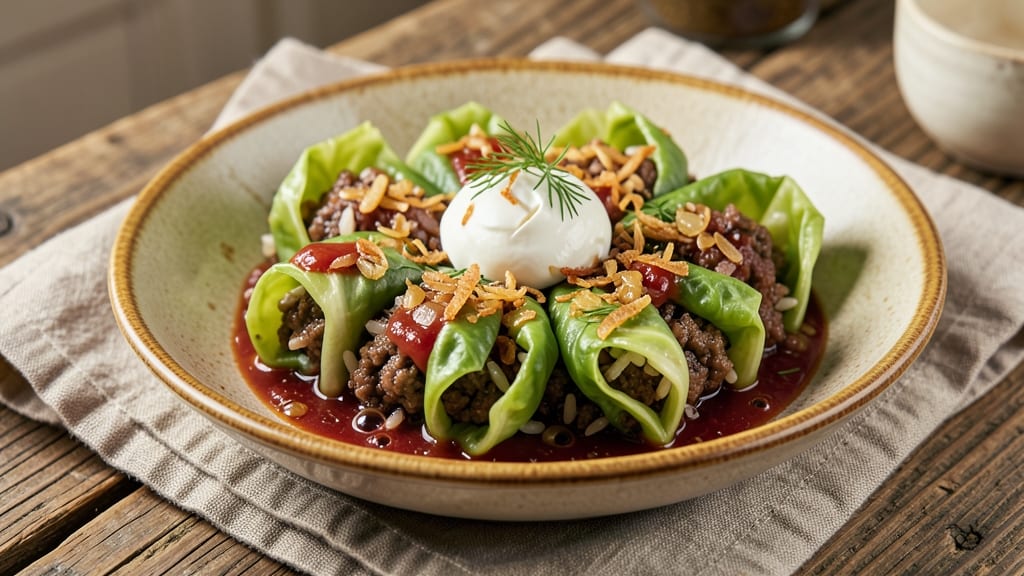
Mastering the art of Polish golumpki transforms simple cabbage rolls into a hearty centerpiece that tastes like home. This traditional recipe combines tender cabbage leaves wrapped around a savory meat-and-rice filling, slow-baked in a rich tomato sauce until everything is perfectly tender.
The key lies in properly preparing the cabbage—boiling it just until pliable—and assembling the filling with the right balance of spices for maximum flavor depth.
What sets this golumpki recipe apart is the layered approach: starting with a flavorful tomato-based sauce that simmers at the bottom of the baking dish, creating a rich foundation for the cabbage rolls.
The filling itself is a harmonious blend of ground meat, long-grain rice, and aromatic spices that infuse every bite. With precise timing and technique, you'll achieve cabbage rolls that stay tender yet hold their shape, never falling apart.
The result is a dish that brings warmth to any table—golden cabbage rolls nestled in a vibrant tomato sauce, their edges slightly crisp while the filling remains juicy and flavorful. This recipe serves six and takes about two hours from start to finish, including preparation and baking time.
The aroma alone will have everyone gathering around the table, eager for their first taste.
For those looking to adapt, a vegetarian version replaces the meat with mushrooms and lentils, maintaining the same rich texture and satisfying flavor profile. Whether you're making it for a family gathering or a special occasion, this golumpki recipe delivers restaurant-quality comfort food right in your own kitchen.
Ingredients for best golumpki
Twelve tender cabbage leaves and a savory filling blend create this Polish comfort classic.
| Ingredient | Amount | Notes |
|---|---|---|
| Fresh Cabbage Leaves 🥬 | 12 whole | Large, outer leaves preferred |
| Ground Beef 🥩 | 1 ½ lb | 80/20 fat ratio for juiciness |
| Long-Grain White Rice 🍚 | 1 cup | Uncooked, rinsed thoroughly |
| Onion 🧅 | 1 whole | Yellow or white, finely diced |
| Garlic Cloves 🧄 | 4 cloves | Freshly minced for maximum aroma |
| Canned Tomato Sauce 🍅 | 2 cups | San Marzano preferred for sweetness |
| Tomato Paste 🍅 | 2 tbsp | High-quality, not powdered |
| Beef Broth 💧 | 1 cup | Homemade or low-sodium store-bought |
| Fresh Dill 🌿 | ¼ cup | Chopped, stems removed |
| Fresh Parsley 🌿 | ¼ cup | Chopped, for freshness |
| Bay Leaves 🍃 | 2 whole | Fresh preferred, dried acceptable |
| Allspice Berries 🌶️ | ¼ tsp | Ground for convenience |
| Black Peppercorns 🌶️ | ½ tsp | Freshly cracked for intensity |
| Salt 🧂 | 1 ½ tsp | Kosher or sea salt preferred |
| Butter 🧈 | 2 tbsp | Unsalted, for sauce richness |
The cabbage leaves are the foundation—look for heads with large, outer leaves that can be easily separated. Whole Foods or Polish specialty markets often carry the freshest cabbage, but any green grocery store will have suitable options. Avoid wilted or yellowed leaves, as they won't hold their shape during baking. If you can't find large leaves, butterfly smaller ones by making a vertical cut down the stem end to create a flat surface for stuffing. The ground beef should be 80/20 fat ratio—this keeps the filling juicy during the long baking time. Most grocery stores carry this pre-ground, but if you're buying whole chuck roasts, trim excess fat before grinding.
No fresh dill? Dried dill at one-third the amount works in a pinch, though fresh is ideal for that bright, herbal note. The tomato sauce can be homemade or store-bought—Rao's or Muir Glen are reliable brands—but if you're making your own, San Marzano tomatoes are worth the investment for their sweetness. Substituting mushrooms for the beef? Use 8 oz of finely chopped cremini mushrooms and add an extra tablespoon of tomato paste to compensate for the lack of fat. The allspice berries add depth—if unavailable, substitute 1/4 tsp ground allspice, but whole berries are preferred for their subtle, warm flavor that lingers.
This dish tastes even better the next day, so make it ahead if possible. The cabbage rolls keep well in the fridge for 3-4 days when stored in an airtight container with sauce. For longer storage, freeze portions in a single layer before transferring to a bag—they'll keep for up to 3 months. When reheating, cover with foil and bake at 350°F until heated through. The sauce thickens as it cools, so you can add a splash of beef broth if it seems too thick when reheating. Portion into individual servings before freezing for easy meal prep.
Why You'll Love This Recipe
- One-Pot Magic: I swear by this method—just brown the beef with onions, cook the rice right in the pan, then stuff it all into those cabbage leaves. No extra bowls, no extra mess. (Yes, even on a Tuesday night.)
- Garlic-Beef Bliss: That crispy, caramelized onion and garlic combo with the savory ground beef? It’s the kind of flavor that makes you pause mid-bite. Honestly, the rice soaks up every last bit—no dry bites here.
- Lunchbox Legend: Between us, this is my go-to for meal prep. Pack it cold or reheat it—those cabbage leaves hold up perfectly, and the rice stays fluffy. My kids actually eat their veggies this way. (Small victories.)
- Budget Winner: Ground beef, rice, and a whole cabbage? This feeds four for under $10. And leftovers? They taste just as good the next day—if there are any, because it disappears fast.
Step-by-step instructions for cabbage rolls stuffed with savory meat and rice
Here's the method for creating tender cabbage rolls with a perfectly balanced filling.
Blanch and Prepare the Cabbage Leaves
Fill a large pot with water and bring to a boil. Add the 12 whole fresh cabbage leaves one at a time, blanching each leaf for 30-45 seconds until pliable but not fully cooked. This softens the leaves enough to wrap the filling without breaking.
Drain the blanched leaves and lay them flat on a clean kitchen towel. Place a folded paper towel over the top and press gently to remove excess moisture. This prevents the filling from slipping out during assembly. Keep the leaves covered with a damp towel while you prepare the filling.
Cook the Rice and Prepare the Filling
In a medium saucepan, combine 1 cup long-grain white rice with 2 cups canned tomato sauce and 1 cup beef broth. Bring to a boil, then reduce heat to low, cover, and simmer for 12 minutes. Remove from heat and let it steam, covered, for another 5 minutes. Fluff with a fork and set aside.
In a large skillet, melt 2 tablespoons butter over medium heat. Add the 1 whole onion, finely diced, and cook for 5 minutes until softened. Add the 4 cloves garlic cloves, minced, and cook for 30 seconds until fragrant. Transfer the onion-garlic mixture to a large mixing bowl.
Add the cooked rice to the bowl with the onion mixture. Stir in 1.5 lb ground beef, breaking it up with your hands. Add 0.25 cup fresh dill, 0.25 cup fresh parsley, 2 whole bay leaves, 0.25 tsp ground allspice berries, 0.5 tsp cracked black peppercorns, and 1.5 tsp salt. Mix thoroughly until all ingredients are evenly distributed.
Assemble the Cabbage Rolls
Lay out a blanched cabbage leaf, vein-side up. Spoon 1/6 of the filling (about 1/3 cup) near the stem end of the leaf. Fold the sides inward, then roll tightly from the stem end, tucking in the sides as you go. Place the completed roll seam-side down in a large Dutch oven.
Repeat with the remaining leaves and filling, arranging the rolls in a single layer in the Dutch oven. If any filling leaks out, press it gently back into the rolls. This ensures each roll stays compact and holds its shape during cooking.
Prepare and Simmer the Sauce
In the same skillet used for cooking the onions, add 2 tablespoons tomato paste and cook for 1 minute until fragrant. Pour this paste into the Dutch oven with the rolls. Add enough water to come about halfway up the sides of the rolls, then cover tightly with a lid.
Bring the liquid to a boil over high heat, then reduce heat to low. Simmer for 1 hour and 15 minutes, or until the cabbage leaves are tender and the rice is fully cooked. Avoid lifting the lid during cooking to prevent the rolls from falling apart.
Serve with Fresh Herbs
Remove the lid and let the rolls sit for 5 minutes to allow any excess liquid to absorb. Garnish each roll with additional fresh parsley and serve immediately. The sauce should be rich and slightly reduced, coating the rolls beautifully. Each bite should deliver tender cabbage, flavorful rice, and juicy beef in perfect harmony.
Pro Tips For Making Best Golumpki
- Blanch Leaves Properly: Drop cabbage leaves in boiling water for exactly 30 seconds—no longer, or they’ll turn mushy. After blanching, plunge them into ice water to stop cooking and keep them crisp enough to hold the filling. (Yes, even if you’re impatient like me, resist the urge to rush this.)
- Cook Rice to Al Dente: Undercooked rice turns to glue; overcooked rice gets grainy. For golumpki, cook rice until it’s just firm to the bite—about 5 minutes less than package instructions—and rinse it afterward. The filling needs to stay distinct, not turn into a sad, sticky blob.
- Sear Meat First: Brown the ground beef in batches over medium-high heat before mixing in onions and garlic. That crust adds depth, and skipping it means your golumpki will taste like a bland meat-and-rice stew. (Trust me, your future self will notice.)
- Pack Filling Tight: Stuff the cabbage leaves generously but firmly—no half-empty pockets. The filling should press against the edges so it steams evenly during baking. Loose packing leads to soggy, unevenly cooked rolls. (Think of it like wrapping a burrito: no gaps.)
Essential equipment for this dish
Cabbage Leaf Prep Tools
Start with a large stockpot (at least 8-quart capacity) for blanching cabbage leaves—my go-to is a Calphalon stainless steel stockpot because it handles high heat without warping. You’ll also need a sharp chef’s knife (I recommend Wüsthof Classic) to trim thick stems and separate leaves cleanly.
A wooden spoon helps gently press leaves flat after blanching without tearing them. 🥬
Dutch Oven Essentials
A 5.5-quart Dutch oven (like Le Creuset’s signature line) is non-negotiable for even heat distribution and tight sealing. The deep sides prevent rolls from toppling, and the heavy base maintains low-and-slow simmering without hot spots.
If you don’t own one, a heavy-gauge stainless steel pot with a tight-fitting lid works—just avoid nonstick, as it can’t handle the long cooking time.
Mixing and Rolling Gear
For the filling, a large mixing bowl (preferably stainless steel) keeps ingredients from sticking, and a pair of silicone spatulas helps scrape every last bit of flavorful rice mixture. To roll the cabbage leaves, use a clean kitchen towel to create a smooth, non-slip surface—this prevents rolls from unraveling.
A small offset spatula (like OXO Good Grips) makes it easy to scoop filling without overfilling the leaves.
Sauce and Simmering Tools
Measure sauce ingredients precisely with a liquid measuring cup (like Pyrex’s glass version) to avoid watery or thick sauce. A wooden spoon stirs the tomato paste into the sauce without scorching it, while a fine-mesh strainer (if you’re using whole spices) ensures smooth texture.
For simmering, a digital meat thermometer (such as Thermoworks Smoke) monitors internal temps of the rolls—aim for 190°F at the center for perfect doneness. 🌡️
Optional Pro Upgrades
For extra flavor, a mortar and pestle crushes whole allspice berries and black peppercorns for deeper aroma. A mandoline slicer (like Braun’s) speeds up onion prep if you’re making this weekly.
And if you love fresh herbs, a microplane zests lemon peel or finely grates garlic for bright accents. These aren’t essential, but they elevate the dish to restaurant-level quality.
Nutrition facts
Frequently asked questions
How do I prevent my cabbage rolls from falling apart?
Blanch the leaves just until pliable (30-45 seconds) and press out excess moisture before stuffing. Use a 1/3 cup of filling per roll and roll tightly from the stem end, tucking in the sides. Keep the lid on during baking to maintain steam pressure—never peek!
Can I make golumpki ahead of time?
Assemble the rolls and refrigerate them in an airtight container for up to 24 hours before baking. For longer storage, freeze them (unbaked) for 3 months. Thaw overnight in the fridge before baking. The flavors actually deepen when reheated!
What's the best way to reheat golumpki?
Cover with foil and bake at 350°F for 20-30 minutes until heated through. For microwave reheating, use 50% power for 2 minutes, then stir and add a splash of broth if the sauce seems too thick. Never reheat uncovered—it dries out the rolls.
Can I substitute ground turkey or chicken?
Yes, but use 93% lean ground turkey (not chicken) to maintain moisture. Add 1 extra tablespoon of tomato paste to compensate for the lower fat content. For chicken, use ground chicken thighs (not breasts) for better texture and flavor.
What if I can't find large cabbage leaves?
Use smaller leaves by making a vertical cut down the stem end to create a flat surface. For savoy cabbage, blanch for 10-15 seconds less as it's more delicate. If using Napa cabbage, reduce the filling by 20% as the leaves are thinner.