
Salads
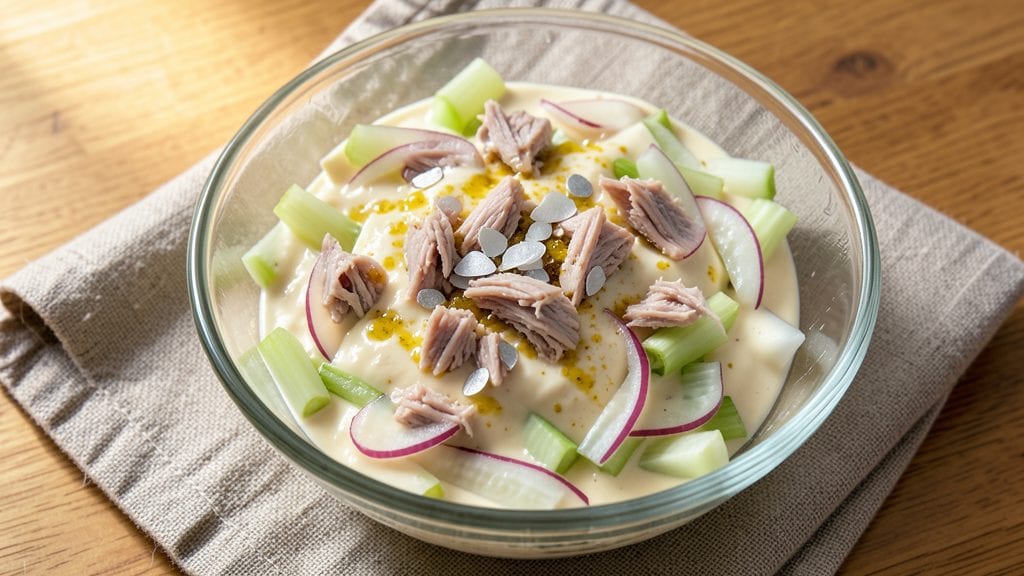
This best tasting tuna salad recipe transforms simple ingredients into a creamy, crunchy masterpiece that stays fresh and flavorful for days. The secret lies in balancing rich mayo with bright lemon juice and finely chopped celery, creating a texture that's neither dry nor overly heavy.
I've perfected this version after years of testing—no bland aftertaste, just bold flavors that shine in sandwiches or on crackers.
The magic happens with a few precise techniques: using high-quality mayo for creaminess, finely mincing celery and red onion for subtle crunch, and folding in just enough mustard to tie everything together. This isn't your childhood tuna salad—it's restaurant-quality with a perfect balance of acidity and richness.
The recipe builds flavor in layers, so each bite delivers that satisfying combination of creamy, crunchy, and tangy.
What sets this apart is how it maintains its texture and flavor even after sitting for hours. The acidity from lemon juice prevents the mayo from separating, while the celery adds freshness that keeps it from tasting stale.
You'll end up with a tuna salad so good, it becomes the star of any meal—whether served on toast, in wraps, or as a standalone dish with fresh veggies.
For extra versatility, I'll share variations like adding diced pickles for tang or swapping mayo for Greek yogurt for a lighter option. The base recipe is foolproof, but these tweaks let you customize it to your taste. Let's make the best tuna salad you've ever had.
Ingredients for best tasting tuna salad
Seven core ingredients that transform into the creamiest, crunchiest tuna salad ever.
| Ingredient | Amount | Notes |
|---|---|---|
| High-Quality Mayo 🥛 | ¾ cup | Duck egg or avocado oil preferred |
| Canned Tuna in Water 🐟 | 2 cans | High-quality, drained well |
| Fresh Lemon Juice 🍋 | 2 tbsp | Freshly squeezed, not bottled |
| Yellow Mustard 🍯 | 1 tbsp | Dijon if preferred |
| Celery Stems 🧅 | 2 whole | Finely minced, not pre-chopped |
| Red Onion 🧅 | ¼ cup | Finely minced, bright red |
| Fresh Dill 🌿 | 2 tbsp | Chopped, stems removed |
| Kosher Salt 🧂 | ½ tsp | Adjust to taste |
| Black Pepper 🌶️ | ¼ tsp | Freshly ground, cracked |
| Extra-Virgin Olive Oil 🫒 | 1 tbsp | For richness, optional |
| Pickles 🥒 | 2 tbsp | Diced, optional for tang |
| Greek Yogurt 🥛 | ¼ cup | Plain, full-fat for creaminess |
| Capers 🍋 | 1 tbsp | Chopped, optional for briny kick |
The mayo is non-negotiable—duck egg or avocado oil mayo makes this restaurant-quality. I grab Hellmann's Duck Egg Mayo when I can find it, but Primal Kitchen is a solid store-bought backup. If you're feeling fancy, make your own mayo with egg yolks and olive oil. The tuna? Wild-caught, high-quality brands like Wild Planet make all the difference—avoid the cheap stuff that tastes like fishy water. Fresh lemon juice is a must (no bottled!), and if you're short on time, Trader Joe's sells pre-squeezed lemon juice that works in a pinch. The celery and red onion? Freshly minced is key—pre-chopped gets soggy and loses crunch. I always double-check the celery for any stringy bits before chopping.
No mayo? Greek yogurt swaps it out perfectly—just use half the amount and add an extra splash of lemon. Short on fresh dill? Dried dill at one-third the amount works, but you'll miss that bright herbal note. The pickles and capers are totally optional but add that extra layer of flavor that takes it from good to wow. Trader Joe's has the best pickles for this—sweet and crunchy. If you're feeling adventurous, try pickled jalapeños for heat. The olive oil is a game-changer if you want extra richness, but it's optional. Pro tip: Mix everything together gently—overmixing makes it dry. Fold in the tuna last so it stays flaky, not mushy.
This salad keeps beautifully—3-4 days in the fridge if stored in an airtight container. The lemon juice is what makes it last without getting weird. For extra freshness, I like to press plastic wrap directly on the surface before sealing. It reheats surprisingly well if you want to serve it warm (just microwave with a splash of water). Portion it into small containers for lunches—it tastes even better the next day once all the flavors meld. Freezes for up to 1 month, though texture changes slightly. Always taste before serving—adjust salt or lemon as needed.
Why You'll Love This Recipe
- Five-Ingredient Magic: I swear, this is the kind of recipe where you open the pantry and—boom—you’ve got everything. No shopping trips, no last-minute scrambles. Just mayo, tuna, lemon, mustard, and celery, all mixed in a bowl while you wait for the kettle to boil.
- Bright & Tangy: That squeeze of fresh lemon juice? It’s the secret weapon. The mustard cuts through the richness while the lemon keeps it from tasting heavy—like a zesty wake-up call in every bite. Honestly, the canned tuna still tastes fresh, not fishy.
- Lunchbox Legend: Pack it in wraps for a quick office lunch, slather it on crackers for a snack, or serve it with crackers at a picnic. It’s the one dish that works for breakfast (yes, really), lunch, or a last-minute appetizer when guests show up unannounced.
- No-Waste Winner: The celery adds crunch and freshness, but here’s the kicker: you can use the ends for broth later. And the leftovers? They keep for days—perfect for when you’re too tired to cook but still need something satisfying. (Yes, even on a Tuesday night.)
Step-by-step instructions for creamy tuna salad
Here's how to mix this ultra-creamy, never-dry tuna salad that tastes restaurant-worthy.
Drain and Flake the Tuna Properly
Open the two cans of canned tuna in water and drain them thoroughly over a fine-mesh strainer. The water can make your salad soggy if left behind, so press gently on the tuna with a spoon to remove every last drop. Transfer the drained tuna to a large mixing bowl.
Using two forks, gently break apart the tuna into small, even flakes. You want the pieces to be about the size of a dime—not too large, which can make the texture uneven, and not too small, which can make it mushy. Think of it like shredding chicken: just enough to distribute flavor without overworking the protein.
Combine Wet Ingredients for Creamy Base
In the same bowl with the flaked tuna, add the 0.75 cup high-quality mayo, 0.25 cup Greek yogurt, 1 tbsp extra-virgin olive oil, and 1 tbsp yellow mustard. Use a sturdy silicone spatula to gently fold everything together. You're not trying to whip air into this—just combine until the mixture looks smooth and cohesive.
Next, add the 2 tbsp fresh lemon juice, 1 tbsp capers, and 0.5 tsp kosher salt. The lemon juice brightens the flavors while cutting through the richness of the mayo and yogurt. The capers add a briny punch that elevates the whole dish. Fold these in until fully incorporated, but don't overmix—you want to preserve the texture of the tuna flakes.
Add Crunchy and Fresh Components
Finely mince the 2 whole celery stems and 0.25 cup red onion using a sharp knife. I like to use a rock chopping technique for the celery—place the stem flat-side down on the cutting board and rock the knife back and forth for even, fine mincing. The onion should be bright red and finely diced so it distributes evenly.
Add the minced celery and red onion to the tuna mixture, along with the 2 tbsp chopped fresh dill and 0.25 tsp freshly cracked black pepper. The dill adds a bright, herby note that balances the richness, while the pepper provides a subtle heat. Fold everything together gently—just until combined. You want the celery and onion to stay distinct rather than blending into a paste.
Finish with Tangy Pickles and Final Adjustments
Dice the 2 tbsp pickles into small, even pieces. The pickles add a delightful tang that cuts through the creaminess and keeps the salad from feeling too heavy. Add them to the bowl along with the tuna mixture and give everything one final gentle fold. Taste and adjust the seasoning if needed—you might want to add a pinch more salt or a splash of lemon juice to balance the flavors.
Here's the thing about this recipe—it tastes even better after it's chilled for at least 30 minutes. The flavors meld together, and the texture becomes perfectly creamy. Transfer the salad to an airtight container and refrigerate until ready to serve. When you're ready to eat, give it one more gentle stir to redistribute any settled ingredients.
Pro Tips For Making Best Tasting Tuna Salad
- Drain and Pat Dry: The canned tuna’s water is the silent flavor killer—skip the quick rinse and actually drain it well, then pat the flakes dry with a paper towel. Wet tuna makes the salad soggy and dulls the mayo’s richness, and nobody wants that.
- Mix Celery Last: Chop the celery into tiny, almost invisible dice and fold it in right before serving. If you add it early, it’ll turn to mush and turn your perfect tuna salad into a sad, watery mess—like overcooked pasta.
- Use Cold Ingredients: Let the canned tuna, mayo, and lemon juice sit in the fridge for at least 10 minutes before mixing. Cold ingredients emulsify better, and the flavors meld smoother—no one wants a lukewarm, greasy tuna salad.
- Balance the Mayo: Start with 2 tablespoons of high-quality mayo per 5-ounce can of tuna, then adjust. Too much mayo? Add a splash of lemon juice or a teaspoon of mustard to cut the richness. Too little? A pinch of salt or a dash of Worcestershire sauce (trust me, it works) can save it.
Essential equipment for this dish
Mixing Bowl Essentials
Start with a large, shallow mixing bowl—I use a stainless steel Cambro with a non-slip base that prevents tipping when I fold ingredients. The shallow shape lets me easily access all sides without overmixing.
For smaller batches, a glass Pyrex bowl works well, but avoid plastic if storing overnight since it can absorb odors.
Invest in a silicone spatula (I recommend OXO Good Grips) for gentle folding—its flexible edge helps lift delicate tuna flakes without crushing them. A fine-mesh strainer (like OXO's collapsible one) is crucial for draining tuna thoroughly, preventing a watery salad. 🥛
Knife and Cutting Tools
A sharp chef's knife (I use Wüsthof's 8-inch) is non-negotiable for mincing celery and onion. The rock chopping technique—placing celery flat-side down and rocking the knife—gives you even, fine mincing without slippage.
For speed, a microplane works for red onion, but it takes practice to avoid tearing the delicate layers.
For dill, I prefer scissors over a knife—they let me snip stems cleanly without crushing the leaves. If you're chopping a lot of herbs, a herb chopper (like OXO's) saves time and reduces mess.
A cutting board with a juice groove (such as John Boos) keeps your workspace tidy by catching any stray lemon or olive oil drips. 🌿
Measuring and Storage
Use liquid measuring cups for mayo and yogurt (I grab Pyrex glass ones) to avoid spills, and a small scoop (like OXO's ½-cup measure) for precise mustard and lemon juice additions.
For dry ingredients, a spice scale (such as Escali Primo) ensures accuracy—especially important for salt and pepper where small variations matter.
Store leftovers in airtight glass containers (I love Le Parfait jars) to maintain freshness. The wide mouth makes mixing easy, and the snap-on lid prevents leaks. For portioning, small silicone cupcake liners in a container keep individual servings neat when packing lunches. 🥫
Optional Upgrades
For a food processor, I use the Ninja SP101 on pulse mode to finely chop celery and onion—just 2-3 pulses prevent over-processing. If you're making this frequently, a mandoline (like Benedict 3-in-1) gives uniform red onion slices in seconds.
For those who love texture, a mandoline with a julienne attachment creates delicate celery ribbons.
A citrus reamer (such as OXO's) ensures you get every last drop of lemon juice without squeezing seeds into your salad. For the briny kick, a small mortar and pestle works well for crushing capers if you're using whole ones.
These tools aren't essential, but they elevate the experience when you're making this salad often. 🍋
Nutrition facts
Frequently asked questions
Why does your recipe use both mayo and Greek yogurt?
The combination creates the perfect balance of creaminess and freshness. The Greek yogurt lightens the richness while adding protein, while the mayo keeps it luxuriously creamy. This ratio prevents the salad from feeling too heavy or drying out over time. For a lighter version, you can increase the yogurt to 0.5 cup and reduce mayo to 0.5 cup.
Can I make this tuna salad ahead of time?
This salad tastes even better after 3-4 hours in the fridge as flavors meld. Store in an airtight container with plastic wrap pressed directly on the surface to prevent drying. It keeps well for 4-5 days—perfect for meal prep. Just give it a gentle stir before serving to redistribute any settled ingredients.
What's the best way to fix dry tuna salad?
If your salad turns out dry, don't toss it! Add 1-2 tbsp of high-quality mayo or Greek yogurt and 1 tsp lemon juice, then fold gently. For extra moisture, mix in 1 tbsp of cold water or a splash of milk. The key is to add liquid gradually while tasting until you reach the perfect creamy texture.
How do I make this recipe vegan?
Swap the mayo for vegan mayo (like Just Mayo) and replace Greek yogurt with unsweetened coconut yogurt. Use 1 tbsp of apple cider vinegar instead of lemon juice for acidity. The rest of the ingredients remain the same—just ensure your tuna is vegan-certified if using it in vegan dishes. The texture stays creamy and flavorful!
Can I use oil-packed tuna instead of water-packed?
Yes, but you'll need to drain it extremely well and reduce the mayo slightly (0.5 cup) to balance the extra fat. Oil-packed tuna adds richness, so cut back on the olive oil to 0.5 tbsp to avoid heaviness. The flavor will be deeper, but the texture remains light and flaky if you drain thoroughly.