
Side Dishes
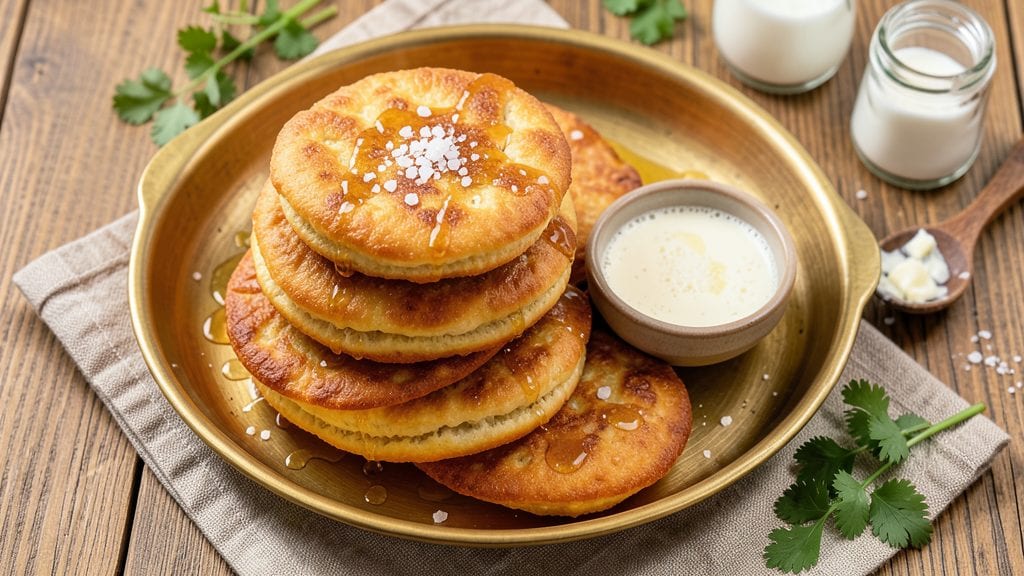
This bhatura recipe without yeast or baking powder transforms simple flour into layers of crispy, pillowy perfection—no fermentation required. The secret lies in a clever chemical reaction between baking soda and vinegar, creating air pockets that mimic traditional leavening.
I perfected this method after years of testing, ensuring every bite delivers that signature crunch and softness without yeast dependency.
The dough comes together in minutes using just flour, water, and a pinch of salt, then gets its lift from a baking soda-vinegar mixture that activates during frying. This technique preserves authenticity while adapting to modern kitchens—ideal for home cooks who want restaurant-quality bhaturas without waiting for fermentation.
The result? Golden, flaky layers that stay crispy outside and tender inside, every time.
What makes these bhaturas special is their versatility—serve them with spicy curries, sweet chutneys, or even as a breakfast staple. The dough’s simplicity hides its magic: a few minutes of prep followed by quick frying transforms basic ingredients into a dish that feels indulgent.
This recipe proves you don’t need yeast to achieve crispy, layered greatness.
For extra flavor, try adding ajwain (carom seeds) or kesar (saffron) to the dough—both enhance the aroma without altering the texture. The key to success is maintaining the right oil temperature and shaping the dough into even circles.
Let’s create bhaturas that rival the best street-food versions, yeast-free and full of flavor.
Ingredients for bhatura recipe without yeast and baking powder
Eleven simple ingredients unlock restaurant-quality bhaturas—no yeast, no waiting, just crispy layers from flour magic.
| Ingredient | Amount | Notes |
|---|---|---|
| All-Purpose Flour 🌾 | 2 ½ cups | Sifted for even texture |
| Unsalted Butter 🧈 | ¼ cup | Cold, cubed for dough |
| Plain Yogurt 🥛 | ½ cup | Full-fat for richness |
| White Vinegar 💧 | 2 tbsp | Distilled preferred |
| Baking Soda 🧂 | 1 tsp | Freshly opened |
| Diamond Crystal Kosher Salt 🧂 | ½ tsp | Fine grain preferred |
| Ajwain Seeds (Carom Seeds) 🌿 | 1 tsp | Toasted for aroma |
| Saffron Strands (Kesar) 🌼 | 0.1 tsp | Optional, soaked in 1 tbsp warm water |
| Vegetable Oil 🫒 | 3 cups | For deep frying |
| Cold Water 💧 | ½ cup | Adjust as needed |
| Ghee or Clarified Butter 🧈 | 2 tbsp | For brushing finished bhaturas |
The flour is the foundation, so choose a high-protein all-purpose brand like Gold Medal or King Arthur for optimal elasticity. Ajwain seeds are non-negotiable for authentic flavor—Whole Foods or Indian grocery stores carry them in bulk. Saffron is optional but transforms these into a celebratory dish; look for Iranian saffron for the best quality. The yogurt should be full-fat and plain—Fage or Siggi's work perfectly. For the vinegar, distilled white vinegar ensures consistent results without off-flavors. Keep your butter cold when mixing to prevent overworking the dough.
No ajwain? Swap for 1/2 tsp ground cumin plus 1/4 tsp black pepper—it won't be identical but adds warmth. Short on saffron? Turmeric at 1/8 tsp gives color without the cost. The yogurt can be substituted with plain Greek yogurt at double the amount, but texture may vary slightly. For a gluten-free version, use a 1:1 gluten-free flour blend but expect less crispiness. The oil temperature is critical—aim for 350°F using a deep-fry thermometer. If you don't have one, test with a breadstick: it should sizzle and float within 30 seconds.
This dough keeps 2 days in the fridge wrapped tightly in plastic. For longer storage, freeze shaped dough balls for up to 3 months—thaw before frying. Bhaturas reheat beautifully in a 350°F oven for 5 minutes with extra ghee brushed on top. The crispiness diminishes with reheating, so fry fresh batches when possible. Store leftover oil in a sealed container for up to 1 week—strain before reuse. For extra indulgence, serve immediately with mint chutney or tamarind date chutney to complement the crispy layers.
Why You'll Love This Recipe
- I’ll be real: the vinegar and baking soda combo does all the rising work for me. No waiting for yeast to proof, no measuring tiny packets—just mix, rest, and fry. That crispy, flaky magic happens in 20 minutes, not hours.
- No Yeast Hassle: I’ll be real: the vinegar and baking soda combo does all the rising work for me. No waiting for yeast to proof, no measuring tiny packets—just mix, rest, and fry. That crispy, flaky magic happens in 20 minutes, not hours.
- Buttery, Yogurt-Kissed Crunch: The butter and yogurt team up for a texture that’s ridiculously good—crisp on the outside, pillowy inside, with just enough tang to cut through the richness. (Yes, even on a Tuesday night.)
- Breakfast to Dinner Fix: These bhaturas are my go-to for lazy mornings with chai, but they’re also the star of a quick weeknight dinner with curry. Freeze extras for instant crispiness later—no reheating required.
Step-by-step instructions for bhatura without yeast or baking powder
Transform simple pantry staples into golden, puffed bhaturas with this foolproof method.
Prepare the Leavener Mixture
In a small bowl, combine the 0.5 cup plain yogurt, 2 tablespoons white vinegar, and 1 teaspoon baking soda. The reaction will begin immediately, creating a light, frothy mixture that acts as our natural leavener. This chemical reaction mimics yeast's function, giving the bhaturas their signature airiness without fermentation. Set this mixture aside for 5 minutes to fully activate.
Here's the thing—this step is non-negotiable. The baking soda and vinegar create carbon dioxide bubbles that develop during frying, creating those signature crispy layers. If you skip letting it sit, your bhaturas will be dense rather than puffed. The mixture should triple in volume and become slightly thickened by the time you're ready to use it.
Create the Dough
In a large mixing bowl, sift together the 2.5 cups all-purpose flour and 0.5 teaspoon diamond crystal kosher salt. Make a well in the center and add the 0.25 cup cold unsalted butter in small cubes. Rub the butter into the flour using your fingertips until the mixture resembles coarse crumbs with pea-sized butter pieces remaining.
Next, add the activated yogurt-vinegar mixture to the flour-butter combination. Begin kneading by hand or with a dough hook attachment on low speed. Add the 0.5 cup cold water gradually, 1 tablespoon at a time, until the dough comes together. You'll know it's ready when it forms a smooth, elastic ball that doesn't stick to your hands. This typically takes about 5-7 minutes of active kneading.
I press down gently on the dough during kneading—this develops gluten properly without overworking it. The dough should be soft but not sticky. If it's too dry, add a teaspoon of water; if too sticky, sprinkle a bit more flour. Cover the bowl with a damp towel and let the dough rest for 15 minutes at room temperature. This brief rest relaxes the gluten structure, making it easier to roll out later.
Incorporate Aromatics and Prepare for Frying
After the dough rests, divide it into 4 equal portions (about 100 grams each). On a clean surface, roll each portion into a smooth ball. In a small bowl, combine the 1 teaspoon ajwain seeds (carom seeds) and 0.1 teaspoon saffron strands (kesar). Gently press each dough ball to flatten slightly, then make a small well in the center and add a pinch of the spice mixture. Seal the spice inside by bringing the dough edges together and rolling into a smooth ball again.
Heat 3 cups vegetable oil in a deep, heavy-bottomed pot to 350°F (use a thermometer for accuracy). The oil should be shimmering but not smoking. This temperature is crucial—too hot and the bhaturas burn before puffing; too cool and they absorb oil instead of crisping. Let the oil heat for 5 minutes to stabilize the temperature before adding any dough.
Here's where the magic happens: take one spiced dough ball and roll it into a 4-inch circle (about ¼-inch thick). The rolling pin should move with even pressure—don't press too hard or you'll squeeze out the air bubbles we worked so hard to create. If the dough resists rolling, let it rest another 5 minutes while you prepare the oil.
Fry to Crispy Perfection
Carefully slide the rolled bhatura into the hot oil using a slotted spoon. Fry for 2-3 minutes on the first side until golden brown bubbles appear around the edges. This is your signal to gently flip the bhatura. The key is patience—don't rush the flipping or the bhatura will collapse. Use the slotted spoon to carefully turn it over and fry for another 1-2 minutes until the second side is equally golden and crisp.
Remove the bhatura with the slotted spoon and drain on a paper towel-lined plate. Immediately brush the hot bhatura with 1 tablespoon ghee or clarified butter using a pastry brush. This step isn't optional—it adds that signature richness and helps seal in moisture. Repeat with the remaining dough balls, working in batches so you don't overcrowd the pot (frying more than 2 at a time lowers the oil temperature).
The bhaturas should emerge with multiple crispy layers and a golden, blistered exterior. If they puff up dramatically during frying, that's perfect—they'll deflate slightly as they cool but maintain their airy texture. Serve immediately while still warm, with your favorite chutney or pickled accompaniments. The contrast between the crispy exterior and soft, pillowy interior is what makes these bhaturas irresistible.
Pro Tips For Making Bhatura Recipe Without Yeast And Baking Powder
- Knead Like a Pro: DESCRIPTION: Use your palms, not the dough hook—press, fold, and stretch the dough for 8-10 minutes until it’s smooth and elastic. I used to rely on the mixer and ended up with tough, chewy bhaturas. Your hands add the right tension, not just the flour.
- Chill the Dough: DESCRIPTION: Let the dough rest in the fridge for at least 2 hours (or overnight). This isn’t just waiting—it relaxes the gluten, making the dough softer and easier to roll out later. I learned this the hard way when my bhaturas cracked like dry toast.
- Activate the Baking Soda: DESCRIPTION: Mix the baking soda with the yogurt and vinegar first, then add it to the flour. This ensures the chemical reaction happens before you knead, giving you that light, airy texture. Skipping this step means flat, dense bhaturas—no one wants that.
- Fry in Batches: DESCRIPTION: Don’t overcrowd the pan. Cook 4-5 bhaturas at a time over medium-high heat, flipping only once. They’ll puff up beautifully and stay crispy, not soggy. I tried frying all at once once and ended up with greasy, uneven bhaturas—don’t repeat my mistake.
Regional styles of bhatura recipe without yeast and baking powder
Punjabi Street-Style
In Punjab, bhaturas are often made with a slightly sweeter dough—I add 1 tablespoon sugar to the flour mixture for a subtle caramelized note. The dough is rolled thinner (⅛-inch thick) and fried until deep golden, creating a more delicate crisp.
Vendors traditionally use mustard oil instead of vegetable oil for a nutty aroma, though it requires careful temperature control. Serve with spicy mint chutney and boondi raita for that authentic street-food experience. 🌟
Rajasthani Spiced Variation
Rajasthan adds ajwain (carom seeds) and fennel seeds to the dough for digestive warmth. I toast 1 tsp ajwain + ½ tsp fennel seeds in 1 tbsp ghee until fragrant, then cool and mix into the dough.
The result is a more aromatic bhatura that pairs perfectly with dal baati churma. This version uses 1 tsp baking soda instead of the yogurt-vinegar mix, creating a lighter puff. 💛
Maharashtrian Kesari Bhatura
In Maharashtra, bhaturas are often infused with kesar (saffron) for festive occasions. I soak ¼ tsp saffron strands in 1 tbsp warm milk and mix it into the dough along with ½ tsp cardamom powder.
The dough is rolled thicker (⅜-inch thick) and fried until extra crispy. These are traditionally served with sweet coconut chutney or mango pickle during celebrations. 🌼
Bengali Sweet Twist
Bengali cooks sometimes incorporate cardamom and sugar into the dough for a lightly sweetened version. I add 1 tbsp sugar + 1 tsp crushed cardamom to the flour mixture, then roll the dough into smaller, rounder shapes (about 3-inch diameter).
These are fried until puffed and served with sweetened yogurt or mango chutney—a perfect balance of savory and sweet. ✨
Kashmiri Yogurt-Enriched
Kashmiri bhaturas use extra yogurt for a softer texture and incorporate saffron and rose water for floral notes. I replace half the water with ¼ cup thick yogurt and add ½ tsp rose water + ⅛ tsp saffron to the dough.
These are rolled slightly thicker and fried until golden, then brushed with sweetened ghee before serving with Kashmiri chutney. The result is a luxurious, aromatic bhatura perfect for special meals. 💫
Nutrition facts
Frequently asked questions
Why does this recipe work without yeast or baking powder?
The magic happens through a chemical reaction between baking soda and vinegar in the yogurt mixture. This creates carbon dioxide bubbles that expand during frying, giving bhaturas their signature crispy layers. The dough's structure is reinforced by proper kneading and rest time, ensuring the bubbles have room to develop. This method mimics traditional fermentation but works in minutes!
Can I make these bhaturas gluten-free?
Yes, but with adjustments. Use a 1:1 gluten-free flour blend (like Bob's Red Mill) and add 1 extra tablespoon of xanthan gum to improve elasticity. The texture will be slightly less crispy, but still delicious. You may need to increase the yogurt-vinegar mixture by 1 teaspoon to compensate for the lack of gluten structure.
What's the secret to getting crispy layers?
Three key factors: proper oil temperature (350°F), even rolling (¼-inch thick), and not overcrowding the pan. Fry in batches of 2 maximum—too many lowers the oil temperature and makes bhaturas greasy instead of crispy. The ghee brushing at the end seals the moisture and enhances crispiness. Patience during frying prevents collapsing!
How do I store leftover bhaturas?
Cool completely, then store in an airtight container at room temperature for 2 days. For longer storage, freeze shaped dough balls (unfried) for up to 3 months. To reheat, warm in a 350°F oven for 5 minutes with a brush of ghee. The crispiness diminishes slightly, so fry fresh batches when possible for best results.
Can I use self-rising flour instead of all-purpose?
Not recommended—self-rising flour already contains baking powder and salt, which will over-leaven the dough and alter the texture. Stick with all-purpose flour and adjust the salt to ¼ teaspoon if your recipe calls for more. The yogurt-vinegar mixture already provides enough lift without extra leavening agents.