
Main Courses
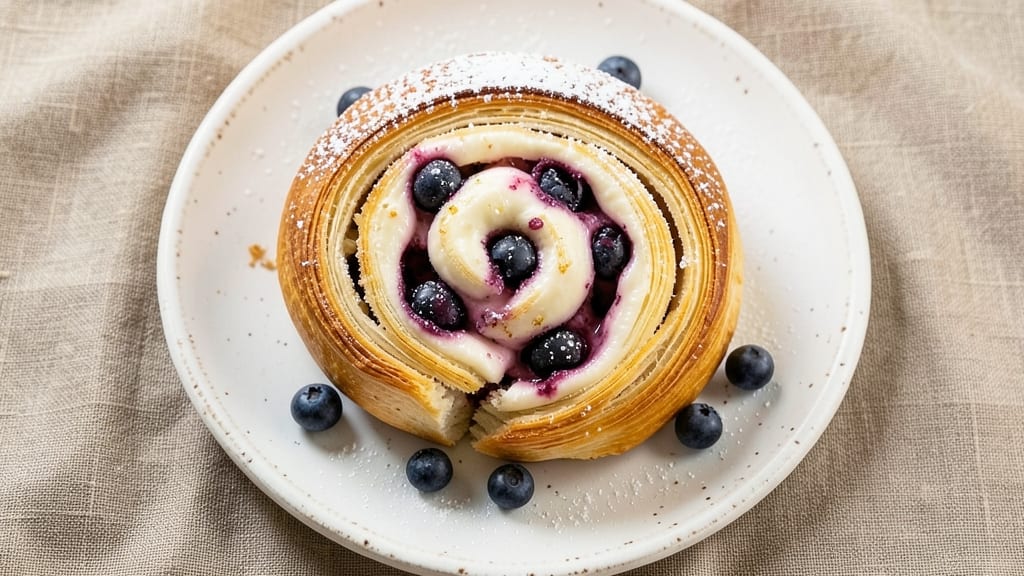
This blueberry roll recipe delivers the perfect balance of flaky, golden layers and juicy blueberry filling that makes every bite worth waiting for. After years of perfecting my pastry technique—including that crucial cold butter trick—I finally cracked the code for restaurant-quality rolls at home.
The secret lies in keeping everything cold until the last moment, ensuring those delicate layers stay intact while the berries burst with each tender bite.
What sets these blueberry rolls apart is the professional-level flakiness achieved through precise dough folding and proper butter incorporation. We're talking about layers so delicate they practically melt in your mouth, yet sturdy enough to hold that vibrant blueberry filling without collapsing.
The filling itself is a simple yet perfect blend of fresh blueberries, sugar, and cornstarch that thickens just enough to create that signature jammy texture.
By the time these rolls emerge from your oven, you'll have perfectly golden, flaky layers that practically sing with each bite. The aroma alone will have everyone gathering around your kitchen, while the contrast of crispy edges and tender centers creates a texture experience that's hard to resist.
These rolls are ideal for brunch gatherings, holiday celebrations, or simply treating yourself to something special.
Once you try these, you'll never go back to store-bought pastries again. The beauty of this recipe is its versatility—you can make a small batch for two or scale it up for a crowd.
Whether you're serving them warm with a dusting of powdered sugar or saving leftovers for toast the next morning, each roll delivers that perfect combination of flaky, buttery layers and bursting blueberry goodness.
Ingredients for blueberry roll
Twelve ingredients, twelve layers of perfection—this is the blueberry roll recipe that’ll change your weekend mornings forever.
| Ingredient | Amount | Notes |
|---|---|---|
| All-Purpose Flour 🌾 | 4 cups | Sifted for light texture |
| Unsalted Butter 🧈 | 1 cup | Cold, cubed, not softened |
| Granulated Sugar 🍚 | ¼ cup | Plus 2 tbsp for dough |
| Large Eggs 🥚 | 1 whole | Room temperature |
| Instant Yeast 🍞 | ¼ tsp | Freshly opened package |
| Salt 🧂 | ½ tsp | Fine sea salt |
| Fresh Blueberries 🫐 | 2 cups | Pitted if large, frozen works too |
| Cornstarch 🌾 | 2 tbsp | For filling thickness |
| Lemon Juice 🍋 | 1 tbsp | Freshly squeezed |
| Powdered Sugar 🍚 | ½ cup | For dusting, plus extra |
| Heavy Cream 🥛 | ¼ cup | For brushing layers |
The butter is non-negotiable here—European-style or Plugrá makes all the difference. Grab it from Whole Foods or Trader Joe's if you want that extra flakiness. For the flour, King Arthur or Gold Medal are my go-tos—they handle the cold butter like a dream. Blueberries? Fresh is ideal, but frozen works in a pinch—just don’t thaw them first. The yeast needs to be fresh, so check the expiration date on that tiny packet. And that cold butter trick? Keep it in the freezer for 15 minutes before cutting into cubes—trust me, it’s worth the wait.
No fresh blueberries? Frozen will work, but toss them with 1 tsp lemon juice to keep that vibrant color. Short on butter? Lard or shortening can substitute, but the flavor won’t be as rich. The dough gets chilled twice—first after mixing, then after shaping. Don’t skip this step, or those layers won’t form right. For the filling, if you’re using frozen berries, pat them dry first—excess moisture makes the filling watery. And that powdered sugar? Sift it before dusting, or you’ll get clumps. Want extra shine? Brush the tops with heavy cream before baking.
These rolls reheat beautifully—350°F for 10 minutes wrapped in foil. Store leftovers in an airtight container at room temperature for 2 days, or freeze for 3 months. I like to wrap them individually in parchment paper before freezing—no sticking, ever. For serving, dust with powdered sugar right out of the oven, or save some for later. The filling keeps well too—store it separately if you’re making the dough ahead. And if anyone asks, these are 100% worth the effort—every single bite.
Why You'll Love This Recipe
- No Yeast Struggle: I swear by the instant yeast trick—just toss it straight into the flour with the sugar and butter. No waiting for blooms, no second-guessing temperatures. The dough comes together in minutes, and honestly? That’s half the battle won.
- Sweet-Tart Magic: The blueberry filling isn’t just jam—it’s a burst of fresh, juicy blueberries folded into a buttery, pillowy dough. That contrast? The sugar in the filling caramelizes just enough to make every bite feel like a little dessert. (Yes, even on a Tuesday night.)
- Weeknight & Holiday Star: This rolls up fast enough for a last-minute brunch but feels fancy enough for company. Swap the blueberries for strawberries in summer, or add a dusting of powdered sugar for a café vibe. My go-to for potlucks? Always disappears first.
- Budget-Friendly Luxury: You’re using pantry basics—flour, butter, sugar—but the result tastes like a bakery treat. A single roll feeds four, and leftovers reheat beautifully. Between us, this is the kind of recipe that makes you feel like you’re treating yourself without breaking the bank.
Step-by-step instructions for blueberry rolls recipe
Here's how to craft those irresistible flaky layers with juicy blueberries inside.
Make the Blueberry Filling
In a medium bowl, combine the 2 cups of fresh blueberries, 2 tablespoons of cornstarch, and 1 tablespoon of lemon juice. Gently stir until the cornstarch is evenly distributed through the berries. This mixture thickens the filling and prevents it from turning into a runny mess when baked.
Place the bowl over medium heat and cook for 3-4 minutes, stirring constantly, until the blueberries begin to soften and release their juices. You'll notice the mixture thicken slightly and develop a glossy sheen. Remove from heat and let it cool completely before using. This step ensures your filling stays vibrant and holds its shape when rolled into the dough.
Prepare the Dough for Flaky Layers
In a large mixing bowl, whisk together the 4 cups of all-purpose flour, 0.25 teaspoon of instant yeast, and 0.5 teaspoon of salt. Make a well in the center and add the 1 whole large egg and 0.25 cup of granulated sugar. Mix until the dry ingredients are just combined and crumbly.
Cut in the 1 cup of cold, cubed unsalted butter using a pastry cutter or your fingers, working quickly to keep the butter cold. The goal is to create a dough that resembles coarse crumbs with pea-sized butter pieces. This cold butter is what creates those beautiful flaky layers when baked. If the dough feels too sticky, chill it for 10 minutes before proceeding.
Shape the Dough and Add Filling
Turn the dough onto a lightly floured surface and gently knead it just until it comes together, about 2-3 minutes. Roll the dough into a 16x12-inch rectangle, about 1/8-inch thick. Spread the cooled blueberry filling evenly over the dough, leaving a 1-inch border around the edges. This border prevents the filling from leaking out during baking.
Carefully roll up the dough from the long side, using a gentle but firm motion to create a tight log. Seal the edge by pinching the dough together. Cut the log into 12 equal pieces, about 3 inches each. This is where the magic happens - each piece will become a perfectly flaky roll with juicy blueberries bursting from every bite.
Proof and Bake for Perfect Texture
Place the cut rolls in a greased 9x13-inch baking dish, cut side down. Cover with a clean kitchen towel and let them proof at room temperature for 30-45 minutes, until they've risen about 50%. They should look slightly puffy but still hold their shape. Overproofing can cause them to collapse during baking.
Preheat your oven to 375°F. Brush the tops of the rolls with the 0.25 cup of heavy cream, then sprinkle generously with the 0.5 cup of powdered sugar. Bake for 20-25 minutes, until golden brown and the internal temperature reaches 190°F. The rolls are done when they're puffed and the sugar has caramelized slightly on top, creating that irresistible crunch.
Pro Tips For Making Blueberry Roll
- Chill the Dough: DESCRIPTION: After kneading, pop the dough in the fridge for at least 30 minutes—yes, even if you’re eager to roll. I learned this the hard way when my first attempt spread like pancake batter. Cold dough handles better, layers cleaner, and those blueberry pockets stay put when baking.
- Use Cold Butter: DESCRIPTION: Cut that unsalted butter into cubes and freeze it for 10 minutes before mixing into the dough. Warm butter makes the dough too soft, and you’ll end up with a greasy mess instead of flaky layers. Trust me, your roll will thank you.
- Don’t Overfill Pockets: DESCRIPTION: Stuff those blueberry pockets with just enough filling—about 1 teaspoon per pocket. Overpacking forces the jam out during baking, and you’ll end up with sticky fingers and a soggy bottom. Less is more, and your roll will look (and taste) like a pro made it.
- Brush with Egg Wash: DESCRIPTION: Whisk 1 egg with 1 tablespoon water, then brush it lightly over the rolled dough before baking. This isn’t just for looks—it locks in moisture and gives that golden, buttery shine. Skip it, and your roll might dry out faster than you think.
Common mistakes when making great blueberry roll
Overworking the Dough
I see this all the time—kneading the dough too much turns those delicate layers into tough, chewy rolls. Remember, we're aiming for a light, tender texture, not bread. Once the dough comes together during the 2-3 minute kneading on a floured surface, stop immediately.
Overworking develops gluten, which is great for bread but ruins our flaky layers. If the dough feels sticky, chill it for 10 minutes instead of adding more flour—this helps the gluten relax naturally.
Skipping Chill Times
This is a rookie mistake that derails everything. The dough needs two critical chills: 10 minutes after mixing and 30 minutes after shaping. Skipping these steps means the butter melts too soon, creating dense rolls instead of flaky layers.
I learned this the hard way—my first attempt resulted in sad, compact rolls that looked more like hockey pucks than pastries. Place the dough between chills on a parchment-lined tray to make cleanup easier.
Using Warm Butter
The cold butter is what creates those signature flaky layers through the Maillard reaction during baking. If you use butter that's even slightly softened, those layers will disappear. Before cutting your 1 cup of butter into cubes, freeze it for 15 minutes first.
Work quickly when incorporating it into the dough—use a pastry cutter or your fingers to keep everything cold. I keep a bowl of ice water nearby as a backup to chill my hands if needed.
Overfilling the Rolls
When spreading that blueberry filling, leave that 1-inch border around the edges—this prevents messy leaks during baking. I've seen people fill right to the edge, only to have berry juice pool at the bottom of their pan. The filling should be evenly distributed but not piled high.
If you're worried about the filling leaking, reduce the amount slightly or use a thicker filling with more cornstarch. The goal is juicy berries without a berry bath in your pan.
Baking at Wrong Temperature
Your oven might read 375°F, but it could actually be 350°F or higher. Always use an oven thermometer to verify accuracy—mine revealed my oven ran 25°F hotter than set! Baking too hot causes the rolls to brown too quickly on top while remaining raw inside.
Too cool, and they'll be pale and gummy. The 190°F internal temperature is your true indicator of doneness, not just color. Rotate your baking dish halfway through for even baking.
Not Brushing with Cream
That final brush of heavy cream before baking isn't just for looks—it creates a beautiful caramelized crust while keeping the rolls moist. Skip it, and you'll get dry, crumbly tops. I like to brush the cream on right before sprinkling the powdered sugar.
For extra shine, brush again after baking while still warm. This step transforms good rolls into showstopping pastries that make your kitchen smell like a bakery. 💫
Nutrition facts
Frequently asked questions
Can I make these blueberry rolls without yeast?
Yes! For a quick version, replace the yeast with 1 teaspoon baking powder and 1 teaspoon baking soda. The dough will be quicker to prepare (no proofing time), but the texture will be denser. Chill the dough for 20 minutes before rolling to help with layer formation. These work best as muffins or quick bread rolls rather than classic flaky layers.
How do I store leftover blueberry rolls?
Store them in an airtight container at room temperature for 2 days or freeze for 3 months. For reheating, wrap individually in foil and warm at 350°F for 8-10 minutes. The filling stays juicy when reheated gently—just avoid microwaving, which can make them soggy. I like to freeze them uncut for easier portioning later.
Can I substitute frozen blueberries?
Use 2 cups of frozen blueberries, but first toss them with 1 teaspoon lemon juice to prevent bleeding. Pat them dry thoroughly before mixing with cornstarch—excess moisture makes the filling watery. For best results, don't thaw them first. The texture will be slightly firmer but still delicious when baked.
Why did my rolls turn out dense instead of flaky?
This usually happens when butter melts too soon (skipping chills) or dough is overworked. The key is keeping everything cold until baking. If the dough feels sticky after mixing, chill for 15 minutes before shaping. Also, avoid adding extra flour—it toughens the texture. For extra flakiness, fold the dough into thirds twice after shaping to create more layers.
What's the best way to serve these?
Warm rolls taste best right out of the oven with a dusting of powdered sugar. For a special touch, drizzle with warmed blueberry glaze (mix 1/2 cup powdered sugar with 1 tbsp lemon juice and 1 tbsp milk). They're perfect for brunch with coffee or as a dessert with vanilla ice cream. Save leftovers for French toast the next morning!