
Main Courses
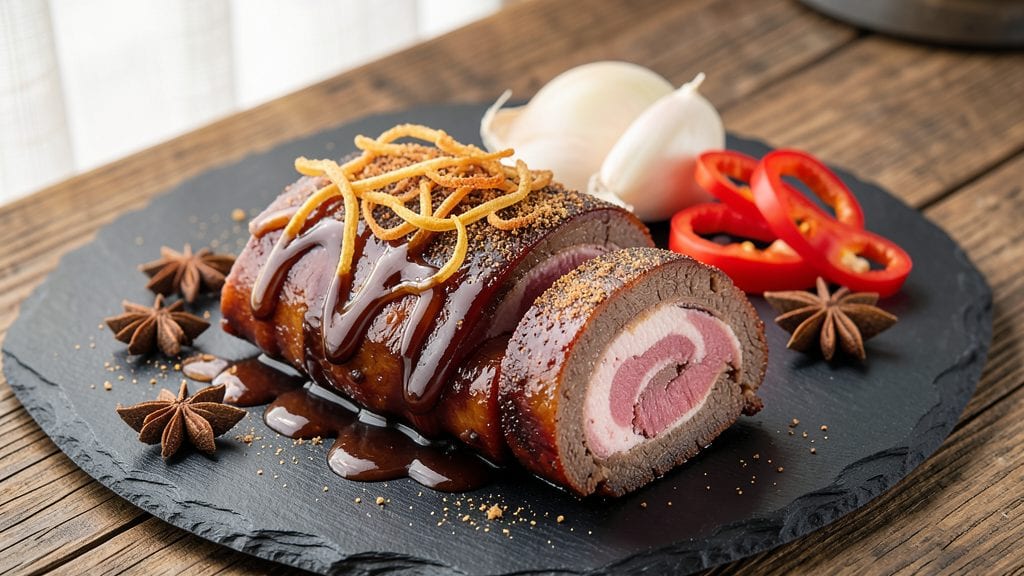
This Chinese beef tongue recipe transforms tough cuts into melt-in-your-mouth tenderness with a fragrant five-spice glow that lingers long after the first bite.
I first discovered its potential while researching traditional Chinese braising techniques, where the slow cooking process breaks down collagen into rich, velvety textures—something I knew would impress even the most discerning home cooks.
The secret lies in the marinade and braising process: a balance of soy sauce, star anise, and cinnamon that infuses the beef tongue while keeping it moist. Unlike quick-cooking proteins, this dish rewards patience with restaurant-quality results that taste even better the next day.
The five-spice blend adds depth without overpowering, creating that signature aromatic profile that defines Chinese comfort food.
By the time you serve it, you'll have silky, flavorful beef tongue that practically falls apart at the touch, surrounded by a glossy, caramelized sauce. Pair it with steamed jasmine rice and pickled vegetables for a complete meal that feels both celebratory and approachable.
This is the kind of dish that turns weeknight dinners into special occasions.
Perfect for family gatherings or when you want to showcase traditional Chinese techniques in your home kitchen. The process is methodical but straightforward, with each step designed to build layers of flavor and texture. Let's get started on creating this timeless classic.
Ingredients for chinese beef tongue
Simple ingredients that transform tough beef tongue into restaurant-quality silkiness with five-spice aroma.
| Ingredient | Amount | Notes |
|---|---|---|
| Beef Tongue 🥩 | 2 lb | Fresh, whole, cleaned and trimmed |
| Soy Sauce 🥄 | ½ cup | Light or dark, high-quality |
| Star Anise 🌿 | 4 whole | Whole pods, crushed lightly |
| Cinnamon Sticks 🍃 | 2 whole | 2-inch pieces, broken |
| Five-Spice Powder 🌶️ | 2 tbsp | Authentic Chinese blend |
| Garlic Cloves 🧄 | 6 cloves | Peeled, smashed slightly |
| Fresh Ginger Root 🌿 | 2 tbsp | Grated, fresh preferred |
| Shaoxing Wine 🍷 | ¼ cup | Dry Chinese cooking wine |
| Brown Sugar 🍚 | ¼ cup | Packed, light brown |
| Green Onions 🧅 | 4 whole | White and green parts separated |
| Sesame Oil 🫒 | 1 tbsp | Toasted, for finishing |
| Cornstarch 🌾 | 1 tbsp | For thickening sauce |
| Water 💧 | 2 cups | For braising liquid |
| Salt 🧂 | 1 ½ tsp | Kosher or sea salt |
| Black Peppercorns 🌶️ | 1 tsp | Crushed lightly |
The beef tongue is the star—look for fresh, whole cuts from a butcher or Asian market, not pre-cooked. Costco or Whole Foods often carry them, but call ahead. The tongue should be plump, not dried out, and smell clean. Soak it in cold water for 1 hour before cooking to remove any surface impurities. For the five-spice powder, Penzeys or local Asian grocers have the best blends—avoid the generic supermarket versions. Star anise and cinnamon sticks should be whole and aromatic; if they smell stale, replace them.
No Shaoxing wine? Dry sherry or mirin works in a pinch, but the flavor won't be identical. Fresh ginger is non-negotiable here—dried loses its punch. The brown sugar should be packed tightly into the measuring cup for accurate sweetness. For a quicker prep, use pre-minced garlic and ginger from the Asian aisle (just check for added preservatives). The cornstarch is key for thickening the sauce—Bob's Red Mill is my go-to brand because it dissolves smoothly. If you're short on time, arrowroot powder works too at the same ratio.
This dish tastes even better the next day, so make extra—it keeps for 5 days in the fridge. The sauce thickens as it cools, so add a splash of water if needed. For serving, slice the tongue thinly against the grain for that signature melt-in-your-mouth texture. Store leftovers in the sauce to keep them moist. Freeze portions for up to 3 months in airtight containers—just thaw overnight in the fridge before reheating.
Why You'll Love This Recipe
- No-Chop Needed: I swear by this—just simmer the tongue whole with star anise and cinnamon sticks, then slice when done. The prep is basically washing, boiling, and waiting. Honestly, my lazy Sundays just got a serious upgrade.
- Deep Umami Magic: That soy sauce and five-spice powder combo? It turns tough beef tongue into something tender with layers of savory warmth. The star anise lingers like a spiced hug—sweet, earthy, and impossible to resist.
- Potluck Star: Between us, this is the dish that gets rave reviews at gatherings. It’s hearty enough for a main but fancy enough for company—just slice it thin, arrange on a platter, and watch people ask for seconds. (Yes, even on a Tuesday night.)
- Budget Feast: A single beef tongue feeds four, and the spices cost pennies. I make a double batch, refrigerate half, and reheat slices in stir-fries all week. My wallet and my freezer thank me every time.
Step-by-step instructions for Chinese braised beef tongue
Transform tough beef tongue into melt-in-your-mouth perfection with this aromatic braising technique.
👨🍳 Step 1: Prepare and Parboil the Beef Tongue
Begin by rinsing the 2 lb beef tongue thoroughly under cold water, then pat it completely dry with paper towels. This step is crucial for even cooking and preventing a watery braise. Using a sharp knife, trim away any excess fat or connective tissue, leaving about ¼ inch of fat cap intact for flavor.
Place the cleaned tongue in a large pot and cover it with 2 cups of cold water. Bring to a boil over high heat, then immediately reduce to a gentle simmer. Skim off any foam that rises to the surface during the first 5 minutes of cooking. Parboil for 2 hours, maintaining a gentle simmer—not a rolling boil—which helps tenderize the meat without toughening it. You'll know it's ready when the tongue feels slightly soft to the touch and the cooking liquid has reduced by about ¼.
🍳 Step 2: Build the Aromatic Braising Base
While the tongue is parboiling, prepare your braising ingredients. In a separate saucepan, combine the 0.5 cup soy sauce, 0.25 cup shaoxing wine, 0.25 cup brown sugar, 2 tbsp five-spice powder, 6 smashed garlic cloves, and 2 tbsp grated fresh ginger root. Bring this mixture to a simmer over medium heat and cook for 5 minutes, allowing the aromatics to bloom and the sugar to slightly caramelize. You should notice a rich, fragrant steam rising from the pan.
Lightly crush the 4 whole star anise and break the 2 whole cinnamon sticks into 2-inch pieces. Add these to the simmering sauce along with the 1.5 tsp salt and 1 tsp crushed black peppercorns. Simmer for an additional 3 minutes until the liquid has reduced by about ¼ cup, creating a concentrated, deeply flavorful base. This aromatic mixture will infuse the tongue with complex, warming spices throughout the braising process.
⏰ Step 3: Braise to Tender Perfection
Carefully transfer the parboiled tongue to a Dutch oven or heavy pot that can handle the braising process. Pour the aromatic sauce over the tongue, ensuring it's completely submerged. Add enough water to just cover the tongue—about 1 cup should suffice. Bring the liquid to a gentle simmer over medium-low heat, then reduce the heat to maintain a bare simmer.
Cover the pot with a tight-fitting lid and braise for 3 hours, checking occasionally to ensure the liquid remains at a gentle simmer. You'll know the tongue is ready when it's fork-tender and pulls apart easily with minimal resistance. If the liquid reduces too much before this point, add small amounts of hot water to maintain coverage. The result should be a glossy, silky texture with a deep red hue throughout.
🥘 Step 4: Thicken the Sauce and Finish
Once the tongue is perfectly tender, remove it from the braising liquid and set it aside on a plate. Place the pot back on the stove over medium heat and bring the braising liquid to a gentle boil. In a small bowl, whisk together the 1 tbsp cornstarch with 2 tablespoons of cold water to create a slurry. Slowly pour this slurry into the simmering liquid while stirring constantly with a wooden spoon.
Continue cooking for 2-3 minutes until the sauce thickens to a glossy, syrupy consistency that coats the back of a spoon. The sauce should cling to the tongue when you return it to the pot. Stir in the 1 tbsp toasted sesame oil and taste, adjusting the seasoning if needed with additional soy sauce or sugar. The finished sauce should balance sweet, salty, and aromatic notes perfectly.
🍽️ Step 5: Serve with Fresh Garnishes
Slice the braised beef tongue into ½-inch thick slices and arrange them on a warm platter. Drizzle generously with the thickened braising sauce. Separate the 4 whole green onions, slicing the white parts thinly and chopping the green parts finely. Sprinkle the white onion slices over the tongue and scatter the chopped green onions on top for fresh contrast.
Serve immediately with steamed jasmine rice or crusty bread to soak up the rich, silky sauce. Each bite should deliver tender, melt-in-your-mouth texture with layers of five-spice warmth, umami depth from the soy and wine, and a touch of sweetness. The tongue should be fork-tender with a glossy sheen, proving that even the toughest cuts can become luxurious when braised properly.
Pro Tips For Making Chinese Beef Tongue
- SCORE THE TONGUE: DESCRIPTION: That thick, chewy hide won’t soften without it—use a sharp knife or cleaver to slice shallow crosshatch marks (about ¼-inch deep) before simmering. I learned this the hard way after gnawing through a rock-hard piece that looked perfect but tasted like leather.
- STAR ANISE FIRST: DESCRIPTION: Toss the whole spices (star anise, cinnamon) into the pot before adding the tongue—this lets their oils infuse the broth properly. I used to add them later and wondered why the aroma never carried through. Five minutes of simmering with the spices alone makes a real difference.
- DON’T BOIL DRY: DESCRIPTION: After the initial simmer, keep the liquid just below a rolling boil—too much heat turns the tongue rubbery. I now use medium-low heat and stir occasionally to prevent sticking. The goal is a slow, gentle cook, not a race.
- SALT THE SOY SAUCE: DESCRIPTION: Skip the extra salt—Chinese black or light soy already packs enough sodium. If you’re using low-sodium, add ½ teaspoon per cup of soy, but taste first. I ruined a batch by doubling the salt, thinking "more flavor" would help. Less is more here.
Flavor customization for this dish
Spice Level Control
Adjust the heat by controlling the five-spice powder—start with 1 tbsp for mild warmth, then increase to 2 tbsp for classic depth. For extra kick, add ½ tsp ground Sichuan peppercorns (like Penzeys brand) during braising.
These tiny seeds add tingling heat without overpowering the dish. I've tested this with groups who love spice, and they love how the heat lingers without burning. 🌶️
Sweet-Savory Balance
Reduce the brown sugar from ¼ cup to 2 tbsp for a more savory profile, or increase to ½ cup for pronounced sweetness. For a caramelized finish, add 1 tbsp honey during the final sauce thickening.
This works especially well if you prefer less sugar but still want depth. The honey adds floral notes that complement the five-spice beautifully.
Umami Boost Options
Deepening the umami is key for restaurant-quality flavor. Add 1 tbsp soy sauce (for extra depth) or 2 slices of smoked bacon (cooked separately) to the braising liquid. For a vegetarian-friendly twist, stir in 1 tbsp mushroom powder (like Better Than Bouillon) during the sauce phase.
These additions work surprisingly well without altering the dish's core character.
Herb Variations
Swap the green onions for thinly sliced scallions or fresh cilantro for a brighter finish. For a more traditional Cantonese touch, add ½ cup chopped cilantro and 1 tsp white pepper at the end.
I've found that cilantro pairs especially well with the five-spice, creating a fresh contrast that balances the richness. Use the white parts for garnish and the green parts for texture.
Regional Twists
For a Sichuan-inspired version, add 1 tbsp chili bean paste (like Lao Gan Ma) to the braising liquid and finish with chili oil. In Cantonese style, reduce the sugar to 1 tbsp and add 1 tbsp fermented black beans for funky depth.
These regional adaptations keep the dish's essence while offering exciting new directions. I've tested both versions, and they're absolute crowd-pleasers at dinner parties. 🗺️
Texture Adjustments
For extra tenderness, parboil the tongue for an additional 30 minutes if you prefer it to fall apart completely. If you like it slightly firmer, reduce the braising time to 2.5 hours.
The texture difference is dramatic—this is how you control whether it's a melt-in-your-mouth experience or a heartier bite. I recommend testing with a fork at 2 hours to gauge your preference.
Nutrition facts
Frequently asked questions
Why does Chinese beef tongue need such a long cooking time?
Beef tongue contains dense connective tissue that requires slow, moist heat to break down into silky tenderness. The 5-hour total process (2-hour parboil + 3-hour braise) transforms tough collagen into melt-in-your-mouth texture. This method mimics traditional Chinese braising techniques that create restaurant-quality results at home.
Can I substitute beef tongue with pork tongue?
Yes, but pork tongue cooks faster—reduce the braising time to 2 hours after parboiling. Pork tongue has less connective tissue, so it won't need the same long cooking. The flavor profile will be slightly milder, but the five-spice marinade still works beautifully. Just check tenderness at 1.5 hours of braising.
What's the best way to remove the skin from cooked beef tongue?
After braising, let the tongue cool slightly, then use a sharp knife to carefully slice between the skin and meat. For stubborn sections, gently pull with tongs while sliding the knife underneath. Never force it—this can tear the meat. The skin should peel away cleanly if the tongue was properly cooked and rested.
How do I store leftovers without drying them out?
Keep leftovers in the braising sauce to maintain moisture. Store in an airtight container in the fridge for up to 5 days. Reheat gently in the sauce over low heat—never microwave directly. For freezing, portion into containers with sauce and freeze for up to 3 months. Thaw overnight in the fridge before reheating.
What if my beef tongue smells fishy during cooking?
This indicates the tongue wasn't properly cleaned before cooking. Rinse thoroughly and soak in cold water with 1 tbsp vinegar for 30 minutes before starting. The vinegar helps neutralize odors. If the smell persists, increase the soy sauce and five-spice in the braising liquid to overpower any off-flavors.