
Desserts
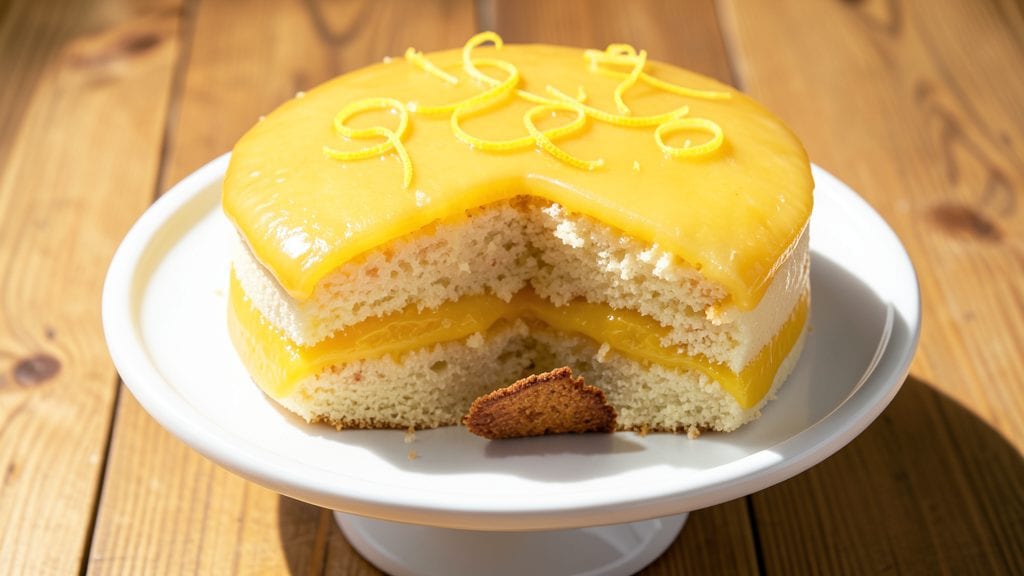
This classic lemon cake recipe delivers that perfect balance of bright citrus and tender crumb that makes it a timeless favorite—no heavy frosting required. The secret lies in a precise batter ratio and a lemon curd filling that keeps every layer moist and bursting with zesty flavor.
I've baked this version dozens of times, and it consistently delivers the golden, domed top and light, fluffy texture that define a true lemon cake.
The beauty of this recipe is its simplicity: just five key ingredients for the cake batter, plus a lemon curd filling that adds moisture and depth without overwhelming the citrus notes.
Baking at 350°F for 25-30 minutes ensures a perfectly set yet tender crumb, while the filling stays velvety smooth between layers. The result? A cake that's naturally sweetened but never cloying, with a tangy-sweet finish that lingers.
What sets this apart is the no-frosting approach—the lemon curd itself acts as the filling and topping, creating an elegant yet approachable dessert.
The top gets a light dusting of powdered sugar for presentation, but the real star is the bright, citrusy flavor that makes every bite taste like summer. This is the kind of cake that feels restaurant-quality but comes together in your own kitchen.
Whether you're serving it at a brunch spread or saving it for a special occasion, this lemon cake delivers consistently perfect results with minimal effort. The technique is foolproof, and the flavor profile is unmistakably classic—just as it should be. Let's get baking!
Ingredients for classic lemon cake
Five essential ingredients for the cake, plus four for the lemon curd filling.
| Ingredient | Amount | Notes |
|---|---|---|
| All-Purpose Flour 🌾 | 2 ½ cups | Sifted for light texture |
| Granulated Sugar 🍚 | 2 cups | Superfine preferred for smoothness |
| Unsalted Butter 🧈 | 1 cup | Cold, cubed for creaming |
| Fresh Lemon Juice 🍋 | ¾ cup | From 4-5 medium lemons |
| Large Eggs 🥚 | 3 whole | Room temperature for even baking |
| Baking Powder 🧂 | 2 tsp | Diamond Crystal preferred |
| Salt 🧂 | ½ tsp | Fine sea salt for balance |
| Zest of 2 Large Lemons 🍋 | 2 tbsp | Fine, bright yellow zest |
| Heavy Whipping Cream 🥛 | ½ cup | Full-fat for curd richness |
| Cornstarch 🌾 | 2 tbsp | For curd stability |
| Powdered Sugar 🍚 | ¼ cup | For dusting cake top |
The flour and sugar ratio here is non-negotiable for that signature tender crumb. King Arthur flour works best for its high protein content, but any all-purpose will suffice. For the lemon juice, Meyer lemons add subtle sweetness, but standard lemons deliver classic tartness. The butter must be cold—European-style if you're splurging, but unsalted works perfectly. Freshly grated zest is critical; pre-packaged zest often lacks brightness. Store your lemons at room temperature until ready to use for maximum juice yield.
No Meyer lemons? Standard lemons plus 1 tbsp honey in the curd will mimic the flavor. Substituting powdered sugar for granulated in the cake batter requires reducing by 20%—it's less sweet but works in a pinch. For the curd, Greek yogurt at half the cream quantity adds tang without altering texture. The cornstarch can be swapped for arrowroot powder at the same ratio. Always use room-temperature eggs to prevent dense layers, and never skip sifting the flour—this ensures that signature domed top.
The cake batter keeps for 3 days in the refrigerator, while the curd can be made 2 days ahead. Assemble the cake just before serving to maintain moisture. Store any leftovers covered at room temperature for 2 days or freeze the assembled cake for 3 months. For a restaurant-quality presentation, dust with powdered sugar immediately before serving—it melts into the curd within minutes, creating that professional finish.
Why You'll Love This Recipe
- No Fuss Mixing: I swear by this recipe because it’s just flour, butter, sugar, eggs, and lemon—no weird substitutions or last-minute store runs. The butter gets creamed with sugar in minutes, and the lemon juice brightens everything up while you’re still measuring.
- Bright Zing Every Time: That fresh lemon juice isn’t just for show—it cuts through the richness of the butter, leaving you with a cake that’s tangy, moist, and just sweet enough. Honestly, the first bite always makes me think, “Why didn’t I bake this sooner?”
- Weekday or Celebration: This cake is my go-to for breakfast with coffee, a picnic spread, or even a last-minute birthday dessert. The simplicity means I can bake it ahead and serve it at room temperature—no stress, just satisfaction.
- Budget-Friendly Stretch: A box of flour, a stick of butter, a few lemons—this recipe costs pennies per serving. Plus, the leftovers? They’re even better the next day, sliced thin with a smear of cream cheese or whipped cream. My wallet and my taste buds thank me.
Step-by-step instructions for classic lemon cake
Here's the method that delivers a perfectly balanced lemon cake with tender layers and bright citrus flavor.
Prepare the Lemon Curd Filling
In a medium saucepan, combine the 1 cup unsalted butter, 2 cups granulated sugar, and 0.75 cup fresh lemon juice. Bring to a gentle simmer over medium heat, stirring constantly until the sugar fully dissolves and the mixture reaches 160°F. This prevents graininess in your final curd.
Remove from heat and immediately whisk in the 3 whole large eggs, one at a time, ensuring each is fully incorporated before adding the next. Return the pan to low heat and continue stirring until the mixture thickens enough to coat the back of a spoon—about 5-7 minutes. The curd should pull away from the sides of the pan cleanly when tested with a spatula.
Strain the warm curd through a fine-mesh sieve into a clean bowl to remove any cooked egg bits. Stir in the 2 tbsp cornstarch and 2 tbsp zest of 2 large lemons, then press plastic wrap directly onto the surface to prevent a skin from forming. Let cool completely at room temperature before using.
Cream Butter and Sugar for the Cake Layers
In a stand mixer fitted with the paddle attachment, beat the 1 cup unsalted butter and 2 cups granulated sugar on medium speed for 3-4 minutes until light and fluffy. This aeration creates the signature tender crumb. Scrape down the sides of the bowl as needed to ensure even mixing.
Add the 3 whole large eggs, one at a time, mixing just until each is incorporated—about 10-15 seconds per egg. Avoid overmixing, which can develop gluten and make the cake dense. Stir in the 0.5 cup heavy whipping cream, mixing until smooth and fully combined.
In a separate bowl, whisk together the 2.5 cups all-purpose flour, 2 tsp baking powder, and 0.5 tsp salt. Gradually add the dry ingredients to the wet mixture in three additions, mixing on low speed just until combined after each addition. This prevents overdevelopment of the gluten structure.
Bake the Cake Layers
Preheat your oven to 350°F and grease two 8-inch round cake pans, lining the bottoms with parchment paper for easy removal. Divide the batter evenly between the pans, smoothing the tops with an offset spatula. Bake for 25-30 minutes, or until a toothpick inserted into the center emerges clean.
Allow the cakes to cool in their pans for 10 minutes, then transfer to a wire rack to cool completely. This gradual cooling prevents cracking. Once fully cooled, level the tops if necessary using a serrated knife for even layers.
Assemble the Lemon Cake
Place one cake layer on a serving plate. Spread an even layer of the cooled lemon curd over the top, leaving a ½-inch border. Repeat with the second layer, then gently press down to create a sealed cake. Dust the top generously with 0.25 cup powdered sugar for a light, elegant finish.
The cake should be served at room temperature, allowing the flavors to meld for at least 1 hour before cutting. Each slice should reveal moist, tender layers with a vibrant lemon curd center that complements the citrusy cake batter perfectly.
Pro Tips For Making Classic Lemon Cake
- Cream Butter Properly: I learned this the hard way—beat the butter and sugar until it’s pale yellow and light, not just smooth. Use a stand mixer (or elbow grease) for 3-5 minutes until the mixture looks like wet sand. This isn’t just about fluffiness; it’s what makes the crumb tender and the lemon flavor shine. Skip this, and your cake will taste dense no matter how much lemon you add.
- Zest Before Juicing: Grate the zest of your lemons right after juicing—it’s fresher and brighter. Use about 1-2 teaspoons of zest (from 1-2 lemons) and fold it into the batter last, just before pouring. The zest burns easily if mixed in too early, and freshness matters more than you’d think. (Yes, even if you’re impatient like me.)
- Bake Until Springy: The cake’s done when a toothpick comes out clean and the top springs back when pressed gently. Ovens run hot, so start checking at 2-3 minutes before the recipe’s suggested time. If the edges pull away too soon, tent with foil to prevent over-browning—your cake will still be moist underneath.
- Cool In Pan: Resist the urge to invert the cake immediately. Let it cool in the pan for 10-15 minutes before transferring to a wire rack. This keeps the layers from collapsing, especially if you’re frosting it. I used to rush this, and half my cakes would end up lopsided—don’t be that person.
Wine and beer pairings for this dish
Wine Pairings
For this bright, citrus-forward cake, I reach for dry sparkling wines like Prosecco or Cava—their effervescence cuts through the richness while enhancing the lemon's zing. A chilled Viognier from California also works beautifully, with its floral notes complementing the cake's tart-sweet balance.
Avoid heavy reds; they'll overpower the delicate citrus flavors. 🍷
Light Beer Options
Crisp Belgian witbiers like Hoegaarden or Stella Artois are my go-to choices—their citrusy, slightly spiced profiles mirror the cake's lemon essence. For a local favorite, try a dry English ale such as Fuller's London Pride, which adds a malty contrast without competing.
Serve both wine and beer well-chilled to maintain their refreshing qualities.
Sweet Sparkling Alternative
If you prefer something sweeter, a demi-sec Champagne or Moscato d'Asti adds a luxurious touch. The slight sweetness harmonizes with the cake's natural sugar, while the bubbles keep the palate clean. I often serve this at brunch when guests want a celebratory touch without overwhelming the dessert. 🥂
Non-Alcoholic Pairings
For non-drinkers, sparkling lemonade made with San Pellegrino Limonata and a splash of Earl Grey tea creates a sophisticated mocktail. The bergamot notes in the tea elevate the lemon flavor, while the bubbles provide the same refreshing contrast as wine or beer. Serve in coupe glasses for an elegant presentation.
Coffee Contrast
A light roast espresso or flat white balances the cake's sweetness beautifully. The bitterness in the coffee enhances the lemon's acidity, creating a perfect contrast. For a dessert-focused pairing, try a lemon-infused espresso—just add a strip of lemon zest to the coffee grounds before brewing.
This adds a subtle citrus note that ties everything together. ☕
Seasonal Adaptations
In summer, I serve this cake with iced rosé—its crisp acidity and berry notes complement the lemon perfectly. For winter gatherings, a dry Riesling adds a touch of honeyed sweetness that warms the palate.
The key is matching the wine's acidity to the cake's brightness for a harmonious bite. 🍇
Nutrition facts
Frequently asked questions
Why does this lemon cake recipe use heavy whipping cream instead of milk?
The heavy whipping cream in the cake batter adds richness and tenderness that milk can't replicate. It also helps create that signature light, airy texture while keeping the cake moist. The cream's fat content ensures the cake stays tender even after cooling, making each slice juicy and flavorful. For a lighter option, you could reduce the cream by 1 tablespoon and add 1 tablespoon of whole milk, but expect slightly less richness.
Can I make the lemon curd ahead of time and still get the same texture?
The curd can be made 2 days ahead and stored in an airtight container in the refrigerator. To maintain its smooth texture, press plastic wrap directly onto the surface to prevent a skin from forming. When ready to use, let it sit at room temperature for 1-2 hours before spreading it between cake layers. This prevents any graininess or separation.
What if my cake layers crack when cooling?
Cracking happens when cakes cool too quickly or are removed from the pan too soon. To avoid this, let the layers cool in the pans for 10 minutes before transferring them to a wire rack. If cracks appear, gently smooth them with a serrated knife or offset spatula while the cake is still warm. For extra stability, chill the assembled cake for 1 hour before serving. This also helps the layers set properly.
Can I substitute Meyer lemons for regular lemons in the recipe?
Meyer lemons are sweeter and less tart, so if you're using them, reduce the lemon juice by 1 tablespoon and add 1 tablespoon of honey to the curd to balance the flavor. Regular lemons will give you that classic bright tartness, but Meyer lemons add a delicate, almost floral note that some prefer. Either way, always use fresh, juicy lemons for the best results!