
Main Courses
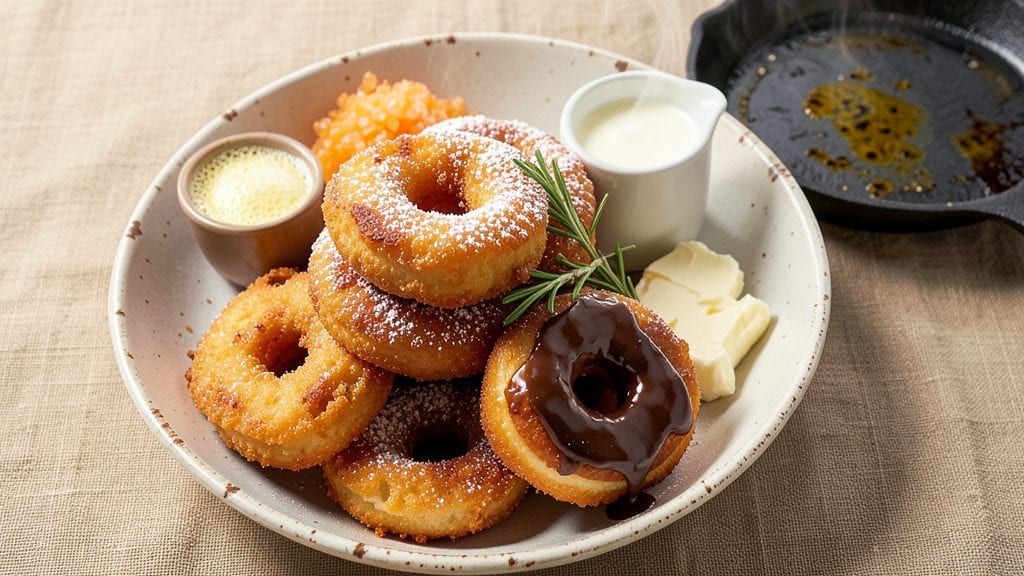
This deep fried donuts recipe delivers the perfect balance of crispy shells and pillowy cores that make every bite irresistible. After years of perfecting my technique—from dough consistency to oil temperature—I’ve cracked the code for donuts that stay golden and fluffy, not greasy or dense.
The secret lies in precise measurements and patience during frying, ensuring each donut emerges with that signature contrast.
What sets this recipe apart is the foolproof dough formula that requires just five simple ingredients and 30 minutes of prep time.
You’ll work with active dry yeast, warm milk, and a touch of sugar to create a light, airy batter that transforms into donuts with golden-brown exteriors and tender interiors. The key to success?
A 375°F oil temperature maintained consistently throughout frying—too hot, and they burn; too cool, and they absorb excess oil.
By the time you’ve coated your donuts in cinnamon sugar or dipped them in chocolate glaze, you’ll have a batch that rivals any bakery’s. The aroma alone will have everyone gathering around your kitchen, and the first bite delivers that satisfying crunch followed by a melt-in-your-mouth center.
This is the kind of recipe that turns a simple dessert into an event—perfect for brunch, game day, or just because.
Whether you’re serving them warm with coffee or saving them for later, these donuts stay fresh and delicious for 24 hours when stored properly. Let’s get started on creating donuts that’ll have everyone asking for seconds—and thirds.
Ingredients for deep fried donut
Five simple ingredients transform into golden, crispy donuts with tender centers.
| Ingredient | Amount | Notes |
|---|---|---|
| Active Dry Yeast 🍞 | 2 ¼ tsp | One packet, room temperature |
| Granulated Sugar 🍚 | ¼ cup | White, for feeding yeast |
| Unsalted Butter 🧈 | ½ cup | Cold, cubed for richness |
| Warm Whole Milk 🥛 | 1 ¼ cups | 110°F, not hot |
| All-Purpose Flour 🌾 | 2 ½ cups | Sifted, for light texture |
| Large Eggs 🥚 | 1 whole | Room temperature, beaten |
| Diamond Crystal Kosher Salt 🧂 | ½ tsp | Fine grain preferred |
| Vegetable Oil 🫒 | 3 cups | High smoke point, 375°F |
| Granulated Sugar 🍚 | ½ cup | For cinnamon coating |
| Ground Cinnamon 🌿 | 2 tbsp | Freshly ground preferred |
| Powdered Sugar 🍚 | ¼ cup | Optional for extra sweetness |
The yeast is the foundation—store-bought packets work fine, but check the expiration date. Warm the milk to 110°F (not hot) to activate it properly; too hot kills the yeast. For butter, use unsalted and cut it into small cubes so it melts evenly into the dough. The flour matters too: King Arthur or Gold Medal brands yield the lightest texture. If you’re in a pinch, Bob’s Red Mill works, but sift it well to avoid lumps. The dough should be smooth but slightly sticky—don’t overwork it, or the donuts will turn tough.
No yeast? Instant yeast works at half the amount, but it dissolves faster, so mix it directly into the dry ingredients. Short on butter? Melted coconut oil gives a similar richness, though the flavor shifts slightly. The oil for frying is critical—vegetable or canola oil are best, but peanut oil adds a subtle flavor if you’re feeling adventurous. For the coating, swap cinnamon for cardamom or pumpkin spice if you prefer. And if you’re feeling fancy, add a pinch of cayenne to the sugar for a hint of heat. The donuts can be fried in batches—just keep the oil at 375°F the whole time using a thermometer.
Freshly fried donuts stay crispy for 24 hours if stored in an airtight container at room temperature. For longer storage, freeze them for up to 3 months—thaw at room temp before reheating. To revive, warm in a 350°F oven for 5-10 minutes until golden again. Pro tip: Coat them immediately after frying while they’re still warm, or the sugar will clump. If you’re making a big batch, portion the dough into balls ahead of time and freeze them on a tray before frying—no sticking, ever.
Why You'll Love This Recipe
- Golden Crisp Magic: The yeast and butter combo creates that perfect balance—light, airy inside with a shatteringly crisp shell. I swear, the first bite makes me pause mid-chew, just admiring how the sugar caramelizes on the outside while staying pillowy underneath.
- No-Fuss Dough: Honestly, this dough is ridiculously forgiving. Mix, let it rise, cut, fry—no rolling pins, no stress. Even if I rush (which I often do), the milk and flour handle it like a champ, so I never end up with a sad, flat donut.
- Breakfast or Dessert: Here’s what sold me—these work anytime. Drizzle with glaze for a morning treat, toss in cinnamon sugar for a weekend indulgence, or even freeze them for a 3 a.m. craving. My kids grab them for school lunches (yes, really), and my husband sneaks them at his desk.
- Budget-Friendly Luxury: Between us, this recipe costs pennies but feels like a splurge. A single batch feeds six, and the leftovers? They last days—frozen, they’re just as good reheated in the toaster. Plus, using whole milk and butter makes them taste like a bakery, not a shortcut.
Step-by-step instructions for deep fried donuts recipe
Here's how to achieve that perfect balance of crispy shells and pillowy interiors every time.
Activate the Yeast for Maximum Rise
In a small bowl, combine the 2.25 tsp active dry yeast with 0.25 cup warm whole milk (about 110°F) and 0.25 cup granulated sugar. Let it sit for 5-10 minutes until frothy—this confirms the yeast is alive and ready to work. You'll see tiny bubbles forming and the mixture expanding slightly.
Here's the thing—if you don't see bubbles within 10 minutes, your yeast might be dead. In that case, start fresh with a new packet. The yeast is the secret weapon behind those light, airy donuts, so don't skip this step. Once frothy, proceed immediately to avoid overproofing.
Mix the Dough for Perfect Texture
In a large mixing bowl, combine the 2.5 cups all-purpose flour, 0.5 tsp diamond crystal kosher salt, and the 0.5 cup cold unsalted butter (cut into small cubes). Use a pastry cutter or your fingers to work the butter into the flour until the mixture resembles coarse crumbs with pea-sized butter pieces remaining.
Create a well in the center and pour in the yeast mixture along with the 1 whole large egg. Gradually mix everything together until a shaggy dough forms. Real talk: the dough should be slightly sticky but not wet. If it's too dry, add 1 tablespoon warm milk at a time until it comes together. Knead the dough on a lightly floured surface for 5-7 minutes until smooth and elastic.
Let the Dough Rest for Optimal Flavor
Place the dough in a lightly greased bowl, cover it with a damp kitchen towel, and let it rise in a warm place for 1-2 hours or until it has doubled in size. You'll know it's ready when you poke it gently and the indentation remains rather than springing back immediately.
Here's where patience pays off—the longer the rise (up to 2 hours), the more flavor develops. However, don't let it rise beyond doubling or the donuts will be dense. After rising, punch down the dough to release air, then divide it into 4 equal portions (about 8 oz each). Shape each portion into a ball and flatten slightly.
Fry to Golden Perfection
Heat 3 cups vegetable oil in a deep fryer or heavy pot to 375°F. Use a deep-fry thermometer to monitor the temperature—this is crucial for achieving that perfect crispy exterior. Once the oil is hot, carefully lower 2 donut balls at a time into the oil using a slotted spoon or tongs.
Fry for 1-2 minutes per side until they're golden brown and the dough has puffed up slightly. Watch carefully—they'll rise dramatically when they hit the hot oil. If they brown too quickly, reduce the heat to 350°F. Remove the donuts with a slotted spoon and drain on a wire rack or paper towels. The key is maintaining that 375°F temperature consistently for even cooking.
Coat and Serve Warm
While still warm, roll the fried donuts in a mixture of 0.5 cup granulated sugar and 2 tbsp ground cinnamon until fully coated. For extra sweetness, dust with 0.25 cup powdered sugar if desired. Serve immediately while they're crispy on the outside and pillowy within.
Don't skip the cinnamon-sugar coating—this is what creates that classic donut flavor you love. The heat from the donuts will melt the sugar slightly, creating a beautiful caramelized crust. Enjoy them warm with a cup of coffee or milk for the ultimate treat.
Pro Tips For Making Deep Fried Donut
- TEST YEAST FIRST: Skip the guesswork—mix 1 teaspoon yeast, 1 teaspoon sugar, and ¼ cup warm milk (110°F) in a bowl. If it doesn’t foam in 5–10 minutes, your yeast is dead. Grab fresh or your dough will fight you later.
- CHILL DOUGH 2 HOURS: After kneading, let the dough rise until puffy, then refrigerate it overnight. Cold dough fries slower, so you won’t rush the oil—meaning crispier, less greasy donuts. (Yes, even if you’re impatient like me.)
- USE A THERMOMETER: Oil should be 350–375°F—no eyeballing. Too low? Soggy donuts. Too high? Burnt exteriors before the centers cook. A cheap thermometer saves you from tossing a batch.
- DREDGE IN SUGAR TWICE: Roll donuts in sugar before frying for flavor, then again after frying while still hot. The second coat sticks better and caramelizes instantly—like a free upgrade. (Skip this, and you’re missing out on that classic crunch.)
Common mistakes when making your deep fried donut
Oil Temp Control
Skipping the deep-fry thermometer is the #1 mistake—without it, you risk burning donuts or making them greasy. I’ve seen home cooks guess at 375°F and end up with either blackened shells or soggy centers.
Invest in a ThermoWorks Thermapen or Taylor Precision model—they’re worth every penny. Even a 5°F swing can ruin your batch. 🌡️
Overcrowding the Fryer
Stuffing too many donuts in the oil at once drops the temperature dramatically, causing uneven cooking and oil splatter. I’ve learned this the hard way—2 donuts max per batch maintains that perfect 375°F and prevents greasy results.
If you’re making a big batch, fry in 30-second intervals between batches to let the oil recover.
Skipping the Proof
Rushing the dough’s rise is a fast track to dense, flavorless donuts. The yeast needs at least 1 hour to develop that light, airy texture. I’ve seen recipes that cut this to 30 minutes—don’t fall for it.
Place your bowl in a warm oven with the light on (about 80°F) for consistent heat. If your dough doesn’t double, it’ll taste flat and heavy.
Using Cold Oil
Starting with cold oil is a recipe for disaster—it takes forever to heat up, and your donuts will absorb way too much oil, becoming greasy. Always heat your oil to 375°F before frying.
Pro tip: Use a deep pot with high sides (like a All-Clad Stainless Steel) to prevent oil splatter. Never add cold dough to hot oil—let it sit at room temp for 10 minutes first.
Coating Too Early
Rolling donuts in cinnamon sugar while they’re still steaming hot causes the sugar to clump into a sticky mess. Let them cool on a wire rack for 2-3 minutes first. I’ve seen people rush this step and end up with donuts glued together.
For extra crunch, dust with powdered sugar right after coating—it’ll melt slightly from the residual heat, creating a glossy finish. 💫
Ignoring the Dough Temp
Using cold dough straight from the fridge causes uneven cooking—it’ll sink in the oil instead of rising properly. Let your shaped donuts sit at room temp for 15-20 minutes before frying. I’ve noticed that dough straight from the fridge often results in lopsided donuts that don’t cook evenly.
If your kitchen is cold, shape the dough and let it rest on the counter while you heat the oil.
Nutrition facts
Frequently asked questions
Can I make these donuts without a deep fryer?
Use a heavy-bottomed pot with at least 2 inches of oil. A 6-quart Dutch oven works perfectly—just maintain that 375°F temperature with a thermometer. Never fill the pot more than halfway to prevent overflow when the oil heats. Safety first: keep a lid nearby to smother any potential grease fires.
Why did my donuts turn out greasy instead of crispy?
Greasy donuts usually mean the oil wasn't hot enough or the dough was too cold. Always use a thermometer to confirm 375°F—oil below 350°F absorbs too much. Also, let shaped donuts rest at room temp for 15 minutes before frying. Cold dough sinks instead of rising properly, leading to uneven cooking.
How do I store leftover fried donuts?
Keep them crispy by storing in an airtight container at room temperature for up to 24 hours. For longer storage, freeze them on a tray first (uncoated), then transfer to a bag for up to 3 months. Reheat in a 350°F oven for 5 minutes to restore crispiness. Never microwave—it makes them rubbery!
Can I substitute whole milk with another liquid?
Yes! Use warm water or plant-based milk (like almond or oat) at 110°F. For richness, add 1 tablespoon melted butter to each cup of substitute. Avoid cold liquids—they shock the yeast and slow fermentation. Always warm your substitute to activate the yeast properly before mixing.
What's the best way to test if the oil is ready?
Use the cold dough test: drop a small piece of dough into the oil—it should sizzle immediately and rise to the surface within 10 seconds. If it sinks or floats without bubbling, your oil isn't at 375°F yet. A thermometer is foolproof, but this method works in a pinch. Never guess—precise temperature control is key to perfect donuts!