
Desserts
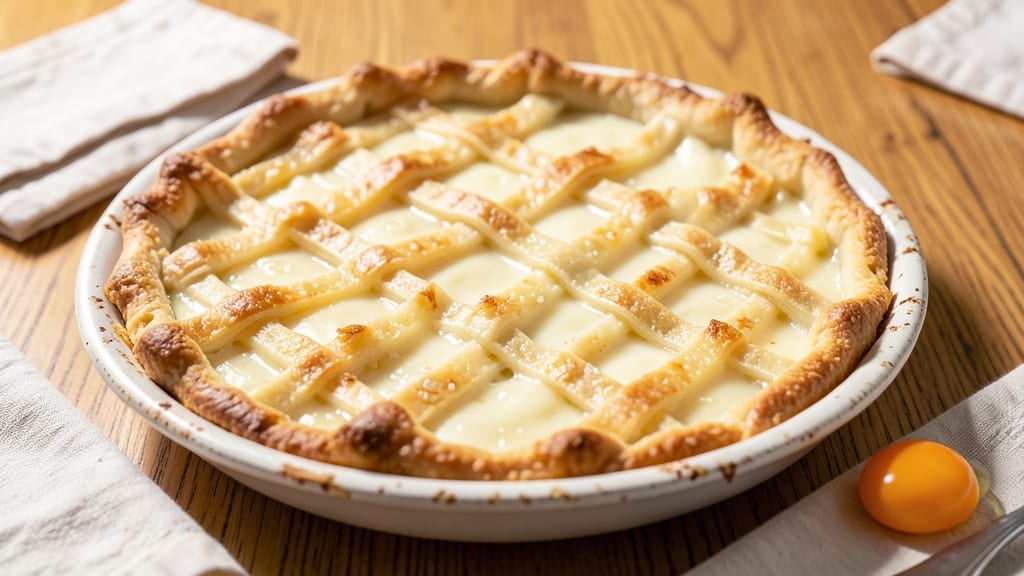
Grandma’s custard pie recipe brings back the warm, comforting aroma of vanilla and buttery crust that makes every slice feel like a hug. ✨ The secret lies in a perfectly balanced custard—rich, creamy, and never grainy—paired with a flaky crust that holds its shape even when sliced.
I’ve perfected this version over years of baking, ensuring the custard stays silky and the crust remains crisp at the edges.
This recipe delivers restaurant-quality results with simple techniques: a homemade pie crust that’s buttery and tender, and a vanilla bean custard thickened just right to prevent cracks. The key is patience—letting the custard thicken slowly on the stove before baking ensures a smooth, velvety texture that melts in your mouth.
No shortcuts here, just time-honored methods that guarantee success.
By the time you pull this pie from the oven, you’ll have golden-brown crust edges and a custard so creamy it practically oozes with every bite. The vanilla bean swirls add depth, making each slice taste like a piece of childhood nostalgia.
Serve it warm with a dollop of whipped cream or a drizzle of caramel for the full experience.
Whether you’re baking for a family gathering or treating yourself to a classic dessert, this custard pie is foolproof and always impressive. Let’s get started—your kitchen will smell like comfort food in no time.
Ingredients for grandma's custard pie
Buttery crust, velvety custard, and vanilla swirls—just these ingredients transform into grandma's legendary pie.
| Ingredient | Amount | Notes |
|---|---|---|
| All-Purpose Flour 🌾 | 2 ½ cups | Sifted for flaky crust |
| Unsalted Butter 🧈 | 1 cup | Cold, cubed for crust |
| Ice Water 💧 | ½ cup | For dough binding |
| Salt 🧂 | ½ tsp | Fine sea salt preferred |
| Large Eggs 🥚 | 1 whole | Cold, for crust |
| Whole Milk 🥛 | 2 cups | Full-fat for richness |
| Granulated Sugar 🍚 | ¾ cup | Superfine preferred |
| Cornstarch 🌽 | ¼ cup | For smooth custard |
| Vanilla Bean 🍃 | 1 whole | Scraped seeds plus pod |
| Egg Yolks 🥚 | 4 whole | Fresh, room temp |
| Vanilla Extract 🍯 | 1 tsp | Pure, not imitation |
| Salted Butter 🧈 | ¼ cup | Melted for custard |
| Heavy Whipping Cream 🥛 | ½ cup | For optional topping |
The crust is where magic happens. Kirkland Signature butter from Costco gives the flakiest layers, but any good brand works if it's cold and cubed. Sift the flour first—King Arthur or Gold Medal are my go-tos—and keep everything chilled. The key? Don't overwork the dough. Use your fingers to gently press it into the pie dish—no rolling pin needed. For the custard, vanilla bean is non-negotiable—the seeds add depth that extract can't match. I grab mine at Williams Sonoma or my local specialty market. If you can't find one, scrape the seeds from a pod and use the pod as a garnish.
No vanilla bean? Double the extract but add a pinch of cinnamon for warmth. Running short on cornstarch? Arrowroot powder at the same amount works perfectly. The custard can handle a splash of half-and-half if you're out of milk, but full-fat milk gives the richest texture. For the crust, lard can replace half the butter if you're avoiding dairy. Just make sure your butter's cold—pop it in the freezer 10 minutes if it's soft. And if you're feeling fancy, add a sprinkle of turbinado sugar between crust layers for crunch.
This pie tastes even better the next day—cover tightly and refrigerate up to 3 days. For make-ahead magic, assemble the pie crust, fill with custard, and refrigerate overnight. Bake straight from the fridge for foolproof results. The custard sets beautifully, so you can slice it like a cheesecake if you're impatient. Store leftovers in individual portions for easy grab-and-go slices. Freeze for up to 2 months—just thaw overnight in the fridge before serving.
Why You'll Love This Recipe
- No-Fuss Dough: I swear by this crust—just flour, butter, ice water, and a pinch of salt. You don’t even need a food processor; a fork and your palms work just fine. The flaky layers melt in your mouth, and honestly? It’s the kind of crust that makes you feel like you’ve earned dessert.
- Velvet Smooth Filling: That custard? It’s dangerously good—just eggs, sugar, and vanilla, but whipped until it’s silky. No lumps, no weird textures, just pure, creamy satisfaction in every bite. (Yes, even on a Tuesday night.)
- Weeknight Hero: This pie is my go-to when I need something impressive but not labor-intensive. Bake it for dinner parties, potlucks, or just because you’re craving something sweet. The crust holds up, the filling stays perfect, and it’s ready when you are.
- Budget-Friendly Luxury: Four simple ingredients, zero specialty items. The butter and eggs make it feel indulgent, but the cost adds up to a steal. Plus, leftovers? They’re rare, but when they happen, they’re just as good reheated (or cold, if you’re sneaky).
Step-by-step instructions for grandma's custard pie
Here's how to make this classic dessert with a perfect buttery crust and silky vanilla custard.
🍳 Step 1: Make the Buttery Crust
In a large bowl, combine the 2.5 cups all-purpose flour and 0.5 tsp salt. Cut in the 1 cup unsalted butter using a pastry cutter or your fingers until the mixture resembles coarse crumbs with pea-sized butter pieces. This texture is crucial for a flaky crust.
Add the 0.5 cup ice water gradually, mixing just until the dough comes together. Don't overwork it—press the dough together until it forms a smooth ball. Wrap it tightly in plastic wrap and refrigerate for at least 1 hour (or up to 2 days) to firm up.
👨🍳 Step 2: Prepare the Vanilla Custard Filling
In a medium saucepan, whisk together the 2 cups whole milk, 0.75 cup granulated sugar, 0.25 cup cornstarch, and the seeds scraped from the 1 whole vanilla bean. Add the 4 whole egg yolks and 1 tsp vanilla extract, whisking constantly to combine.
Cook over medium heat, stirring constantly with a wooden spoon, until the mixture thickens enough to coat the back of the spoon (about 5-7 minutes). The custard should be smooth and slightly thicker than heavy cream. Immediately pour it into a bowl, cover with plastic wrap (touching the surface), and refrigerate for at least 2 hours to chill completely.
⏰ Step 3: Roll and Assemble the Crust
Preheat your oven to 375°F. On a lightly floured surface, roll out the chilled dough to a 12-inch circle (about ⅛-inch thick). Transfer it to a 9-inch pie dish, pressing gently to fit. Trim and crimp the edges with a fork or your fingers for a decorative finish.
Pour the chilled custard into the crust, spreading it evenly. Dot the top with the 0.25 cup salted butter (melted and cooled slightly). This creates beautiful golden swirls as it bakes. Bake for 45-50 minutes until the crust is golden brown and the custard is set but still slightly jiggly in the center.
🥘 Step 4: Finish with Cream Topping (Optional)
While the pie bakes, whip the 0.5 cup heavy whipping cream to soft peaks. Spread it evenly over the hot custard just after removing the pie from the oven. The heat will create a golden, caramelized crust on top—this is the magic touch that makes it taste like Grandma's!
Let the pie cool completely at room temperature (about 2 hours) before slicing. The custard will firm up beautifully, creating those signature swirls that make this pie so special. Serve chilled or at room temperature with a dollop of whipped cream if desired.
Pro Tips For Making Grandma'S Custard Pie
- CHILL THE BUTTER FIRST: That cold butter in your flour mix? It’s not just about flakiness—it’s about the custard filling too. If your butter softens while cutting into the flour, your pie crust will fight back later, and nobody wants a soggy bottom. Stick it in the fridge for 15 minutes before starting, even if you’re eager to begin.
- WEIGH YOUR EGGS: Grandma’s recipe probably says “large eggs,” but large eggs aren’t all the same. Weigh them instead of guessing: 50 grams each for the custard mix guarantees a smooth, consistent texture. I learned this the hard way—once I used extra-large eggs and ended up with a custard so thick it curdled in the oven.
- STOP WHEN IT’S SHINY: Overmixing the custard filling is the fastest way to ruin it. Mix just until the eggs and sugar are fully incorporated and the mixture looks glossy—not thick, not streaky, just shiny. Keep a rubber spatula handy and resist the urge to stir like you’re folding in frosting. The second it looks like wet paint, you’re done.
- USE A THERMOMETER: The custard needs to hit 170°F (77°C) to set properly, but eyeballing it in the oven is a gamble. A cheap instant-read thermometer inserted into the center will tell you when it’s done—no guesswork, no overcooking, no undercooked eggs. I skipped this for years and always ended up with either a runny center or a dry top. Not worth the risk.
Wine and beer pairings for these flavors
Sweet Wine Pairings
Grandma’s custard pie pairs beautifully with Moscato d'Asti—its light effervescence and floral notes complement the vanilla without overpowering the delicate custard. I always reach for a chilled glass of this Italian wine, as its subtle sweetness enhances the pie’s creamy texture.
For a richer option, try Riesling from Germany’s Mosel region—its honeyed aroma and crisp acidity cut through the richness perfectly. 🍷
Creamy Dessert Wines
A late-harvest Chenin Blanc from South Africa offers a velvety texture that mirrors the custard’s smoothness. Its stone fruit flavors and touch of caramel harmonize with the vanilla and buttery crust.
For a more decadent pairing, Sauternes from Bordeaux delivers a luxurious contrast—its luscious sweetness and apricot notes stand up to the pie’s richness.
Light Beer Options
If wine isn’t your thing, a Belgian witbier like Hoegaarden provides a refreshing, citrusy balance. The peppery coriander and light effervescence cleanse your palate between bites. For a darker option, try a honey ale—its malty sweetness and subtle floral notes echo the custard’s vanilla.
Just avoid heavy stouts or IPAs, as they’ll overpower the delicate dessert. 🍺
Coffee or Tea Pairings
After the pie, serve espresso or cappuccino to contrast the sweetness with bold, bitter notes. A chai latte with cinnamon adds warmth that complements the vanilla. For tea lovers, Earl Grey with its bergamot aroma creates a sophisticated finish.
I often enjoy a small cup of hot chocolate with a sprinkle of sea salt to enhance the pie’s flavors.
Seasonal Adaptations
In summer, pair with sparkling rosé—its crisp acidity and berry notes refresh the palate. For winter gatherings, a port wine or tawny adds depth with its nutty, caramelized flavors. The key is matching the wine’s sweetness and acidity to the custard’s richness without clashing.
Always keep wines chilled for dessert pairings—room temperature wines can overwhelm the pie’s delicate balance. ✨
Nutrition facts
Frequently asked questions
Why does my custard pie crack during baking?
Cracking usually happens when the custard sets too quickly or the oven temperature fluctuates. Always preheat your oven to 375°F and bake on the middle rack. Pour the custard into a pre-baked crust (blind-baked for 15 minutes first) and avoid opening the oven door during baking. Let the pie cool completely before slicing—rushing this step can also cause cracks.
Can I make this custard pie ahead of time?
This pie actually tastes better the next day. Assemble the crust and fill it with custard, then refrigerate overnight. Bake straight from the fridge for foolproof results. Store leftovers in an airtight container for up to 3 days in the fridge or freeze for 2 months. Thaw overnight in the refrigerator before serving.
What's the secret to a flaky pie crust?
The magic is in the butter and cold ingredients. Use cold butter (pop it in the freezer for 10 minutes if needed) and keep everything chilled. Cut the butter into the flour until you have pea-sized pieces, and don't overwork the dough. Roll it out between two sheets of parchment paper to prevent sticking—this keeps the layers delicate and crisp.
Can I substitute vanilla extract for vanilla bean?
Yes, but the flavor won't be as complex. Use double the amount (so 2 teaspoons instead of 1 teaspoon) and add a pinch of cinnamon or nutmeg for depth. For best results, scrape seeds from a vanilla bean pod and add the pod to the custard while it cooks—it infuses subtle floral notes that extract can't match.
How do I know when the custard is fully set?
The custard should be just slightly jiggly in the center when done—like Jell-O that hasn't fully firmed up. Insert a toothpick: it should come out clean but with a few moist crumbs clinging to it. Overbaking makes the custard dry and grainy. If in doubt, err on the side of underbaking—it'll continue setting as it cools.