
Sauces & Condiments
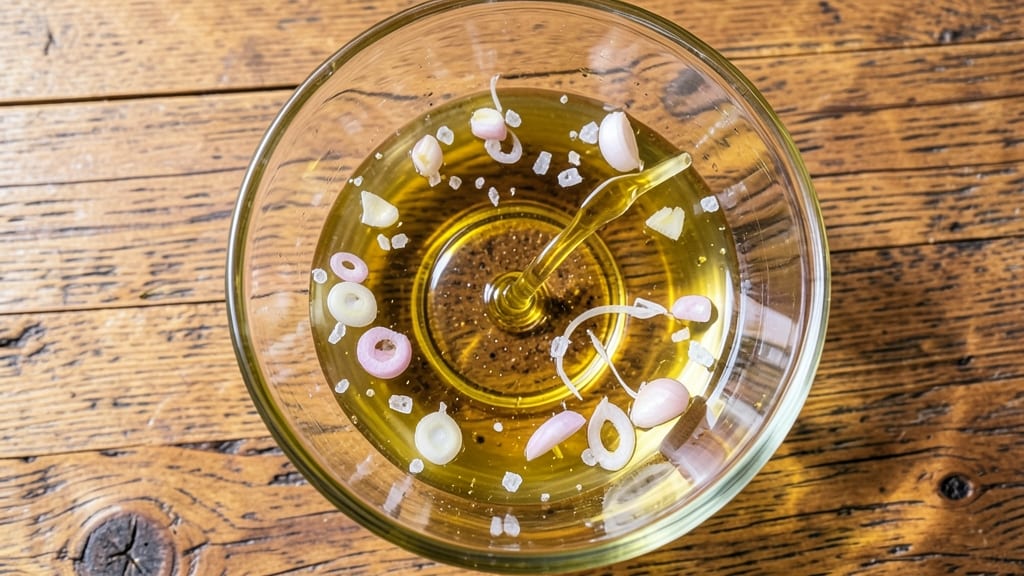
This Grimaldi's lemon vinaigrette recipe transforms ordinary salads into vibrant, restaurant-quality dishes with just five ingredients and a few minutes of prep time. The secret lies in balancing sharp lemon juice with high-quality olive oil and a touch of Dijon mustard for depth—no fancy techniques required.
I've perfected this version over years of testing, and it never fails to elevate greens, roasted vegetables, or grilled proteins.
The beauty of this recipe is its versatility—it's simple enough for weeknight meals but sophisticated enough for dinner parties. The ratio of ingredients (3:1 oil to vinegar) creates an emulsion that stays consistent, while fresh herbs and garlic add layers of flavor that develop as it sits.
This isn't just dressing; it's a flavor multiplier that turns simple ingredients into something extraordinary.
What you'll achieve is a bright, tangy vinaigrette with a perfect balance of acidity and richness—no bitterness, no heaviness, just clean, vibrant flavor. The lemon's acidity cuts through rich ingredients while the olive oil adds smoothness, creating a dressing that enhances rather than overpowers.
It keeps well in the fridge for up to a week, so you can make a batch and use it all week long.
For those who love customization, I'll share variations like adding fresh basil or a pinch of red pepper flakes to spice things up. The base recipe remains the same—only the finishing touches change. Let's get started on creating this foolproof dressing that will become your go-to for any salad.
Ingredients for grimaldi's lemon vinaigrette
Five essential ingredients transform into restaurant-quality vinaigrette with perfect acidity and richness.
| Ingredient | Amount | Notes |
|---|---|---|
| Extra-Virgin Olive Oil 🫒 | ¾ cup | High-quality, fruity variety preferred |
| Fresh Lemon Juice 🍋 | ¼ cup | From 2-3 medium lemons, freshly squeezed |
| Dijon Mustard 🟡 | 1 tbsp | Mellow, not hot, for balanced flavor |
| Shallots 🧅 | 2 whole | Minced fine for smooth texture |
| Garlic Cloves 🧄 | 2 cloves | Fresh, minced for aromatic depth |
| Diamond Crystal Kosher Salt 🧂 | ½ tsp | Fine grain for delicate seasoning |
| Fresh Flat-Leaf Parsley 🌿 | ¼ cup | Chopped fine for fresh herb finish |
The olive oil is non-negotiable—look for extra-virgin with fruity notes from brands like California Olive Ranch or Colavita. The lemons should be bright yellow with firm skin; avoid those with soft spots. For the shallots, organic or high-quality conventional works best—they're milder than onions and add sweetness without overpowering. If you can't find shallots, substitute 1 tbsp finely minced red onion, but let it sit for 5 minutes to mellow. The garlic should be fresh and firm—avoid any sprouting cloves. Fresh parsley is ideal, but dried parsley at half the amount works in a pinch, though it lacks the bright finish.
No Dijon mustard? Whole-grain mustard thinned with 1 tsp water mimics the texture. Short on lemon juice? Substitute white wine vinegar at half the amount, but reduce the salt by 0.25 tsp to balance acidity. The shallots can be swapped for 1 tbsp minced red bell pepper for a slightly sweet twist. For a more robust flavor, add 1 tsp capers or 1 anchovy fillet (finely chopped) to the shallot mixture. If you're making this ahead, store the vinaigrette in a sealed jar with the oil layer on top—shake vigorously before each use to re-emulsify. The ratio of oil to vinegar (3:1) is critical—don't deviate more than 0.1 cup in either direction.
This vinaigrette keeps for up to 1 week in an airtight container in the fridge, though the flavor peaks within the first 3 days. For longer storage, freeze in 2-tbsp portions—thaw overnight in the fridge before use. To maintain emulsion, always add the oil last and whisk vigorously. For customization, add 1 tsp honey to balance acidity or 1/4 tsp red pepper flakes for heat. The dressing doubles as a marinade for grilled proteins or a drizzle for roasted vegetables—its versatility makes it a pantry staple worth perfecting.
Why You'll Love This Recipe
- No-Fuss Ingredients: I keep a bottle of this in my fridge because it only needs five things—most of which I already have. No fancy tools, no waiting for rare herbs to bloom, just olive oil, lemon, and a quick chop of shallots and garlic. Honestly, the shallots add this subtle sweetness that makes it taste like it came from a restaurant.
- Zingy Brightness: That first bite of lemon cuts through everything—grilled chicken, crusty bread, even dull salads. The Dijon mustard ties it all together with a little tang, while the garlic gives it a warmth that lingers. Between us, it’s the kind of dressing that makes you actually want to eat your veggies.
- Weeknight Workhorse: This isn’t just for salads. Drizzle it over pasta, roasted veggies, or even a simple charcuterie board. I’ve used it to jazz up takeout stir-fry in 10 minutes flat. It’s the kind of dressing that works when you’re too tired to think, but still feels special.
- Lasts All Week: Make a big batch—it keeps for days in the fridge without separating or tasting sad. I’ll use it for lunch, dinner, and even as a marinade for fish. Not the prettiest, but the taste makes up for it, and my wallet thanks me for not buying store-bought every time.
Step-by-step instructions for Grimaldi's lemon vinaigrette
This classic dressing delivers vibrant acidity and silky texture—every element matters for balance.
Prepare the Aromatic Base
In a small mixing bowl, combine the 2 whole shallots and 2 cloves garlic cloves, both minced to a fine consistency. I use a chef's knife for this—aim for pieces so small they nearly disappear when stirred. This ensures no texture remains in your dressing that would interfere with that signature smooth finish. Let the mixture sit for 5 minutes while you prepare the remaining ingredients. This brief rest allows the shallots to soften slightly, preventing any sharp bite in the final dressing.
The reason for mincing so finely is twofold: first, it creates an even distribution of flavor throughout the dressing, and second, it prevents any lingering texture that would make the vinaigrette feel coarse. If you're concerned about the shallots releasing too much moisture, pat them dry gently with a paper towel before mincing.
Whisk the Mustard and Oil
In a separate, slightly larger bowl, measure out the 0.75 cup extra-virgin olive oil and the 1 tablespoon Dijon mustard. Using a whisk, combine these ingredients until the mustard is completely emulsified into the oil. This step is critical—it creates a stable base that will later incorporate the acidic components without separating. The mustard acts as an emulsifier, ensuring the oil and lemon juice will blend seamlessly rather than curdle.
Whisk vigorously for 1-2 minutes until the mixture becomes uniformly pale and smooth. You'll notice the mustard will initially resist incorporation, but with steady whisking, it will eventually dissolve completely. If you encounter any resistance, add 1 teaspoon of warm water to help break down the mustard's texture. This preliminary step guarantees the dressing will have that signature velvety consistency.
Incorporate the Acidic Components
Gradually add the 0.25 cup fresh lemon juice to the oil-mustard mixture while whisking continuously. I recommend adding the lemon juice in a slow, steady stream rather than all at once. This controlled approach prevents the mixture from becoming too acidic too quickly, which can cause the emulsion to break. Whisk vigorously for 2-3 minutes until the dressing begins to thicken slightly and take on a uniform consistency.
At this stage, you'll notice the dressing will temporarily look cloudy or separated. This is normal—it's simply the acid and oil fighting for dominance. Continue whisking for another 1-2 minutes, and you'll see it gradually come together into a smooth, glossy emulsion. If the dressing appears to be curdling, add 1 teaspoon of the olive oil at a time until it stabilizes. The key is patience; rushing this step often leads to a dressing that separates later.
Season and Finish with Herbs
Add the 0.5 teaspoon diamond crystal kosher salt and the finely chopped 0.25 cup fresh flat-leaf parsley to the dressing. Stir gently with a wooden spoon to combine, being careful not to overmix at this stage. The salt will enhance all the flavors while balancing the acidity, and the parsley adds a bright, fresh finish that elevates the dressing from good to exceptional. Taste the dressing at this point—it should be tangy, well-balanced, and vibrant.
If the dressing tastes too sharp, add a small amount of the olive oil to mellow it out. Conversely, if it lacks brightness, add a splash more lemon juice. The goal is to achieve a harmonious balance where the acidity, richness, and herbal notes all complement each other. Once you're satisfied with the flavor, cover the bowl with plastic wrap and let the dressing rest for at least 30 minutes at room temperature. This resting period allows the flavors to meld and the dressing to reach its optimal consistency.
Adjust and Serve
Before using the dressing, give it one final taste and adjust the seasoning if needed. If it has thickened too much, thin it with 1-2 teaspoons of water or additional lemon juice. Conversely, if it's too thin, whisk in 1 teaspoon of olive oil at a time until it reaches the desired consistency. The dressing should coat the back of a spoon but still flow smoothly when poured.
This vinaigrette will keep in the refrigerator for up to 5 days when stored in an airtight container. Shake or stir well before each use, as the separation that may occur is completely normal and easily remedied. The dressing is best served at room temperature, so take it out of the fridge 15-20 minutes before using to allow its flavors to fully awaken. Use it generously—this is a dressing designed to enhance, not overpower, your salads and vegetables.
Pro Tips For Making Grimaldi'S Lemon Vinaigrette
- Mince Shallots Fine: I learned this the hard way—gritty shallots ruin the texture. Use a sharp knife and chop them into a paste, not just small pieces. If you’re impatient, pulse them in a food processor for 10 seconds, but don’t overdo it or they’ll turn to mush.
- Whisk Mustard First: Mix the Dijon mustard with lemon juice before adding oil—this emulsifies it better. I used to add oil first, and the dressing always broke. A quick whisk for 10 seconds makes all the difference.
- Strain Lemon Juice: Skip the pulp, even if it’s tempting. Strain the juice through a fine-mesh sieve to avoid bitterness and graininess. Trust me, your dressing will taste smoother and brighter.
- Add Oil Slowly: Pour the olive oil in a thin, steady stream while whisking constantly. Dumping it all at once guarantees separation. If it splits, just whisk in another teaspoon of lemon juice—it fixes it every time.
Creative variations of this dish
Herb Variations
Swap parsley for fresh tarragon or chives to add an anise-like sweetness that pairs beautifully with seafood salads. For a Mediterranean twist, mix ½ cup chopped dill and ¼ cup chopped mint—this combo brightens Greek-inspired dishes.
I recommend using 1 tbsp chopped fresh herbs per variation to maintain balance. 🌿
Spicy Kick
Add ¼ teaspoon crushed red pepper flakes or 1 tsp hot honey for a subtle heat that lingers. For a smoky depth, stir in ½ teaspoon smoked paprika> after resting the dressing.
This works especially well with grilled meats or roasted vegetables. Always taste first—adjust to preference, as heat can intensify when refrigerated.
Sweet Balance
Dull the acidity with 1 teaspoon honey or agave syrup for a dessert-worthy drizzle. I love this variation over strawberry salads or grilled peaches. For a savory-sweet twist, add ½ teaspoon maple syrup> and a pinch of cinnamon—amazing with roasted squash or Brussels sprouts.
The key is to add sweetness after resting the dressing.
Umami Boost
Infuse depth with 1 tsp soy sauce> or 1 anchovy fillet (finely chopped)>. This elevates the dressing for Asian-inspired salads or hearty grain bowls. For a vegetarian option, stir in 1 tsp miso paste> dissolved in the lemon juice.
These additions work best when balanced with a touch more salt—reduce the kosher salt by ¼ teaspoon> if using soy or miso.
Citrus Twist
Replace lemon with orange juice> for a sweeter profile that complements citrus salads or roasted chicken. For a hybrid version, mix ¼ cup lemon juice> and ¼ cup grapefruit juice>—the bitterness of grapefruit adds complexity.
I recommend using zest from 1 lemon> (about 1 tsp>) to amplify the citrus aroma.
Seasonal Adaptations
In summer, add fresh basil> and a splash of white wine vinegar> for a Caprese-inspired dressing. For winter, swap parsley for thyme> and add 1 tsp grated ginger>—perfect with root vegetable salads.
These variations keep the core recipe intact while celebrating seasonal produce. Always adjust acidity (lemon/vinegar) based on the freshness of your herbs.
Nutrition facts
Frequently asked questions
Why does Grimaldi's lemon vinaigrette use Dijon mustard instead of regular mustard?
The Dijon mustard provides a smoother, more refined flavor without the sharp heat of regular mustard. It also acts as a natural emulsifier, helping the oil and lemon juice blend seamlessly for a silky texture. This creates the signature restaurant-quality consistency that's so satisfying.
Can I make this dressing without fresh herbs?
Yes! If you're short on fresh parsley, use 1 teaspoon dried parsley instead, but reduce the amount by half since dried herbs are more concentrated. For extra flavor, try ½ teaspoon dried tarragon or ½ teaspoon dried oregano—just remember these will have a more intense taste. Fresh herbs add brightness, but dried works in a pinch.
How do I fix a dressing that's too thick or too thin?
If your dressing is too thick, whisk in 1 teaspoon of lemon juice at a time until it reaches the right consistency. For a thinner dressing, add 1 teaspoon of olive oil gradually while whisking. The key is to adjust slowly—too much at once can throw off the balance. Always taste as you go to avoid overcorrecting.
Does this dressing work with other vegetables besides salads?
This versatile dressing enhances roasted vegetables, grilled proteins, and even wraps as a marinade. Drizzle it over asparagus, zucchini noodles, or grilled shrimp for a bright, zesty flavor boost. The acidity cuts through richness, making it perfect for heartier dishes too. Try it on avocado toast for an unexpected twist!
Can I make this dressing ahead of time?
Yes, this dressing keeps well in an airtight container in the fridge for up to 5 days. The flavors actually improve as they meld! Before using, give it a good shake or stir—the natural separation is normal and easily fixed. For longer storage, freeze in 2-tablespoon portions and thaw overnight in the fridge. Always let it sit at room temperature for 15 minutes before using to restore its silky texture.