
Sauces & Condiments
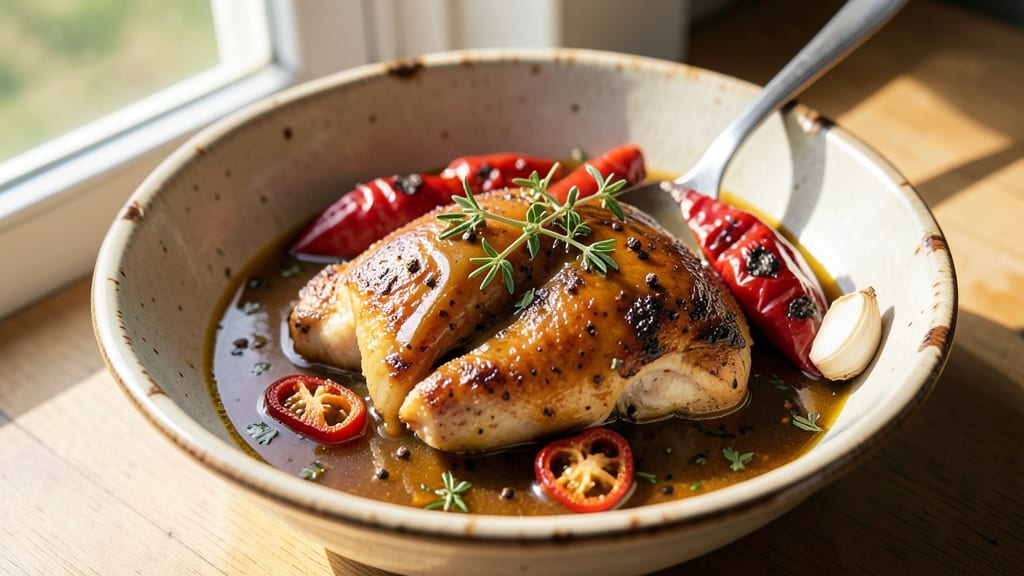
This jerk gravy recipe transforms your favorite jerk dishes into something truly special—smoky-sweet, caramelized, and rich with layers of depth that elevate every bite. 💫 The secret lies in balancing heat from Scotch bonnet peppers with allspice and thyme, then reducing the sauce until it coats the back of a spoon like liquid velvet.
I developed this after years of perfecting jerk marinades, and the gravy became the star of every meal.
The process is straightforward but requires patience: simmering tomato paste and spices until they deepen in flavor, then deglazing the pan to capture every last bit of caramelized goodness. A splash of vinegar brightens the sauce, while a cornstarch slurry thickens it just enough to cling beautifully.
What you’ll end up with is a glossy, aromatic sauce that’s bold enough to stand alone but perfect for drizzling over jerk chicken, pork, or even tofu.
This gravy keeps well in the fridge for up to a week or freezes for months, making it ideal for meal prep or batch cooking. The flavors only intensify over time, so you’ll find yourself reaching for it long after the initial excitement wears off.
Whether you’re serving it over rice, tossing it with roasted vegetables, or using it as a dipping sauce, the possibilities are endless.
For a vegan version, simply swap out the chicken or beef stock for a hearty vegetable broth and use a plant-based butter or oil for deglazing. The technique remains the same—just as rich, just as flavorful, and just as irresistible. Let’s get cooking!
Ingredients for jerk gravy
Six spices, two peppers, and a splash of vinegar. That’s all it takes to make this jerk gravy shine.
| Ingredient | Amount | Notes |
|---|---|---|
| Tomato Paste 🍅 | 2 tbsp | Squeeze tube preferred for ease |
| Scotch Bonnet Peppers 🌶️ | 2 whole | Seeds removed for less heat |
| Allspice Berries 🌿 | 1 tsp | Ground works if fresh unavailable |
| Fresh Thyme Leaves 🌿 | ½ cup | Stems removed, packed loosely |
| Garlic Cloves 🧄 | 4 cloves | Minced finely for depth |
| Chicken Stock 💧 | 1 cup | Homemade preferred, low-sodium |
| Apple Cider Vinegar 🍋 | 1 tbsp | Brightens the sauce |
| Brown Sugar 🍯 | 1 tbsp | Light or dark works |
| Cornstarch 🌾 | 1 tbsp | For thickening slurry |
| Unsalted Butter 🧈 | 2 tbsp | Full-fat for richness |
| Salt 🧂 | 1 tsp | Kosher or sea salt |
| Black Peppercorns 🌶️ | ½ tsp | Freshly cracked preferred |
The Scotch bonnet peppers are the heart of this sauce—look for bright red, firm ones at the Latin market or international aisle. Trader Joe's usually carries them, but if you can't find them, habaneros work in a pinch (use half the amount). The allspice berries? Penzeys or bulk bins have the freshest, but if you've got whole berries, toast them in a dry pan for 30 seconds first—it deepens the flavor. Fresh thyme is non-negotiable here; dried just won't cut it. The tomato paste can be from a squeeze tube (no waste!) or the canned kind—just make sure it's 100% tomato with no additives.
No Scotch bonnet? Habanero or even a pinch of cayenne will add heat, but you'll need to adjust to taste. Short on thyme? Oregano at half the amount works in a bind, but it won't be the same. The brown sugar can be swapped for maple syrup or agave if you're avoiding refined sugar. For a vegan version, use vegetable broth and plant-based butter—the technique stays identical. The cornstarch slurry is key for that silky texture; if you don't have it, a 1:1 mix of flour and water works too (though it won't be as glossy).
This gravy tastes even better the next day—make a double batch if you can. Store it in the fridge for up to 1 week, or freeze for 3 months in airtight containers. I like to portion it into ice cube trays for easy single-use servings—just pop one out and warm it up. The sauce thickens as it cools, so thin with a splash of broth or water if it gets too stiff. Leftovers reheat beautifully; just stir in a splash of water or broth to loosen it up.
Why You'll Love This Recipe
- No-Pan Needed: I toss everything in a pot, let it simmer, and boom—done. No fancy prep, no peeling mountains of garlic. Just a handful of ingredients that turn into liquid gold in under 20 minutes.
- Fire & Herbs: That Scotch bonnet? It’s the secret. A little heat, a lot of depth—paired with allspice and thyme, and suddenly your dish isn’t just flavorful, it’s memorable. Like a warm hug for your taste buds.
- Feed the Crowd: Slap this gravy over rice, toss it with chicken, or even drizzle it on toast. It’s that adaptable. My family devours it for dinner, I pack it for lunches, and it’s still the star at potlucks. Zero guilt, maximum impact.
- Budget Firepower: Scotch bonnets are cheaper than you think (and you only need one), and allspice berries last forever. Tomato paste? A tube goes a long way. This isn’t a splurge—it’s a pantry powerhouse that stretches your dollar while packing serious punch.
Step-by-step instructions for jerk gravy
Here's how to build bold, smoky-sweet flavor layer by layer.
🍳 Step 1: Char the Peppers and Aromatics
Heat a dry skillet over medium-high heat. Add the 2 whole Scotch Bonnet peppers (seeds removed) and 4 cloves garlic cloves (minced). Cook for 3-4 minutes, stirring occasionally, until the peppers blister and blacken in spots and the garlic turns golden. This charring adds deep, smoky notes that form the gravy's foundation.
Real talk: Don't rush this step. You want visible char on the peppers—that's where the complex flavors develop. Once they're ready, transfer everything to a cutting board and roughly chop the peppers. Set aside ½ cup of the fresh thyme leaves for garnish later.
🍳 Step 2: Build the Flavor Base
In the same skillet (no need to clean it—those browned bits are flavor gold), melt the 2 tbsp unsalted butter over medium heat. Add the charred pepper and garlic mixture, then stir in the 2 tbsp tomato paste and 1 tsp allspice berries. Cook for 2 minutes until fragrant and slightly darkened.
Here's the thing—this is where the magic happens. The tomato paste will darken as it cooks, developing a caramelized depth that balances the pepper's heat. Stir constantly to prevent burning, which would make the gravy bitter. Add the remaining ½ cup fresh thyme leaves and cook for another 30 seconds until the thyme releases its aroma.
🥘 Step 3: Develop the Sauce
Pour in the 1 cup chicken stock, 1 tbsp apple cider vinegar, and 1 tbsp brown sugar. Bring to a gentle simmer over medium-low heat, then reduce heat to maintain a bare simmer. Let it cook uncovered for 8-10 minutes until the liquid reduces by about 25% and thickens slightly.
Taste and adjust seasoning with 1 tsp salt and ½ tsp black peppercorns (freshly cracked). The sauce should be vibrant with smoky-sweet depth—bright enough to cut through rich proteins but rich enough to coat them beautifully. If it's too thin at this point, don't worry; we'll thicken it next.
🍳 Step 4: Thicken and Finish
In a small bowl, whisk together the 1 tbsp cornstarch with 2 tablespoons water to make a smooth slurry. Slowly pour this into the simmering sauce while stirring constantly. The sauce will thicken immediately—keep stirring for 1-2 minutes until it reaches your desired consistency.
For the final touch, remove the skillet from heat and let the gravy rest for 2 minutes. This resting period allows the flavors to meld completely. The finished gravy should coat the back of a spoon and have a glossy sheen. If it's still too thin, you can simmer it uncovered for another 1-2 minutes to reduce further.
Pro Tips For Making Jerk Gravy
- CHAR THE TOMATO PASTE: Don’t just toss it in cold—heat the tomato paste with a splash of water or broth first. I learned this the hard way: skipping this step means you’re just stirring in powdered brick instead of building flavor. Two minutes on medium heat, stirring constantly, makes all the difference—it blooms the umami and prevents clumping.
- DESEED THE SCOTCH BONNET: Cut a small slit in the pepper, remove seeds and veins, then chop it fine—not just rough chunks. That heat needs to distribute evenly, not turn your gravy into a one-bite fire drill. If you’re nervous, wear gloves, but don’t skip this step. The flavor stays; the burn doesn’t have to.
- CRUSH THE ALLSPICE WHOLE: Buy whole berries and crush them lightly in your palm or a mortar before adding. Pre-ground allspice loses potency fast, and you’ll taste the difference—earthy, warm, and complex instead of just “spice.” A few seconds of effort here saves you from wondering why your gravy tastes flat.
- SWEAT THE GARLIC LOW: Cook the garlic slow after adding the peppers—no rushing to brown it. Burnt garlic turns bitter and overpowers the jerk profile. Keep heat at a simmer, stir often, and pull it out just as it turns golden. Patience here keeps the dish balanced, not harsh.
Essential equipment for jerk gravy
Skillet Essentials
Start with a heavy-bottomed stainless steel skillet—I swear by All-Clad or Made In for even heat distribution. The deep sides help prevent spills when simmering, and stainless won’t react with the acidity in vinegar or peppers.
A 10-inch or 12-inch size gives you room to work without overcrowding. If you’re on a budget, a Lodge cast iron works too, but watch for hot spots that could burn your sauce. 🔥
Deglazing Tools
You’ll need a wooden spoon or silicon spatula for scraping up those precious browned bits from the pan—this is where 50% of your flavor hides. I keep a balloon whisk nearby too for quick stirring when the sauce starts to thicken.
A fine-mesh strainer comes in handy if you prefer a smoother texture, though I like the rustic look of tiny pepper specks in my gravy.
Precision Measuring
For the cornstarch slurry, grab a small mixing bowl and whisk—this is where consistency matters most. A digital kitchen scale ensures your 1 tbsp cornstarch is accurate (spoon measurements vary wildly).
I also recommend a measuring spoon set with ¼ tsp increments for the allspice and peppercorns—those tiny amounts make a big difference. A fine-mesh strainer helps sift spices if you’re using ground allspice.
Heat Control
Invest in a good stove thermometer—I use a Thermoworks Thermapen—to monitor your heat levels precisely. Jerk gravy needs medium-low heat for simmering, but medium-high for charring peppers.
A timer keeps you from overcooking the sauce, and a heat diffuser (like a copper core diffuser) helps prevent scorching if you’re using gas burners. For electric stoves, a cast iron skillet distributes heat more evenly than nonstick.
Storage Containers
For leftovers, glass jars with airtight lids (like Le Parfait) are my go-to—they stack neatly in the fridge and freeze beautifully. Ice cube trays work for single-serving portions, and silicone lids prevent freezer burn.
Label everything with dates—this gravy tastes best within 5-7 days in the fridge or 3 months in the freezer. A fine-mist spray bottle helps loosen thickened gravy when reheating.
Nutrition facts
Frequently asked questions
Can I make jerk gravy without Scotch bonnet peppers?
If you can't find Scotch bonnets, use habanero peppers (halve the amount) or a 1-2 tsp cayenne pepper for heat. For a milder version, skip the peppers entirely and add ½ tsp smoked paprika for depth. The flavor will still be rich and smoky—just adjust to your heat preference.
Why does my jerk gravy taste thin or watery?
Thin gravy usually happens if you didn’t reduce it enough before thickening. Let it simmer uncovered for another 3-5 minutes to concentrate the flavors. If it’s already reduced but still thin, the cornstarch slurry might not have been mixed properly—whisk it vigorously before adding. A splash of chicken stock or water can also help adjust consistency later.
How do I store jerk gravy for later use?
Let the gravy cool completely, then transfer it to airtight glass containers or freezer-safe bags. It keeps in the fridge for up to 1 week and freezes beautifully for 3 months. For easy portions, freeze in ice cube trays—just pop a cube into hot dishes when needed. Reheat gently on the stove, adding a splash of water if it thickens too much.
Can I use this gravy for vegan dishes?
Yes! Swap chicken stock for vegetable broth and use plant-based butter or oil for deglazing. The technique stays the same—the sauce will still be rich and flavorful. For extra depth, add a pinch of nutritional yeast or a dash of soy sauce at the end. It pairs perfectly with jerk-style tofu or vegan meats.