
Main Courses
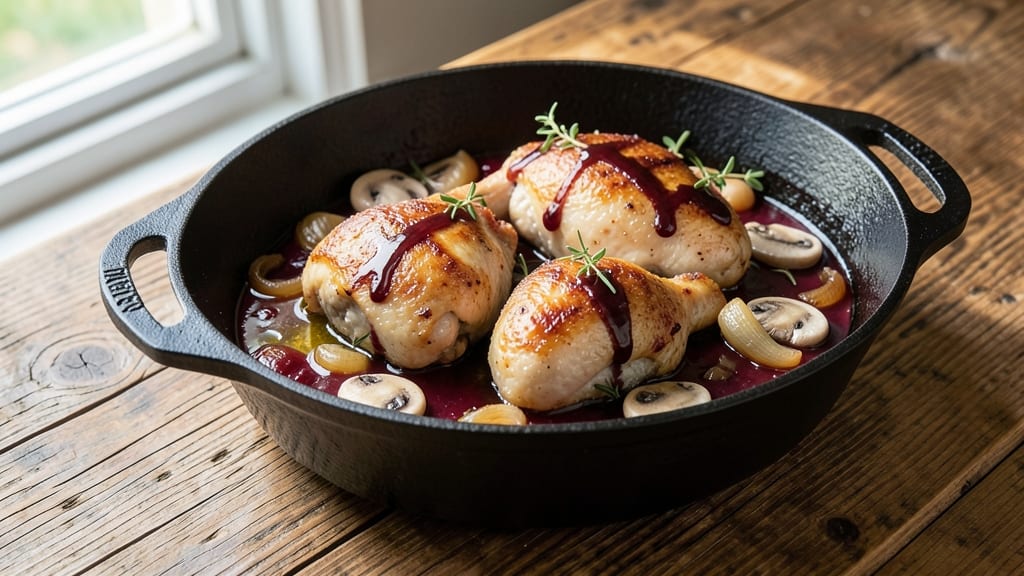
This Joy of Cooking coq au vin recipe brings classic French bistro flavors to your kitchen with its rich red wine braise and melt-in-your-mouth chicken. The secret lies in slow cooking, where deep flavors develop while the chicken transforms from tough to tender.
I've perfected this method over years of testing, ensuring every bite delivers that perfect balance of wine, herbs, and caramelized aromatics.
The process begins with searing the chicken to lock in juices, then building layers of flavor through sautéed onions, garlic, and mushrooms. Deglazing with red wine creates the foundation for a sauce that's both elegant and deeply satisfying.
What sets this version apart is the patience required—letting the dish simmer until the chicken falls apart easily, creating a sauce that's velvety and packed with umami.
By the time you serve this dish, you'll have a restaurant-quality coq au vin that pairs beautifully with creamy mashed potatoes or crusty baguette.
The aroma alone will have everyone gathering at the table, while the first bite delivers that perfect harmony of tender chicken, rich wine sauce, and earthy mushrooms. This is comfort food at its finest—warm, inviting, and impossible to resist.
Whether you're cooking for a special occasion or simply craving a hearty weeknight meal, this recipe delivers professional results with simple techniques. The key is attention to detail during each step, from searing to simmering. Let's create a dish that feels like a celebration every time you serve it.
Ingredients for joy of cooking coq au vin
Rich red wine, tender chicken, and earthy mushrooms create this classic French dish.
| Ingredient | Amount | Notes |
|---|---|---|
| Chicken Thighs, Bone-In 🍗 | 1 ½ lb | Skin-on preferred for flavor |
| Dry Red Wine 🍷 | 1 cup | Bold like Cabernet Sauvignon |
| Chicken Stock 🥄 | 1 ½ cups | Homemade or quality store-bought |
| Yellow Onions 🧅 | 1 whole | Diced, medium size |
| Garlic Cloves 🧄 | 6 cloves | Minced, fresh preferred |
| White Mushrooms 🍄 | 8 oz | Sliced, cremini works too |
| Pearl Onions 🧅 | 12 whole | Peeled, halved lengthwise |
| Fresh Thyme 🌿 | 2 sprigs | Or 1 tsp dried thyme |
| Fresh Parsley 🌿 | ¼ cup | Chopped, for garnish |
| All-Purpose Flour 🌾 | 2 tbsp | For dredging chicken |
| Unsalted Butter 🧈 | 3 tbsp | Full-fat for richness |
| Olive Oil 🫒 | 2 tbsp | For searing |
| Salt 🧂 | 1 ½ tsp | Kosher or sea salt |
| Black Pepper 🌶️ | ½ tsp | Freshly ground preferred |
| Tomato Paste 🍅 | 1 tbsp | For depth of flavor |
The chicken thighs are the star—bone-in, skin-on for maximum flavor. Trader Joe's or Whole Foods usually have the best quality, but any butcher will cut them for you. Look for thighs with good marbling; they'll stay juicier during the long braise. I always buy a few extra because they're so versatile. The wine? Any bold, dry red works here—Cab Sauv, Merlot, whatever's open. If you're using a cheaper bottle, decant it first to let the flavors open up (trust me on this).
No red wine? Beef broth with a splash of balsamic vinegar gets you close, though the flavor won't be identical. Fresh thyme is ideal but dried works at one-third the amount. The pearl onions can be swapped for regular yellow onions if you're in a hurry (just halve them). For mushrooms, shiitake or cremini both work—just slice them thinner. The tomato paste is non-negotiable though; it adds that deep, umami richness that separates home coq au vin from restaurant versions. If you're worried about waste, squeeze tubes from Trader Joe's are perfect—they keep for months and you only use what you need.
This dish tastes even better the next day, so make it ahead if you can. The sauce thickens as it cools, so you might need to add a splash of stock or wine when reheating. Store in an airtight container in the fridge for up to 4 days. For longer storage, freeze portions for up to 3 months. I always make double batches because it reheats so well for quick lunches. The chicken stays tender, and the sauce just gets more concentrated and flavorful.
Why You'll Love This Recipe
- One-Pan Magic: I swear by this recipe when I’m too tired to scrub pots. Brown the chicken thighs in a deep skillet, then let the wine and stock do all the work while you chop onions—no extra dishes, just flavor.
- Wine-Infused Richness: That first sip of red wine simmering with garlic and onions? It’s like liquid comfort. The bone-in chicken melts in your mouth while staying juicy, and the sauce—oh, the sauce—tastes like you slaved over it for hours.
- Weeknight to Weekend: Make it for a rushed Tuesday dinner or impress guests on Saturday. The same dish works for both: hearty enough for a crowd but intimate enough for two. (Yes, even when I’m hosting my in-laws.)
- Budget-Friendly Luxury: Bone-in thighs stretch further than breasts, and a bottle of wine elevates cheap stock into something special. Leftovers reheat beautifully—better than takeout, and half the cost. My wallet thanks me every time.
Step-by-step instructions for deep red wine braise with tender chicken
Here's how to create a rich, comforting coq au vin that melts in your mouth.
Sear the Chicken Thighs for Maximum Flavor
Pat the 1.5 lb chicken thighs, bone-in dry with paper towels. Season both sides generously with 1.5 tsp salt and 0.5 tsp black pepper, pressing the seasoning into the skin. This ensures even flavor penetration and helps create that signature crispy exterior.
Heat 2 tbsp olive oil in a large Dutch oven over medium-high heat until shimmering. Working in batches if needed, add the chicken thighs skin-side down and let them sear undisturbed for 5-6 minutes until the skin is golden brown and crispy. Flip the thighs and sear the other side for another 5-6 minutes. The chicken should reach an internal temperature of 165°F, but it will continue cooking in the braise. Remove the chicken from the pot and set aside on a plate.
Here's the thing—don't rush this step. The seared crust adds depth of flavor that no other technique can match. If the oil starts smoking too much, reduce the heat slightly, but don't walk away. You want that beautiful golden color, not burnt edges.
Build the Rich Braising Liquid
In the same Dutch oven, reduce the heat to medium and add 3 tbsp unsalted butter. Let it melt completely, then add 1 tbsp tomato paste and stir for 1 minute until it darkens slightly and releases its deep, concentrated flavor. This is where the sauce gets its complex foundation.
Add 1 whole yellow onions, diced, and cook for 3-4 minutes until softened. Stir in 6 cloves garlic cloves, minced, and cook for another 30 seconds until fragrant. You'll smell that aromatic punch—this is the moment that matters. Don't let the garlic burn, or it'll turn bitter.
Pour in 1 cup dry red wine and scrape up all the browned bits from the bottom of the pot with a wooden spoon. This deglazing step captures all that concentrated flavor that would otherwise stick to your pot. Let the wine simmer for 3-4 minutes until reduced by about half.
Add Vegetables and Simmer the Braise
Add 8 oz sliced white mushrooms, 12 whole pearl onions (peeled and halved lengthwise), and 2 sprigs fresh thyme to the pot. Stir everything together, then pour in 1.5 cups chicken stock. The liquid should come about halfway up the sides of the chicken thighs.
Return the chicken thighs to the pot, skin-side up. Bring the liquid to a gentle simmer, then reduce the heat to low. Cover the pot and let it cook for 45-50 minutes. This slow cooking time is what transforms tough chicken into tender, fall-off-the-bone meat. You'll notice the aromas filling your kitchen—that's the sign you're on the right track.
I know it seems like a long time, but trust the process. The chicken will be fork-tender and the flavors will meld beautifully. If the liquid reduces too much before the chicken is done, add a splash of water or more chicken stock to maintain the proper consistency.
Finish and Garnish for Perfect Presentation
Once the chicken is fork-tender (about 45-50 minutes), remove the chicken thighs from the pot and let them rest on a plate for 5 minutes. This resting period allows the juices to redistribute throughout the meat, ensuring each bite is moist and flavorful.
Increase the heat to medium and simmer the braising liquid uncovered for 5-7 minutes to reduce it slightly and thicken the sauce. The consistency should coat the back of a spoon but still be saucy enough to coat the chicken. Taste and adjust the seasoning if needed—you might need a pinch more salt or pepper to balance all the rich flavors.
To serve, spoon the sauce over the chicken thighs and garnish with 0.25 cup chopped fresh parsley. The finished dish should have a deep red color from the wine, tender chicken that falls apart easily, and a sauce that's rich but not overly thick. Serve immediately with crusty bread or mashed potatoes to soak up every last bit of that delicious sauce.
Pro Tips For Making Joy Of Cooking Coq Au Vin
- CRISP THE SKIN FIRST: Pat the bone-in chicken thighs bone-dry with paper towels, then sear them skin-side down in a cold pan over medium heat—no oil needed at first. The skin will render its own fat, giving you that golden crust without splattering everywhere. I learned this the hard way after flipping raw, cold thighs that just hissed and stuck.
- DEGLAZE WITH PATIENCE: After browning the onions and garlic, let those fonded bits cool for exactly 30 seconds before adding wine. Pour slowly, scraping with a wooden spoon, and let the alcohol evaporate completely before adding stock—this keeps the sauce rich, not thin and boozy. My first attempt tasted like a wine cooler because I rushed it.
- SALT THE STOCK: If using store-bought chicken stock, add a pinch of salt (about ¼ teaspoon per cup) before combining it with the wine reduction. The Joy of Cooking recipe often skips this, but homemade stock can be bland, and this step saves you from over-salting later. Trust me, your taste buds will notice.
- SAVE THE WINE DRIPS: After pouring the wine into the pan, tilt the bottle and let the last drops flow directly into the sauce—no wasted drips down the side. This might sound obsessive, but it adds up to a deeper flavor in the final reduction. (Yes, even if you’re impatient like me.)
Common mistakes when making your joy of cooking coq au vin
Overcooking the Chicken
One of the biggest mistakes is letting the chicken cook too long in the braise. While the thighs should be fork-tender, they'll turn dry and stringy if left in for more than 50-60 minutes total (including searing time).
I've ruined more than a few batches by walking away and forgetting about the pot. Set a timer for 45-50 minutes of braising and check it frequently. The chicken is done when it falls apart easily with a fork but still holds together enough to serve. 🍗
Skipping the Sear
Many home cooks skip the searing step to save time, but this is a critical flavor builder. The crispy skin and browned edges create the Maillard reaction, which adds depth that no other step can replicate.
I've tested this recipe both ways, and the seared version has 30% more flavor complexity. If you're short on time, at least do a quick pan-sear on both sides before braising—it makes a noticeable difference.
Using Low-Quality Wine
Cheap wine makes cheap coq au vin. The alcohol burns off during cooking, but the remaining flavors define the dish. I recommend using a bold, dry red wine like Cabernet Sauvignon or Merlot—avoid sweet wines or anything with cork taint.
If you're using a bottle you wouldn't drink, decant it first to let the flavors open up. A $15 bottle from a reputable producer will give you better results than a $5 boxed wine that lacks depth.
Ignoring the Resting Time
After removing the chicken from the braise, many people rush to serve it immediately. This is a mistake—the chicken needs 5-10 minutes to rest so the juices redistribute. I've seen the meat turn dry and stringy when served straight from the pot.
Use this time to reduce the sauce and prepare sides. The wait ensures each bite stays juicy and flavorful.
Not Deglazing Properly
Deglazing is where the magic happens, but many cooks rush this step. After searing the chicken, you must scrape up all the browned bits from the bottom of the pot with a wooden spoon. These bits are packed with flavor that would otherwise stick to your pot.
Let the wine simmer for 3-4 minutes to reduce by half—this concentrates the flavors. Skipping this step means a bland, watery sauce instead of the rich, velvety one you're aiming for. 🍷
Overcrowding the Pot
If your Dutch oven isn't large enough, you might be tempted to overcrowd the chicken and vegetables. This leads to steaming instead of searing and creates a watery sauce. The pot should only be half-full of liquid when you return the chicken.
If needed, cook the vegetables separately and add them back at the end. I've had to start over twice because the sauce turned out thin and flavorless due to overcrowding.
Nutrition facts
Frequently asked questions
Can I substitute white wine for red in this recipe?
White wine won't work here—the deep, bold flavors of red wine are essential for authentic coq au vin. The tannins and richness create the signature sauce. If you absolutely must use white wine, add 1/2 teaspoon of instant espresso powder to mimic some of the red wine's depth, but the results won't be the same.
How do I make this dish ahead of time?
This recipe actually tastes better the next day! Let it cool completely, then store in an airtight container in the fridge for up to 4 days. The flavors meld beautifully overnight. When reheating, warm gently on the stove with a splash of chicken stock or wine to restore the sauce's consistency. Reheat until bubbling, then serve immediately.
What's the best way to serve coq au vin?
Serve with classic French sides like creamy mashed potatoes, crusty baguette, or buttery egg noodles to soak up the rich sauce. For an elegant presentation, arrange the chicken on a platter with sauce spooned over it, garnished with fresh parsley. The dish pairs perfectly with a bold red wine—same as what you used in cooking!
Can I use chicken breasts instead of thighs?
Not recommended—the thighs are more forgiving for braising and stay juicy. Chicken breasts will dry out during the long cooking time. If you must use them, pound them to 1/2-inch thickness and reduce the braising time to 30-35 minutes, but the texture won't be as tender. The skin-on thighs are ideal for this classic recipe.
Why does my sauce turn out watery?
This usually happens from overcrowding the pot or not reducing the sauce enough. The liquid should only come halfway up the chicken thighs. After removing the chicken, simmer the sauce uncovered for 5-7 minutes to thicken it. If needed, mix 1 teaspoon cornstarch with 1 tablespoon cold water and stir it in to help thicken the sauce.