
Sauces & Condiments
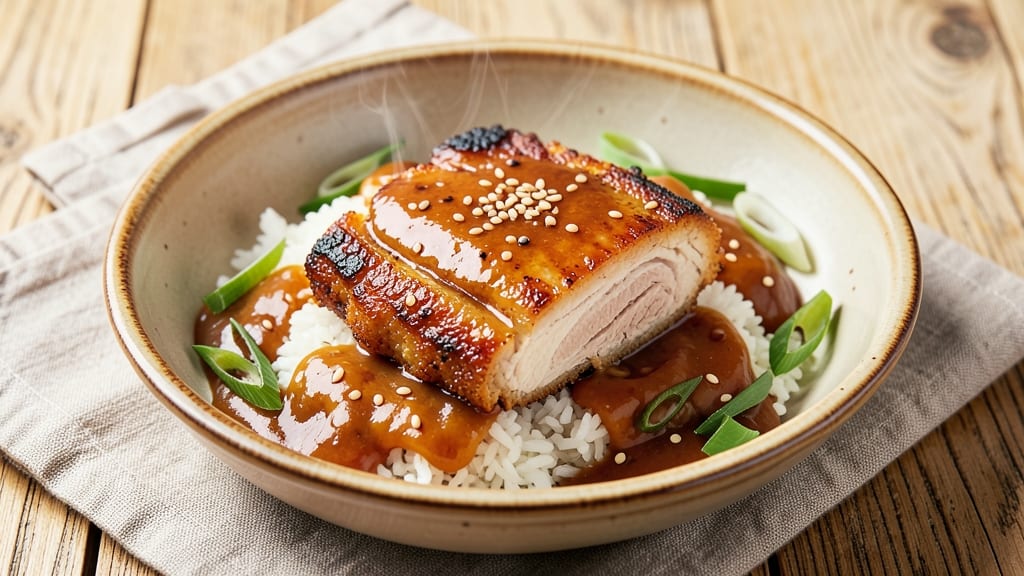
This katsudon sauce recipe delivers the deep umami richness that makes every bite of katsudon unforgettable—balanced perfectly between sweet, salty, and savory. I first discovered this sauce while perfecting my own version of katsudon after years of studying Japanese home cooking techniques.
The secret lies in the slow simmering of traditional ingredients that transform ordinary soy sauce into something extraordinary.
The foundation of this sauce is a precise blend of soy sauce, dashi stock, mirin, and sugar, simmered until the flavors meld into a velvety, aromatic liquid. Unlike store-bought versions, this recipe builds layers of complexity through proper reduction and balancing techniques.
The result is a sauce that enhances pork, eggs, and onions without overpowering them—just as it should in authentic katsudon.
What makes this sauce truly special is its versatility. While it was designed for katsudon, it elevates any dish featuring pork, chicken, or even vegetables. The sauce's perfect balance of sweetness and umami makes it ideal for dipping, glaze, or finishing touch.
Once you taste the difference between homemade and store-bought, you'll never go back.
Ready in just 30 minutes, this sauce requires minimal effort but delivers restaurant-quality results. The key is patience during simmering—letting the flavors develop fully ensures a sauce that's rich, glossy, and packed with depth. Let's create this essential Japanese sauce that will transform your cooking.
Ingredients for katsudon sauce
Eight essential ingredients transform simple pantry staples into restaurant-quality katsudon sauce.
| Ingredient | Amount | Notes |
|---|---|---|
| Japanese Soy Sauce 🥄 | ½ cup | High-quality, preferably Koikuchi shoyu |
| Dashi Stock 🍜 | ½ cup | Homemade or quality bottled |
| Mirin 🍶 | ¼ cup | Sweet cooking wine, not substitute |
| Granulated Sugar 🍚 | ¼ cup | White or brown sugar preferred |
| Fresh Ginger 🌿 | 1 tbsp | Finely grated, organic preferred |
| Garlic Cloves 🧄 | 2 cloves | Minced, fresh preferred |
| Sesame Oil 🫒 | 1 tbsp | Toasted, for aroma |
| Water 💧 | ½ cup | Filtered preferred |
The soy sauce and dashi stock are non-negotiable—Japanese brands like Kikkoman and Hekuran deliver the authentic umami depth. Grab mirin at an Asian market (Naniwa or Marukyu are reliable) or make your own by reducing rice wine with sugar. Fresh ginger and garlic should be vibrant; brown spots mean it's past its prime. The sesame oil adds that signature aroma—toasted, not refined. For dashi, I swear by Hondashi powder when I'm short on time, but homemade kombu-bonito is worth the effort.
No mirin? Rice wine plus 1 tsp sugar works in a pinch, though the flavor won't be identical. Substitute dashi with mushroom broth plus 1 tsp fish sauce for a vegetarian version. Sesame oil too strong? Reduce to 0.5 tbsp and add 0.5 tbsp neutral oil. The sugar can be swapped for honey or maple syrup, though the texture may vary slightly. For a deeper umami punch, add 1 tsp dried shiitake powder—it dissolves completely and adds complexity without altering the sauce's balance.
This sauce keeps beautifully in the fridge for 2 weeks in an airtight jar. The flavors actually improve as it sits—shake before using. For long-term storage, freeze in ice cube trays and transfer to a bag. Thaw overnight in the fridge. Double the batch if you're making katsudon for a crowd; it disappears fast. The sauce reheats perfectly—just warm gently on the stove or microwave until steaming.
Why You'll Love This Recipe
- Five-Ingredient Magic: I swear by this combo—soy sauce, dashi, mirin, sugar, and ginger. That’s it. No fancy techniques, no last-minute grocery runs. The sauce simmers down to a glossy, umami-rich perfection while you chop an onion or boil rice. Honestly, the simplicity makes it my go-to for lazy nights when I still want restaurant-quality flavor.
- Umami Bomb: Between us, that ginger-mirin-sugar blend? It’s where the sauce gets its soul. The dashi adds depth, the soy brings saltiness, and the fresh ginger keeps it bright—not too sweet, not too heavy. One sip and you’ll understand why katsudon feels like a hug in a bowl.
- Doubles as Glaze: Here’s what sold me—this sauce isn’t just for katsu. Drizzle it over grilled fish, toss it with noodles, or even brush it on baked tofu. The versatility means I never waste a batch, and my wallet thanks me for the stretch.
- Pantry Staple: I make a big batch and keep it in the fridge for weeks. The flavors actually improve over time, deepening into something richer. Plus, dashi and soy sauce are cheap—this sauce costs pennies per serving. My secret weapon for feeding the family without breaking the bank.
Step-by-step instructions for katsudon sauce
This sauce delivers the perfect harmony of umami, sweetness, and aromatic depth—essential for authentic katsudon.
Prepare the Aromatic Base
In a medium saucepan, combine the 0.5 cup dashi stock, 0.5 cup water, 1 tablespoon freshly grated ginger, and 2 minced garlic cloves. Bring to a gentle simmer over medium heat until you can smell the fragrant steam rising—about 3-4 minutes. The ginger should release its bright, citrusy aroma while the garlic softens just enough to infuse flavor without becoming bitter.
Here's the thing—don't rush this step. The dashi stock needs time to develop its full umami potential, and the ginger and garlic must meld together. If the mixture boils vigorously, reduce the heat slightly to maintain a steady simmer rather than a rolling boil, which can make the flavors harsh.
Add Sweetness and Soy Depth
Once the aromatics are fragrant, whisk in the 0.5 cup Japanese soy sauce and 0.25 cup mirin. Stir continuously for 2-3 minutes until the mixture begins to reduce slightly and the colors deepen to a rich amber. You'll notice the sauce becoming glossy and slightly syrupy as the alcohol from the mirin evaporates, leaving behind its sweet, fruity essence.
This is where the sauce's balance begins to form. The mirin adds a delicate sweetness that cuts through the soy's saltiness, while the soy sauce provides that essential umami backbone. If you taste it now, you'll detect the foundation of your sauce—savory, slightly sweet, and aromatic.
Incorporate Sugar and Simmer
Add the 0.25 cup granulated sugar and stir until fully dissolved. Increase the heat to medium-high and let the sauce simmer vigorously for 5-7 minutes, stirring occasionally. You're aiming for a reduction where the sauce thickens enough to coat the back of a spoon but remains pourable. The sugar will caramelize slightly, adding depth and a subtle complexity to the flavor profile.
Watch the sauce closely during this stage. It should reduce by about one-third, transforming from a thin liquid to a syrupy consistency. If it reduces too quickly, add 1 tablespoon water at a time to maintain the right balance. The goal is a glossy, velvety sauce that clings beautifully to both the bread and the pork in katsudon.
Finish with Sesame Oil
Remove the saucepan from heat and let it cool slightly for 2 minutes. Then, stir in the 1 tablespoon toasted sesame oil. This final step is critical—it adds a nutty, toasty aroma that elevates the sauce from good to extraordinary. The sesame oil should be fully incorporated, giving the sauce a delicate sheen and a rich, aromatic finish.
Taste the sauce and adjust the seasoning if needed. You might find it needs a touch more saltiness or sweetness, but with these ingredients, it should already be perfectly balanced. Let the sauce cool to room temperature before using it, as this allows the flavors to fully meld and develop.
Store and Use
Transfer the sauce to a clean jar or airtight container and refrigerate for at least 1 hour before using. This resting period deepens the flavors and ensures the sauce reaches its peak balance. When ready to use, reheat gently over low heat, stirring occasionally, until warmed through. The sauce should be thick enough to cling to the katsu pork and bread but still pourable enough to drizzle generously.
This sauce keeps well in the refrigerator for up to 5 days, making it perfect for batch cooking. If you find it thickens too much upon reheating, simply add a splash of hot water to loosen it to your desired consistency. The result? A sauce that's rich, umami-packed, and perfectly balanced—just like the katsudon it's designed to complement.
Pro Tips For Making Katsudon Sauce
- Simmer Slow and Steady: Katsudon sauce needs time to marry flavors—don’t rush the reduction. A gentle simmer at medium-low heat (about 15-20 minutes) lets the sugar caramelize and the dashi deepen without burning. I used to crank the heat, and the sauce ended up sharp and bitter.
- Grate Ginger Fine: Skip the food processor for fresh ginger—your sauce will taste flat. Use a microplane or the finest grater and let it sit in the sauce for at least 5 minutes before straining. The heat and oils release more zing, and you’ll taste the difference.
- Balance the Mirin: Too much mirin makes the sauce cloying; too little leaves it thin. Start with 1 tablespoon per cup of liquid and adjust as you go—taste after 10 minutes of simmering. If it’s too sweet, add a splash of soy sauce; if too sharp, a pinch of sugar.
- Strain Twice: Ginger and dashi sediment ruin a smooth sauce. After simmering, strain through a fine-mesh sieve, then a cheesecloth-lined strainer. Yes, it’s extra work, but the result is silky—no gritty surprises when you drizzle it over rice.
Troubleshooting perfect results
Sauce Too Salty
If your katsudon sauce turns out too salty, don’t panic—there are simple fixes. The most effective solution is to add 1-2 tablespoons of water or dashi stock and simmer for 3-5 minutes to dilute the saltiness.
For a more dramatic adjustment, stir in 1 teaspoon of honey or mirin to balance the flavor profile. If you prefer a vegetarian option, a splash of vegetable broth works well. Taste as you go—this sauce is forgiving, but balance is key. 💡
Sauce Too Thin
A thin sauce usually means it didn’t reduce enough during simmering. To thicken it, simmer the sauce uncovered over medium-low heat for an additional 5-10 minutes, stirring occasionally.
If it still feels too runny, mix 1 teaspoon of cornstarch with 1 tablespoon of water, stir it in, and simmer for another 2 minutes until it reaches your desired consistency. For a smoother finish, strain the sauce through a fine-mesh sieve to remove any cornstarch residue.
This trick works wonders for achieving that perfect glossy texture. ✨
Sauce Too Sweet
If your sauce tastes overly sweet, it’s likely because the sugar or mirin overpowered the other flavors. To fix this, add 1-2 teaspoons of Japanese soy sauce and simmer for 2-3 minutes to deepen the umami and balance the sweetness.
A pinch of black pepper or a dash of sesame oil can also help cut through the sweetness while adding complexity. Taste frequently—small adjustments make all the difference. The goal is harmony, not just masking the sweetness. 🌶️
Ginger or Garlic Flavor Too Strong
If the ginger or garlic flavors are too pronounced, it’s likely because they weren’t cooked long enough to mellow. To fix this, simmer the sauce for an additional 5 minutes to allow the raw flavors to soften and integrate.
If the aroma is still too sharp, strain the sauce through a fine-mesh sieve to remove any lingering bits of ginger or garlic. For a smoother finish, you can also add a ½ teaspoon of honey or a splash of mirin to round out the flavors.
This step is especially helpful if you used extra-fresh ginger or garlic. 🌿
Sauce Separates or Curdles
Sauce separation usually happens when the sauce is reheated too quickly or not stirred properly. To fix this, gently reheat the sauce over low heat, stirring constantly until it smooths out.
If it still looks separated, whisk in 1 tablespoon of water or dashi stock and simmer for another 2 minutes. For a more stable sauce, avoid using too much sesame oil—stick to the 1 tablespoon called for in the recipe.
The key is patience; let the sauce warm gradually to prevent any further separation. 🔥
Lacking Depth of Flavor
If your sauce feels flat or lacks umami, it might need a flavor boost. Stir in ½ teaspoon of Worcestershire sauce or a pinch of dried shiitake powder to enhance the depth. For a vegetarian option, add 1 teaspoon of mushroom powder or a splash of vegetable-based dashi.
Simmer for another 3-5 minutes to let the new flavors meld in. This trick is especially useful if you’re using store-bought dashi or soy sauce that isn’t as rich as homemade versions. The result will be a sauce with layers of complexity. 💫
Nutrition facts
Frequently asked questions about Japanese katsu sauce
What's the difference between katsudon sauce and tonkatsu sauce?
While both are Japanese soy-based sauces, katsudon sauce is specifically designed for the dish's pork, egg, and onion combo—it's sweeter with a deeper umami from dashi and mirin. Tonkatsu sauce is usually thicker, less sweet, and often contains Worcestershire sauce. The katsudon version has that signature bright ginger aroma that tonkatsu sauce lacks.
Can I make this sauce without mirin?
Yes! Substitute with ¼ cup rice wine plus 1 teaspoon sugar for a similar effect. For extra depth, add ½ teaspoon of honey to mimic mirin's fruity notes. The sauce will still work but won't have that authentic sweet-tangy balance.
How long should I simmer the sauce?
Simmer for 10-15 minutes total—about 5-7 minutes after adding sugar—to achieve that perfect velvety consistency. The key is patience: let it reduce by roughly one-third while stirring occasionally. Rushing this step makes the sauce too thin and flat-tasting.
What's the best way to store leftover sauce?
Transfer to an airtight container and refrigerate for up to 2 weeks. The flavors actually improve with time! For long storage, freeze in ice cube trays—thaw overnight in the fridge. Reheat gently over low heat, adding 1 teaspoon water if it thickens too much.
Can I use this sauce for other dishes besides katsudon?
It works beautifully with tonkatsu, grilled pork chops, or even as a dipping sauce for ramen. For vegetarian dishes, pair it with mushroom stir-fries or tofu skewers. The balance of sweet and umami makes it incredibly versatile.