
Main Courses
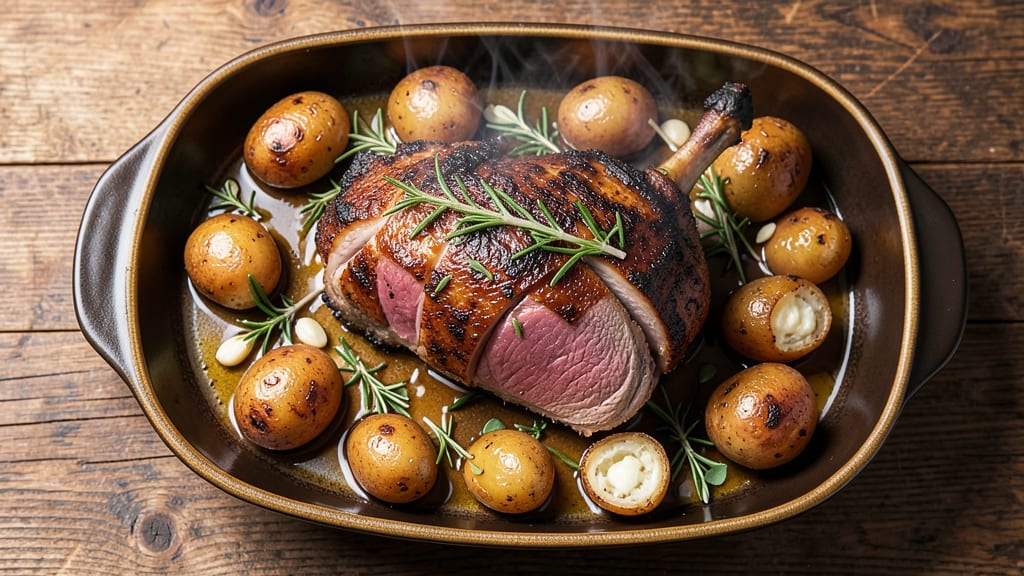
A perfectly cooked lamb leg bake transforms a simple Sunday dinner into a showstopping centerpiece that smells like a Mediterranean feast. The secret lies in a crisp herb crust that seals in juices while caramelized potatoes form a golden, savory base beneath.
After years of testing, this method delivers tender meat with a deep, aromatic crust every time—no guesswork required.
What sets this recipe apart is the balance of technique and simplicity: a 350°F oven ensures even cooking, while a 2-hour roast time lets flavors meld without drying the meat.
The herb crust isn’t just decorative—it locks in moisture and adds layers of flavor with rosemary, thyme, and garlic. Even beginners achieve restaurant-quality results with this foolproof approach.
By the time you carve into that golden-brown crust, you’ll uncover juicy, fall-apart lamb that pairs beautifully with the crispy potatoes below. The aroma alone will have everyone gathered at the table, and the presentation—herb-studded crust, caramelized edges—makes it feel like a special occasion.
This is comfort food elevated to its finest form.
Serve with a bold red wine like Cabernet Sauvignon or a crisp white such as Sauvignon Blanc to complement the rich flavors. The leftovers reheat beautifully, making it perfect for meal prep or hosting. Let’s get cooking—this lamb leg bake is worth every minute of wait time.
Ingredients for lamb leg bake
Eleven ingredients transform a simple lamb leg into a restaurant-worthy centerpiece with crispy herb crust and caramelized potatoes.
| Ingredient | Amount | Notes |
|---|---|---|
| Lamb Leg (French-style) 🐑 | 4 lb | Bone-in, trimmed of excess fat |
| Baby Potatoes 🥔 | 2 lb | Yukon gold or red preferred |
| Fresh Rosemary 🌿 | ¼ cup | Finely chopped, stems removed |
| Fresh Thyme 🌿 | ⅛ cup | Leaves only, stems discarded |
| Garlic Cloves 🧄 | 6 cloves | Minced, skin-on for maximum flavor |
| Extra-Virgin Olive Oil 🫒 | ½ cup | High-quality, fruity variety |
| Dijon Mustard 🍯 | 2 tbsp | For herb crust adhesion |
| Diamond Crystal Kosher Salt 🧂 | 1 ½ tbsp | For seasoning and crust |
| Freshly Ground Black Pepper 🌶️ | 1 tsp | Coarsely ground for texture |
| Dry White Wine 🍷 | ½ cup | Sauvignon Blanc preferred |
| Chicken Broth 🥣 | ½ cup | Low-sodium preferred |
| Unsalted Butter 🧈 | ¼ cup | Cold, cubed for potatoes |
| Fresh Parsley 🌿 | 0.1 cup | Chopped, for garnish |
The lamb leg is the foundation—opt for a French-style cut with even fat distribution for optimal moisture retention. Whole Foods or specialty butchers carry the best quality, but any reputable grocer will have suitable options. Look for vibrant color and firm texture, avoiding any cuts with yellowing fat or off aromas. The potatoes should be small and uniform in size to ensure even cooking. Yukon gold or red potatoes hold their shape beautifully while developing a crispy exterior. Fresh herbs are non-negotiable here; Williams-Sonoma or local farmers' markets offer the highest quality rosemary and thyme, which should be fragrant and free from browning.
No fresh rosemary? Dried rosemary at half the amount works in a pinch, though texture will differ. Substitute white wine with chicken broth if needed, maintaining the same total volume. For a deeper flavor, add 1 tsp smoked paprika to the herb crust. The Dijon mustard is essential for binding the herb mixture—Maille brand is ideal, but any quality Dijon will suffice. If you can't find Diamond Crystal kosher salt, Morton coarse salt works well, though you may need to adjust slightly. For the potatoes, parboiling for 5 minutes before roasting ensures they cook through without burning on the outside.
Leftover lamb reheats beautifully—wrapped in foil at 325°F for 15 minutes preserves moisture. Store in an airtight container for up to 4 days in the refrigerator or 3 months frozen. The herb crust can be prepped ahead and stored separately for 2 days before assembly. Potatoes keep well for 5 days in the fridge, though they're best used fresh. For meal prep, portion the lamb into individual servings before freezing, allowing for quick reheating. The aroma alone will have your kitchen smelling like a Mediterranean bistro within minutes of baking.
Why You'll Love This Recipe
- One-Pan Magic: The lamb, potatoes, and herbs all roast together—no pots, no pans, just one sheet pan. I swear by this: less cleanup, more time to actually eat.
- Herb-Crusted Perfection: That rosemary and thyme clinging to the lamb? It’s like a flavor hug—earthy, bright, and impossible to resist. Between us, the garlic cloves roasted into the potatoes? Absolute game.
- Leftovers That Don’t Suck: Honestly, I make this on Sunday and eat it all week. The lamb stays tender, the potatoes crisp up again when reheated, and honestly? It’s the kind of meal that gets better the second day.
- Sunday Dinner Ready: Not the prettiest, but the taste makes up for it. Perfect for family dinners, potlucks, or when you want to impress without stressing. (Yes, even on a Tuesday night.)
Step-by-step instructions for herb-crusted roast with caramelized potatoes
Master this French-style lamb leg technique for a showstopping centerpiece with perfectly caramelized potatoes.
Prepare the Herb Crust for Maximum Flavor
In a small mixing bowl, combine the 0.25 cup fresh rosemary, 0.125 cup fresh thyme, 6 cloves minced garlic, 2 tablespoons Dijon mustard, 1.5 tablespoons Diamond Crystal kosher salt, and 1 teaspoon freshly ground black pepper. Mix thoroughly until the herbs are evenly distributed and the mustard creates a cohesive paste. This herb crust will form a fragrant barrier that locks in moisture while creating a golden-brown exterior.
Transfer the herb mixture to a sheet of plastic wrap and flatten it into a thin rectangle. Place the 4 lb lamb leg on top, fat-side up, and carefully spread the herb mixture evenly over the entire surface, pressing firmly to ensure adhesion. The mustard acts as a natural binder that helps the crust stick during roasting. Wrap the lamb tightly and refrigerate for at least 1 hour before cooking—this chilling step prevents the crust from sliding off during the high-heat roast.
Parboil and Season the Baby Potatoes
Place the 2 lb baby potatoes in a large pot and cover with cold water. Add 1 tablespoon Diamond Crystal kosher salt and bring to a boil over high heat. Once boiling vigorously, reduce to a gentle simmer and cook for exactly 8 minutes until the potatoes are partially tender but still firm to the bite. This initial cooking prevents them from overcooking later and creates the perfect foundation for caramelization.
Drain the potatoes thoroughly and return them to the pot. Toss with 0.5 cup extra-virgin olive oil until evenly coated, then spread them in a single layer on a parchment-lined baking sheet. Roast uncovered at 425°F for 20 minutes, stirring once halfway through, until they begin to develop golden spots. These caramelized patches signal they're ready for the final roast with the lamb.
Roast the Lamb Leg to Perfect Medium-Rare
Preheat your oven to 425°F with the rack positioned in the lower third of the oven. Remove the lamb from the refrigerator and let it sit at room temperature for 30 minutes to ensure even cooking. Place the lamb leg on a wire rack set inside a roasting pan, fat-side up, and roast uncovered for 45 minutes. After this initial period, reduce the oven temperature to 325°F and continue roasting for an additional 1 hour 15 minutes to 1 hour 30 minutes, depending on your preferred doneness.
The lamb is perfectly cooked when an instant-read thermometer inserted into the thickest part of the meat (avoiding bone) registers 130°F for medium-rare. The internal temperature will rise another 5-10°F during resting, so don't overcook it. The herb crust should be deep golden brown with some charred spots—this indicates proper Maillard reaction and maximum flavor development.
Deglaze and Reduce the Pan Sauce
While the lamb rests, place the roasting pan on the stovetop over medium-high heat. Add 0.5 cup dry white wine and scrape up all the browned fond from the bottom of the pan using a wooden spoon. Let the wine simmer for 3-4 minutes until reduced by half. Add 0.5 cup chicken broth and continue simmering until the liquid reduces to a syrupy consistency, about 5-6 minutes. This reduction creates a concentrated sauce that will complement the lamb beautifully.
Remove the pan from heat and stir in the 0.25 cup unsalted butter, allowing it to melt completely. The sauce should coat the back of a spoon with a glossy sheen. If the sauce is too thick, add 1 tablespoon water at a time until you reach your desired consistency. This pan sauce captures all the roasted flavors and adds moisture to each slice of lamb.
Rest and Serve with Herb-Garnished Potatoes
Transfer the lamb to a cutting board and tent loosely with aluminum foil. Let it rest for at least 20 minutes—this crucial step allows the juices to redistribute throughout the meat, ensuring each slice remains tender and flavorful. During this time, return the potatoes to the oven at 400°F for 10-15 minutes to finish caramelizing their edges.
Slice the lamb leg into ½-inch thick portions against the grain for maximum tenderness. Arrange the slices on a warm platter and spoon the reduced pan sauce generously over the top. Garnish with 0.1 cup chopped fresh parsley and serve immediately alongside the caramelized potatoes. The combination of succulent lamb, crispy herb crust, and sweet potatoes creates a harmonious balance of textures and flavors that will impress any dinner guest.
Pro Tips For Making Lamb Leg Bake
- SEAR THE LAMB FIRST: Hit that lamb leg with a hot pan—no oil needed—until every side turns deep brown. I learned this the hard way: skipping the sear means a bland, gray center even if the outside looks cooked. Two minutes per side, high heat, and you’re golden.
- SCORE THE FAT, NOT THE MEAT: Use a sharp knife to slice through the fat cap in a crosshatch pattern before roasting. This renders the fat faster and keeps the meat moist—no more dry, stringy lamb. (Yes, it looks butcher-y, but it’s worth it.)
- PARBOIL POTATOES, THEN BAKE: Toss the baby potatoes in boiling water for 5 minutes first—just until they’re tender when pierced. Drain well, then roast them alongside the lamb. This guarantees crispy skins without burning before the lamb’s done.
- ADD HERBS LATE: Sprinkle fresh rosemary and thyme after the lamb’s been roasting for 45 minutes, not at the start. The oils in the meat carry their flavor deeper, and they won’t turn bitter from sitting too long. (I used to burn them—don’t make my mistake.)
Creative variations of these flavors
Mediterranean Roast
Transform your lamb leg into a fragrant Mediterranean feast by swapping the herb crust for a mix of 1 tbsp ground cumin, 1 tbsp smoked paprika, 2 tbsp lemon zest, and 3 tbsp extra-virgin olive oil.
Roast the lamb at 375°F for 2 hours instead, basting with the oil every 30 minutes. Serve with a side of roasted eggplant and warm pita bread for dipping. The cumin adds earthy warmth, while the lemon zest brightens the rich lamb. 🌿
Spicy Moroccan Twist
For a bold flavor profile, blend 1 tbsp harissa paste, 1 tbsp ground coriander, ½ tsp cayenne pepper, and 2 tbsp honey into a glaze. Brush this mixture over the lamb leg after the initial 45 minutes of roasting at 425°F.
Return to the oven for 15 minutes to caramelize the glaze. Pair with couscous and grilled zucchini for a vibrant, spicy meal. The harissa adds heat, while the honey balances with sweetness. 🌶️
Honey-Garlic Glazed
Create a sticky, sweet-savory crust by mixing ¼ cup honey, 3 tbsp soy sauce, 2 tbsp minced garlic, and 1 tbsp grated ginger.
Brush this glaze over the lamb leg after 1 hour of roasting at 350°F and return to the oven for 20 minutes to create a glossy finish. Serve with steamed jasmine rice and quick-pickled cucumbers. The honey-glaze caramelizes beautifully, adding depth to every bite. 🍯
Herb Butter Stuffed
For an elegant touch, stuff the lamb leg with a mixture of ½ cup softened butter, ¼ cup chopped parsley, 2 tbsp chopped mint, 3 minced garlic cloves, 1 tbsp lemon juice, and 1 tsp black pepper.
Gently loosen the meat near the bone and tuck the herb butter mixture inside before roasting. This variation infuses the lamb with vibrant flavors throughout. 🥖
Slow-Cooked with Red Wine
For a hands-off approach, slow-cook the lamb leg in a Dutch oven with 2 cups dry red wine, 1 cup chicken broth, 2 sprigs rosemary, and 2 bay leaves at 300°F for 4 hours.
The wine reduces into a rich sauce that coats the lamb. Serve with mashed potatoes and sautéed green beans. The slow cooking ensures tender, fall-apart meat with deep, wine-infused flavors. 🍷
Nutrition facts
Frequently asked questions
How do I choose the best lamb leg for this recipe?
Look for a French-style bone-in cut with even fat distribution—this ensures juicy meat while the fat renders for flavor. The leg should be firm to the touch with a vibrant pink color and minimal yellowing fat. Ask your butcher for the "lamb leg roasting joint" or "lamb leg (whole)" cut, which typically weighs 4-5 pounds for 4 servings. Avoid pre-cut portions with exposed bones or excessive marbling.
Can I use frozen lamb instead of fresh?
Fresh lamb is ideal, but if using frozen, thaw it completely in the refrigerator for 24-48 hours before prepping. Never thaw at room temperature—this promotes bacterial growth. Pat the lamb dry thoroughly after thawing to help the herb crust adhere properly. The cooking time remains the same, but monitor the internal temperature closely with a meat thermometer.
What if my herb crust falls off during roasting?
This usually happens if the lamb isn't chilled after applying the crust or if the Dijon mustard wasn't mixed thoroughly. For next time, press the herb mixture more firmly and refrigerate the lamb for at least 1 hour before roasting. If it happens mid-cook, simply press any loose pieces back onto the lamb and continue roasting. The flavor will still be delicious—just less dramatic presentation.
How do I adjust cooking time for a different-sized lamb leg?
Use a 15-minute rule: For every 1 pound over 4 pounds, add 15 minutes to total roasting time. For example, a 5-pound lamb would need 3 hours 15 minutes total (45 min at 425°F + 2 hours 30 min at 325°F). Always use a meat thermometer—130°F internal temp equals perfect medium-rare regardless of size.
What are the best sides to serve with this lamb?
Beyond the caramelized potatoes, consider these pairings: roasted Mediterranean vegetables (zucchini, bell peppers), warm crusty bread for soaking up sauce, or a simple green salad with lemon vinaigrette. For a heartier meal, add sautéed spinach with garlic or wild rice pilaf. The herb crust's intensity balances well with bright, acidic, or earthy sides.