
Soups & Stews
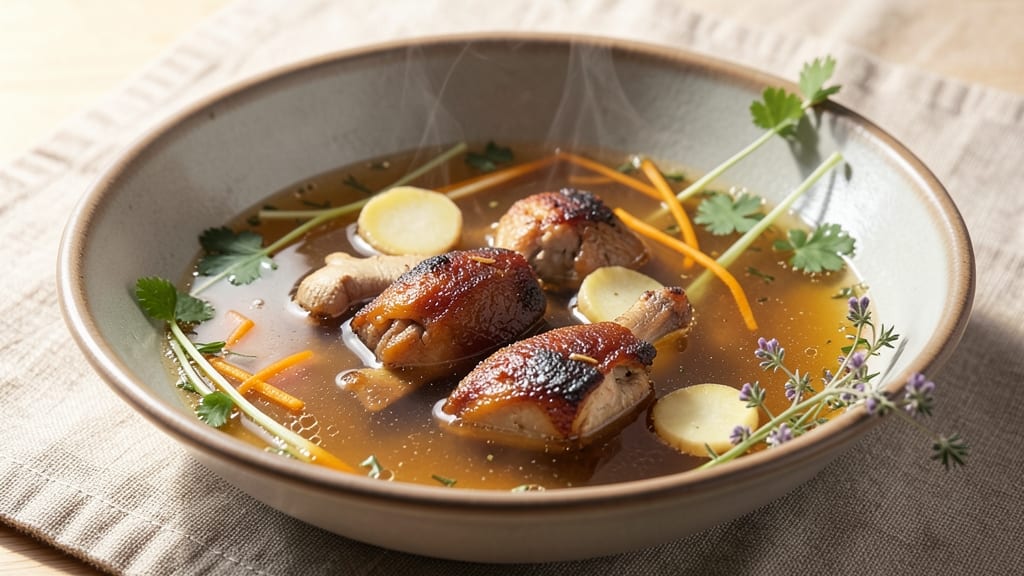
This low FODMAP chicken broth recipe delivers the gut-friendly comfort of homemade stock without triggering digestive discomfort. After years of perfecting broths for sensitive stomachs, I developed this method that preserves rich flavor while eliminating problematic ingredients like garlic and onions.
The secret lies in using fresh herbs, ginger, and a carefully selected spice blend that adds depth without FODMAPs.
What sets this broth apart is its clarity and depth—achieved through proper simmering and straining techniques that create a smooth, golden liquid packed with collagen and minerals.
Unlike store-bought versions, this recipe uses high-quality chicken pieces and simmers long enough to extract maximum flavor while keeping it gentle on digestion. The result is a broth so clean and aromatic, even those with sensitive digestive systems can enjoy it daily.
By the time you strain the final batch, you'll have a pale golden, crystal-clear broth that's perfect for soups, risottos, or sipping straight from a mug. The flavor profile is balanced—savory from the chicken, bright from fresh herbs, and subtly warming from ginger and turmeric.
This isn't just broth; it's a foundational ingredient that transforms every meal into something nourishing and comforting.
Store it in the refrigerator for up to 5 days or freeze for months—ideal for meal prep or keeping a gut-friendly pantry staple on hand. Whether you're managing IBS or simply seeking cleaner eating, this broth delivers restaurant-quality results at home. Let's get started with the ingredients you'll need.
Ingredients for low fodmap chicken broth
High-quality chicken pieces and fresh herbs create this crystal-clear, gut-friendly broth.
| Ingredient | Amount | Notes |
|---|---|---|
| Chicken Backs or Neck Pieces 🍗 | 2 lb | High collagen content for richness |
| Fresh Ginger Root 🧅 | ½ cup | Finely grated, low FODMAP |
| Fresh Turmeric Root 🌿 | ¼ cup | Finely grated, anti-inflammatory |
| Fresh Parsley Stems 🌿 | ½ cup | Tough stems only, no leaves |
| Fresh Cilantro Stems 🌿 | ¼ cup | Tough stems only, no leaves |
| Fresh Thyme Sprigs 🌿 | 4 whole | Low FODMAP, aromatic |
| Fresh Rosemary Sprigs 🌿 | 2 whole | Low FODMAP, piney flavor |
| Low FODMAP Onion Powder 🧅 | ½ tsp | Specially formulated blend |
| Sea Salt 🧂 | 1 ½ tsp | Diamond Crystal preferred |
| Black Peppercorns 🌶️ | ½ tsp | Crushed lightly |
| Apple Cider Vinegar 🍏 | 1 tbsp | Brightens flavor naturally |
| Cold Water 💧 | 8 cups | Enough to cover chicken |
The chicken pieces make all the difference—backs or necks from a trusted butcher yield the most collagen and richness. Local farms or Costco often have these cuts at reasonable prices, though most grocery stores carry them too. Look for pieces with a good amount of connective tissue—this is what breaks down into gelatin during simmering. Fresh ginger and turmeric should be vibrant and firm, not shriveled. Whole Foods or Trader Joe's carry organic roots that work beautifully here. The herbs? Don't waste money on fresh leaves—tough stems from parsley and cilantro contain the most flavor without being FODMAP triggers.
No fresh ginger? Powdered ginger works at half the amount, but fresh is ideal. Running out of thyme? Fresh oregano at the same quantity gives similar earthy notes. The apple cider vinegar might seem odd, but it's a game-changer for brightness—Bragg or organic brands work best. For the onion powder, Fody Foods or Low FODMAP brand blends are specifically formulated to avoid problematic compounds. If you can't find low FODMAP onion powder, skip it entirely—the broth will still be delicious without it.
This broth keeps beautifully—5 days refrigerated or 6 months frozen. For freezing, use ice cube trays for single portions or mason jars for larger batches. The fat will solidify on top, so skim it off before reheating. I always make a double batch—one for immediate use and one to freeze for those days when I need a quick, gut-friendly base. The flavor actually improves after a few days as the ingredients meld together.
Why You'll Love This Recipe
- No-Chop Necessary: I swear by this—just toss in those whole ginger and turmeric roots, unpeeled, and the broth still tastes like it simmered for hours. The chicken backs? They’re the secret—rich flavor without the fuss of deboning.
- Earthy Depth Magic: That combo of fresh turmeric and ginger? It’s like a warm hug in a bowl. No garlic, no onions—just pure, soothing spice that works in everything from soups to rice dishes without triggering sensitivities.
- Soup-to-Salad Sidekick: I make a big batch on Sundays and use it all week—sipping it straight, tossing it into stir-fries, or even drizzling it over grilled veggies. The parsley and cilantro stems add just enough freshness to keep it interesting.
- Budget-Friendly Goldmine: Chicken backs are cheap, and this recipe stretches them into gallons of broth. Freeze what you don’t use—it’s my go-to when I’m low on cash but still want something nourishing. (Yes, even on a Tuesday night.)
Step-by-step instructions for low FODMAP chicken broth
Here's how to craft a deeply flavorful, gut-friendly broth using just the right ingredients.
Prepare the Chicken and Aromatics
Begin by thoroughly rinsing the 2 lb chicken backs or neck pieces under cold water and patting them completely dry with paper towels. This step is crucial—the moisture will prevent proper browning later. While the chicken dries, peel the 0.5 cup fresh ginger root and 0.25 cup fresh turmeric root, then grate them finely using a microplane or box grater. The ginger should yield a bright yellow paste, and the turmeric a deeper golden hue.
Next, remove the leaves from the 0.5 cup fresh parsley stems and 0.25 cup fresh cilantro stems, keeping only the fibrous stems. Tie each herb bundle—parsley, cilantro, 4 whole fresh thyme sprigs, and 2 whole fresh rosemary sprigs—with kitchen twine to create herb bouquets. These bundles will infuse the broth without becoming too fibrous.
Build Deep Flavor in the Pot
Heat a large stockpot over medium-high heat until it's hot enough to sizzle. Add the chicken pieces in a single layer, letting them sear undisturbed for 3-4 minutes per side until they develop a golden-brown crust. This step unlocks the Maillard reaction, which builds rich, complex flavors. Once browned, remove the chicken and set it aside temporarily.
In the same pot, add 1 tablespoon apple cider vinegar and let it bubble for 30 seconds to deglaze the fond. This step extracts additional flavor from the browned bits. Immediately add the 8 cups cold water, bringing the mixture to a gentle boil. Stir in the 0.5 tsp low FODMAP onion powder, 1.5 tsp sea salt, and 0.5 tsp crushed black peppercorns, then return the chicken to the pot.
Simmer and Infuse the Broth
Reduce the heat to low, ensuring the broth maintains a gentle simmer—not a rolling boil—to prevent cloudiness. Add the grated ginger, turmeric, and herb bundles to the pot. The broth should cover the chicken by at least 1 inch. Skim off any foam or impurities that rise to the surface during the first 15 minutes of simmering, as this helps create a clearer final broth.
Let the broth simmer uncovered for 2.5 to 3 hours. You'll notice the chicken gradually breaks down, releasing collagen into the liquid, which will thicken the broth slightly. The aroma should evolve from sharp and vinegary to rich, earthy, and herbaceous. The ginger and turmeric will lend their signature warmth, while the herbs add depth without overpowering.
Strain and Finish
Once the broth has simmered for the full time, remove the chicken pieces and let them cool slightly before shredding or discarding the bones. Strain the broth through a fine-mesh sieve or cheesecloth-lined colander, pressing gently on the solids to extract every last drop of flavor. Discard the herb bundles and any remaining grated ginger and turmeric.
Taste the broth and adjust the seasoning if needed—you may want to add a pinch more sea salt or a splash of apple cider vinegar to brighten the flavor. Let the broth cool completely before refrigerating, where it will develop even more flavor over 24 hours. For best results, use within 5 days or freeze for up to 3 months. This broth is the foundation of countless gut-friendly meals, from soups to risottos.
Pro Tips For Making Low Fodmap Chicken Broth
- BLANCH CHICKEN FIRST: Toss those chicken backs or necks in boiling water for 2-3 minutes before simmering—this loosens grime and dirt stuck to the bones, so your broth stays cleaner. I learned this the hard way after straining a cloudy batch and wondering why my broth looked like pond water.
- GRATE GINGER AND TURMERIC FINE: Use the small holes of a box grater for the ginger and turmeric—this ensures even distribution and avoids chunks that won’t infuse properly. I used to chop them roughly, and the broth always tasted unevenly spiced.
- SKIP THE CILANTRO STEMS IF RUSHING: Parsley stems are non-negotiable for flavor, but cilantro stems add bitterness that some people dislike. If you’re short on time, just use parsley—your broth will still be rich and aromatic.
- SIMMER LOW AND LONG: Keep the heat at a bare simmer (tiny bubbles, not rolling) for at least 4 hours—this breaks down collagen in the bones for a deeper flavor. I used to rush it to 2 hours, and the broth always tasted thin and weak. Patience pays off.
Storing and reheating this recipe
Refrigerator Storage
This broth keeps beautifully in the refrigerator for up to 5 days when stored in an airtight glass container. I use 4-cup glass jars with snap-on lids because they preserve flavor better than plastic.
Let the broth cool completely before sealing—hot liquids create condensation that can dilute flavors and encourage bacterial growth. Place the jar in the coldest part of your fridge, away from strong-smelling foods like fish or garlic. The fat will solidify on top, so simply skim it off before reheating. 💧
Freezer Storage
For longer storage, freeze the broth in ice cube trays or mason jars for up to 6 months. Ice cubes are perfect for portion control—just pop one into soups or sauces as needed. For larger batches, leave 1-inch headspace in jars to prevent cracking.
I always label my jars with the date and contents to track freshness. When ready to use, thaw overnight in the fridge or reheat directly from frozen in a saucepan over low heat.
Reheating Methods
To reheat, pour the broth into a saucepan and warm over medium-low heat until it reaches 165°F. Stir occasionally to prevent scorching, and add 1-2 tablespoons of water if it looks too thick. Avoid microwaving—it can create a skin on the surface and uneven heating.
For quick reheating, I use a stainless steel double boiler over simmering water, which keeps the broth smooth and prevents hot spots. 🔥
Reviving Flavor
If your broth tastes flat after reheating, brighten it with a pinch of sea salt or a splash of apple cider vinegar—just ½ teaspoon can make a noticeable difference.
I also keep a small jar of fresh thyme leaves in my freezer; adding a few thawed leaves to reheated broth restores its aromatic depth. For extra richness, whisk in 1 teaspoon of olive oil before serving.
The key is to treat reheated broth like a fresh batch—adjust seasonings to taste.
Freezer-to-Fridge Transition
When transferring frozen broth to the fridge, thaw it overnight in the refrigerator rather than at room temperature. This prevents bacterial growth and maintains clarity. If you're short on time, place the sealed container in a bowl of cold water to speed up thawing while keeping it safe.
Once thawed, give it a good stir—broth often separates during freezing. If you notice any ice crystals or off flavors, strain it again through a fine-mesh sieve to restore its smooth texture. ✨
Nutrition facts
Frequently asked questions
Can I use chicken breasts instead of backs or necks for this broth?
While chicken breasts will work, they contain less connective tissue and collagen, which gives broth its rich, velvety texture. For the best results, stick with backs or necks—they yield a deeper, more flavorful broth. If you must use breasts, add 1 tablespoon of gelatin powder (low FODMAP) to mimic the thickness.
What can I substitute if I don't have fresh ginger or turmeric?
For fresh ginger, use ½ teaspoon of ground ginger (low FODMAP). For turmeric, try ¼ teaspoon of ground turmeric or a pinch of saffron threads for a different but equally aromatic touch. Both alternatives will still provide warmth and depth to your broth.
Why does my broth look cloudy after simmering?
Cloudiness usually means the broth boiled too vigorously, causing proteins to break down and scatter. To fix this, strain the broth through a cheesecloth-lined sieve or use a clarifying agent like egg whites (if not avoiding dairy). For future batches, maintain a gentle simmer and skim foam regularly.
How can I make this broth even more flavorful?
Boost richness by adding 1 bay leaf (remove before serving) or a splash of white wine (low FODMAP) during simmering. For umami depth, include 1 tablespoon of low FODMAP soy sauce or a dash of fish sauce (check for gluten-free if needed). Let it simmer 30 minutes longer for maximum extraction.
Is this broth safe for people with dairy sensitivities?
This recipe contains no dairy ingredients, making it safe for those with lactose intolerance or dairy sensitivities. The ginger, turmeric, and herbs provide natural anti-inflammatory benefits without triggering digestive issues. Always double-check your low FODMAP onion powder for dairy additives.