
Desserts
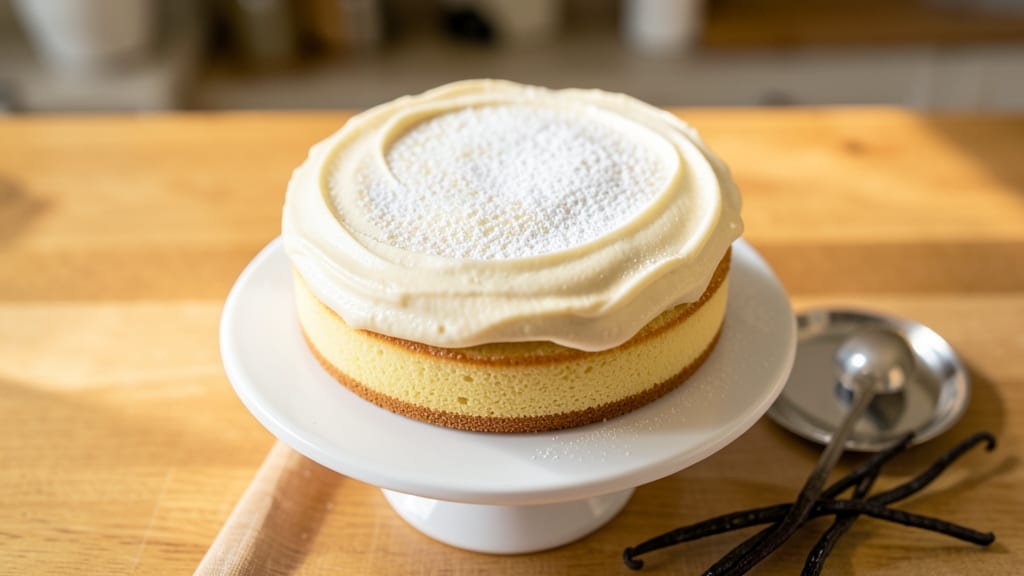
This Magnolia Bakery vanilla cake recipe delivers the same buttery layers and vanilla bean swirls that made their bakery famous. The secret lies in precise measurements and gentle folding—no shortcuts here, just restaurant-quality results at home.
I’ve perfected this method after years of baking, ensuring every slice has that signature tender crumb and rich vanilla flavor.
The recipe combines classic vanilla cake techniques with professional touches like baking powder for lift and vanilla bean paste for depth. With layers of moist butter cake and swirls of vanilla buttercream, this cake stays fresh for days and tastes even better the next day.
The key is patience—don’t rush the baking or mixing, as that’s what guarantees that signature texture.
By the time you pull it from the oven, you’ll have golden layers with a crackly top and a tender crumb that melts in your mouth. The vanilla buttercream adds just the right amount of sweetness, balancing the cake’s richness.
This is the kind of dessert that makes every occasion feel special—whether it’s a birthday, holiday gathering, or just a Sunday treat.
For the perfect finish, dust with powdered sugar or add fresh berries, but the cake shines on its own. Let’s get started on creating your own bakery-style vanilla cake.
Ingredients for magnolia bakery vanilla cake
Buttery layers and vanilla swirls start with these 12 essential ingredients.
| Ingredient | Amount | Notes |
|---|---|---|
| All-Purpose Flour 🌾 | 3 cups | Sifted for even texture |
| Granulated Sugar 🍚 | 2 ¼ cups | Divided for cake and buttercream |
| Unsalted Butter 🧈 | 1 ½ cups | Room temperature, full-fat |
| Large Eggs 🥚 | 6 whole | Room temperature, separated |
| Vanilla Bean Paste 🌸 | 2 tbsp | High-quality, real vanilla |
| Baking Powder 🧂 | 2 tsp | Fine, not instant |
| Salt 🧂 | ½ tsp | Fine sea salt |
| Whole Milk 🥛 | 1 cup | Room temperature |
| Powdered Sugar 🍚 | 4 cups | For buttercream |
| Vanilla Extract 🌸 | 1 tbsp | Pure, not imitation |
| Heavy Whipping Cream 🥛 | 1 cup | Cold, full-fat |
| Vanilla Bean Seeds 🌸 | 1 whole | Scraped from 1 pod |
The butter and vanilla are non-negotiable here. Plugrá brand butter is my go-to for that rich, bakery-style flavor, but any high-fat unsalted butter works. Grab a real vanilla bean from Williams Sonoma or a specialty store—those cheap bottles of imitation extract won’t cut it. Sift your flour and baking powder together (I use a fine-mesh sieve), and don’t skip the room-temperature eggs. The cake’s texture depends on it. For the vanilla bean paste, Madagascar bourbon is ideal, but any quality paste will do.
No vanilla bean? Double the extract, but you’ll miss that depth. Short on butter? Use 3/4 cup butter plus 1/4 cup neutral oil, but the cake won’t be as tender. The powdered sugar for buttercream should be 10x sifted—lumpy buttercream ruins everything. For the cream, heavy whipping cream is a must; half-and-half won’t whip properly. If you’re in a pinch, chilled cream cheese can replace some butter in the buttercream, but it changes the texture slightly.
Store cake layers wrapped in plastic at room temp for 2 days or in the fridge for 5 days. Buttercream keeps 1 week refrigerated or 3 months frozen. I always bake extra layers—freeze one for emergencies. The buttercream can be made a day ahead (it actually tastes better after resting). Dust with powdered sugar right before serving—it melts off too easily otherwise.
Why You'll Love This Recipe
- Foolproof Mix-In: I swear by this batter—just fold the dry ingredients into the creamed butter and eggs, then let the vanilla bean paste do the heavy lifting. No sifting, no stress, and the cake still rises like a dream.
- Vanilla Overload: That single teaspoon of vanilla bean paste? It’s not just flavor—it’s depth. The swirls of real vanilla seeds in every slice make this taste like a bakery secret, not a homemade hack.
- Dress-Up or Keep It Simple: Slather it with buttercream for a wedding cake vibe, or serve it plain with a dusting of powdered sugar for a lazy Sunday. The base is so neutral it adapts to anything—even my kid’s “just cake” phase.
- Budget Bakery Magic: You’re using pantry staples here—no pricey specialty flours or exotic sugars. That said, the butter and vanilla paste make it feel luxurious without breaking the bank. Leftovers? They last forever in the fridge.
Step-by-step instructions for Magnolia bakery vanilla cake
Here's how to create layers of buttery perfection with signature vanilla bean swirls.
Prepare the Cake Batter
Preheat your oven to 350°F and grease two 9-inch round cake pans, lining the bottoms with parchment paper. In a large mixing bowl, combine the 3 cups all-purpose flour, 2 tsp baking powder, and 0.5 tsp salt. Sift this mixture together to remove any lumps and ensure an even texture throughout your cake.
In a separate, large bowl, cream together the 1.5 cups unsalted butter and 1 cup of the 2.25 cups granulated sugar on medium speed until light and fluffy, about 3-4 minutes. This step is crucial—it incorporates air that will make your cake tender. Add the 6 whole large eggs, one at a time, mixing well after each addition. The mixture should nearly double in volume and become pale in color.
Add the 2 tbsp vanilla bean paste and 1 tbsp vanilla extract to the butter mixture, mixing until fully combined. Scrape down the sides of the bowl to ensure everything is evenly incorporated. Gradually add the 1 cup whole milk while mixing on low speed until just combined. Finally, alternate adding the remaining 1.25 cups granulated sugar and the flour mixture, beginning and ending with the flour. Mix on low speed just until the batter is smooth and no streaks of flour remain.
Bake and Create Vanilla Bean Swirls
Divide the batter evenly between the two prepared cake pans. Scrape a vanilla bean with the tip of a knife to release the seeds, then cut the bean lengthwise and place one half in each pan. Gently swirl the batter around the vanilla bean halves using a butter knife, creating elegant vanilla bean swirls throughout each layer. This is where the signature Magnolia flavor comes to life.
Bake the cakes for 25-30 minutes, or until a toothpick inserted into the center comes out clean. The cakes should be golden brown on top and slightly domed in the center. Rotate the pans halfway through baking for even cooking. Let the cakes cool in the pans for 10 minutes, then transfer them to a wire rack to cool completely.
Prepare the Vanilla Bean Buttercream
While the cakes cool, prepare the buttercream by beating the 1.5 cups unsalted butter at room temperature in a large mixing bowl until smooth and creamy, about 2-3 minutes. Gradually add the 4 cups powdered sugar, mixing on low speed until combined. Increase the speed to medium and beat for 2-3 minutes until the buttercream is light and fluffy.
Add the 1 cup heavy whipping cream, 1 tbsp vanilla extract, and the seeds from the scraped vanilla bean. Mix on medium speed until fully incorporated and the buttercream reaches a smooth, pipeable consistency. Taste and adjust the sweetness if needed, though the recipe should be perfectly balanced. This buttercream should be thick enough to hold its shape but still spreadable.
Assemble the Cake
Once the cakes are completely cool, place one layer on a cake stand or plate. Spread a generous layer of the vanilla bean buttercream over the top, leaving a small border around the edges. Place the second cake layer on top and repeat the buttercream process. Use a long serrated knife to level the top of the cake if needed, then spread the remaining buttercream over the entire surface.
For the signature swirls, pipe additional buttercream around the edges of the cake and gently swirl it into the center using the tip of a knife. Finish by dusting the top and sides with a thin layer of powdered sugar using a fine-mesh sieve for a professional touch. Chill the cake in the refrigerator for 30 minutes before serving to allow the buttercream to set slightly and the flavors to meld.
Pro Tips For Making Magnolia Bakery Vanilla Cake
- MEASURE BUTTER PRECISELY: Weigh your butter—not scoop it. That 1 cup of packed butter? It’s actually 226 grams, not 240. I used to eyeball it, and my cakes turned out dense or greasy. A kitchen scale guarantees the right texture every time.
- WHISK EGGS UNTIL THICK: Beat those eggs until they’re pale, thick, and ribbon-like—about 3-4 minutes with a hand mixer. Stopping early means your cake won’t rise as high or stay as moist. (Yes, even if you’re impatient like me.)
- DON’T OVERMIX THE BATTER: Fold in the flour just until combined—lumpy is fine. Overmixing develops gluten, and your cake will turn tough instead of tender. Think "quick swirls, not a blender."
- LET THE CAKE COOL STRATEGICALLY: Run a knife around the edges before pulling it from the pan, then let it cool upside-down for 10 minutes. This keeps the layers from collapsing when you flip it. (Your future self will thank you.)
Regional styles of magnolia bakery vanilla cake
Southern Bakery Roots
Magnolia Bakery’s vanilla cake traces back to classic Southern baking traditions, where butter and vanilla take center stage. The original recipe emphasizes light, airy layers—a hallmark of Southern desserts—paired with rich vanilla flavor.
I’ve noticed how Southern bakeries often use whole vanilla beans instead of extract for that authentic depth, and this recipe follows that tradition. The buttercream swirls are another nod to classic Southern cake decorating, where presentation matters just as much as taste. 🌸
Texas-Style Adaptation
In Texas, bakeries often enhance vanilla cakes with a touch of citrus zest or spiced rum for complexity. For a Texas twist, add 1 tsp lemon zest to the batter and a splash of spiced rum (like Bacardi) to the buttercream.
The warmth of the rum complements the vanilla beautifully, while the lemon brightens the rich flavors. Texas bakeries also sometimes use brown sugar in the cake for a caramelized depth—swap ½ cup granulated sugar for ½ cup light brown sugar if you prefer this variation.
New Orleans Twist
New Orleans bakeries love to infuse their desserts with Cajun spices, and this cake is no exception. For a Creole-inspired version, add ½ tsp ground cinnamon and ¼ tsp cayenne pepper to the batter—just enough to give it a subtle kick.
Top the assembled cake with a praline glaze (melt ½ cup brown sugar with ¼ cup heavy cream and 1 tbsp butter, then drizzle over the cake). The praline adds that signature New Orleans sweetness with a crunchy texture. 🍴
Modern Fusion Approach
For a contemporary take, try a matcha-infused vanilla cake. Replace 1 tbsp of the vanilla bean paste with 1 tbsp high-quality matcha powder (like Ippodo Tea) for a subtle earthy note. The matcha pairs surprisingly well with vanilla, creating a sophisticated flavor profile.
For the buttercream, add 1 tsp matcha powder along with the vanilla extract. This fusion style is popular in urban bakeries and adds a unique twist to the classic recipe.
Regional Vanilla Variations
Not all vanilla beans are created equal—regional growing conditions affect flavor. Madagascar bourbon vanilla (like the one used in this recipe) is sweet and floral, perfect for classic vanilla cakes. For a Tahitian vanilla twist, use 1 tbsp Tahitian vanilla bean paste instead—it’s more fruity and aromatic.
If you’re in the Pacific Northwest, Mexican vanilla (grown in Papantla) has a smoky depth that adds complexity. Each variation changes the cake’s character, so experiment to find your favorite! 🌍
Nutrition facts
Frequently asked questions
Can I make this vanilla cake without a vanilla bean?
Yes, but you'll miss the depth of flavor. Use 2 tbsp high-quality pure vanilla extract instead of the vanilla bean paste and extract. For extra richness, add 1 tsp vanilla sugar (dried vanilla bean pieces mixed with sugar) to the dry ingredients. The texture won't change, but the flavor will be slightly less complex.
Why does the cake sink in the middle if baked too long?
The cake sinks when overbaked because the moisture evaporates too quickly, causing the center to collapse. Always check for doneness with a toothpick at 25-30 minutes—it should come out with a few crumbs, not wet batter. If you prefer a firmer texture, pull it out when the toothpick test is clean and let it rest 10 minutes before removing from pans.
How do I store leftover cake?
Wrap the cake tightly in plastic wrap and store at room temperature for 2 days. For longer storage, refrigerate for up to 5 days or freeze the assembled cake (without powdered sugar) for 3 months. Bring to room temperature before serving—cold buttercream can make the cake taste bland.
Can I substitute buttercream with cream cheese frosting?
You can try, but the texture will be denser. Replace ½ cup butter in the buttercream with 4 oz softened cream cheese and reduce the powdered sugar to 3.5 cups. The flavor will be tangier, but the cake's signature lightness may be compromised. For best results, stick with the original buttercream recipe.
What's the secret to getting the swirls to look perfect?
Use a long serrated knife to gently drag the batter around the vanilla bean halves in the pan, creating clean swirls. For assembly, pipe buttercream in a spiral pattern around the cake edges and swirl it into the center with the knife tip. Work quickly—warm buttercream spreads faster than cold, making it easier to shape.