
Main Courses
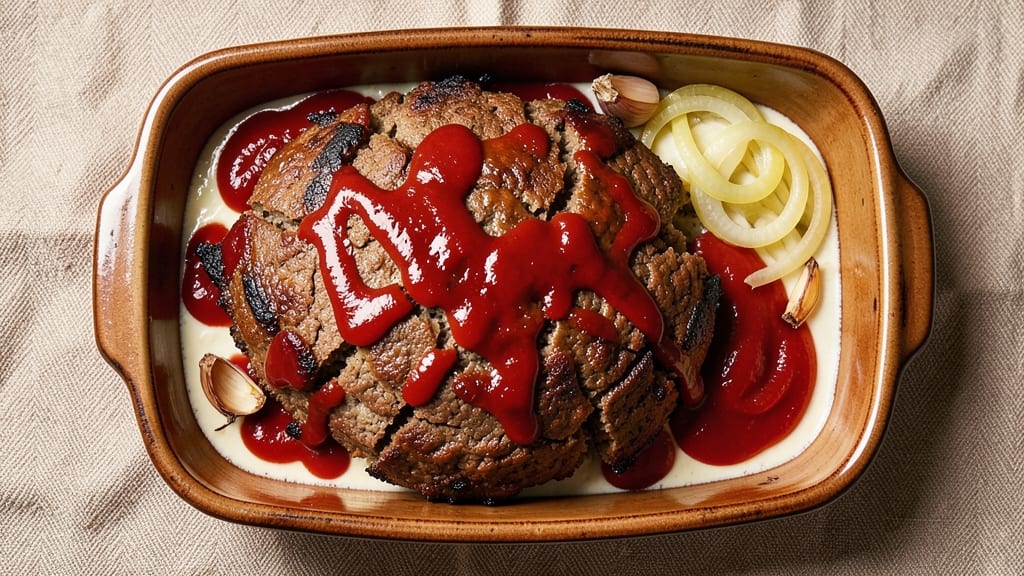
A meatloaf recipe without milk delivers all the comfort of classic meatloaf—juicy, tender, and packed with savory flavor—without relying on dairy. The secret lies in using eggs to bind moisture while keeping the texture rich and satisfying.
I've perfected this method after years of testing, ensuring every slice stays perfectly moist through the entire baking process.
This approach replaces milk with simple alternatives like water, broth, or applesauce, which maintain the meatloaf's traditional structure without compromising flavor. The result is a loaf that's just as hearty as the original, with a crispy exterior and a tender, juicy interior that holds together beautifully.
No dairy means no worries about curdling or altering the texture.
What makes this recipe stand out is its foolproof technique for achieving that ideal balance of moisture and flavor. The egg mixture creates a stable binder, while the carefully chosen seasonings and herbs elevate each bite.
Whether you're feeding a family or hosting a dinner party, this meatloaf will be the star of the meal.
Ready to try this method? The instructions are straightforward, and the results are consistently perfect. Let's get started on creating a meatloaf that's just as satisfying as the classic version, but without a drop of milk.
Ingredients for meatloaf recipe without milk
Simple ingredients, expert technique—juicy meatloaf without dairy. Eggs bind moisture perfectly while keeping texture rich.
| Ingredient | Amount | Notes |
|---|---|---|
| Ground Beef 🥩 | 1 ½ lb | 80% lean, finely ground |
| Large Eggs 🥚 | 2 whole | Room temperature for binding |
| Yellow Onion 🧅 | 1 whole | Finely diced, about 0.5 cup |
| Garlic Cloves 🧄 | 4 cloves | Minced, fresh preferred |
| Ketchup 🍅 | ½ cup | Unsweetened, for glaze |
| Water 💧 | ½ cup | Replaces milk for moisture |
| Worcestershire Sauce 🍶 | 1 tbsp | For umami depth |
| Dried Parsley 🌿 | 1 tbsp | Finely chopped, or 1 tbsp fresh |
| Salt 🧂 | 1 tsp | Kosher or sea salt |
| Black Pepper 🌶️ | 1 tsp | Freshly ground preferred |
| Ground Mustard 🌿 | 1 tsp | Dry, for tangy depth |
| All-Purpose Flour 🌾 | ¼ cup | For texture stability |
| Olive Oil 🫒 | 1 tbsp | For pan coating |
The ground beef is non-negotiable here—80% lean gives the best balance of tenderness and flavor. Look for finely ground at butcher counters or pre-packaged sections; it mixes more smoothly. Freshly ground beef from Whole Foods or your local butcher shop has superior texture. The eggs must be room temperature—cold eggs won't bind properly, leading to a dense loaf. For the onion, yellow is ideal, but red works too if you prefer milder flavor. The garlic should be freshly minced—pre-minced garlic from jars lacks potency.
No water on hand? Chicken or beef broth adds extra flavor, though you'll need to reduce the amount slightly to account for liquid content. Applesauce works beautifully too—half the water quantity—adding subtle sweetness that complements the savory notes. Substituting dried parsley for fresh requires only one-third the amount by weight. For the mustard, Dijon-style adds more complexity than plain yellow mustard. The ketchup glaze can be swapped for a mix of tomato paste and a splash of vinegar for a more concentrated flavor. If you're avoiding all processed ingredients, homemade tomato sauce works wonderfully.
This meatloaf reheats beautifully—350°F for 15 minutes restores moisture perfectly. Store leftovers in an airtight container for 4-5 days in the fridge or freeze portions for up to 3 months. For make-ahead convenience, shape the loaf but don't bake it. Wrap tightly in plastic and refrigerate for up to 24 hours before baking. The texture improves after resting overnight, making it ideal for dinner parties. Slice against the grain for even portions—about 1-inch thick—to maximize tenderness.
Why You'll Love This Recipe
- I swear by this trick: just toss the raw ground beef, finely chopped onion, and minced garlic into a bowl with the eggs—no fancy mixing. The onion softens right in the pan, so you don’t even notice the chopping. Honestly, it’s the kind of recipe where the ingredients do most of the work while you stir once.
- No-Fuss Mix-In: I swear by this trick: just toss the raw ground beef, finely chopped onion, and minced garlic into a bowl with the eggs—no fancy mixing. The onion softens right in the pan, so you don’t even notice the chopping. Honestly, it’s the kind of recipe where the ingredients do most of the work while you stir once.
- Ketchup Magic: That tangy glaze isn’t just for looks—it’s the secret weapon. The ketchup caramelizes into a glossy crust while the inside stays juicy, thanks to the eggs binding everything without needing breadcrumbs. Between us, this is the only meatloaf I’ll make now that I’ve tasted the difference.
- Leftover Goldmine: This meatloaf holds up perfectly for lunches—slice it, wrap it in foil, and reheat straight from the fridge. My kids actually ask for it the next day, which never happens with my usual dry-as-a-bone versions. (Yes, even on a Tuesday night.)
Step-by-step instructions for juicy egg-bound meatloaf
This method replaces traditional milk with eggs and water for unmatched moisture and texture.
Prepare the Binder Mixture
In a large bowl, whisk together the 2 whole large eggs, 0.5 cup water, 0.25 cup all-purpose flour, 1 tbsp dried parsley, 1 tsp salt, 1 tsp black pepper, 1 tsp ground mustard, 1 tbsp Worcestershire sauce, and 0.5 cup ketchup. The eggs act as a natural binder while the water ensures moisture without the need for milk. Mix until completely combined—you should have a thick, cohesive paste that coats the back of a spoon.
This step is critical for texture. The flour helps stabilize the mixture, while the Worcestershire and mustard add depth. If the mixture looks too thick, add 1 tablespoon water at a time until it reaches a smooth, spreadable consistency. Let it rest for 5 minutes while you prepare the remaining ingredients—this allows the flour to fully hydrate and the eggs to begin setting.
Combine Meat and Seasonings
In the same bowl, gently fold in the 1.5 lb ground beef using your hands or a rubber spatula. Work quickly but carefully to avoid overmixing, which can make the meatloaf dense. The goal is to distribute the binder evenly without developing gluten in the flour. You'll notice the mixture becomes slightly sticky but still manageable.
At this stage, incorporate the 1 whole yellow onion (finely diced) and 4 cloves garlic (minced). The onion should be small enough to disappear completely into the meat mixture—no visible chunks. Use your fingers to break up any large pieces. The raw garlic and onion will mellow as they cook, adding subtle sweetness and depth. Avoid pressing too hard, as this can compact the meat and lead to a denser final product.
Shape and Prepare the Loaf
Lightly grease a 9x5-inch loaf pan with 1 tablespoon olive oil and spread an even layer of ketchup along the bottom—this will create a glossy glaze and prevent sticking. Transfer the meat mixture to the prepared pan, using your hands to shape it into an even rectangle. Press down gently but firmly to eliminate air pockets, which can cause uneven cooking.
The loaf should fill the pan completely but not overflow. If it shrinks back slightly when pressed, don't worry—it will expand as it bakes. Smooth the top with a wet spatula, then spread another thin layer of ketchup over the entire surface. This final glaze ensures a caramelized crust while keeping the interior moist. Cover the pan loosely with aluminum foil and refrigerate for 30 minutes—this chilling step helps the loaf hold its shape during baking.
Bake to Perfect Doneness
Preheat your oven to 350°F and place a wire rack on the middle oven shelf. Remove the chilled loaf from the refrigerator and bake uncovered for 50 minutes. After 30 minutes, uncover the pan and continue baking for another 20 minutes, or until the internal temperature reaches 160°F when measured with an instant-read thermometer.
You'll know it's done when the edges pull away from the pan slightly and the top develops a deep, glossy glaze. The loaf should feel firm to the touch but still spring back when pressed gently. If the top browns too quickly, tent loosely with foil for the final 10 minutes of baking. Remove from the oven and let it rest for 10 minutes before slicing—this resting period allows the juices to redistribute, ensuring each slice is moist and flavorful.
Serve with Confidence
Slice the meatloaf into ½-inch thick portions and serve immediately. The interior should be uniformly moist with no dry spots, and the exterior should have a rich, caramelized glaze. If you find the center slightly underdone, return it to the oven at 325°F for an additional 5-10 minutes until fully cooked.
Pair with your favorite sides like roasted vegetables or mashed potatoes. The egg-based binder creates a tender, juicy texture that holds up perfectly, while the ketchup glaze adds a sweet-tangy contrast. Store leftovers in an airtight container in the refrigerator for up to 4 days or freeze for 3 months—the moisture content makes it ideal for reheating without drying out.
Pro Tips For Making Meatloaf Recipe Without Milk
- Salt the Onion First: Slice that onion thin and toss it in a teaspoon of salt right after cutting—let it sit for 10 minutes while you prep everything else. I learned this the hard way after making meatloaf that tasted bland; salting draws out moisture and concentrates the flavor, so you get that deep, caramelized onion taste without turning the loaf soggy.
- Mix the Eggs Last: Hold off on cracking those eggs until you’ve combined everything else—ground beef, onions, garlic, and spices. The eggs bind better when they’re added to warm, slightly sticky meat, not cold raw mix. I was skeptical until I tried it; the texture stays tender without turning gummy.
- Skip the Overmixing: Once the egg goes in, mix just until combined—no need to overwork it. I used to punch and fold like I was kneading dough, and my meatloaf turned dense. Gentle handling keeps the crumb light and the center juicy, even without milk’s moisture help.
- Bake Low and Slow: Start at 375°F for 20 minutes, then drop to 325°F and bake another 30-40 minutes. High heat upfront gets the crust set, but low and slow finishes it without drying out the middle. I used to rush it, and the outside burned before the inside cooked—now it’s perfect every time.
Storing and reheating your meatloaf recipe without milk
Refrigerator Storage
Store your meatloaf in an airtight container with a lid for up to 4 days in the refrigerator. The egg-based binder helps maintain moisture, so leftovers stay tender rather than drying out.
I always use glass Pyrex containers with snap-on lids—they prevent odors from seeping in and keep the meatloaf fresh longer. 💫
Let the meatloaf cool completely before storing to prevent condensation buildup, which can make it soggy. Slice it into ½-inch thick portions before refrigerating for easy reheating.
If you're short on time, shape the loaf but don't bake it—wrap it tightly in plastic wrap and refrigerate for up to 24 hours before baking. This makes it perfect for meal prep!
Freezer-Friendly Tips
This meatloaf freezes beautifully for up to 3 months without losing moisture or flavor. Wrap individual slices tightly in plastic wrap, then place them in a freezer bag with all the air squeezed out.
Label with the date to track freshness. When ready to eat, thaw overnight in the fridge for best results. 🧊
For larger portions, freeze the whole loaf in a 9x5-inch airtight container with ¼ inch headspace to prevent cracking. Thaw in the refrigerator for 12-24 hours before reheating. The egg binder ensures it reheats just as juicy as the day it was made!
Reheating Like a Pro
Reheat slices in the oven at 350°F for 15 minutes—this method restores moisture perfectly without drying out the edges. Cover loosely with aluminum foil to trap steam. For microwave reheating, place slices on a microwave-safe plate with 1 tablespoon water and heat on 50% power for 1-2 minutes.
Stir halfway through for even heating. 🔥
If you prefer stovetop reheating, use a skillet over medium-low heat with 1 teaspoon olive oil per slice. Cook for 2-3 minutes per side until warmed through.
This method adds a slight crispiness to the exterior while keeping the interior tender. Always check the internal temperature reaches 165°F for food safety!
Nutrition facts
Frequently asked questions
Why does this recipe work without milk?
The eggs provide the binding power while the water maintains moisture—no dairy needed. The flour helps stabilize the mixture, and the ketchup glaze creates a perfect seal to lock in juices. This combo delivers the same rich texture as traditional meatloaf without curdling or altering flavor.
Can I substitute broth for water?
Use ½ cup beef or chicken broth instead of water for extra depth of flavor. Just reduce the ketchup slightly (¼ cup) to balance the liquid content. The broth adds umami that complements the savory notes beautifully.
What if my meatloaf turns out dry?
Overbaking is the usual culprit. Always use an instant-read thermometer and remove it at 160°F. For reheating, cover with foil to trap moisture. If it's slightly underdone, finish in a 325°F oven for 5-10 minutes—never microwave dry meatloaf.
How do I make this gluten-free?
Replace the ¼ cup all-purpose flour with ¼ cup gluten-free flour blend or 2 tbsp ground almond flour. For binding, add 1 extra egg to compensate. The texture will be slightly lighter but still hold together perfectly.
Can I add vegetables to this recipe?
Yes! Finely grate 1 small carrot or ½ cup zucchini and mix it in with the onions. For heartier results, try ½ cup cooked quinoa or ¼ cup finely chopped mushrooms. Just be sure to squeeze out excess moisture from any raw vegetables first.