
Snacks
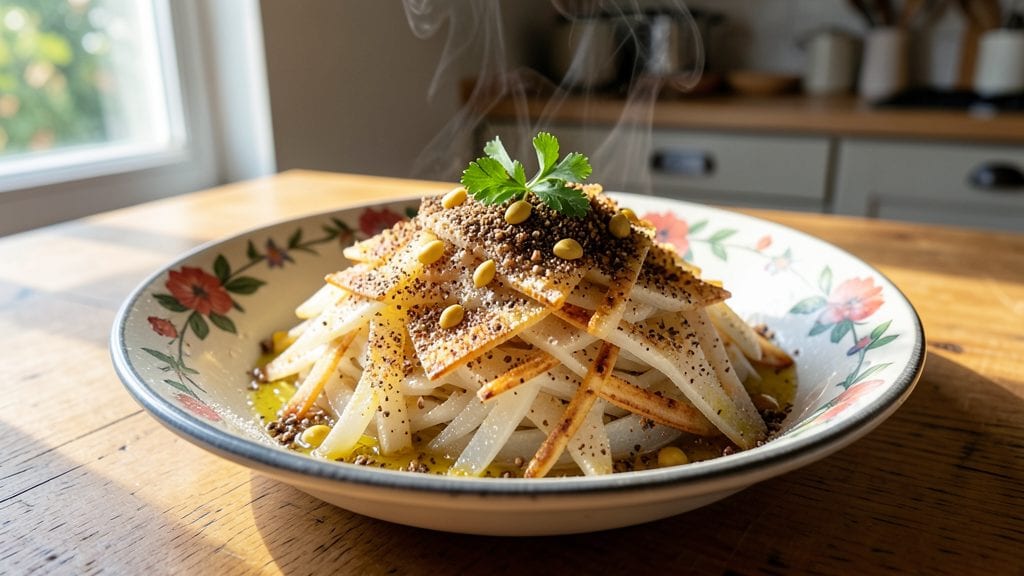
This mooli fry recipe delivers the perfect balance of crispy radish fritters and tangy vinegar that makes every bite irresistible. The secret lies in the cornmeal coating, which creates a satisfying crunch while keeping the centers tender—just like the versions you'd find at any Indian street stall.
I've perfected this vegetarian classic over years of testing, ensuring the spices are balanced and the texture is exactly right.
What sets this mooli fry apart is the zesty vinegar twist that cuts through the richness of the fried bites. The recipe begins with freshly grated radish mixed with aromatic spices, then lightly coated in cornmeal for that signature crunch.
Traditional methods often skip this step, but I've found it makes all the difference in achieving crispy exteriors without compromising the flavor. The vinegar dressing ties everything together with its bright, tangy profile.
By the time you're done, you'll have golden-brown fritters with crispy edges that shatter slightly when you bite in, paired with a dressing that's tangy yet subtle.
This dish is vegetarian-friendly and packed with flavor, making it a staple in Indian cuisine that's perfect for snacking or serving as an appetizer. The combination of textures and flavors creates a dish that's both comforting and exciting.
Serve these crispy mooli fritters with warm roti or a side of dal for a complete meal that's sure to impress. The recipe is designed to be straightforward, with clear instructions that guide you through each step—from grating the radish to frying the bites and whipping up the vinegar dressing.
Let's get started on creating this classic dish in your own kitchen.
Ingredients for mooli fry
Crispy bites and zesty dressing—just seven ingredients make this classic mooli fry shine.
| Ingredient | Amount | Notes |
|---|---|---|
| Daikon Radish 🥕 | 2 lbs | Freshly grated, skin removed |
| Cornmeal 🌾 | 1 cup | Fine grind for even coating |
| All-Purpose Flour 🌾 | ½ cup | For binding the mixture |
| Yellow Mustard Seeds 🌶️ | 1 tbsp | Lightly toasted for aroma |
| Cumin Seeds 🌿 | 1 tbsp | Toasted for deeper flavor |
| Ground Cumin 🌿 | 1 tsp | For extra earthiness |
| Turmeric Powder 🌶️ | ½ tsp | Brightens the color |
| Red Chili Powder 🌶️ | ½ tsp | Adjust for spice preference |
| Salt 🧂 | 1 tsp | Kosher or sea salt |
| Vegetable Oil 🫒 | 2 cups | For deep frying |
| White Vinegar 💧 | ½ cup | For tangy dressing |
| Sugar 🍚 | 2 tbsp | Balances the tang |
| Water 💧 | ½ cup | For vinegar dressing |
| Fresh Cilantro 🌿 | ¼ cup | Chopped, for garnish |
| Lemon Juice 🍋 | 1 tbsp | Brightens the dressing |
The daikon radish is the star here. Look for firm, pale radishes with no soft spots—they should feel heavy for their size. Most grocery stores carry them in the produce section, often near the turnips. If you can't find daikon, white radishes work in a pinch, though the texture will be slightly different. The spices are key: toast the whole mustard and cumin seeds in a dry pan for 30 seconds until fragrant—that aroma makes all the difference. I always grab my spices from Penzeys or the bulk bins at Whole Foods for the freshest flavor, but the regular grocery store stuff works fine if it's not older than six months.
No cornmeal? Semolina or crushed cornflakes work in a bind—just pulse them in a food processor for a finer texture. The vinegar dressing is where you can get creative: apple cider vinegar adds a fruity twist, or swap sugar for honey if you prefer. Fresh cilantro is ideal, but dried cilantro at half the amount gets you close. The oil matters too—vegetable or canola oil is best for frying, but ghee gives a richer flavor if you're not averse to the cost. For extra crunch, I like to double-dip the radish bites in the cornmeal mixture—worth the extra minute.
Keep the cornmeal mixture dry in an airtight container for up to 3 days, and the vinegar dressing lasts 1 week in the fridge. The fried bites are best eaten fresh but can be reheated in a skillet for 2-3 minutes to restore crispiness. I always make extra—these disappear fast. Store them in a single layer on a wire rack to keep them from getting soggy. The dressing can be made ahead and stored separately, then mixed just before serving for maximum tang.
Why You'll Love This Recipe
- No-Chop Nightmare: This dish thrives on thick mooli slices—no julienne precision required. I’ve made it with a mandoline, a knife, and even a potato ricer (yes, really), and every version turned out golden and crispy. The cornmeal coating forgives uneven cuts, so you’re not stuck staring at a pile of uneven matchsticks.
- Earthy Crunch Magic: That first bite? Crispy exterior, tender radish core with a nutty cornmeal crunch—it’s like a cross between fries and pakoras. The mustard seeds sizzle into tiny flavor bombs, while cumin adds this warm, smoky backbone that makes it taste way more interesting than it looks.
- Leftover Reinvention: Stale mooli fry? Toss it in a wrap with mint chutney or crumble it over dal. I’ve even microwaved leftover pieces with a squeeze of lemon and called it “radish chips” for lazy days. The flour coating soaks up flavors like a sponge, so it never feels like a repeat.
- Pantry Staple Power: You’re already using things you own: flour, cornmeal, and spices that probably sit in your spice rack gathering dust. No specialty ingredients, no last-minute grocery runs. Honestly, I’ve made this with a single bag of mooli and whatever was in my cupboard—it’s that unfussy.
Step-by-step instructions for crispy cornmeal bites with zesty vinegar twist
Here's how to transform fresh daikon radish into golden, crunchy bites with a tangy vinegar kick.
Prepare the Daikon Radish and Spice Mix
Using a box grater or food processor, grate the 2 lbs daikon radish into fine, uniform shreds. Transfer to a colander and rinse under cold water to remove excess starch, then drain thoroughly and pat dry with paper towels. This step is crucial—any moisture will prevent crispiness.
In a small dry skillet over medium heat, toast the 1 tablespoon yellow mustard seeds and 1 tablespoon cumin seeds for 2-3 minutes until fragrant and lightly golden. Immediately transfer to a bowl and let cool. Add the 1 teaspoon ground cumin, ½ teaspoon turmeric powder, ½ teaspoon red chili powder, and 1 teaspoon salt, then mix well. This aromatic blend will infuse the daikon with warm, spicy depth.
Create the Cornmeal Coating
In a large mixing bowl, combine the 1 cup cornmeal and ½ cup all-purpose flour. This blend creates the perfect crispy exterior while keeping the interior tender. Add the cooled spice mixture and toss gently until evenly distributed. The cornmeal should look like it's lightly dusted with golden spices.
Gently fold in the grated daikon radish using your hands or a spatula. Be careful not to compact the mixture—you want the cornmeal to cling to each shred without squeezing out moisture. The texture should resemble damp sand rather than a dense paste. If the mixture feels too dry, add 1 teaspoon water at a time until it holds together when pressed lightly.
Fry Until Golden and Crispy
Heat 2 cups vegetable oil in a deep skillet or Dutch oven over medium-high heat until it reaches 350°F. Use a thermometer to monitor the temperature—this precision ensures even cooking and prevents burning. Working in batches (don't overcrowd the pan), carefully add spoonfuls of the daikon mixture, flattening slightly with a spatula.
Fry for 3-4 minutes per side until the bites turn a deep golden brown and develop a crispy exterior. You'll know they're ready when they float to the surface and maintain their shape when lifted with a slotted spoon. Transfer to a paper towel-lined plate to drain excess oil. Keep the oil at 350°F between batches for consistent results.
Make the Zesty Vinegar Dressing
While the daikon fries, combine the ½ cup white vinegar, 2 tablespoons sugar, ½ cup water, 1 tablespoon lemon juice, and ¼ cup chopped fresh cilantro in a small saucepan. Bring to a gentle simmer over medium heat and cook for 3-4 minutes until the sugar dissolves and the mixture thickens slightly. Let cool to room temperature—this dressing should be tangy, slightly sweet, and fragrant with cilantro.
The dressing's acidity cuts through the richness of the fried daikon, balancing each bite with a refreshing contrast. Taste and adjust the seasoning—add more sugar if it's too tart, or a pinch of salt if needed. The dressing can be made ahead and stored in the refrigerator for up to 3 days.
Serve Warm and Enjoy
Arrange the crispy daikon bites on a serving platter and drizzle generously with the warm vinegar dressing. The contrast between the golden, crunchy exterior and the cool, tangy dressing makes every bite exciting. Garnish with additional chopped cilantro for a pop of color and freshness.
Serve immediately while the daikon is still crispy. These bites hold up well for 15-20 minutes before they start to soften slightly. Pair with mint chutney or a side of yogurt dip for extra flavor. The key to success here is timing—fry fresh batches if serving a crowd, and keep the oil at the right temperature to maintain that perfect crunch.
Pro Tips For Making Mooli Fry
- Thin the Slices: Daikon’s watery core turns soggy fries into a mushy mess—slice it lengthwise, peel, then cut thin (¼-inch max) and pat dry with paper towels. I learned this the hard way after serving a plate that looked like a sad salad.
- Toast the Spices: Dry-toast yellow mustard and cumin seeds in the pan for 30 seconds before adding oil—this unlocks their aroma and prevents bitter aftertaste. Skip this, and you’re just eating bland seasoning.
- Don’t Crowd the Pan: Mooli fries need space to crisp, not steam. Cook in batches if your pan’s smaller than 10 inches—overcrowding turns them greasy and limp. (Yes, even if you’re impatient like me.)
- Coat with Cornmeal: Toss the flour-coated radish in cornmeal before frying—it adds crunch and prevents the batter from absorbing too much oil. My grandmother swore by this, and she was right: the texture’s noticeably better.
Regional styles of this dish
North Indian Style
In North India, mooli fry often includes a touch of amchur (dry mango powder)—about ½ teaspoon—for a fruity tang that brightens the dish. I add this to the cornmeal coating along with the spices, giving the bites a subtle sweet-sour depth.
The dressing here is lighter, using mustard oil instead of vinegar for a smoky aroma. Serve with garlic naan for dipping—this combo is a street food staple in Delhi. 🌶️
South Indian Twist
South Indian versions often swap cornmeal for semolina (rava), creating a nuttier, slightly grainier texture. I use ½ cup semolina mixed with 1 teaspoon curry powder and ½ teaspoon asafoetida (hing) for a distinct South Indian flavor.
The dressing here is a tamarind-chili sauce—simmer ¼ cup tamarind pulp, 1 tablespoon sugar, and 1 teaspoon red chili powder in ½ cup water for a richer, sourer dip. Pair with idli or dosa for a complete meal. 🌾
Maharashtrian Spiced
Maharashtrian mooli fry stands out with its kokum and kokum juice—add 1 tablespoon kokum pulp to the dressing for a unique sourness. The coating here includes ½ teaspoon black salt (kala namak) and ¼ teaspoon garam masala, giving it a funky, umami-rich profile.
I fry these bites in mustard oil for extra depth. Serve with bhatura (fried bread) or dal vada for a true Maharashtrian spread. 💛
Bengali Sweet-Savory
Bengali-style mooli fry sweetens the dressing with jaggery (gur)—replace sugar with 2 tablespoons jaggery for a caramelized depth. The coating includes ½ teaspoon fennel seeds and ¼ teaspoon cardamom powder, adding a floral note.
Serve with luchi (Bengali fried bread) or as a side with machher jhol (fish curry). This version is lighter on spices but packs a sweet-savory punch. 🍯
Gujarati Crunchy
Gujarati mooli fry uses gram flour (besan) instead of cornmeal for a protein-rich, extra-crispy texture. The coating includes ½ teaspoon dhania (coriander) powder and ¼ teaspoon ajwain (carom seeds) for a distinct Gujarati flavor.
The dressing here is a green chili and lemon mix—blend 2 green chilies, 1 tbsp lemon juice, and ½ tsp chaat masala for a zesty kick. Perfect with thepla or khakhra. 🌶️
Punjabi Street Food
In Punjab, mooli fry is a chaat-style snack—the bites are tossed in sev (crispy chickpea noodles) and garnished with chaat masala and pomegranate seeds.
The dressing here is a mint-coriander chutney—blend ¼ cup mint, ¼ cup cilantro, 1 green chili, and 1 tbsp lemon juice. Serve with bhel puri or as a standalone snack. This version is bold, crunchy, and perfect for festivals. 💫
Nutrition facts
Frequently asked questions
Can I use regular radishes instead of daikon?
Yes, but expect a slightly different texture. Daikon's mild, crisp flavor works best for this recipe, but white radishes will give you a sharper bite. For daikon's signature tenderness, look for firm, pale radishes with no soft spots. If substituting, reduce the red chili powder to ¼ teaspoon to balance the sharper flavor.
Why did my mooli fry turn out soggy instead of crispy?
Soggy fries usually mean excess moisture in the radish mixture. Always pat the grated radish thoroughly dry after rinsing, and avoid overmixing the cornmeal coating. Fry in small batches at 350°F—overcrowding drops the oil temperature. For extra crispiness, double-dip the bites in the cornmeal mixture before frying.
Can I bake these instead of frying?
Preheat oven to 400°F and bake for 18-20 minutes on a parchment-lined tray, flipping halfway. For crispiness, brush with a tiny bit of oil before baking. The texture will be lighter than fried versions, but still delicious. Reduce the cornmeal to ¾ cup since baked versions need less structure to hold shape.
How do I store leftovers?
Keep fried bites in an airtight container for up to 2 days at room temperature, but they'll lose crispiness. For longer storage, refrigerate for 3 days or freeze for 1 month. Reheat in a skillet over medium heat for 2-3 minutes per side. The vinegar dressing keeps separately in the fridge for 1 week—just mix fresh before serving.
What's the best oil for frying?
Vegetable or canola oil are ideal for high-heat frying (350°F) and neutral flavor. For regional variations, use mustard oil (North India) or ghee (South India) for richer taste. Avoid olive oil—it burns at these temperatures. Maintain oil temperature between batches by adding small amounts of cold oil as needed.