
Side Dishes
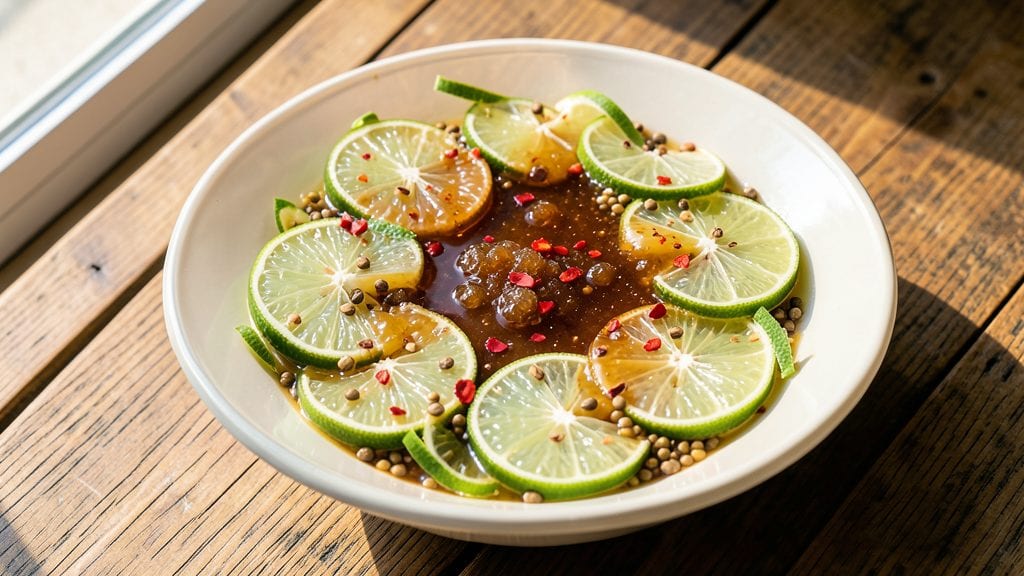
This old-fashioned sweet lime pickle recipe brings bold, tangy-sweet heat to every bite—perfect for pairing with samosas, dosas, or even grilled meats. The traditional method balances zesty limes, aromatic spices, and caramelized sugar for a condiment that’s both vibrant and deeply flavorful.
I’ve perfected this version after years of testing, ensuring the right mix of sweetness and heat that makes it irresistible.
The secret lies in slow-cooking the limes with mustard seeds, fenugreek, and vinegar until they soften and release their juices, creating a thick, syrupy consistency. This process develops layers of flavor that store-bought versions simply can’t match.
The result is a glossy, aromatic pickle that stays fresh for months when stored properly, ready to elevate any meal with just a spoonful.
What makes this recipe special is its versatility—adjust the sweetness or heat to your taste, and use it as a dip, topping, or even a marinade. Whether you’re serving it with crispy fries or rich curries, this pickle adds a bright, tangy contrast that cuts through richness beautifully.
The traditional method ensures authenticity, while modern storage techniques keep it fresh for weeks.
Once you try this recipe, you’ll never go back to store-bought again. The deep, caramelized flavors and perfect balance of sweet and spicy make it a staple in any kitchen. Let’s get started on making your own batch—it’s easier than you think!
Ingredients for old fashioned sweet lime pickle
Zesty limes, aromatic spices, and caramelized sugar—this sweet pickle brings bold tangy-sweet heat to every bite.
| Ingredient | Amount | Notes |
|---|---|---|
| Fresh Limes 🍋 | 2 cups | Juiced and segmented, seeds removed |
| White Vinegar 💧 | 1 ½ cups | Distilled preferred for clarity |
| Granulated Sugar 🍯 | 1 ½ cups | Light brown sugar for caramel depth |
| Mustard Seeds 🌶️ | 1 tbsp | Whole, yellow variety preferred |
| Fenugreek Seeds 🌿 | ½ tbsp | Lightly toasted for aroma |
| Red Chili Powder 🔥 | 1 tbsp | Adjust for heat preference |
| Turmeric Powder 🌿 | ½ tsp | Freshly ground for vibrant color |
| Ground Black Pepper 🌶️ | ½ tsp | Freshly cracked for potency |
| Asafoetida Powder 🍃 | ¼ tsp | Optional, for umami depth |
| Salt 🧂 | 1 ½ tsp | Diamond Crystal kosher preferred |
The limes are the heart of this recipe, so pick firm, bright ones—the juicier, the better. I always grab organic limes from Whole Foods when they're in season, but regular grocery store limes work fine too. The sugar is non-negotiable for that deep caramelized flavor—light brown sugar adds subtle molasses notes that make it taste homemade. For the spices, Penzeys or bulk bins at Indian grocery stores have the freshest fenugreek and mustard seeds. Toast them lightly in a dry pan before adding to wake up their flavors—just 30 seconds until fragrant.
No white vinegar? Apple cider vinegar works just as well, though it'll have a slightly different tang. Short on brown sugar? White sugar plus 1 tsp molasses mimics the depth. The red chili powder is where you can play—start with 1 tbsp and adjust after tasting. No asafoetida? Skip it—this recipe still shines. For the turmeric, freshly ground is ideal, but if you've only got powder, use half the amount. The salt matters too—Diamond Crystal kosher dissolves perfectly, but any fine sea salt works. If you're making this for a crowd, double the batch—it keeps beautifully.
This pickle gets better with time—wait at least 24 hours before using for maximum flavor development. Store in a clean, sterilized glass jar with a tight seal. Keeps in the fridge for up to 3 months (yes, really!) or 6 months if you freeze it. The syrup thickens as it sits, so give it a good stir before serving. I always make extra—it disappears fast when paired with crispy samosas or grilled chicken. The longer it sits, the more complex the flavors become—trust the process.
Why You'll Love This Recipe
- Just Five Ingredients: I swear, this is the kind of recipe where you won’t even need to hunt for obscure spices. Fresh limes, vinegar, sugar, mustard seeds, and fenugreek—that’s it. No fancy prep, no chopping marathons, just slice, simmer, and wait. My pantry already had everything, and honestly? That’s half the battle won.
- Tangy-Sweet Magic: The fenugreek gives it this unexpected depth—like a secret handshake between sweet and sour. The mustard seeds crackle just enough to wake up your taste buds, while the sugar caramelizes into the limes, turning them into little bursts of sunshine. (Yes, even on a Tuesday night.)
- Party in a Jar: This stuff is ridiculously versatile. Slather it on sandwiches, toss it into rice dishes, or just eat it straight with crackers—no judgment. I’ve served it at potlucks, packed it in lunches, and even drizzled it over grilled fish. It’s the kind of condiment that makes you look like a host with a secret weapon.
- Lasts Forever, Costs Nothing: One batch keeps for months in the fridge, and the ingredients? Cheap as chips. A few limes, a bag of sugar, and some seeds—that’s less than $5 total. Between us, I’ve had this pickle for six months now, and it’s still bright and tangy. That’s not just a recipe; that’s a money-saver.
Step-by-step instructions for sweet lime pickle
Here's the method—simple yet transformative, balancing sweetness and heat for a pickle that lingers.
Prepare the Lime Base
Cut the 2 cups of fresh limes in half and juice them thoroughly using a reamer or citrus juicer. Strain the juice through a fine-mesh sieve to remove any pulp or seeds—this ensures your pickle stays clear and bright. In a separate bowl, carefully segment the lime flesh, removing all seeds and any tough membranes. You'll end up with about 1 cup of segmented lime flesh, which will form the heart of your pickle.
I like to work with room-temperature limes because they yield more juice and are easier to segment. If you're using very tart limes, you might want to reserve a bit of the juice for later—sometimes the acidity needs balancing. The goal here is to maximize flavor extraction while keeping the texture clean and vibrant.
Toast the Spices for Depth
In a dry, heavy-bottomed skillet over medium-low heat, toast the 1 tablespoon of mustard seeds and 0.5 tablespoon of fenugreek seeds together for 2-3 minutes. Stir constantly so they don't burn—you're looking for a nutty aroma to develop, not smoke. The mustard seeds will pop like tiny fireworks, and the fenugreek will release its earthy, slightly bitter notes. Let them cool slightly before transferring to a mortar and pestle.
Here's the thing—light toasting enhances the spices' natural oils and aromas. If you skip this step, your pickle will still work, but it'll lack that sophisticated depth. Crush the toasted seeds into a coarse powder while still warm—they'll release even more flavor when combined with the other ingredients later.
Combine Wet and Dry Ingredients
In a large, non-reactive bowl (stainless steel or glass), combine the lime juice, 1.5 cups of white vinegar, and 1.5 cups of granulated sugar. Stir until the sugar dissolves completely—this should take about 1-2 minutes of gentle stirring. The mixture will be slightly syrupy at this stage, but that's perfect. Add the crushed spice mixture, 1 tablespoon of red chili powder, 0.5 teaspoon of turmeric powder, 0.5 teaspoon of ground black pepper, 0.25 teaspoon of asafoetida powder, and 1.5 teaspoons of salt.
This is where the magic happens—the acidity of the vinegar and lime juice will begin to break down the sugar slightly, creating a complex flavor base. The asafoetida powder might seem subtle, but it adds an unmistakable umami depth that ties everything together. Stir well to ensure all the spices are evenly distributed throughout the liquid.
Add the Lime Segments and Infuse
Gently fold the 1 cup of lime segments into the spiced liquid mixture. Be careful not to bruise the segments—they should remain intact but fully immersed in the liquid. Transfer everything to a clean, airtight glass jar, making sure to pack the limes snugly. Leave about 1 inch of headspace at the top to allow for expansion as the flavors meld.
The lime segments will begin to absorb the spiced syrup immediately, but the real transformation happens during the resting period. Seal the jar tightly and let it sit at room temperature for 24 hours. This initial resting period allows the flavors to penetrate the limes, creating a perfect balance of sweet, tangy, and spicy notes. After 24 hours, refrigerate the jar for at least 48 hours before using—this ensures the flavors fully develop and the texture becomes just right.
Pro Tips For Making Old Fashioned Sweet Lime Pickle
- USE THICK LIME SLICES: Cut limes into ¼-inch thick rounds—thinner slices get mushy, thicker ones stay crisp. I learned this after my first batch turned to lime mush in a week.
- TOAST THE SEEDS: Lightly dry-toast mustard and fenugreek seeds in a pan for 30 seconds until fragrant. This stops them from floating and makes the flavor pop—skip this, and they’ll just sit there like dull pebbles.
- STIR THE SYRUP: After adding sugar and vinegar, give the mix a quick stir before pouring over limes. Sugar settles fast, and you’ll end up with some limes swimming in plain vinegar while others drown in syrup.
- PAT DRY THE LIMES: Wipe limes with a kitchen towel before slicing—moisture dilutes the vinegar and slows down the pickling process. I used to skip this, and my jars would take twice as long to develop that perfect tangy-sweet balance.
Make-ahead tips for leftovers
Prep Ahead Strategy
Start by preparing the lime segments and juice 2 days ahead—this gives the citrus time to mellow and lose some of their sharpness. Store the segmented limes in an airtight container in the fridge, covered with a thin layer of vinegar.
The juice can be refrigerated separately in a sealed bottle for up to 3 days. This head start ensures you’re ready to assemble the pickle when you’re free to cook, saving you time on the actual day. 📅
Spice Toasting Shortcut
Toast your mustard and fenugreek seeds the night before and store them in a small jar with the lid loosely closed. This prevents moisture buildup and keeps the spices potent.
When you’re ready to make the pickle, simply crush them fresh—they’ll already be aromatic and ready to blend into the mixture. This step alone cuts 5 minutes off your cooking time. ✨
Long-Term Storage Hack
For maximum shelf life, divide the finished pickle into smaller 8-ounce glass jars before refrigerating. This prevents overcrowding and makes it easy to grab a single serving without disturbing the rest.
The smaller jars also freeze beautifully—simply leave ½ inch of headspace before sealing. Thaw overnight in the fridge for the best texture. ❄️
Flavor Development Timeline
The pickle tastes best after 7-10 days of refrigeration, but you can speed up the process by letting it sit at room temperature for an extra 12 hours after the initial 24-hour rest.
This mimics the traditional method of letting flavors meld slowly. If you’re short on time, refrigerate it immediately, but know the flavors will continue to deepen over the first week. 💡
Freezer-Friendly Adaptation
If you’re making a large batch, freeze the syrup separately from the lime segments. Combine 1 cup syrup with ½ cup lime segments in each freezer bag, leaving 1 inch of space for expansion.
Thaw in the fridge overnight before using—this preserves the texture of the limes while keeping the syrup vibrant. Perfect for batch cooking! 🧊
Gift-Worthy Packaging
Transfer the finished pickle into small, sterilized 4-ounce jars with decorative labels. These make thoughtful gifts for friends or hosts—just add a ribbon and a handwritten note. The small size ensures the pickle stays fresh for up to 3 months without refrigeration if packed properly.
A great way to share the love (and the zing)! 🎁
Nutrition facts
Frequently asked questions
Can I make this lime pickle without vinegar?
Vinegar is essential for preservation and tanginess, but you can substitute with lemon juice (though it lacks the same preservation power). For every 1 cup of white vinegar, use 1.25 cups of fresh lemon juice. The pickle will be less acidic and keep for only 2-3 weeks in the fridge. Traditional recipes rely on vinegar for both flavor and shelf life.
How do I adjust the sweetness or spice level?
For less sweetness, reduce sugar by 0.25 cups and add 1 extra tbsp vinegar to balance. For more heat, increase red chili powder by 0.5 tsp at a time. Always taste the syrup before adding lime segments—you can't easily remove excess sugar or spice later. The ideal ratio is 1:1 sugar to vinegar for balance.
Why did my lime pickle turn cloudy?
Cloudiness usually means the lime juice wasn't strained properly or the jar wasn't sterilized. For crystal-clear pickle, strain juice through a fine cheesecloth and use clean glass jars. If it's already cloudy, don't worry—it's still safe to eat! The flavors won't be affected. For future batches, add 1 tsp citric acid to the syrup to maintain clarity.
Can I use bottled lime juice instead of fresh?
Fresh lime juice is ideal for authentic flavor, but bottled works in a pinch. Use 2 cups bottled lime juice and add 1 extra tbsp sugar to compensate for less natural sweetness. The texture will be slightly different—fresh limes develop a thicker, glossier syrup. For best results, combine 1 cup fresh juice with 1 cup bottled if you're short on time.
What's the best way to serve this pickle?
This versatile pickle works as a condiment for samosas, dosas, or grilled meats, a tangy dip for fries, or even a marinade for chicken. For extra drama, serve chilled in small bowls with crispy papadums. The sweet-spicy balance pairs perfectly with rich, fried foods. Try it on cheese platters too—the combination is surprisingly delicious!