
Side Dishes
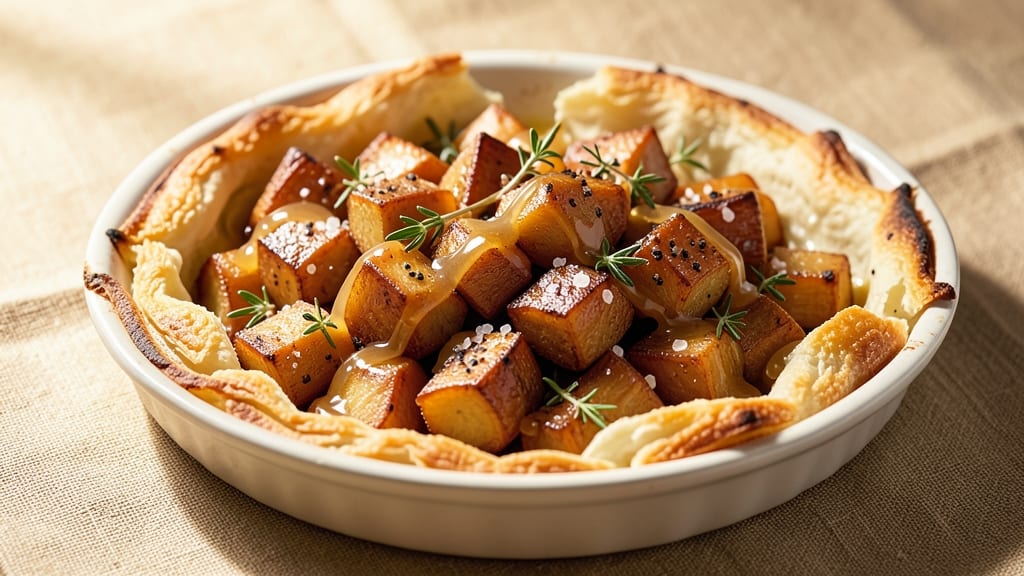
This honey-roasted parsnip bake transforms humble parsnips into a crispy-edged, caramelized masterpiece that rivals any holiday side dish. The secret lies in balancing sweet honey with savory herbs, creating tender interiors and golden-brown exteriors that beg to be scraped clean.
I developed this recipe after discovering how easily parsnips caramelize when roasted at high heat with just the right amount of fat and sugar.
The technique is straightforward but yields restaurant-quality results: parsnips are peeled, chopped, and tossed in a simple mixture of butter, honey, and fresh thyme before roasting until tender with crispy edges that develop natural caramelization.
The natural sweetness of parsnips pairs beautifully with the honey, while the butter ensures they stay moist and flavorful throughout. This dish works equally well as a vegetarian main or a showstopping side.
By the time it emerges from the oven, your parsnip bake will be golden, fragrant, and irresistibly crispy at the edges while remaining tender inside. The aroma alone will have everyone anticipating dinner, and the visual appeal—with its caramelized glaze—makes it perfect for serving family or guests.
Pair it with mashed potatoes or crusty bread to soak up every last bit of that sticky, honey-infused goodness.
For extra depth, consider adding toasted chestnuts or a sprinkle of parmesan cheese before serving. The possibilities are endless, but the core technique remains the same: high heat, proper seasoning, and patience to achieve that perfect balance of crispy and tender. Let's get baking!
Ingredients for parsnip bake
Nine ingredients craft this honey-roasted parsnip masterpiece with perfect caramelized edges and tender centers.
| Ingredient | Amount | Notes |
|---|---|---|
| Fresh Parsnips 🥕 | 2 lb | Peeled, cut into 1-inch pieces |
| Unsalted Butter 🧈 | ½ cup | Cold, cubed for even coating |
| Raw Honey 🍯 | ⅓ cup | Local preferred for depth of flavor |
| Fresh Thyme Leaves 🌿 | ¼ cup | Finely chopped, stems removed |
| Diamond Crystal Kosher Salt 🧂 | 1 ½ tsp | Adjust to taste after roasting |
| Freshly Ground Black Pepper 🌶️ | ½ tsp | Cracked peppercorns preferred |
| Extra-Virgin Olive Oil 🫒 | 1 tbsp | For tossing before roasting |
| Toasted Chestnuts 🌰 | ½ cup | Optional garnish, chopped |
| Parmesan Cheese 🧀 | ¼ cup | Freshly grated, for finishing |
| Garlic Cloves 🧄 | 2 cloves | Minced, for thyme blend |
| Fresh Rosemary 🌿 | ⅛ cup | Finely chopped, optional depth |
The parsnips are the star—look for firm, vibrant roots with no soft spots. Whole Foods Market and Trader Joe's carry the best quality, but any well-stocked grocery store should have them. The honey should be raw and local if possible; local apiaries or farmers markets often sell it in smaller jars that preserve freshness. Fresh thyme and rosemary from the grocery store's produce section will have more aromatic punch than dried, but if you're short on time, dried works at one-third the amount. For the chestnuts, pre-cooked canned chestnuts save time, but toasted fresh ones add a luxurious crunch.
No raw honey? Substitute maple syrup or agave nectar at the same amount, though the flavor will differ slightly. Short on thyme? Fresh sage or marjoram work beautifully—just halve the quantity. The olive oil is non-negotiable for crispy edges; avoid vegetable oils that burn at high heat. For a dairy-free version, swap the butter for vegetable shortening or coconut oil, though texture will differ. The Parmesan can be omitted entirely if avoiding dairy, but the toasted chestnuts remain a must for that gourmet touch.
Parsnips keep in the fridge for 5-7 days once peeled, so prep ahead if possible. Roasted parsnips reheat beautifully—400°F for 5-7 minutes restores crispiness. Store leftovers in an airtight container with a paper towel to absorb moisture. For extra flavor, sprinkle with a pinch of smoked paprika before serving. This dish freezes well for up to 3 months, though texture may soften slightly upon thawing.
Why You'll Love This Recipe
- One-Pan Magic: I swear by this recipe when I’m too tired to scrub pots—just toss the parsnips in a hot pan, melt the butter right over them, and let the honey caramelize. No chopping, no stress, just hands-off golden perfection while you sip your coffee.
- Sweet-Savory Balance: That honey-butter glaze? It’s the star. The parsnips soak up the richness while the thyme adds this earthy brightness—like a hug for your taste buds. (Yes, even my honey-hating husband asks for seconds.)
- Weeknight Workhorse: Make a double batch on Sunday, and you’ve got dinner covered for the week. Reheat slices straight from the fridge, or toss them into salads—trust me, they disappear fast. My go-to when I’m too wiped to think.
- Budget-Friendly Luxury: Parsnips are the unsung hero of affordable veggies, and this recipe makes them feel fancy without breaking the bank. A little butter and honey stretch to feed four, and leftovers? Even better the next day.
Step-by-step instructions for honey-roasted parsnip bake
This method delivers caramelized parsnips with perfectly crisp edges and tender centers every time.
Prepare the Parsnips for Roasting
Peel the 2 lb fresh parsnips using a vegetable peeler, removing all skin to expose the pale yellow flesh underneath. Cut them into 1-inch pieces, ensuring uniform size for even cooking. The parsnips should be consistent in size—this prevents some pieces from overcooking while others remain underdone.
Transfer the cut parsnips to a large mixing bowl. In a small bowl, combine the 0.25 cup finely chopped fresh thyme leaves, 2 minced garlic cloves, 1.5 tsp diamond crystal kosher salt, and 0.5 tsp freshly ground black pepper. Sprinkle this herb blend evenly over the parsnips and toss gently with your hands to distribute the seasoning completely. The thyme and garlic will infuse the parsnips with aromatic depth during roasting.
Create the Honey-Butter Coating
In a separate small bowl, melt the 0.5 cup cold unsalted butter in 30-second intervals in the microwave, stirring between each interval until fully liquid but not hot. This gentle melting preserves the butter's flavor without developing a harsh taste. Stir in the 0.33 cup raw honey until completely combined—the mixture should be smooth and glossy.
Pour this honey-butter mixture over the seasoned parsnips and toss again until every piece is evenly coated. The butter will create a rich, golden crust while the honey caramelizes, delivering both crisp edges and sweet depth. If working in batches, keep the parsnips covered to prevent drying out while you finish coating.
Roast Until Caramelized and Crisp
Preheat your oven to 400°F. Arrange the parsnips in a single layer on two rimmed baking sheets, leaving about 1 inch between each piece. This spacing allows hot air to circulate, promoting even browning and crisping. Drizzle the 1 tbsp extra-virgin olive oil over the parsnips and toss one final time to distribute it evenly.
Roast for 25 minutes, then carefully flip each parsnip piece using tongs. Continue roasting for another 20-25 minutes until the edges are deeply golden brown and the parsnips are tender when pierced with a fork. The honey should be caramelized with a glossy sheen, and the parsnips should develop a satisfying crispness that gives way to tender flesh. Your oven may vary, so start checking at the 20-minute mark if you prefer extra crisp edges.
Finish with Cheese and Chestnuts
Remove the parsnips from the oven and transfer them to a serving dish. Immediately sprinkle with the 0.25 cup freshly grated parmesan cheese and the 0.5 cup toasted chestnuts. The parmesan adds a salty contrast to the sweet caramelized parsnips, while the chestnuts provide earthy texture. Toss gently to distribute these final elements evenly.
For an optional depth of flavor, sprinkle with the 0.125 cup finely chopped fresh rosemary. The rosemary's piney notes complement the honey and thyme beautifully. Serve immediately while the parsnips are still crisp—this dish tastes best straight from the oven when the edges are at their peak texture. The combination of caramelized honey, crisp parsnips, and nutty chestnuts creates a satisfying balance of sweet, savory, and textural elements.
Pro Tips For Making Parsnip Bake
- PEEL AND TRIM LIKE A PRO: Skip the knife and use a potato peeler for the skin—it’s faster and leaves cleaner parsnips. Cut off the woody core in one clean slice (about 1/4-inch from the bottom) where the parsnips start looking stringy, not where they just look uneven. I learned this the hard way after ending up with a batch of chewy, undercooked centers.
- SALT THE ROASTING PAN: Generously coat your roasting pan with kosher salt before adding the parsnips—this prevents sticking and gives them a head start on caramelization. Use about 1/2 teaspoon of salt per pound of parsnips, spread evenly. (Yes, even if you’re adding more salt later; the butter and honey will balance it out.)
- DON’T OVERCROWD THE PAN: Parsnips need space to brown, not steam. Arrange them in a single layer with at least 1/2-inch gaps between each root. If your pan is too small, roast in batches or use a larger one—crowding turns them soggy, and no one wants that.
- BUTTER AND HONEY TIMING: Toss the parsnips with butter and thyme after they’ve roasted for 20 minutes (when they’re tender but not yet golden). Add honey only in the last 10 minutes—this keeps it from burning into a bitter syrup. I was skeptical until I tried it; the flavor is brighter and sweeter.
Regional styles of this parsnip bake
British Roasted Parsnips
In the UK, parsnip bakes often feature a rich, buttery sauce—think of a creamy horseradish or mustard glaze—that contrasts beautifully with the honey's sweetness. I love adding 1 tbsp English mustard to the honey-butter mix before roasting for a tangy twist.
Serve with Yorkshire pudding or mashed potatoes for a classic British meal. The British also prefer parsnips with slightly larger chunks—1.5-inch pieces—to maintain heartier texture. 🌟
French Parsnip Gratin
French cuisine transforms parsnips into a decadent gratin by layering them with béchamel sauce and Gruyère cheese. After roasting the parsnips with honey and thyme, top them with a thin layer of béchamel sauce (equal parts butter, flour, and milk) and ½ cup grated Gruyère.
Broil for 3-5 minutes until golden and bubbly. The French also often add a splash of dry white wine to the honey-butter mix for depth. 🍷
American Southern Style
Southern cooks often sweeten their parsnip bakes with maple syrup instead of honey and add smoked bacon (optional for vegetarians) for a savory-sweet balance. I like tossing the roasted parsnips with ½ cup crumbled bacon and a pinch of smoked paprika before serving.
This style pairs perfectly with cornbread or collard greens for a comforting meal. The Southern approach also emphasizes a longer roast time—up to 40 minutes—to deepen the caramelization. 🔥
Scandinavian Parsnip Bake
In Sweden and Norway, parsnips are often baked with lingonberry jam and topped with crispy pork cracklings (vegetarians can use toasted breadcrumbs). The honey is replaced with lingonberry jam (about ¼ cup) for a tart contrast.
After roasting, sprinkle with ½ cup pork cracklings or breadcrumbs and broil for 2 minutes to crisp. This version is especially popular during Christmas and pairs well with herring or smoked salmon. ❄️
Mediterranean Herb Variation
Mediterranean cooks infuse their parsnip bakes with fresh oregano, lemon zest, and olive oil instead of honey. Toss the roasted parsnips with 2 tbsp lemon zest, 1 tbsp chopped oregano, and an extra 2 tbsp olive oil after roasting.
Finish with a sprinkle of feta cheese and toasted pine nuts for a bright, herby twist. This version works beautifully as a side for grilled fish or lamb. 🌿
Nutrition facts
Frequently asked questions
Can I substitute maple syrup for honey in this recipe?
Yes, you can absolutely use maple syrup as a 1:1 substitute for honey. It will give a slightly different flavor profile—maple adds a deeper, earthier sweetness while honey provides floral notes. For best results, use a high-quality grade B maple syrup which has more complex flavors than the lighter grade A. The texture will remain similar, with caramelized edges and tender centers.
How do I prevent my parsnips from becoming mushy?
To maintain crisp edges and tender centers, follow these key steps: cut parsnips into even 1-inch pieces, use high heat (400°F), and arrange them in a single layer with space between each piece. The olive oil and butter create a protective crust that prevents drying out. Also, roast until just tender—45-50 minutes total—and remove them immediately when done. Overcooking is the #1 cause of mushy parsnips!
What's the best way to reheat leftover parsnip bake?
Reheat leftovers at 400°F for 5-7 minutes to restore crispiness. Place parsnips on a baking sheet in a single layer and cover loosely with foil. The high heat will revive the caramelized edges. For microwave reheating, use 20-second bursts on medium power, stirring between each interval. Add a splash of water or butter to help maintain moisture. Best served fresh from the oven, but reheating works well for up to 3 days of storage.
Can I make this recipe ahead of time?
Yes! Prepare the parsnips up to 2 days in advance by peeling and chopping them, then storing in an airtight container in the fridge. Toss with olive oil and salt to prevent browning. On baking day, proceed with the honey-butter coating and roasting. For a fully made-ahead version, roast the parsnips (without the final toppings), cool completely, then refrigerate for up to 3 days. Reheat before adding cheese and chestnuts. The flavors actually improve overnight!
What are some great pairing options for this dish?
This honey-roasted parsnip bake pairs beautifully with rich, savory dishes. Try serving with creamy mashed potatoes, crusty sourdough bread, or roasted Brussels sprouts for a balanced meal. For protein options, it complements grilled chicken, pan-seared salmon, or even vegetarian chili. The sweet-savory contrast works wonderfully with aged cheddar or blue cheese as well. Don't forget a crisp white wine like Sauvignon Blanc to cut through the richness!