
Main Courses
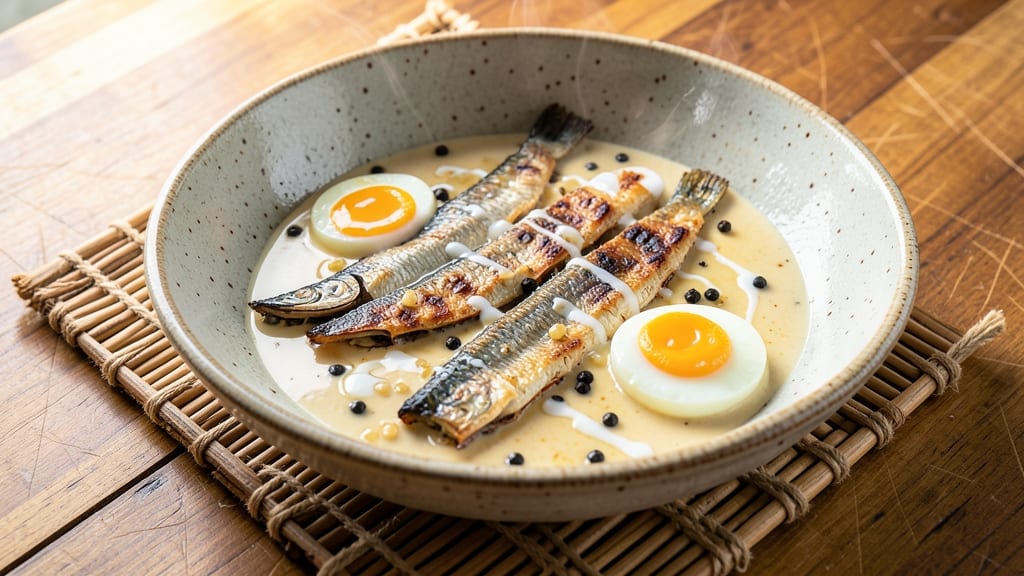
This Filipino sardines with egg recipe transforms simple ingredients into a dish that balances crispy tops with a velvety coconut curd center—sarsang puti style.
I remember the first time I tasted it at a family gathering, where the aroma of garlic and vinegar filled the kitchen, promising a meal that was both comforting and vibrant.
The secret lies in properly cleaning and scaling the sardines, then tempering the eggs with just the right amount of vinegar and black pepper to create that signature tangy depth.
The magic happens when you combine the crispy sardines with the creamy egg mixture, cooked just until the top sets into a golden crust while keeping the center rich and custardy.
This dish is a staple in Filipino households, often served with steamed rice to soak up every last bit of the flavorful sauce. The technique is straightforward but requires attention to detail—especially the timing of the eggs and the heat control—to achieve that perfect balance of textures.
What you’ll end up with is a dish that’s crispy on top, creamy in the middle, and packed with the bright, garlicky flavors of traditional Filipino cooking.
The coconut curd adds a subtle sweetness that rounds out the tangy, savory notes, making it a meal that’s both hearty and elegant. This is the kind of dish that feels like a hug in a bowl, perfect for weeknight dinners or special gatherings.
Serve it with buttered rice or toast for a complete meal, and don’t forget to save some for leftovers—the flavors only deepen over time. Let’s get cooking and bring a taste of the Philippines to your table.
Ingredients for sardines with egg filipino
Twelve crispy sardines, six eggs, and coconut milk—this Filipino classic delivers perfect texture balance.
| Ingredient | Amount | Notes |
|---|---|---|
| Fresh Sardine Fillets 🐟 | 12 whole | Cleaned, heads removed |
| Large Eggs 🥚 | 6 whole | Room temperature preferred |
| Coconut Milk 🥥 | 13 ½ oz | Full-fat canned preferred |
| Garlic Cloves 🧄 | 6 cloves | Minced finely for aroma |
| White Vinegar 🍶 | ½ cup | For egg tempering |
| Black Peppercorns 🌶️ | 1 tsp | Freshly ground preferred |
| Salt 🧂 | 1 ½ tsp | Adjust to taste |
| Canola Oil 🫒 | ½ cup | For frying sardines |
| Sugar 🍬 | 1 tbsp | Balances tanginess |
| Green Onions 🧅 | 3 whole | Sliced for garnish |
| Steamed White Rice 🍚 | 2 cups | For serving |
| Vegetable Oil 🫒 | ¼ cup | For egg mixture |
The sardines are non-negotiable—fresh or high-quality canned makes all the difference. Look for small, clean fillets at Asian markets or the seafood counter. Filipino brands like Swallow or Del Monte work too, but drain them well. Garlic? Freshly minced is key—pre-minced loses flavor fast. I always grab extra because half gets tossed in the egg mixture. The coconut milk should be full-fat canned (none of that light stuff)—it adds richness to the curd. Thai Kitchen or Goya brands are reliable.
No fresh sardines? Canned sardines in oil work in a pinch—just drain and pat dry. Short on garlic? Garlic powder at half the amount gets you close, but fresh is better. Vinegar substitute? Lemon juice works too, but it's more acidic. The sugar balances the tang—brown sugar adds depth if you're feeling fancy. Eggs must be room temperature for even cooking. No need to separate yolks and whites here—just whisk them together. The oil for frying? Canola or vegetable—nothing fancy, just something with a high smoke point.
This keeps for 2 days in the fridge, but honestly, it's best served fresh. The crispy sardines lose their crunch over time. Portion into jars for easy reheating—just microwave until warm. The egg curd reheats beautifully, but the sardines stay crispier if you eat it fresh. Leftovers? Freeze the curd portion separately for up to 1 month—just thaw and reheat. The rice soaks up all the flavor, so make extra.
Why You'll Love This Recipe
- One-Pan Magic: I swear by this recipe when I’m too tired to scrub pots—just fry the sardines, crack eggs into the same pan, and let the coconut milk do its thing. The garlic sizzles in seconds, and suddenly, dinner’s ready before the rice even finishes.
- Creamy Crisp Contrast: That first bite—crispy sardine skin giving way to a silky egg yolk swimming in coconut milk? It’s the kind of flavor combo that makes you pause mid-fork. The vinegar’s tang cuts through the richness, so it’s never heavy, just ridiculously satisfying.
- Lunchbox Hero: Between us, this is my go-to for packed lunches. The sardines hold up for days in the fridge, and the eggs stay tender when reheated (just a quick zap in the microwave). My kids still fight over the last piece—no sad, soggy leftovers here.
- Pocketbook Performer: Fresh sardines are cheaper than chicken, and eggs? Always on sale. A single can of coconut milk stretches across two meals, and garlic and vinegar? Pantry staples. I’ve fed four people for under $10 with this—no guilt, all flavor.
Step-by-step instructions for sardines with egg Filipino recipe
Here's how to make this crispy-topped, creamy coconut dish that's pure comfort food magic.
Prepare the Crispy Sardine Topping
Heat the 0.5 cup canola oil in a large skillet over medium-high heat until shimmering. Add the 12 whole fresh sardine fillets, skin-side down, and cook for 3-4 minutes until the skin becomes deep golden brown and crispy. Flip carefully and cook the other side for 2-3 minutes until just opaque.
Remove the sardines and set aside on a paper towel-lined plate. Keep the oil in the pan—you'll use it again. Here's the thing—don't overcook the sardines. They'll continue cooking when they return to the pan later, and we want them tender, not rubbery. The crispy skin is what makes this dish special, so take your time getting that golden color.
Make the Creamy Coconut Egg Mixture
In a mixing bowl, whisk together the 6 whole large eggs, 13.5 oz coconut milk, 0.5 cup white vinegar, 1 tbsp sugar, and 1.5 tsp salt until fully combined. The vinegar will make the eggs curdle slightly—that's normal and actually creates that signature creamy texture. Add the 6 cloves minced garlic cloves and mix again.
In a separate small bowl, combine the 0.25 cup vegetable oil with 1 tsp freshly ground black peppercorns. Slowly drizzle this mixture into the egg mixture while whisking constantly. This creates a silky emulsion that prevents the curd from becoming too thick. The mixture should be smooth but still slightly runny—think like heavy cream consistency.
Assemble and Cook the Crispy-Creamy Masterpiece
Return the skillet with the canola oil to medium-low heat. Pour the egg mixture evenly over the crispy sardines, tilting the pan to coat them completely. Cook for 4-5 minutes, stirring gently with a spatula, until the mixture thickens slightly and the bottom begins to set. The edges should be just set but the center still slightly jiggly—this is crucial for that perfect creamy texture.
Here's where it gets fun—when the mixture is almost set, sprinkle the 3 whole sliced green onions over the top. The heat will make them wilt slightly, adding freshness to balance the richness. Remove from heat and let it rest for 2 minutes—this helps the curd set properly without becoming rubbery.
Serve Over Steamed White Rice
Divide the 2 cups steamed white rice among four plates. Spoon the sardine and egg mixture over the rice, using a spatula to create an even layer. The crispy sardine topping should be on top, with the creamy coconut egg mixture underneath—this creates that perfect texture contrast with every bite.
Garnish each serving with additional sliced green onions if desired. Serve immediately while the sardine topping is still crispy and the coconut egg mixture is warm and creamy. This dish is best eaten fresh—waiting too long will make the sardine topping soften. The combination of the crispy, salty sardines with the rich, slightly tangy coconut curd is what makes this recipe so special.
Pro Tips For Making Sardines With Egg Filipino
- Sear Sardines First: Hit the fillets with a quick, hot sear in oil before adding coconut milk—this locks in flavor and prevents them from turning rubbery later. I used to skip this, and the dish always tasted flat until I realized the garlic and vinegar needed something crisp to cling to.
- Whisk Eggs Cold: Crack eggs straight from the fridge into a bowl, then whisk them like you’re trying to break a world record. Cold eggs poach more evenly in the coconut milk, and they won’t curdle when the vinegar hits. (Yes, even if you’re impatient like me.)
- Simmer Garlic Low: Cook the minced garlic in coconut milk on low heat until it’s just golden—no browning, no burning. I learned this the hard way after one batch tasted bitter. Let it perfume the milk slowly; it’s the base of the whole dish.
- Acid the Coconut Milk: Stir in the white vinegar after the coconut milk and eggs have simmered for 3-4 minutes—this keeps the eggs from breaking apart. Add it gradually, tasting as you go. Too much too soon turns the sauce into curdled soup.
Dietary considerations for this dish
Pescatarian Perfection
This dish is a pescatarian dream—packed with protein from the sardines and healthy fats from coconut milk, making it a complete meal without any meat. Sardines provide omega-3 fatty acids (about 1,000mg per serving) for heart health, while the eggs add 12 grams of protein per egg.
The coconut milk contributes medium-chain triglycerides, which support brain function and energy levels. 💪
Gluten-Free Friendly
Naturally gluten-free, this recipe relies on simple ingredients like rice, eggs, and coconut milk—no hidden gluten sources lurking in sauces or thickeners. Just ensure your coconut milk brand doesn’t contain additives (some brands use wheat-based stabilizers).
I always check the label on Thai Kitchen or Goya brands to confirm. The dish’s rich flavors come entirely from the natural ingredients, so no substitutions are needed for a safe gluten-free experience.
Dairy-Free Adaptations
While the traditional recipe includes coconut milk (a dairy-free ingredient), some versions call for condensed milk. For a fully dairy-free adaptation, replace the 13.5 oz coconut milk with an equal amount of coconut cream (thicker texture) or cashew cream (blend 1 cup soaked cashews with 1 cup water).
The egg mixture will still curdle beautifully, maintaining that signature creamy texture without dairy. The crispy sardines remain the star, so no adjustments are needed there.
Low-Carb Options
Skip the rice entirely and serve this over a bed of cauliflower rice or shredded cabbage for a low-carb twist. The sardines and coconut egg mixture provide plenty of flavor without the need for starchy sides.
For extra satisfaction, pair with a side of sautéed spinach or zucchini noodles. The dish’s natural richness means you won’t miss the carbs—just focus on the crispy sardine topping and creamy curd. 🥦
Allergen Awareness
This recipe contains eggs and coconut, so those with allergies should avoid it. For egg-free versions, try a tofu scramble instead of the egg mixture—blend 1 block firm tofu with 1 tbsp cornstarch and 2 tbsp nutritional yeast for a similar texture.
The sardines can stay the same, but always check labels on coconut products for cross-contamination warnings if allergies are severe. When in doubt, I recommend preparing this dish in a dedicated allergen-free kitchen.
Keto Considerations
For a keto-friendly version, eliminate the rice and use cauliflower rice or cheese crisps as a base. The sardines and coconut milk are already keto-compliant, but watch your portion sizes—coconut milk contains 6g net carbs per ½ cup.
To reduce carbs further, substitute half the coconut milk with unsweetened almond milk (though the texture will be slightly lighter). The dish remains high in fat and protein, making it a great fit for keto diets when adjusted properly. 🥥
Nutrition facts
Frequently asked questions
Can I use canned sardines instead of fresh?
Drain and pat dry 12 canned sardines in oil (like Swallow or Del Monte brands) before cooking. They work just as well for the crispy topping—just skip the scaling step. The texture difference is minimal, and it saves time.
Why does the egg mixture curdle when I add vinegar?
The vinegar creates a chemical reaction that gently curdles the eggs, which is actually what gives this dish its signature creamy texture. Think of it like making custard—this slight curdling helps create that velvety consistency while keeping it rich. The heat will then set it into a smooth, slightly tangy curd.
How do I fix rubbery sardines?
Overcooking is the usual culprit. For crispy, tender sardines, cook them for only 3-4 minutes per side on medium-high heat—they'll finish cooking when you add the egg mixture. If they're already rubbery, try reheating them gently in a dry pan for 1-2 minutes to restore some crispness.
Can I make this ahead of time?
The crispy sardine topping is best eaten fresh, but you can prep the coconut egg mixture up to 1 day ahead and store it in the fridge. Reheat gently in a skillet before adding the sardines. For leftovers, store the entire dish (without rice) for 2 days—just reheat until warm. The flavors actually deepen overnight!
What's the secret to the perfect crispy top?
Three things: hot oil (use 0.5 cup canola oil at medium-high heat), skin-side down first, and don't overcrowd the pan. Cook in batches if needed. The sardines should be golden brown in 3-4 minutes—this creates that perfect crispy shell that contrasts with the creamy center.