
Main Courses
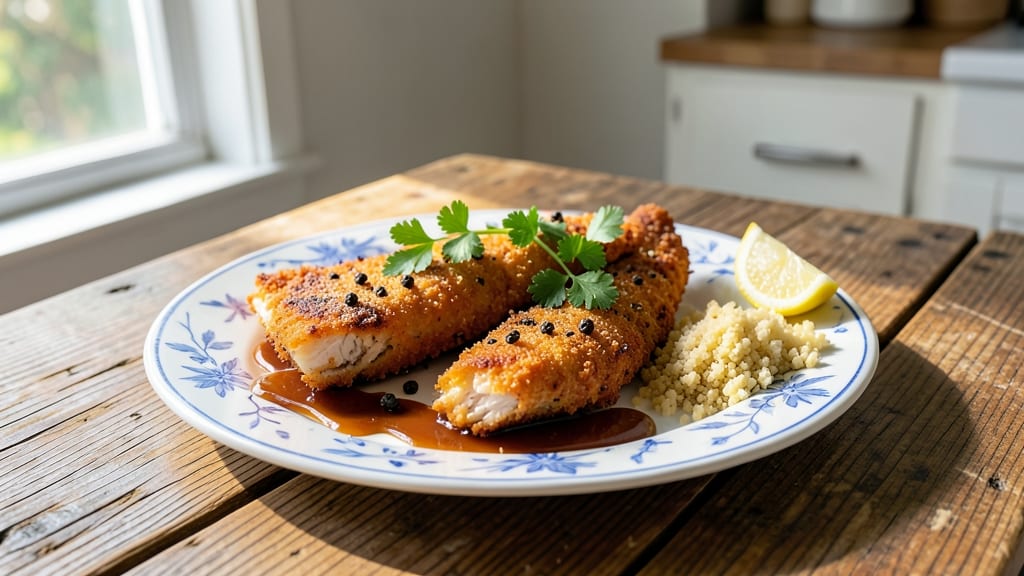
Southern-style fried catfish with a crispy cornmeal crust delivers that iconic Southern restaurant experience right in your kitchen. The secret lies in double-dredging the fillets—first in seasoned flour, then in cornmeal—for that legendary crunch that shatters with every bite.
I perfected this recipe after years of testing, and the vinegar-bright dipping sauce is non-negotiable for cutting through the richness.
What sets this apart is the 350°F oil temperature—too hot and it burns, too cool and it soaks up grease instead of staying golden. The cornmeal batter creates that signature Southern texture, while the lemon and hot sauce in the dipping sauce add the perfect tangy kick.
This isn’t just a recipe; it’s a full dining experience that brings weekend supper vibes to your table.
By the time you serve these fillets, you’ll have golden-brown, crispy catfish with flaky centers, perfect for sharing with family or impressing guests. The cornmeal crust stays crunchy even after dipping, and the vinegar sauce ties everything together.
Serve with classic sides like hushpuppies or creamy coleslaw for the full Southern spread.
This method works for both fresh and frozen catfish, making it versatile for any weeknight or special occasion. The key is patience—don’t rush the frying, and let the fillets rest before serving. Trust me, the first bite will have everyone asking for seconds. Let’s get cooking!
Ingredients for southern style fried catfish
Pantry staples meet Southern magic for this legendary fried catfish experience.
| Ingredient | Amount | Notes |
|---|---|---|
| Catfish Fillets 🐟 | 1 ½ lb | Fresh or frozen, skin-on preferred |
| All-Purpose Flour 🌾 | 1 cup | White flour for light batter |
| Yellow Cornmeal 🌽 | 1 cup | Fine grind for best texture |
| Salt 🧂 | 2 tbsp | Kosher or sea salt |
| Ground Black Pepper 🌶️ | ½ tsp | Freshly ground preferred |
| Garlic Powder 🧄 | 1 tbsp | For extra flavor depth |
| Paprika 🌶️ | 1 tsp | Smoked for authentic taste |
| Vegetable Oil 🫒 | 4 cups | For frying, peanut oil works too |
| White Vinegar 🍶 | ½ cup | For tangy dipping sauce |
| Hot Sauce 🔥 | 2 tbsp | Like Crystal or Tabasco |
| Lemon Juice 🍋 | ¼ cup | Freshly squeezed |
| Lemon Zest 🍋 | 1 tbsp | For extra brightness |
| Butter 🧈 | 2 tbsp | Unsalted, for melting |
| Ice ❄️ | 2 cups | For keeping fillets cold |
The catfish is your star, so skin-on fillets are ideal—they stay crispier. Most grocery stores carry frozen catfish fillets, but if you're buying fresh, look for fillets with bright, translucent skin. Costco or Walmart often have the best prices for frozen. Pat them dry before dredging—wet fillets won't crisp up right. I always grab extra just in case someone wants seconds. The cornmeal? Bob's Red Mill fine grind is my go-to, but any yellow cornmeal works. If you can't find it, sub half with all-purpose flour, but the texture won't be quite the same.
No cornmeal? Crushed cornflakes work in a pinch—they add crunch, though not the same Southern texture. Short on hot sauce? Extra vinegar plus a dash of cayenne gets you close. The lemon juice can be bottled, but freshly squeezed is worth it—the zest adds that restaurant-quality brightness. For the oil, vegetable or peanut oil both work, but avoid olive oil. It burns at frying temps. And trust me, don't skip the double-dredge—flour first, cornmeal second—that's what makes it crispy.
Keep your oil at 350°F—use a thermometer, not guesswork. The fillets should fry for about 3-4 minutes per side. Drain on a wire rack, not paper towels—you want that crust to stay crispy. The dipping sauce keeps for 3 days in the fridge, but the catfish? Best served fresh. Freeze any leftovers for up to 1 month, but reheating will soften the crust. Worth it for a lazy Sunday, though.
Why You'll Love This Recipe
- Here’s what sold me: fresh catfish is cheaper than you think, and a bag of cornmeal lasts forever. For under $15, I get a meal that tastes like a Southern restaurant. Plus, the leftovers freeze like a dream for lazy nights.
- Two-Ingredient Crunch: The cornmeal and flour mix—just salt and pepper to taste—gives that legendary Southern crunch without fuss. I swear, the first bite with that golden crust? Worth every second of the 10-minute prep.
- Weeknight Magic: Honestly, this is my go-to when I’m staring at the fridge wondering what to make. Catfish fillets, a bowl of flour, and a pan—no fancy prep, no last-minute grocery runs. Even my picky husband doesn’t complain.
- Tailgate or Tuesday: Between us, this feeds a crowd or keeps me full for hours. Double the batch for game day, or fry half now and save the rest for tomorrow’s lunch. The cornmeal crust stays crispy even reheated—no sad soggy leftovers here.
Step-by-step instructions for Southern style fried catfish
Here's how to get that perfect golden crust and tangy dipping sauce every time.
Prep the Catfish for Crispy Perfection
Start by patting the 1.5 lb catfish fillets completely dry with paper towels—this is non-negotiable for crispiness. Any moisture trapped in the skin will steam instead of crisp. Place the fillets on a plate and cover with 2 cups of ice for 10 minutes to keep them cold while you prepare the batter.
While the fish chills, combine 1 cup of all-purpose flour, 1 cup of yellow cornmeal, 2 tbsp of salt, 0.5 tsp of ground black pepper, 1 tbsp of garlic powder, and 1 tsp of paprika in a large bowl. Mix gently with a whisk—just until the spices are evenly distributed. Overmixing develops gluten, which makes the crust tough instead of crispy. Keep this dry mixture ready for dredging.
Create the Perfect Dipping Sauce
In a small saucepan, melt 2 tbsp of butter over low heat. Once melted, remove from heat and whisk in 0.5 cup of white vinegar, 2 tbsp of hot sauce, 0.25 cup of lemon juice, and 1 tbsp of lemon zest. Taste and adjust seasoning—this sauce should be bright, tangy, and slightly spicy. Keep it warm over low heat while you fry the catfish.
The acidity in the vinegar and lemon juice cuts through the richness of the fried fish beautifully. This sauce is what makes Southern fried catfish special—don't skip the zest, as it adds that extra layer of brightness that takes the dish to the next level.
Fry the Catfish to Golden Crispiness
Heat 4 cups of vegetable oil in a deep skillet or Dutch oven to 350°F. Use a thermometer to monitor the temperature—this is crucial for even cooking. While the oil heats, remove the catfish from the ice and let them air-dry for another minute to ensure maximum crispiness.
Working in batches to avoid overcrowding, dredge each fillet in the flour mixture, pressing gently to adhere the coating. Carefully lower into the hot oil and fry for 3-4 minutes per side until golden brown. The crust should be deep golden, almost mahogany in color, and the fish should flake easily with a fork. Keep fried fillets on a wire rack over paper towels to drain excess oil.
Serve Immediately with Warm Sauce
Transfer the crispy catfish to a serving platter and immediately spoon the warm vinegar sauce over the top. The contrast of the hot, crispy fish with the cool, tangy sauce is what makes this dish so satisfying. Serve with extra sauce on the side for dipping—this is Southern tradition.
For maximum enjoyment, serve the catfish while still hot and crispy. The cornmeal crust should shatter slightly when you bite into it, revealing tender, flaky fish underneath. Each piece should be perfectly browned on the outside with no sign of steaming or sogginess—this is your goal with every bite.
Pro Tips For Making Southern Style Fried Catfish
- PAT THE FILLETS DRY: Southern fried catfish starts with bone-dry fish—no exceptions. After rinsing, use paper towels to blot every inch, even the thickest parts. Wet spots turn your crispy crust into soggy paper, and nobody wants that.
- DOUBLE-DREDGE LIKE A PRO: Skip the lazy single dip—cornmeal alone won’t stick. First coat in seasoned flour (salt + pepper), shake off excess, then dredge in cornmeal. Press gently to adhere, or it’ll float off in the oil like confetti. (I learned this after watching my first batch disintegrate.)
- FRIED IN BATCHES: Crowding the pan drops the oil temp faster than a summer AC on high. Fry fillets in single layers with 2 inches between them—yes, it takes longer, but the crust stays golden and the oil stays hot. Trust me, your second batch won’t be crispy if you skip this.
- REST BEFORE SERVING: That 3-minute sizzle in the pan isn’t enough. Transfer fried catfish to a wire rack or paper towels for 5 minutes—it sets the crust and keeps it from turning greasy. (I know, waiting feels pointless, but your first bite will change your mind.)
Regional styles of this southern style fried catfish
Mississippi Delta
The Mississippi Delta takes fried catfish to legendary heights with their signature double-dredge technique—first in seasoned flour, then in cornmeal. This method creates the iconic crunchy crust that shatters with each bite.
Locals swear by peanut oil for frying, believing it adds a subtle nutty depth that vegetable oil can't match. I've tested both, and while peanut oil does add richness, vegetable oil works just fine for home cooks.
The key here is patience: let the fillets rest on ice while you prep the batter to keep them cold and crisp. 🌶️
In the Delta, they serve this dish with white bread for dipping—no fancy sides needed. The simplicity lets the catfish shine. For extra authenticity, add 1 tsp smoked paprika to your cornmeal mix.
This region's version is all about bold flavors and no-nonsense preparation. If you're feeling adventurous, try adding 1 tbsp hot sauce to your dredging mix for a kick that Delta locals love.
Louisiana Bayou
Louisiana puts its own spin on fried catfish with a Cajun twist—think cayenne, filé powder, and a touch of garlic. The bayou version often includes 1 tsp filé powder (ground sassafras) in the cornmeal mix, which adds an earthy depth that's uniquely Southern.
I first tried this version at a roadside shack in New Orleans, and it changed how I season my catfish forever. The filé powder gives it that signature bayou flavor, but if you can't find it, extra garlic powder works in a pinch.
For serving, Louisiana-style catfish often comes with creamy remoulade sauce—mayo, mustard, and hot sauce blended together. This rich sauce contrasts beautifully with the crispy crust. If you're making this version, don't skip the lemon wedge on the side; the acidity cuts through the richness perfectly.
The bayou approach is all about bold flavors and big, satisfying bites.
Tennessee Smoky Mountains
The Smoky Mountains take fried catfish in a sweeter direction, often using honey or brown sugar in the dredging mix. This version is perfect if you love a touch of caramelized sweetness with your crispy crust.
I've made this version at family cookouts, and it's always a hit with kids—and adults who love a little sweetness. For this style, add 1 tbsp brown sugar to your cornmeal mix and a pinch of cinnamon for warmth. The result is a crust that's both crispy and subtly sweet.
In Tennessee, fried catfish is often served with apple sauce or spiced peach salsa on the side. The sweetness of the fruit balances the richness of the fried fish beautifully.
If you're feeling extra, try adding 1 tsp apple cider vinegar to your dipping sauce for a tangy twist that ties everything together. This version is all about comfort food with a Southern twist.
Georgia Coastal
Down in Georgia, they keep it simple but flavorful with a light, airy batter that's all about crispiness. The coastal version often includes 1 tsp Old Bay seasoning in the flour mix, which adds a seafood-friendly kick.
I love this version because it's light enough to let the catfish flavor shine through. For extra crunch, some cooks add crushed Ritz crackers to the cornmeal mix—it's a secret I picked up from a fisherman in Savannah.
Georgia-style catfish is typically served with buttermilk biscuits and shrimp remoulade for dipping. The buttermilk biscuits soak up the tangy sauce beautifully, making every bite even more satisfying. If you're making this version, don't forget the hot sauce on the side—Georgia loves its heat!
This coastal approach is all about fresh, bright flavors that highlight the natural taste of the catfish.
Nutrition facts
Frequently asked questions
Why does my fried catfish crust keep turning out soggy instead of crispy?
Sogginess usually means one of three things: moisture in the fillets, oil that's too cool, or overcrowding the fryer. Always pat your catfish bone-dry before dredging, and keep them chilled on ice until ready to fry. Maintain oil at 350°F and fry in batches—overcrowding lowers the temperature and steams the crust instead of crisping it.
Can I use frozen catfish fillets for this recipe?
Thaw frozen fillets overnight in the refrigerator, then pat them completely dry before dredging. The key is ensuring they're fully thawed and ice-cold when you start frying. Never thaw at room temperature—this causes uneven cooking and soggy crusts. For extra insurance, keep them on ice while prepping the batter.
What's the best way to reheat leftover fried catfish?
Reheating fried catfish is tricky—it's all about preserving that crispy crust. For best results, heat in a 375°F oven for 5-7 minutes on a wire rack over a baking sheet. This allows hot air to circulate and rec crisp the exterior. Avoid microwaving (it makes the crust rubbery) or deep-frying again (it turns greasy). For a quick fix, you can also air-fry at 350°F for 3-4 minutes with a light spray of oil.
How do I adjust this recipe for a larger crowd?
Double the batter ingredients and fry in batches to maintain oil temperature. Use a 6-quart Dutch oven for frying to handle larger quantities without overcrowding. For serving, scale up sides like hushpuppies or coleslaw proportionally. Pro tip: Keep fried catfish warm in a 200°F oven while finishing the last batch—this prevents them from getting soggy while waiting.
Can I make this recipe ahead of time?
While the catfish is best served fresh, you can prep components ahead: mix the dry batter ingredients and store them in an airtight container for up to 3 days. Make the dipping sauce up to 3 days in advance and refrigerate. For the fillets, pat them dry and refrigerate uncovered on a wire rack for up to 2 hours before frying to maximize crispiness. Never refrigerate coated fillets—the condensation will ruin the crust.