
Sauces & Condiments
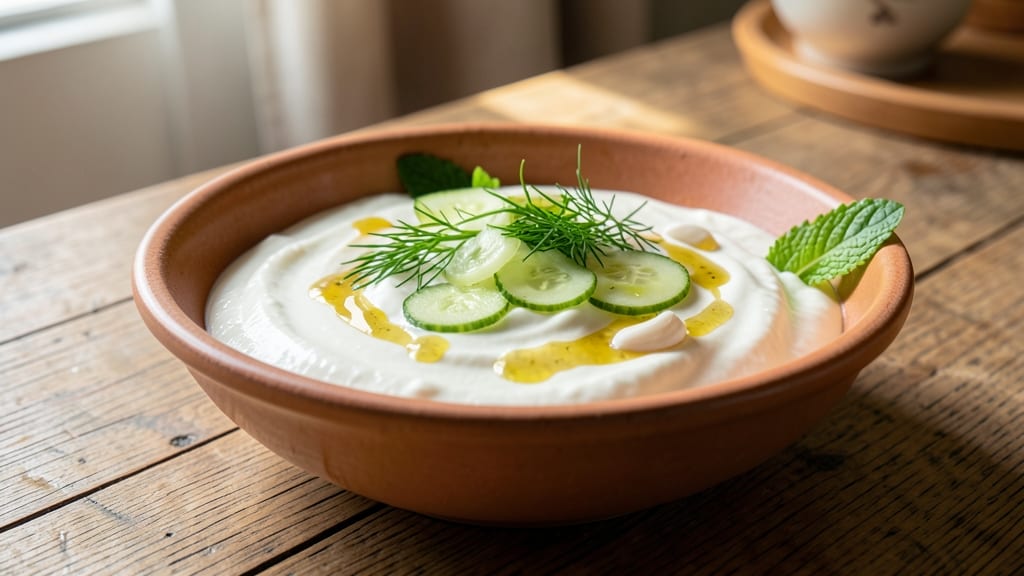
This tzatsiki sauce recipe transforms simple ingredients into a creamy, herby masterpiece that elevates every dish it touches. The marriage of tangy Greek yogurt, crisp cucumber, and aromatic garlic creates a sauce that’s refreshingly cool yet deeply flavorful—perfect for dipping, drizzling, or serving as a meze centerpiece.
I’ve perfected this version to balance authenticity with adaptability, so you can customize it with dill, mint, or even a dash of lemon.
The beauty of tzatsiki lies in its simplicity: just five core ingredients, a food processor, and 15 minutes of prep time. The key is grating the cucumber finely (no peeling needed) to maximize texture, then blending it with thick yogurt until smooth but still slightly textured.
A touch of olive oil and garlic rounds out the flavors, while fresh herbs add that signature Mediterranean brightness. This isn’t just a sauce—it’s a flavor foundation that works with grilled meats, fresh bread, or as a topping for roasted vegetables.
What you’ll end up with is a sauce that’s cool, creamy, and impossibly versatile—ideal for dipping pita or lamb kebabs, garnishing souvlaki platters, or even whipping up a quick salad dressing. The best part?
It keeps beautifully in the fridge for up to 5 days, so you can make a batch ahead and enjoy it all week. Let’s get started on this foolproof, restaurant-quality tzatsiki that’s easier to make than store-bought but tastes worlds better.
For those who love to experiment, this sauce adapts effortlessly: swap in avocado for a richer texture, add a pinch of smoked paprika for depth, or mix in finely chopped bell peppers for color.
The possibilities are endless, but the core technique remains the same—simple, balanced, and always delicious. Here’s how to make it perfectly every time.
Ingredients for tzatsiki sauce
Five core ingredients blend into this creamy, herby tzatsiki masterpiece—simple yet restaurant-worthy.
| Ingredient | Amount | Notes |
|---|---|---|
| Plain Greek Yogurt 🧀 | 1 ½ cups | Full-fat for creaminess, unsweetened |
| English Cucumber 🥒 | 1 medium | Grilled or raw, peeled if preferred |
| Extra-Virgin Olive Oil 🫒 | ¼ cup | High-quality, fruity variety |
| Garlic Cloves 🧄 | 2 cloves | Freshly minced, aromatic |
| Fresh Dill 🌿 | ¼ cup | Chopped, stems removed |
| Fresh Mint Leaves 🍃 | ⅛ cup | Optional, finely chopped |
| Lemon Juice 🍋 | 1 tbsp | Freshly squeezed, bright |
| Diamond Crystal Kosher Salt 🧂 | ½ tsp | Fine grain preferred |
| Ground Black Pepper 🌶️ | ¼ tsp | Freshly cracked |
The Greek yogurt is non-negotiable—full-fat gives that signature creaminess, while unsweetened keeps flavors pure. Fage or Chobani are my go-tos, but any thick, tangy yogurt works. For the cucumber, English cucumbers are ideal—they’re seedless and milder than Persian types, but regular cucumbers will do in a pinch. Just remove the seeds and peel if you prefer. Fresh dill is the star herb here, but dried works at one-third the amount if you're in a bind. The garlic? Freshly minced makes all the difference—pre-minced from a jar lacks depth.
No fresh dill? Fresh parsley or mint can step in, though the flavor shifts slightly. Want extra richness? Swap half the yogurt for avocado for a velvety texture. The olive oil should be extra-virgin—cheap oil tastes like soap here. For a smoky twist, add ½ tsp smoked paprika to the blend. The lemon juice is key for brightness, but if you're out, white wine vinegar at half the amount works. Salt is crucial—taste as you go, but Diamond Crystal kosher dissolves cleanly. Black pepper adds a subtle kick, but don’t overdo it—tzatsiki should be fresh, not spicy.
This sauce keeps beautifully—5 days in the fridge, sealed tightly. For longer storage, freeze in ice cube trays, then transfer to a bag. Thaws perfectly without texture loss. I always make a double batch: one jar for the fridge, one frozen for lazy nights. The texture evolves over time, getting even smoother. If it separates, just stir before using. Pairs perfectly with warm pita, grilled lamb, or roasted veggies—trust me, you’ll want to make this weekly.
Why You'll Love This Recipe
- No-Fuss Ingredients: I keep a tub of Greek yogurt and cucumbers in my fridge just for this—no specialty shopping, no fuss. The only prep is grating the cucumber (peel optional, honestly), and the rest? Stirring. That’s it.
- Garlic-Dill Magic: Between us, this combo is chef’s kiss—the sharp bite of fresh garlic and bright dill cutting through the yogurt’s creaminess. Drizzle in that olive oil, and suddenly, every bite feels like a little vacation.
- Game for Any Meal: Slather it on grilled chicken, dip pita in it, or pile it on a lazy weeknight salad. I’ve even used it as a base for a quick soup when I’m running low on ideas. It’s the kind of thing that makes you want to eat more veggies just to dip them.
- Lasts All Week: Make a big batch—it keeps for days in the fridge, and the flavor only gets better. My lunchbox gets packed with this stuff more than I’d like to admit, and it’s still fresh when I’m halfway through the week. Plus, it’s cheaper than buying store-bought.
Step-by-step instructions for tzatsiki sauce
Here's the method for creamy, vibrant tzatsiki that balances tangy yogurt with fresh herby notes.
Prepare the Cucumber Base
Peel the 1 medium English cucumber if you prefer a smoother texture, or leave it unpeeled for subtle speckles. Using a mandoline or sharp knife, slice the cucumber into ¼-inch thick half-moons. Transfer them to a clean kitchen towel and press gently to remove excess moisture—this prevents a watery sauce later.
Real talk: If you skip this step, your tzatsiki will separate. The towel absorbs liquid like a sponge while keeping the cucumber intact. For extra flavor, you can lightly grill the cucumber slices for 3-4 minutes on each side until charred—this adds a smoky depth that pairs beautifully with the yogurt.
Mix the Yogurt Foundation
In a medium bowl, combine the 1.5 cups plain Greek yogurt with the 0.5 tsp Diamond Crystal kosher salt and 0.25 tsp ground black pepper. Stir until fully integrated, breaking up any lumps with a silicone spatula. The yogurt should look smooth and homogeneous—this ensures a velvety texture in the final sauce.
Here's the thing—using full-fat yogurt is non-negotiable. It creates that signature creamy mouthfeel. If your yogurt is too thick, you can whisk in 1 teaspoon of cold water to loosen it slightly, but don't overdo it. The goal is a spreadable consistency, not a runny one.
Incorporate Aromatics and Herbs
Add the 2 cloves freshly minced garlic to the yogurt mixture and stir well. The garlic should be finely minced—no chunks—so it distributes evenly without overpowering. Next, fold in the 0.25 cup chopped fresh dill and 0.125 cup finely chopped fresh mint leaves using gentle motions to preserve the herbs' delicate texture.
This is where the sauce comes alive. The dill brings bright, grassy notes while the mint adds a refreshing lift. I like to use my fingers for this part—it's more intuitive than a spoon and helps prevent crushing the herbs. If you're using grilled cucumber, add it now and fold it in gently.
Finish with Olive Oil and Acid
Drizzle in the 0.25 cup extra-virgin olive oil while stirring continuously. The oil should emulsify with the yogurt, creating a silky sheen. Finally, add the 1 tablespoon freshly squeezed lemon juice and mix until fully combined. Taste and adjust seasoning—you might need a pinch more salt or a squeeze of lemon for brightness.
The olive oil not only adds richness but also helps bind the sauce, preventing separation. The lemon juice cuts through the creaminess, balancing the flavors. For best results, let the tzatsiki rest in the refrigerator for at least 30 minutes before serving—this allows the flavors to meld and the texture to set perfectly.
Pro Tips For Making Tzatsiki Sauce
- Drain the Cucumber Thoroughly: Wrap the grated cucumber in a clean kitchen towel or cheesecloth and squeeze out every last drop of water—no, really, get it bone dry. I used to skip this, and the tzatsiki always ended up watery, no matter how much yogurt I used. Five minutes of wringing saves you from a soggy mess later.
- Use Cold Yogurt: Chill your Greek yogurt in the fridge for at least an hour before mixing—cold yogurt keeps the sauce from separating. I learned this the hard way after making a batch with room-temperature yogurt and ending up with a weird, grainy texture. Trust me, the fridge is your friend here.
- Mince the Garlic Fine: Smash the garlic cloves with the flat side of your knife before mincing, then pulse in a food processor for a smoother, more even texture. Raw, chunky garlic can overpower the sauce, and no one wants that bitter bite cutting through. A quick pulse keeps it subtle but flavorful.
- Add Oil Gradually: Start with just 1 tablespoon of olive oil, then taste and drizzle in more as needed—tzatsiki shouldn’t be swimming in it. I used to dump in a quarter cup right away, and it’d turn into a heavy, greasy dip instead of the light, fresh spread it should be. Less is more, especially with extra-virgin.
Troubleshooting great tzatsiki sauce
Watery Texture Fix
If your tzatsiki turns out too thin, it’s likely because excess cucumber moisture wasn’t removed. Fix it by pressing the sliced cucumber harder between paper towels for 5-10 extra minutes before mixing.
For immediate results, stir in 1 tablespoon of plain flour or 1 teaspoon of cornstarch—it thickens without altering flavor. Let it sit for 10 minutes to fully absorb the moisture. 💧
Separation Issues
Separation happens when oil and yogurt don’t emulsify properly. Prevent it by adding the olive oil gradually while whisking vigorously. For a quick fix, place the sauce in a blender and pulse for 10-15 seconds—this redistributes the oil evenly.
If it’s already separated, stir in 1 teaspoon of lemon juice to help re-emulsify the mixture. The key is patience: rest the sauce for 30 minutes before serving to let flavors stabilize.
Herbs Sinking or Floating
Fresh herbs often sink or float unevenly, making the sauce look unappetizing. Solve this by finely chopping them into pinhead-sized pieces and folding them in last. For an even distribution, blend the herbs with 1 tablespoon of yogurt first, then mix into the batch.
If herbs float, press them gently into the sauce with the back of a spoon. A light sprinkle of salt on the herbs before adding also helps them cling better to the yogurt base.
Too Tangy or Bland
Yogurt tanginess can vary by brand, and some batches may need balancing. Adjust the flavor by tasting as you go: if it’s too sharp, add ½ teaspoon of honey or 1 extra tablespoon of olive oil to mellow it.
For blandness, boost brightness with ½ teaspoon of lemon zest or an extra 1 teaspoon of lemon juice. Pro tip: Let the sauce sit overnight—flavors mellow naturally, and you can tweak seasoning the next day. 🍋
Cucumber Too Strong
If the cucumber flavor dominates, you’ve likely used too much or didn’t remove enough moisture. Fix it by reducing cucumber to ½ cup grated (instead of sliced) and adding 1 extra tablespoon of olive oil to balance.
For a milder taste, swap in ¼ cup of avocado—it adds creaminess without cucumber intensity. If the issue persists, increase the dill or mint to mask the cucumber’s bitterness. A pinch of smoked paprika also adds depth to overpower any harsh cucumber notes.
Yogurt Too Thick or Thin
Yogurt consistency affects the final texture dramatically. Adjust thickness by whisking in 1 teaspoon of cold water for thinning or 1 tablespoon of plain flour for thickening. If using low-fat yogurt, add 1 tablespoon of olive oil to compensate for lost creaminess.
For a smoother texture, blend the sauce for 10 seconds—this breaks up any lumps while keeping it slightly rustic. Always taste as you go; the ideal tzatsiki should be spreadable but not runny.
Nutrition facts
Frequently asked questions
Why does my homemade tzatsiki sauce separate?
Separation happens when oil and yogurt don't properly emulsify. The fix? Add olive oil gradually while whisking continuously. For immediate results, blend the sauce for 10-15 seconds or stir in 1 teaspoon of lemon juice to help re-emulsify. Always let the sauce rest for 30 minutes before serving to stabilize flavors and textures.
Can I make tzatsiki without cucumber?
Yes! For a cucumber-free version, swap the cucumber with ½ cup grated avocado or ½ cup finely chopped bell peppers. These alternatives add creaminess or sweetness while keeping the herby yogurt base intact. Just reduce olive oil slightly to balance the extra moisture from avocado.
How long does homemade tzatsiki keep in the fridge?
Properly stored, tzatsiki stays fresh for 5-7 days in an airtight container. For longer storage, freeze in ice cube trays and transfer to a freezer bag—it thaws beautifully without texture loss. The sauce actually improves overnight as flavors meld, so making a batch ahead is ideal.
What's the best way to serve tzatsiki?
Tzatsiki shines as a dip for warm pita, grilled lamb, or falafel, but it also works as a topping for souvlaki platters or roasted vegetables. For extra flair, drizzle with olive oil and sprinkle with toasted pine nuts or crumbled feta. It's equally delicious as a sandwich spread or salad dressing base.
Can I use dried herbs instead of fresh?
Yes, but use one-third the amount of dried herbs compared to fresh. For example, 1 teaspoon dried dill replaces 1 tablespoon fresh. Dried herbs are more concentrated, so start with less and adjust to taste. The flavor will be slightly less vibrant but still delicious.