
Side Dishes
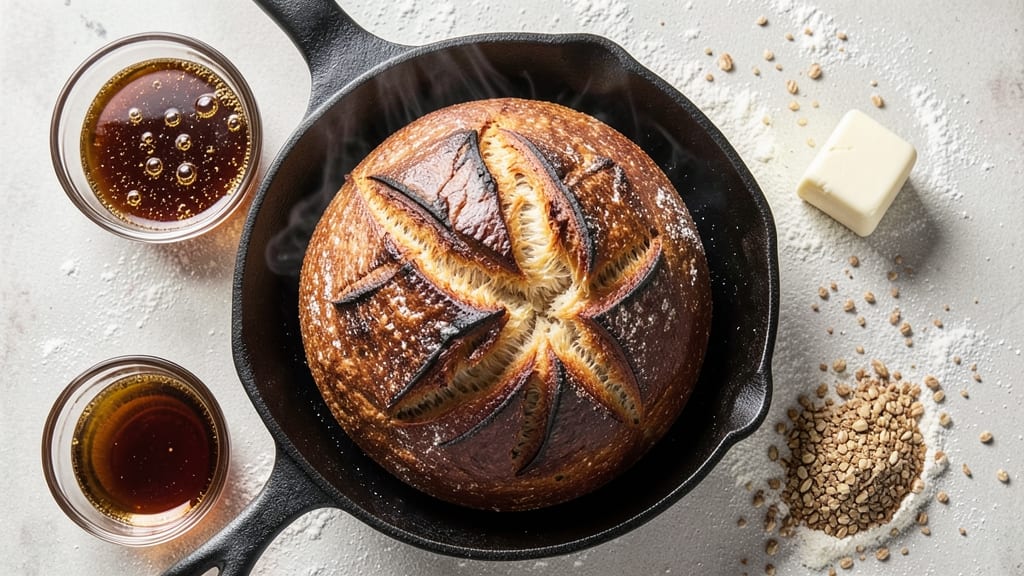
This ale bread recipe transforms simple ingredients into a rich, nutty loaf with a crisp crust and moist interior—perfect for sandwiches or serving alongside soups. The deep malt flavors from dark beer create a complex taste that rivals artisanal bakery breads.
I developed this version after years of experimenting with beer bread recipes, focusing on achieving that ideal balance of texture and flavor without requiring special equipment.
The secret lies in using a combination of all-purpose flour and whole wheat flour for structure and depth, while the yeast and warm beer create a light, airy crumb. Unlike quick breads, this version requires proper proofing times—about 2 hours for the dough to rise fully—so patience is key.
The result is a loaf with a golden-brown crust that develops a satisfying crunch when sliced, while the interior remains tender and slightly chewy.
What makes this ale bread truly special is its versatility—it pairs beautifully with hearty stews, grilled meats, or even as a base for gourmet sandwiches. The beer’s maltiness adds a subtle sweetness that enhances the bread’s natural flavor, making it far more interesting than traditional sandwich bread.
Once you try this, you’ll never buy store-bought ale bread again.
For those short on time, I’ve included a quick variation using soda instead of beer, though the flavor won’t be as rich. The full recipe below delivers the authentic experience, with step-by-step instructions for proofing, shaping, and baking to perfection.
Let’s get started on creating your own loaf of restaurant-quality ale bread at home.
Ingredients for ale bread
Sixteen ingredients crafting artisanal ale bread with deep malt richness and perfect crunch.
| Ingredient | Amount | Notes |
|---|---|---|
| All-Purpose Flour 🌾 | 3 ½ cups | Sifted for even texture |
| Whole Wheat Flour 🌾 | 1 ½ cups | Adds nutty depth |
| Active Dry Yeast 🍞 | 2 ¼ tsp | Freshly measured for best rise |
| Dark Ale Beer 🍺 | 1 ½ cups | Room temperature preferred |
| Granulated Sugar 🍚 | ½ cup | Feeds yeast for activation |
| Unsalted Butter 🧈 | ½ cup | Cold, cubed for texture |
| Large Eggs 🥚 | 2 whole | Room temperature for mixing |
| Diamond Crystal Kosher Salt 🧂 | 1 ½ tsp | Enhances malt flavors |
| Black Peppercorns 🌶️ | ½ tsp | Coarsely cracked for warmth |
| Garlic Cloves 🧄 | 3 cloves | Minced for subtle depth |
| Honey 🍯 | 2 tbsp | Balances beer's bitterness |
| Coarse Cornmeal 🌽 | ½ cup | For dusting bread pan |
The beer is non-negotiable here—Guinness or Samuel Adams Black Lager deliver that signature dark malt complexity. If you're using a lighter ale, add an extra 1 tbsp of molasses to deepen the flavor. King Arthur Flour or Bob's Red Mill are my go-tos for the flours, as they mill consistently. The yeast needs to be fresh; if your package is past its expiration, grab a new one—old yeast won't activate properly. For the butter, I swear by Plugrá—it's cultured and adds a subtle tang that complements the beer's maltiness.
No dark beer? Substitute 1 cup of strong black tea (like Earl Grey) plus 1 tbsp of unsulphured molasses for the beer's depth. Whole wheat flour can be swapped for all-purpose if you're avoiding gluten, but the texture will be less dense. The honey can be replaced with maple syrup in a 1:1 ratio, though it'll add a slightly different sweetness profile. If you're short on time, instant yeast works too—just mix it directly with the flour. For the peppercorns, a quick pulse in a spice grinder gives you that perfect cracked texture without overworking them.
This dough needs time—2 hours at room temperature for the first rise, then another 30 minutes after shaping. Don't rush it, or the crumb will be dense. Store leftovers wrapped in a clean kitchen towel for up to 3 days—it reheats beautifully in a 350°F oven for 10 minutes. For freezing, slice the cooled loaf and wrap individual pieces in plastic wrap, then place in a freezer bag for up to 3 months. The crust stays crisp even after freezing—just toast it for 5 minutes to revive.
Why You'll Love This Recipe
- No Yeast Fuss: I swear by this—just toss in the yeast with warm beer and sugar, let it sit for 10 minutes, and boom, it’s ready. No waiting hours for proofing like some fussy sourdough starter.
- Malty Magic: That dark ale beer isn’t just flavor—it’s the star. The bread has this deep, caramelized richness with a hint of bitterness that pairs perfectly with butter or jam. (Yes, even on a Tuesday night.)
- Game for Any Meal: Slice it fresh for sandwiches, toast it for breakfast, or serve it warm with soup. The whole wheat adds texture, so it’s sturdy enough for hearty meals but still light enough for a quick snack.
- Budget-Friendly Stretch: A single batch feeds my family for days—leftovers toast up just as well as day-old bread. And using pantry staples (plus a six-pack of beer) keeps costs low without sacrificing taste.
Step-by-step instructions for ale bread with nutty crust
This method delivers perfectly risen loaves with a crisp exterior and tender crumb—every time.
Activate the Yeast with Beer and Honey
In a small bowl, combine the 1.5 cups dark ale beer (room temperature) with the 2 tbsp honey and 0.5 cup granulated sugar. Stir until fully dissolved, then sprinkle the 2.25 tsp active dry yeast over the surface. Let sit for 5-10 minutes until you see vigorous bubbling—this confirms the yeast is alive and ready to work.
Here's the thing—beer contains alcohol, which can inhibit yeast activity. The honey and sugar act as yeast food, ensuring a strong fermentation even with this bold ingredient. If no bubbles form after 15 minutes, your yeast may be inactive, and you'll need to start over.
Mix the Dough Until Windowpane Stage
In a stand mixer fitted with the dough hook, combine the 3.5 cups all-purpose flour, 1.5 cups whole wheat flour, 1.5 tsp diamond crystal kosher salt, and 0.5 tsp coarsely cracked black peppercorns. Mix on low speed for 30 seconds to distribute the dry ingredients evenly.
Add the yeast-beer mixture, 0.5 cup cold cubed unsalted butter, and 2 room-temperature large eggs to the bowl. Mix on low speed for 2 minutes, then increase to medium speed for 5-7 minutes until the dough forms a smooth, elastic sheet that cleans the sides of the bowl (the windowpane test). Overmixing develops gluten too much, resulting in a tough loaf.
Knead and Rest for Optimal Texture
Transfer the dough to a lightly floured surface and knead gently for 2-3 minutes to strengthen the gluten structure. Shape into a round loaf and place it in a lightly greased bowl. Cover with a damp towel and let rise in a warm place for 1-1.5 hours, or until doubled in size. The dough should feel light and springy when pressed gently.
I know it seems counterintuitive to handle the dough after mixer kneading, but this final knead ensures proper shaping and prevents air pockets. The beer's carbonation will create lift, but we need that gluten network to support it during baking.
Shape and Proof for Maximum Rise
Punch down the risen dough and transfer it to a lightly floured surface. Gently shape into an oval loaf, tucking the ends under slightly to create surface tension. Place the shaped loaf in a 9x5-inch loaf pan that's been lightly dusted with 0.5 cup coarse cornmeal to prevent sticking.
Cover again and let proof for another 30-45 minutes until the dough has risen 1-2 inches above the pan's rim. The beer's malt sugars create a slower, more controlled rise than traditional yeast breads—this extra proofing time develops those complex flavors we're after.
Bake to Golden Perfection with Steam
Preheat your oven to 375°F with a baking stone or inverted baking sheet on the lower rack. This creates convection for even baking. Place a metal bowl filled with hot water on the lower rack as well—this generates steam during the initial baking phase, which is crucial for that crisp nutty crust.
Bake the loaf for 35-40 minutes until the top is deep golden brown and sounds hollow when tapped on the bottom. The internal temperature should reach 190-200°F at the center. If the top browns too quickly, tent loosely with foil after 20 minutes to prevent over-browning while the interior finishes cooking.
Pro Tips For Making Ale Bread
- Bloom the Yeast First: DESCRIPTION:
- Chill the Dough Overnight: DESCRIPTION:
- Use Cold Beer: DESCRIPTION:
- Steam the Loaf: DESCRIPTION:
Flavor customization for ale bread
Sweet vs. Savory
Balance the beer’s maltiness by adjusting sweetness levels. For a sweeter loaf, add an extra 1 tbsp honey or replace ½ cup of the all-purpose flour with ½ cup brown sugar.
This works beautifully for breakfast sandwiches. For savory, increase the black peppercorns to 1 tsp and add 1 tsp smoked paprika—perfect for pairing with hearty soups. 🌶️
Herb Infusions
Fresh herbs elevate the beer’s depth. Try 1 tbsp chopped rosemary or 1 tbsp thyme leaves mixed into the dough for an earthy note. For a brighter twist, add 2 tbsp chopped chives or 1 tbsp fresh dill after shaping the loaf.
These additions pair exceptionally well with smoked meats or sharp cheeses.
Spiced Variations
Warm spices like cinnamon and nutmeg complement dark ales beautifully. Add ½ tsp cinnamon and ¼ tsp nutmeg to the dough for a bread that tastes like a cross between sourdough and gingerbread.
For a kick, swap the peppercorns for ½ tsp ground cloves—this works surprisingly well with stout beers like Guinness.
Crust Enhancements
Create a crispier crust by brushing the baked loaf with 1 tbsp melted butter mixed with 1 tsp maple syrup while still warm. For a chewy texture, sprinkle 1 tbsp sesame seeds or 1 tbsp poppy seeds on top before baking. These toppings add visual appeal and a delightful crunch.
Gluten-Free Adaptation
Replace the all-purpose and whole wheat flours with a 1:1 gluten-free baking flour blend (like Bob’s Red Mill or King Arthur). Add 1 tbsp xanthan gum to improve elasticity.
The texture will be denser, but the beer’s flavor still shines through. For best results, use a gluten-free bread pan lined with parchment paper.
Quick Soda Bread Swap
For a faster version, replace the beer with 1.5 cups buttermilk and reduce the yeast to 1.5 tsp. Skip the second rise and bake immediately at 400°F for 25-30 minutes.
This version lacks the depth of ale bread but works in a pinch. Add 1 tbsp caraway seeds for a rye-like flavor if desired.
Nutrition facts
Frequently asked questions
Can I use any type of beer for this ale bread?
Dark ales like Guinness or Samuel Adams Black Lager work best for their rich malt flavors. Lighter beers (like pilsners) will produce a milder loaf. For extra depth, add 1 tbsp molasses if using a pale ale. Avoid highly carbonated beers—they can make the dough too airy and collapse during baking.
Why does my ale bread turn out dense instead of light?
Overmixing or skipping proofing times are common culprits. The beer's alcohol can also slow yeast activity—ensure your yeast is fresh and the beer is room temperature. Let the dough rise until it's doubled in size (about 2 hours) and avoid opening the oven too early during baking. A baking stone helps create that crisp crust.
How long can I store homemade ale bread?
Wrap cooled loaves in a clean kitchen towel and store at room temperature for 3 days. For longer storage, slice and freeze individual pieces (wrapped tightly) for up to 3 months. To revive, toast frozen slices at 350°F for 5 minutes—they'll stay crisp!
Can I make this bread without a stand mixer?
Mix the dough by hand in a large bowl until it pulls away from the sides (windowpane test). Knead for 10 minutes on a floured surface until smooth. The texture will be slightly less uniform, but the flavor won't suffer. For extra strength, let the dough rest 15 minutes before shaping.
What's the best way to reheat stale ale bread?
Preheat oven to 350°F and wrap the bread in foil. Heat for 10-15 minutes until warmed through. For crispy crust, place slices directly on a baking sheet and toast for 5 minutes. A quick fix: Microwave slices for 20 seconds covered with a damp paper towel.