
Side Dishes
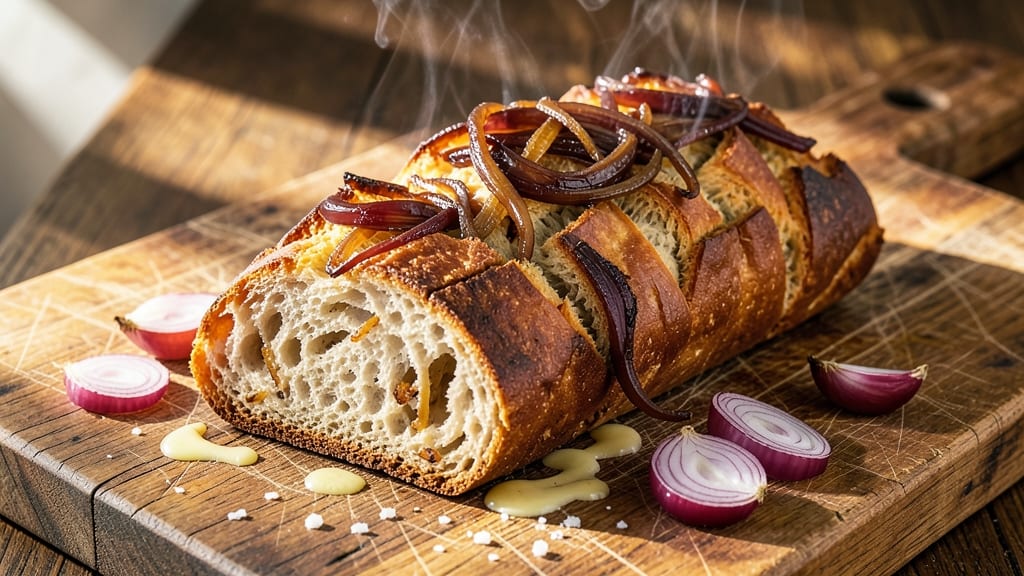
This artisan onion bread recipe transforms simple ingredients into a loaf with golden, crispy crust and layers of caramelized sweetness. The secret lies in slow-cooked onions that melt into the dough, creating those signature swirls that make every bite irresistible.
I’ve perfected this recipe over years of baking, balancing traditional techniques with modern convenience—no yeast headaches or hours of proofing required.
The dough starts with a simple mix of flour, water, and a touch of sugar, but the real magic happens when you fold in those deeply caramelized onions. They add natural sweetness that deepens as the bread bakes, while a quick-rise method ensures you won’t spend all day waiting.
The result? A loaf with a crackly crust and tender, flavorful crumb that’s perfect for sandwiches or serving alongside soups.
What sets this recipe apart is the scoring technique—those precise cuts guide the bread’s expansion and create a visually stunning finish. Once baked, the aroma of caramelized onions fills your kitchen, and the first bite delivers layers of texture: crispy crust, soft interior, and bursts of sweet, savory onion.
This is the kind of bread that makes your table feel like a bakery.
Whether you’re baking for a holiday feast or a weeknight dinner, this recipe delivers professional-quality results with minimal effort. The dough is forgiving, the onions can be prepped ahead, and the baking process is straightforward. Let’s get started on creating your own artisan loaf with those perfect, golden swirls.
Ingredients for artisan onion bread
Simple pantry staples meet caramelized onions for a bread with golden swirls and crispy crust.
| Ingredient | Amount | Notes |
|---|---|---|
| Yellow Onions 🧅 | 3 large | Chopped, caramelized thoroughly |
| All-Purpose Flour 🌾 | 4 cups | Unbleached preferred for texture |
| Granulated Sugar 🍚 | ¼ cup | For dough and caramelizing onions |
| Instant Yeast 🍞 | 1 ½ tsp | Quick-rise variety for convenience |
| Salt 🧂 | 1 ½ tsp | Kosher or sea salt preferred |
| Unsalted Butter 🧈 | ½ cup | Cold, cubed for dough |
| Whole Milk 🥛 | ½ cup | Warmed to 110°F for activation |
| Large Egg 🥚 | 1 whole | Room temperature for even mixing |
| Olive Oil 🫒 | 1 tbsp | For greasing loaf pan |
| Cornmeal 🌽 | ½ cup | For dusting bread pan |
| Coarse Sea Salt 🧂 | 1 tbsp | For topping before baking |
The onions are the heart of this recipe. Yellow onions work best for their balance of sweetness and structure—red onions get too mushy. Caramelize them low and slow until deep golden and jammy (about 45 minutes). Whole Foods or Trader Joe's often carry the sweetest varieties. If you're short on time, use pre-caramelized onions from a jar, but fresh is always better. The sugar in the onions will deepen as they bake, so don't skimp on the caramelization—this is where the magic happens.
For the flour, King Arthur or Bob's Red Mill are my go-tos—they're reliable and produce consistent results. If you're gluten-sensitive, swap for a 1:1 gluten-free flour blend, but expect a denser crumb. The yeast is the secret to that quick rise—instant yeast activates faster than active dry, so no waiting required. No instant yeast? Use active dry, but dissolve it in the warm milk first. The butter should be cold when you mix it into the dough—this creates those beautiful flaky layers. If your kitchen is warm, chill the dough for 20 minutes before shaping.
This dough keeps well for 24 hours in the fridge, wrapped tightly in plastic. For longer storage, freeze shaped loaves (unbaked) for up to 3 months. Thaw overnight in the fridge before baking. The bread reheats beautifully—wrap in foil and warm in a 350°F oven for 5-10 minutes. I like to slice it fresh and serve with extra caramelized onions on top. The crust stays crispy for about 2 days if stored in a bread bag, but honestly, it's best eaten the first day when everything is at its peak.
Why You'll Love This Recipe
- You already own everything: flour, yeast, sugar, onions. No specialty ingredients, no fancy tools. Between us, this is the kind of recipe that proves you don’t need a bakery to make something that tastes like one.
- No-Knead Magic: I swear by this dough—just mix, let it rise, and bake. The onions caramelize right into the crust while you’re doing anything else. Honestly, the only effort is slicing the onions, and even that’s forgivable.
- Sweet-Savory Crust: That sugar in the dough? It’s not just for looks—it melts into the onions during baking, giving you a crispy shell with layers of jammy, caramelized sweetness. (Yes, even on a Tuesday night.)
- Weeknight Workhorse: Freeze half the loaf for lazy mornings or last-minute dinners. It’s the kind of bread that disappears fast—whether you’re serving it with soup, slathering it with butter, or just tearing it apart for toast.
Step-by-step instructions for artisan onion bread
This method delivers a perfectly balanced loaf with crispy crust, tender crumb, and sweet caramelized onions throughout.
Caramelize the Onions Thoroughly
Heat a large skillet over medium-low heat and add the 3 large chopped yellow onions. Cook them slowly for 45-50 minutes, stirring occasionally, until deep golden brown with rich caramelized sweetness. The onions should reduce significantly in volume and develop a jam-like consistency.
Here's the thing—don't rush this step. The slow cooking transforms the onions from sharp to sweet, creating the signature flavor of this bread. If they stick, add 1 tablespoon olive oil to help them release. Once fully caramelized, let them cool completely before using in the dough.
Mix and Knead the Dough
In a large bowl, combine the 4 cups all-purpose flour, 1.5 teaspoons instant yeast, and 1.5 teaspoons salt. Make a well in the center and add the 1 whole large egg, 0.5 cup whole milk, and 0.25 cup granulated sugar. Mix until a shaggy dough forms.
Gradually add the 0.5 cup unsalted butter (cold, cubed) and the cooled caramelized onions. Knead by hand for 8-10 minutes until the dough becomes smooth and elastic. If it's too sticky, add 1 tablespoon flour at a time. The dough should be slightly tacky but not wet—this ensures proper texture.
First Rise and Shape the Loaf
Lightly grease a 9x5-inch loaf pan with 1 tablespoon olive oil and dust it thoroughly with 0.5 cup cornmeal. Transfer the dough to the pan, cover with a damp towel, and let it rise at room temperature for 1-1.5 hours or until doubled in size. The dough should spring back slowly when pressed gently.
After rising, shape the dough into a log by folding the sides toward the center. This creates tension that helps develop the crust. Sprinkle the top evenly with 1 tablespoon coarse sea salt and cover again. Let it rise for another 30-45 minutes while you preheat the oven.
Bake to Golden Perfection
Preheat your oven to 375°F. Place the loaf pan on the middle rack and bake for 35-40 minutes until the crust is deep golden brown and sounds hollow when tapped on the bottom. The internal temperature should reach 190°F at the center.
For extra crispiness, broil for 1-2 minutes at the end, watching closely to avoid burning. Let the bread cool in the pan for 10 minutes before transferring to a wire rack. This resting period prevents a gummy crumb and allows the flavors to fully develop.
Pro Tips For Making Artisan Onion Bread
- Caramelize Onions Slowly: I learned this the hard way—rushing the onions means they’ll turn bitter or mushy. Use medium-low heat and let them cook for at least 20-25 minutes, stirring occasionally, until deep golden brown. That’s when the natural sugars turn into sweet, jammy goodness.
- Use Warm Water for Yeast: Skip the fridge and grab water straight from the tap after running it for 10 seconds—lukewarm, not hot. Mix it with sugar and yeast first, then wait 5 minutes for frothy action before adding flour. Cold water kills yeast; hot water cooks it. (Yes, even if you’re impatient like me.)
- Shape Loaves Tightly: Don’t be gentle—press the dough into a tight, smooth ball before letting it rise. A loose shape means uneven baking and sad, flat sections. Use your knuckles to press down firmly, then tuck the seam under for that bakery-style look.
- Bake in a Preheated Dutch Oven: This isn’t the prettiest method, but it’s the tastiest. Place your shaped loaves in a cold Dutch oven, then bake at 375°F (190°C) for 30 minutes. The trapped steam gives you that perfect crackly crust and soft interior—no fancy equipment, just science.
Wine and beer pairings for these flavors
Crisp White Wine
Artisan onion bread’s sweet, caramelized notes shine when paired with a dry white wine like Sauvignon Blanc or Chardonnay. I reach for a New Zealand Sauvignon Blanc—its bright citrus and herbal notes cut through the richness of the bread’s crust while complementing the onions’ sweetness.
A California Chardonnay with light oak adds a buttery touch that enhances the bread’s texture. Serve slightly chilled to let the wine’s acidity refresh your palate between bites. 🍷
Malty Amber Ale
For beer lovers, an amber ale or honey wheat beer bridges the bread’s caramelized sweetness with a malty backbone. I love Allagash White—its honeyed malt and subtle spice notes mirror the bread’s caramelized onions.
A Belgian-style witbier with its coriander and orange peel adds a refreshing twist, balancing the bread’s richness with effervescence. Avoid heavy stouts; they’ll overpower the delicate onion swirls. 🍺
Light-Bodied Red
If you prefer red wine, opt for a Pinot Noir or Beaujolais. A Oregon Pinot Noir with its red fruit and earthy undertones pairs surprisingly well, letting the bread’s crust and onion flavors take center stage.
For something fruitier, a Gamay from Beaujolais brings juicy berry notes that contrast beautifully with the caramelized onions. Serve at room temperature to let the wine’s fruitiness complement the bread’s sweetness. 🍇
Creamy Stout (Contrast Pairing)
For a bold contrast, try a light cream stout like Guinness. The bread’s crispy crust and sweet onions play off the stout’s roasted malt and coffee notes, creating a delightful balance.
The stout’s creamy texture also softens the bread’s crust, making each bite even more satisfying. This pairing is perfect for hearty meals like roasted meats or rich stews. ☕
Sweet Sparkling Wine
If you’re serving dessert or want to highlight the bread’s caramelized sweetness, a demi-sec sparkling wine like Veuve Clicquot or Prosecco adds effervescence and a touch of sugar. The bubbles cleanse your palate, while the wine’s sweetness enhances the onions’ caramelized depth.
This pairing works especially well when the bread is still warm from the oven. ✨
Non-Alcoholic Options
For a refreshing non-alcoholic match, try sparkling apple cider or ginger beer. The cider’s crisp acidity and subtle sweetness echo the bread’s caramelized onions, while ginger beer’s spice adds a lively contrast.
Both drinks keep the meal feeling celebratory without alcohol. A cold glass of iced tea with a splash of lemon also works beautifully. 🍏
Nutrition facts
Frequently asked questions
Can I make this bread without yeast?
Yes, you can create a quick version using baking powder or self-rising flour. Replace the yeast with 1.5 teaspoons baking powder and reduce the flour to 3.5 cups. The dough will rise faster but won't develop the same airy texture. For best results, bake immediately after mixing—no proofing required. The crust will still be crispy, though the crumb will be denser.
How do I store leftover onion bread?
Wrap the bread tightly in plastic wrap or place it in an airtight container to maintain freshness. It stays crispy for 2-3 days at room temperature, but the crust softens after 24 hours. For longer storage, freeze sliced bread in a sealed bag for up to 3 months. Thaw at room temperature or warm in a 350°F oven for 5 minutes to restore crispiness.
Why did my bread turn out dense instead of crusty?
Dense bread usually means the dough didn't rise enough or was over-kneaded. Ensure your yeast is fresh and the dough rises in a warm spot (75-80°F) until doubled. Also, check your flour—too much or old flour absorbs moisture, making the dough heavy. For extra crispiness, bake at 375°F until the crust is deep golden brown, then broil for 1-2 minutes at the end.
Can I use red onions instead of yellow?
Red onions work, but they caramelize faster and may turn mushy if cooked too long. For best results, reduce cooking time to 30-35 minutes and watch closely. The flavor will be slightly sharper, but the sweetness develops similarly. If you prefer milder onions, mix 2 yellow and 1 red onion for balance. The color contrast in the bread will be prettier, too!
How do I reheat sliced bread without drying it out?
Wrap slices in a damp paper towel and reheat in a 350°F oven for 3-5 minutes until warm. For extra crispiness, place slices on a baking sheet and toast in the oven for 2 minutes after reheating. A quick fix is using the toaster oven on low heat—this method preserves moisture better than a microwave.