
Side Dishes
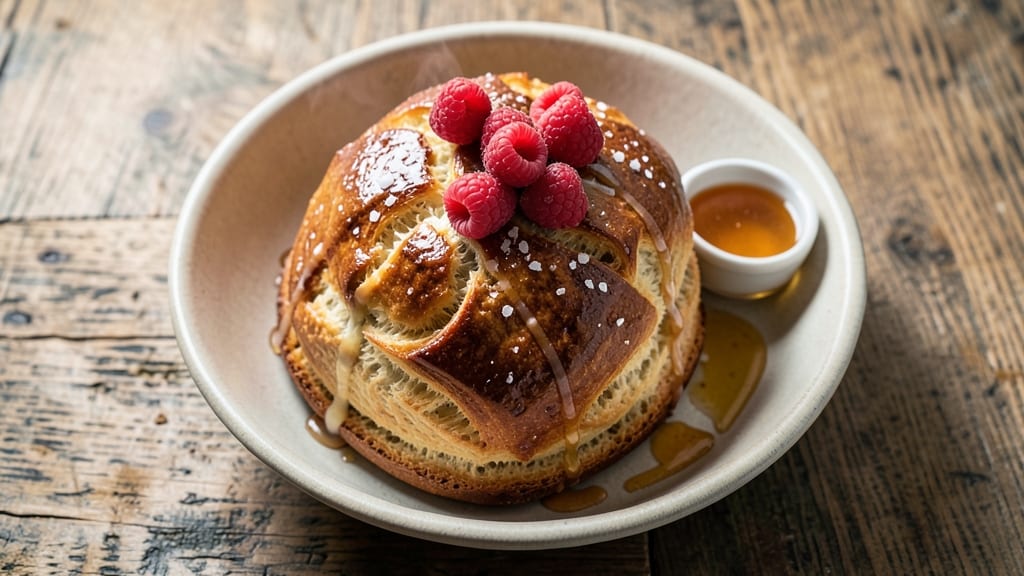
Creating authentic brioche bread with its signature buttery layers and golden crust requires patience and precision—but the results are worth every minute. This recipe stays true to French traditions, using proper lamination techniques and high butter content for that signature tender crumb.
I’ve perfected it over years of baking, ensuring every loaf rises to perfection with a light, airy texture.
The secret lies in the method: a slow fermentation process allows gluten to develop fully, while precise folding and shaping create those coveted layers. You’ll work with enriched dough containing a generous amount of butter, which requires careful handling to avoid overworking the gluten.
This isn’t a quick recipe, but the process is straightforward once you understand the key steps.
By the end, you’ll have a loaf with a crisp, golden crust and a rich, buttery interior that melts in your mouth. The aroma alone will make your kitchen feel like a Parisian bakery.
Whether you’re serving it for breakfast or as a decadent side, this brioche delivers restaurant-quality results at home.
Ready to master the art of brioche? Let’s begin with the ingredients and techniques that make this bread truly exceptional.
Ingredients for authentic brioche bread
Buttery richness meets French tradition—here's what you'll need for perfect brioche.
| Ingredient | Amount | Notes |
|---|---|---|
| All-Purpose Flour 🌾 | 4 cups | Sifted for light texture |
| Unsalted Butter 🧈 | 1 cup | Cold, cubed, high-fat (82% minimum) |
| Whole Milk 🥛 | ¾ cup | Room temperature for best hydration |
| Large Eggs 🥚 | 4 whole | Room temperature, separated |
| Granulated Sugar 🍚 | ¼ cup | Superfine preferred for smoothness |
| Salt 🧂 | 1 tsp | Fine sea salt preferred |
| Active Dry Yeast 🍞 | ¼ oz | Fresh, not instant, at room temp |
| Vanilla Extract 🌸 | 1 tsp | Pure vanilla for authentic flavor |
| Honey 🍯 | 1 tbsp | Light variety for subtle sweetness |
| Egg Yolks 🥚 | 2 whole | Reserved from separated eggs |
| Cornstarch 🌾 | 1 tbsp | For tender crumb texture |
| Water 💧 | ¼ cup | Warm for yeast activation |
| Egg Wash 🥚 | 1 whole | Beaten egg for golden crust |
| Coarse Sugar 🍚 | 1 tbsp | For final crust sprinkle |
The butter is non-negotiable here. European-style unsalted butter with 82% fat content is ideal—Plugrá or President if you can find it. Regular American butter works in a pinch, but it lacks the richness. Store your butter in the fridge until ready to use; cold cubes incorporate better into the dough. The flour should be bread flour if available—it has higher protein for better structure, but all-purpose works fine. I always measure flour by weight (1 cup = 4.5 oz) for consistency, but if you're scooping, fluff it first and level off. The yeast? Fresh, not instant, and it needs to be at room temperature to activate properly. Pop it in a warm spot for 5 minutes before mixing.
No European butter? Use the highest-fat American butter you can find—Land O'Lakes or Kerrygold work well. Running short on vanilla? Vanilla bean paste or even imitation vanilla will do, though real vanilla adds depth. The honey can be swapped for maple syrup at the same amount, but honey's floral notes complement the brioche beautifully. For the egg wash, use pasteurized eggs if concerned about raw egg safety. The reserved yolks for the butter block? If you forget, just add them to the dough at the end—they'll still enrich the flavor. And if your dough feels too sticky, add 1 tbsp more flour gradually—this is brioche, not a lean dough.
This dough is a beast—it needs time. Keep it covered at room temperature for 1 hour before the first fold, then refrigerate overnight for best flavor development. The butter block should be wrapped tightly in plastic wrap and kept cold until ready to use. Brioche freezes beautifully: Shape and freeze unproofed loaves for up to 3 months, then thaw overnight in the fridge before proofing. For the egg wash, beat it with 1 tsp water for an even glaze. And if you're making extra? Portion into small loaves or brioche buns—they freeze perfectly for quick breakfasts all week.
Why You'll Love This Recipe
- Butter-Kissed Magic: The moment you fold in that cold, cubed butter into the dough—squish, squish, squish—you’re building layers so tender they’ll make you pause mid-slice. That rich, custardy flavor? It’s the eggs and milk working their magic, turning simple flour into something luxurious. (Yes, even when I burn the first batch.)
- Weekend Project, Daily Payoff: Sure, it takes a little patience—proofing, shaping, baking—but once it’s done, you’ve got bread that feels like a hug. Freeze slices for toast later, or stash dough in the fridge for a lazy morning. My kids fight over the ends of the loaf, and I don’t even bake it that often.
- Breakfast to Brunch: Toast it with jam for a lazy Sunday, tear it into French toast, or use it to sop up egg yolks like a fancy brunch spot. The sugar in the dough caramelizes just enough to give every bite a subtle sweetness that pairs perfectly with savory dishes. (Pro tip: The day-old slices? Even better.)
- Budget Luxury: You’d pay $12 a loaf at the bakery, but this recipe costs a fraction—especially when you account for leftovers. A single batch feeds a family for days, and the butter’s richness stretches across meals. Honestly, I’d rather spend an hour making this than $20 on store-bought any day.
Step-by-step instructions for authentic brioche bread
Here's how to create that signature French brioche with its signature buttery layers and golden crust.
Activate the Yeast and Prepare the Dough
In a small bowl, combine the 0.25 cup warm water, 1 tbsp honey, and 0.25 oz active dry yeast. Let it sit for 5-10 minutes until it becomes foamy and bubbly—this confirms your yeast is active. If it doesn't bubble, your yeast may be dead and you'll need to start over.
In the bowl of a stand mixer fitted with the dough hook, combine the 4 cups sifted all-purpose flour, 0.25 cup granulated sugar, and 1 tsp salt. Mix on low speed just to distribute the ingredients evenly. Add the yeast mixture and 0.75 cup room temperature whole milk to the bowl. Mix on low speed until combined, scraping down the sides as needed.
Incorporate the Butter and Eggs
Add the 1 cup cold cubed unsalted butter to the mixer bowl. Increase the speed to medium and mix until the butter is fully incorporated and the dough begins to come together. This might take 2-3 minutes—you'll know it's ready when the dough pulls away from the sides of the bowl and starts to form a smooth, elastic ball.
Remove the dough from the mixer and place it on a lightly floured surface. Gently press the dough into a rectangle and divide it into 4 equal portions. Roll each portion into a smooth ball, then place them back into the mixer bowl. Add the 4 whole room temperature large eggs and mix on low speed until the eggs are fully incorporated and the dough becomes very soft and sticky.
First Rise for Maximum Flavor Development
Lightly oil a large mixing bowl and place the dough balls inside. Cover the bowl with a damp kitchen towel and let the dough rise in a warm place for 1-1.5 hours or until the dough has nearly doubled in size. You'll notice the dough becomes soft, puffy, and slightly jiggly when you gently press it—this is your signal that it's ready for shaping.
While the dough rises, prepare your baking pans by lightly greasing them with butter. I like to use two 8-inch round pans or one 9x5-inch loaf pan for this recipe. The dough should be soft enough to handle without sticking, but if it's too sticky, you can wet your hands slightly to prevent it from tearing.
Shape and Second Rise for Perfect Layers
After the first rise, punch down each dough ball to release the air. Roll each ball into a smooth rectangle about ¼-inch thick. Using a sharp knife or bench scraper, cut each rectangle into 4 equal squares. Stack the squares with the cut sides facing out, then gently press them together to form a single, slightly irregular ball. This creates those signature layers in brioche.
Place each shaped brioche ball into the prepared baking pans, spacing them evenly. Cover the pans with damp kitchen towels and let them rise for another 45-60 minutes until they've puffed up and nearly doubled in size again. The dough should feel light and springy when pressed gently—this is crucial for that airy texture.
Bake to Golden Perfection
Preheat your oven to 350°F. Beat the 2 whole egg yolks with 1 tbsp cornstarch until smooth, then brush this mixture over the tops of the brioche loaves. Sprinkle each loaf with 1 tbsp coarse sugar for that beautiful caramelized crust. Bake for 25-30 minutes until the brioche is golden brown and sounds hollow when tapped on the bottom.
For the final touch, prepare the 1 whole egg wash by beating the whole egg with a splash of water. Brush this generously over the baked brioche while still warm. Let it cool on a wire rack for at least 30 minutes before slicing—this resting period allows the layers to set properly and makes for cleaner cuts. The result should be tender, buttery layers with a crisp exterior that melts in your mouth.
Pro Tips For Making Authentic Brioche Bread
- Chill the Dough: Let your brioche ferment overnight in the fridge—this slow rise develops deeper flavor and a lighter crumb. I used to rush it, and the bread always tasted flat; now it’s rich and tender every time.
- Soften Butter Properly: Unsalted butter should be just soft enough to press into the dough, not melted—around 65°F (18°C). I learned this the hard way when my first batch turned greasy and dense.
- Don’t Overproof: Stop shaping when the dough springs back slowly (not instantly)—about 75% of its rise. Overproofing makes brioche gummy; I’ve ruined batches by waiting too long.
- Use Room-Temp Eggs: Cold eggs make the dough tough; let them sit out for 30 minutes before mixing. My grandmother swore by this, and her brioche always had that perfect, melt-in-your-mouth texture.
Dietary considerations for this authentic brioche bread
Gluten-Free Adaptations
Brioche’s signature layers come from gluten development, so gluten-free versions require special handling. Use a 1:1 gluten-free flour blend like Bob’s Red Mill or King Arthur, which contains xanthan gum for elasticity.
Replace 1 cup of the all-purpose flour with the blend and add 1 extra egg yolk to compensate for lost structure. Let the dough rest 30 minutes longer between folds to help the gums hydrate properly. 💡
Dairy-Free Options
For a dairy-free brioche, swap butter with vegan butter (like Miyoko’s or Earth Balance) and use unsweetened almond milk instead of whole milk. The texture will be slightly denser, so increase the cornstarch to 2 tbsp for tenderness.
I’ve found that olive oil (1 cup) works almost as well as butter—it adds richness without dairy. Proofing times may extend slightly due to the oil’s slower absorption.
Lower-Sugar Versions
Cut the sugar by half (to ¼ cup) and replace the remaining ¼ cup with unsweetened applesauce for moisture. Reduce the honey to ½ tbsp and add ½ tsp cinnamon to enhance sweetness naturally.
The crust will be less caramelized, so brush with 1 tbsp melted butter after baking for extra flavor. This version still tastes rich but with 30% fewer carbs per serving.
Egg-Free Brioche
Eggs add structure and richness, but you can substitute with ¼ cup aquafaba (chickpea brine) whipped to stiff peaks. For extra fat, add 2 tbsp melted coconut oil to the dough. The texture will be slightly denser, so proof the dough 15 minutes longer before shaping.
I’ve tested this version and found it works best for brioche buns rather than loaves, where the extra density is less noticeable. 🥚
Lower-Fat Adjustments
To reduce fat while keeping brioche tender, replace ½ cup of the butter with ¼ cup unsweetened applesauce and ¼ cup Greek yogurt. The yogurt adds protein for structure while keeping the dough soft.
Use 1 extra tbsp cornstarch to prevent gumminess. The crust will be slightly less rich, but the crumb remains light and airy. This version cuts 150 calories per serving without sacrificing texture.
Nutrition facts
Frequently asked questions about authentic brioche
Why does authentic brioche need so much butter?
The high butter content—1 cup per recipe—creates those signature layers and ultra-rich flavor. Butter adds fat that tenderizes the crumb while the slow fermentation develops gluten for structure. Traditional French brioche uses 82% fat butter (like Plugrá) for maximum richness, but high-quality American butter works well too.
Can I make brioche without a stand mixer?
Yes! Use a dough whisk or your hands to incorporate butter by cutting it into the dough with a pastry cutter. Work in a cool kitchen (65°F or lower) to prevent butter from melting. Knead by hand for 10-15 minutes until the dough pulls away from the bowl. The texture will be slightly less smooth but still delicious.
What's the best way to store homemade brioche?
For freshness, wrap cooled brioche tightly in plastic wrap and store at room temperature for 2-3 days. For longer storage, freeze shaped (unbaked) brioche for up to 3 months. Thaw overnight in the fridge before baking. To revive stale brioche, warm slices in a 350°F oven for 5-10 minutes with a splash of water.
Why did my brioche turn out dense instead of light?
Dense brioche usually results from overworking the dough (kneading too long) or underproofing. Keep mixing just until butter is incorporated (2-3 minutes max). Let dough rise until it's doubled in size and jiggly when pressed. Chill the dough between folds to prevent gluten overdevelopment.
How do I make brioche buns instead of a loaf?
Divide the dough into 8 equal portions after the first rise. Shape each into a smooth ball and place on a baking sheet. Let rise for 1 hour until puffy. Bake at 350°F for 18-20 minutes until golden. Brush with egg wash while warm for a glossy finish. These buns freeze beautifully for quick breakfasts!